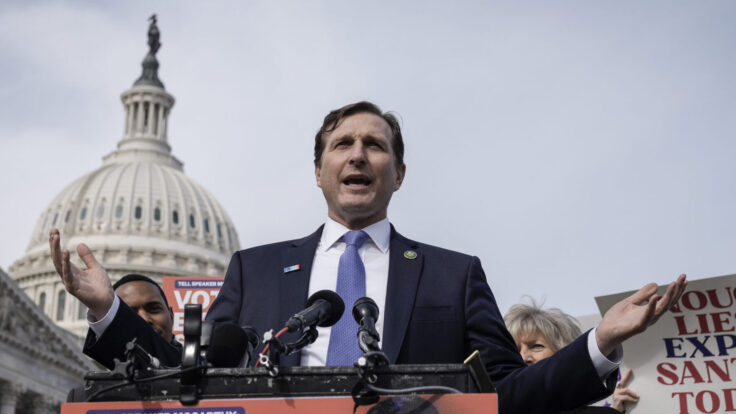
Hello and welcome back to The Best & The Brightest. I’m Leigh Ann Caldwell. If you need any more proof that we are living through an America First era, look no further than the Vatican. Vice President J.D. Vance was one of the last people to see Pope Francis before he died, and now the U.S. has been appropriately rewarded with the election of the first American pope, Leo XIV. (Although apparently Leo, then Cardinal Robert Francis Prevost, has had some harsh words for Vance.)
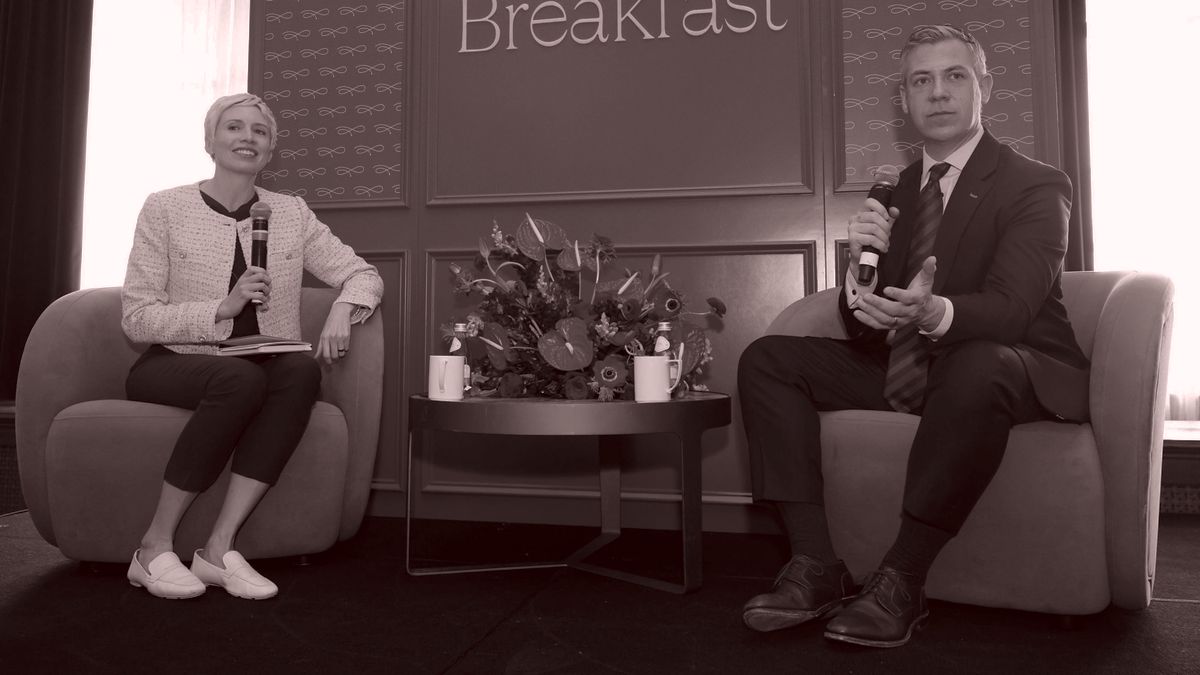
This morning, I hosted Puck’s first D.C. Power Breakfast, the start of a monthly in-person conversation with an essential member of Congress in a beautiful setting. Senator Jim Banks, an O.G. Puck subscriber (join him in our satisfied subscriber community here), was my conversation partner at the Waldorf, and we’ll have a lot more from that discussion below. You can also listen to the whole chat on a special edition of The Powers That Be podcast (available here and here) later next week.
|
|
|
|
A MESSAGE FROM OUR SPONSOR
|
|
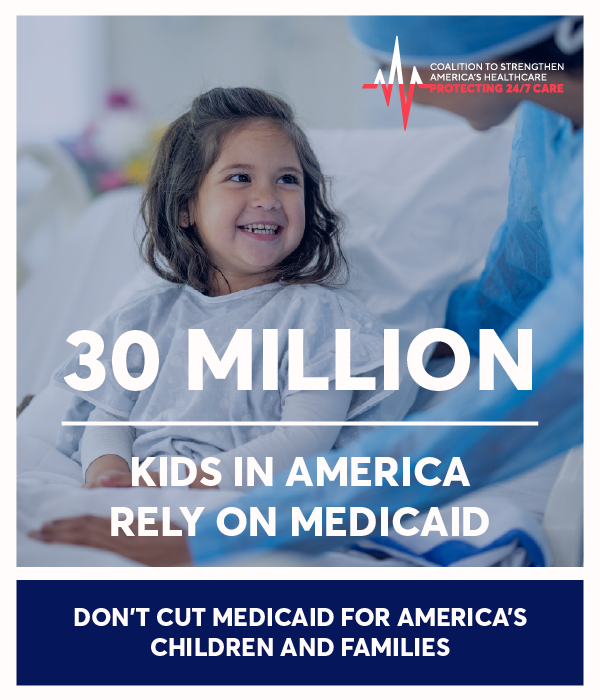
Medicaid helps keep more than 30 million children healthy, covering regular checkups and more.
|
|
|
|
But first, my colleague Abby Livingston has the latest on the “big, beautiful bill” and a pulled Trump nomination…
|
|
|
 |
Abby Livingston |
|
- Big, beautiful trouble: House Republicans are moving forward on “the big, beautiful bill” this week, mostly behind closed doors, and tensions seem to be mounting everywhere: The SALT members are still unhappy but locked in; vulnerable Republicans are worried about potential Medicaid cuts; the Freedom Caucus wants more cuts; and Trump has reportedly asked Speaker Mike Johnson to raise the top tax rate, which is not the kind of thing no-new-tax conservatives are keen to do, as we wrote about last month. Still, the speaker said earlier this week that the bill is on track to pass by the Memorial Day recess, and then it will go to the Senate. Republicans, in other words, are engaged in an absolute race against time, especially because big bills—like Obamacare in 2010 and Obamacare repeal in 2017—often take longer than expected to get to a vote. It will be quite an achievement if they hit Johnson’s target.Given the tight margin, Johnson faces one of his trickiest whips yet—after all, what will mollify one part of the conference is certain to alienate another. In fact, just about the only consensus on the bill is that it needs to move fast. A number of Republican operatives have told me that they are worried about the timing challenge. The fallout from Trump’s Liberation Day tariffs could prompt significant supply chain disruptions at the precise moment that the bill is going to the House floor.
- The end of Ed: Earlier today, Trump pulled his
nomination of Ed Martin for D.C. U.S. attorney, after North Carolina Sen. Thom Tillis, an in-cycle Republican in a battleground state who also sits on the Judiciary Committee, said he would not support confirmation. He cited Martin’s legal defense of the January 6 insurrectionists as his main reason. Tillis, of course, addressed the same issue earlier this year during the F.B.I. confirmation of Kash Patel, who raised money for the defense of January 6 defendants he claimed were nonviolent, but the senator ultimately voted for that confirmation with enthusiasm.So what’s the difference? Trump may be losing political capital since peak confirmation season, when he successfully rammed through several nominees who tested Republican senators’ tolerance for flawed records—Patel, Tulsi, Hegseth, R.F.K. Jr., etcetera. Back then, Trump’s approval rating was above water. Now it isn’t.
It’s unclear whether the Martin pushback will be a one-off for Tillis and the other Senate Republicans who were lukewarm on his nomination. But these lawmakers will soon face another pressure test during the yet-to-be-scheduled confirmation of Mike Waltz for U.N. ambassador. A glance at the Foreign Relations Committee roster shows that save for Rand Paul, all of its Republican members voted to confirm every one of Trump’s previous nominees. So, the odds favor Waltz sailing through the committee, despite the Signal chat scandals. Democrats, meanwhile, are expected to go hard on the issue, and the full Senate confirmation vote will give the usual rebels (Susan Collins, Mitch McConnell, and Lisa Murkowski) their chance to weigh in. The juxtaposition of this confirmation to the winter hearings will indicate whether Trump has lost some of his leverage over the party in the intervening months.
|
|
|
|
A candid chat with Indiana freshman Senator Jim Banks about tariffs, midterms, and not repeating the G.O.P.’s 2017 mistakes.
|
|
|
|
Just before President Donald Trump announced a new trade agreement with the U.K.—really more of an outline of a framework of an agreement, but one that Trump allies are nevertheless portraying as part of the greatest negotiation in the history of negotiations—I sat down with Republican Indiana Sen. Jim Banks, who is all in on Trump’s tariff policy. Banks, a freshman from Indiana, has an umbilical relationship with the president. He was first elected to the House in 2016, during Trump’s first turn at the top of the ticket. He long ago embraced the latter’s populist tendencies as the future of his party. All this made him a perfect guest for the inaugural Puck Power Breakfast, which took place at the Waldorf on Pennsylvania Avenue… yes, the site of Trump’s former hotel.
Banks was an early endorser of Trump’s 2024 run for the White House, and he told me onstage that he remains steadfast in his belief that the G.O.P. needs to maintain its status as the party of the working class. While defending the tariffs, he warned Republicans against making the mistake that Democrats had during the past four years—“telling people they’re better off when they’re not.” For his part, Banks thinks the party needs to do a better job explaining how the immediate consequences of the tariffs can eventually yield transformational benefits—including, but not limited to, the diminution of China’s role in the global economy. I asked if he worried whether this message could be successfully conveyed before the realities of the midterms set in. He countered that Trump was more focused on wholesale change rather than the next election cycle. As for those vulnerable Republicans in Congress? We’ll see…
|
|
|
|
A MESSAGE FROM OUR SPONSOR
|
|
Medicaid helps keep more than 30 million children healthy, covering emergency room visits and more.
|
|
|
|
We also discussed how the party had changed since 2017, when he helped pass the Tax Cuts and Jobs Act that Congress is now trying to extend; the likely political consequences if they don’t get it done; and whether Trump will actually follow congressional appropriations given the history with DOGE. This excerpt of our conversation has been lightly condensed and edited for clarity.
|
The Party of the Working Class
|
|
Leigh Ann Caldwell: 2017, of course, was the year that the Trump tax cuts passed. You were in your first year in the House when that was being debated and crafted. Now, you’re in your first year in the Senate as they’re trying to extend those tax credits. How different are the conversations now compared to then?
Jim Banks: In 2017, Republicans made a giant mistake. I voted for the Tax Cuts and Jobs Act. But the mistake was on the overemphasis of the corporate rates and making them permanent, rather than making individual rates and small business rates permanent. It was the wrong message to the working-class voters and the base of the new Republican Party.
Back then, we started with healthcare [the effort to repeal Obamacare]. We flopped and fell on our face and lost momentum. Then we came around to tax cuts, but we came around to it too late to see the full benefits before the midterm election. So this time, that’s a mistake we’re trying not to repeat.
So really, the fight is over permanence of the individual rates and the small business rates. The new Republican Party, which has been [re]invented in the image of Donald Trump and the “America First” movement, has to [focus on] those working-class voters. That has to be the emphasis and the priority of the tax cuts this time. The difference between then and now: The old Republican Party focused more on Wall Street and corporate America; the new Republican Party focuses more on Main Street and working-class families.
I wrote a memo four years ago, after Trump left office, about, how do Republicans cement the party as the party of the working class? President Trump did it on November 5, 2024, when he won the popular vote with this new base of voters who weren’t with Republicans before. They used to be voters like my dad, who was a union Democrat, a working-class Democrat, who believes that Democrats abandoned him. Those voters came out and gave us majorities again in the House and the Senate, and elected President Trump back to the White House. But the big question for the next decade in American politics is whether or not those working-class voters stay with Republicans, or go back to voting Democrat because Republicans didn’t do what they said they were going to do. And it comes back to this tax cut package.
By just extending the Trump tax cuts, do Republicans risk not being able to adequately show voters that they did something for them? Because if your tax rates don’t increase, then you don’t know that Congress did anything.
God forbid, if we allowed the massive tax increase on working-class families to happen because we don’t extend the individual rates, then our party would be swept into the minority for a long time to come. But voters don’t think that way. We’re not giving them a tax cut; we’re extending the tax cuts from last time. So how do we go out and sell that to them?
I actually think the opposite is much worse: allowing those rates to go up—and for people who are already working-class families, who are already struggling during challenging times, to see their taxes get a big tax hit next year when they file their taxes. The electoral consequences for that would be devastating for my party.
And then there’s the whole issue of spending cuts, which is really complicating this tax bill. One of those conversations is around Medicaid. About 20 percent of people in your state are on Medicaid, and Indiana pays for one quarter of that cost. Can Indiana afford to pay more?
The Republican consensus position is to pass reforms for work requirements on Medicaid. Period. And I think that’s where we end up; we won’t cut Medicaid services. Work requirements are not only a reform that saves tax dollars to make reconciliation work, they’re also very politically popular. If you go back to the ’90s, under President Clinton and Republican majorities in Congress, they passed the same work requirements that the House and Senate are looking to tackle in the reconciliation bill today.
Do you think the tax cuts will be able to be made permanent, and do you think there will be at least a trillion dollars in spending cuts?
It’s obviously politically complicated. But a trillion dollars in spending cuts and making the tax cuts permanent, I think is very reasonable.
|
|
You’re on the Peter Navarro side of tariffs, aren’t you? You’re very pro-tariff.
I support what the president is doing. I think it’s going to be proven not just right in the short term, but in the long term. What President Trump is doing will be so good for America and diminish the role that China plays in the world, in a way that would be really good for our kids, our grandkids, and for our country.
I’m the son of a factory worker and a nursing home cook. All of my family members back home are blue-collar, working class, and live paycheck to paycheck. One mistake that Republicans can’t make right now, that Democrats made over the past four years, is telling people at home that they’re better off when they know they’re not. You can’t tell people gas prices have gone down and egg prices are going down, then, when they go to the gas pumps and grocery store, their eggs cost more than ever before and gas is still sticking at higher prices than [it] should.
I think what President Trump is doing, what Republicans in Congress need to do a better job of, is selling this vision of short-term pain for long-term gain for America, for our kids, for our grandkids. And the announcement today will be good news that the American people can hang their hat on. I think today will be the first of many announcements like that, that would prove that President Trump’s reciprocal tariffs and his approach in the short term is going to lead to something better for our country.
|
|
|
|
If these deals are not done on these 90 countries in 90 days, should these reciprocal, retaliatory tariffs go back into effect?
I’ll defer to the president on that and [U.S. trade representative Jamieson] Greer. I don’t think we’re doing a good job of explaining that this is all about diminishing China, our greatest adversary in the world. The trade approach with all of our allies and other countries around the world—there will be nuances and components of these deals that affect their relationship with China.
One big piece that didn’t get nearly enough attention that proves this point is Apple pulling iPhone production manufacturing out of China and moving it to India. That’s a great example of good news in all of this that didn’t get enough attention. It shows that what President Trump is doing will have a direct impact on diminishing China and raising up America and our allies’ position in the world to control our own destiny.
|
“This Guy’s Pulling Rabbits Out of a Hat”
|
|
Can the economy get back on track in time to help Republicans in the midterms?
Obviously, it’s important that we keep the House majority, and I have a lot of confidence in Richard Hudson and all the work being done at the N.R.C.C. By the way, I’ve criticized Speaker Johnson before, but this guy’s pulling rabbits out of a hat [unlike] anything I’ve ever seen before. He deserves a lot of credit for building that unity and making things happen in the House that seemed impossible in such a small majority and difficult situation.
Is that him or is that Trump?
President Trump is intimately involved in bringing that unity and making things happen, and working with Speaker Johnson to do it. He has a better relationship with Speaker Johnson than he’s had with any Republican leader that he’s had in that position before. But it’s important we keep the House majority. We’re going to keep the Senate majority. I think President Trump is really a lot more focused on the long-term future of the country than the midterms. I think he’s rightly far more focused on restoring America’s role in the world and diminishing the role of China.
Should President Trump follow the appropriations process and the spending that Congress agrees to in 2026 appropriations? There are threats that he will not.
Well, with any legal authority that he has to save tax
dollars and help us balance the budget, like he talked about in his address [to a joint session of Congress]—I think he’s serious about that. I’ve had private conversations with him about the $37 trillion national debt, and all of the interest, and defunding unnecessary programs. One thing we’re waiting on is for the White House to give us the rescissions package. That’s on Russ Vought. Give us these rescissions packages so that we can make all of these DOGE cuts permanent. And if we can’t do that, then we’re going to have a hard time doing anything.
But if you’re asking me if he should obey the law—of course, President Trump is going to obey the law, but he should use all of his legal authority to help us balance the budget. He has always given Congress budgets that are far more fiscally conservative than where Congress ends up at the end of the day.
|
|
|
|
Join Emmy Award-winning journalist Peter Hamby, along with the team of expert journalists at Puck, as they let you in on the conversations insiders are having across the four corners of power in America: Wall Street, Washington, Silicon Valley, and Hollywood. Presented in partnership with Audacy, new episodes publish daily, Monday through Friday.
|
|
|
|
Unique and privileged insight into the private conversations taking place inside boardrooms and corner offices up and down Wall Street, relayed by best-selling author, journalist, and former M&A senior banker William D. Cohan.
|
|
|
Need help? Review our FAQ page or contact us for assistance. For brand partnerships, email ads@puck.news.
You received this email because you signed up to receive emails from Puck, or as part of your Puck account associated with . To stop receiving this newsletter and/or manage all your email preferences,
click here.
|
|
Puck is published by Heat Media LLC. 107 Greenwich St, New York, NY 10006
|
|
|
|