Hello, and welcome back to The Best & The Brightest. I’m Julia Ioffe, and this is your Thursday foreign policy dispatch.
Is the Iranian nuclear program toast after last Saturday’s strikes? I spoke to national security insiders about what the intelligence actually says. Plus, Puck’s new A.I. correspondent, Ian Krietzberg, has a must-read update on what’s really happening with the ban on state-level A.I. regulation that House Republicans slipped into the Big Beautiful Bill—and why Senate Republicans want to strip it back out. (Make sure to sign up for Ian’s forthcoming private email, The Hidden Layer, by clicking here.)
But first…
|
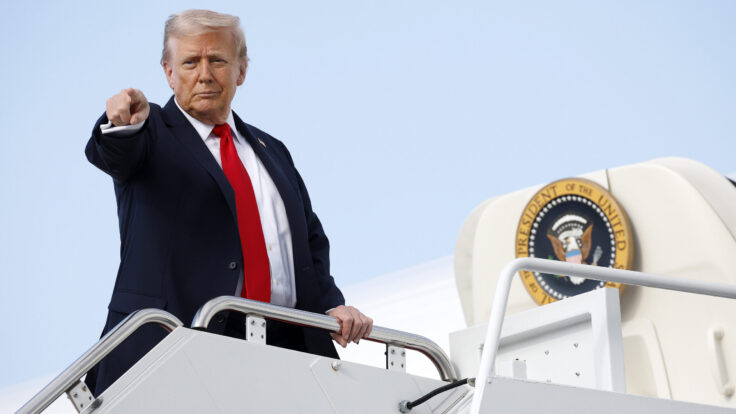
- Who’s your daddy?: Last week, I wrote about how, at this point, every world leader understands that the way to placate Trump is to massage his ego. Benjamin Netanyahu was perhaps the most shameless in the days before Trump deployed B-2 bombers to Iran, releasing a cringe-worthy Trump birthday video that brought to mind Marilyn Monroe’s “Happy Birthday, Mr. President...” Now, as Leigh Ann noted yesterday, it’s NATO chairman Mark Rutte’s turn to drive the cringemobile. “Congratulations and thank you for your decisive action in Iran,” Rutte texted Trump, who was en route to the NATO summit in The Hague, according to screenshots the president quickly posted on Truth Social. “Truly extraordinary and something no one else dared to do.”Rutte also made sure to give Trump credit for pushing members of the alliance toward hitting their 5 percent of G.D.P. military spending target. “You will achieve something NO American president in decades could get done,” Rutte gushed, in fluent Trumpese. “Europe is going to pay in a BIG way, as they should, and it will be your win.”
Understandably, Rutte has caught some flak for these missives, which people have portrayed as pretty embarrassing for someone of his stature. But really, isn’t it more embarrassing for Trump that world leaders speak to him like he’s a toddler? There’s an unmistakable condescension in Rutte’s messages; it’s as if he’s one step away from calling him “buddy” and asking if he’d like to put his shoes on now.
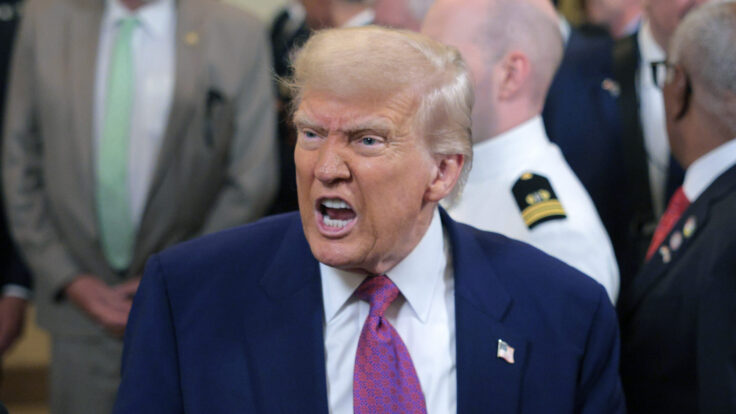
But then, of course, Rutte called Trump “daddy,” which, as you know by now, he did after Trump compared Iran and Israel to children fighting in a schoolyard. And no, you’re not the only one cringe-giggling. Here’s Secretary of State/National Security Advisor Marco Rubio losing his composure behind Trump when the president was asked about Daddygate. But the Trump folks love it and are doubling and tripling down. Late last night, the White House tweeted out a video of Trump’s arrival in the Netherlands set to the tune of Usher’s “Hey Daddy (Daddy’s Home),” and by this afternoon the Trump War Room was selling “Daddy” merch. What a time to be alive.
- Zelensky suits up: All the talk in Ukraine this week has been about what Volodymyr Zelensky wore to the NATO summit this week: a suit. After two and a half years of wearing drab, military-esque outfits in solidarity with his soldiers on the front lines, Zelensky sharpened up for his meetings at The Hague to request more weapons for Ukraine. The piece—a black number, paired with a black shirt and black shoes in lieu of the combat boots Zelensky has favored—is from a capsule collection by Ukrainian designer Viktor Anisimov. It was made in a martial style with the country’s wartime situation in mind. “The designer’s goal was to retain the military uniform, but make the outfit more formal, restrained, and functional,” according to an article in Ukrainian outlet New Voice. “All items are made in black.”
- RIFs at State: Earlier this month, I reported that reduction in force, or RIF, notices were expected to rain down on Foggy Bottom on June 12, but a judge put that on hold, as part of a ruling barring federal agencies from enacting mass layoffs while a legal challenge makes its way through court. The case is now before the Supreme Court, but sources tell me that the Trump administration isn’t waiting, and that RIFs are coming this Friday anyway. Stay tuned.
|
|
|
|
A MESSAGE FROM OUR SPONSOR
|
|
Medicaid funding cuts hurt everyone, resulting in closed hospitals and crowded emergency rooms.
|
|
|
|
Now, here’s Ian on what’s going on with the A.I. regulation moratorium in the Big Beautiful Bill…
|
|
|
 |
Ian Krietzberg |
|
A critical mass of Republicans on Capitol Hill appears on the verge of killing a provision in the Big Beautiful Bill that would ban states from enacting their own A.I. regulations for a decade—a proposition that has riled everyone from A.I. researchers and policy experts to Megan Garcia, the mother of a 14-year-old boy who died by suicide after developing a relationship with an A.I. chatbot. In a letter sent today to Florida Sen. Ashley Moody, Garcia wrote that a moratorium would leave “an entire generation vulnerable.”
There are a number of reasons why Republicans are turning on the moratorium, which was included in the version of the BBB passed by the House last month. For one, the provision is likely in violation of the Byrd Rule, and thus ineligible for inclusion in a reconciliation bill. But Senators Marsha Blackburn and Josh Hawley, in particular, are concerned about copyright issues. (Along with Democrat Maria Cantwell, they’re expected to co-sponsor an amendment to strip the language from the bill before it goes back to the House.)
G.O.P. objections to the regulation ban may also be motivated by public opinion. A bipartisan majority (55 percent) of Americans opposes the measure, versus only 18 percent who support it, according to one recent poll. That’s not much of a surprise: Survey data over the past two years has consistently shown that voters generally don’t trust in Big Tech and support strong federal regulation of A.I.
In 2023, Congress held a hearing with industry leaders on the “oversight of A.I.,” focused on establishing rules of the road. But lawmakers didn’t follow up with legislative action. Instead, individual states have passed laws and resolutions largely focused on consumer protections. (California and Tennessee are focused on protecting their creative industries, in particular.) Last year alone, at least 45 states introduced A.I.-related bills, and 31 adopted resolutions or passed legislation.
It’s been a messy process, impeded at every step by Big Tech’s fire hose of lobbying money—see, e.g., California’s failure to pass SB 1047. Certainly, it would make things simpler for the biggest A.I. companies if there was a single set of federal regulations they could abide by—and help craft—rather than having to comply with dozens of different state-level regulations.
Perhaps that’s one reason tech executives, led by OpenAI’s Sam Altman, were such vocal proponents of swift federal regulation as recently as 2023. If Congress had passed a law back then, the corporations that sit at the center of the A.I. revolution would likely be far less restrained than under the patchwork of laws and regulations they must navigate currently. It’s also why the industry is now appealing more directly to the Trump administration, with OpenAI publicly calling for a “voluntary partnership” between the government and the private sector—all for national security reasons, of course. But if the private sector gets some “relief” from the multitude of “overly burdensome” state laws, all the better!
|
|
|
|
The president rushed to insist on the complete and total success of his Iran strikes without waiting for a full assessment; his critics similarly rushed to declare he must be wrong. The reality is that the full picture will take time to emerge—but in the meantime, intelligence is being further politicized.
|
|
|
|
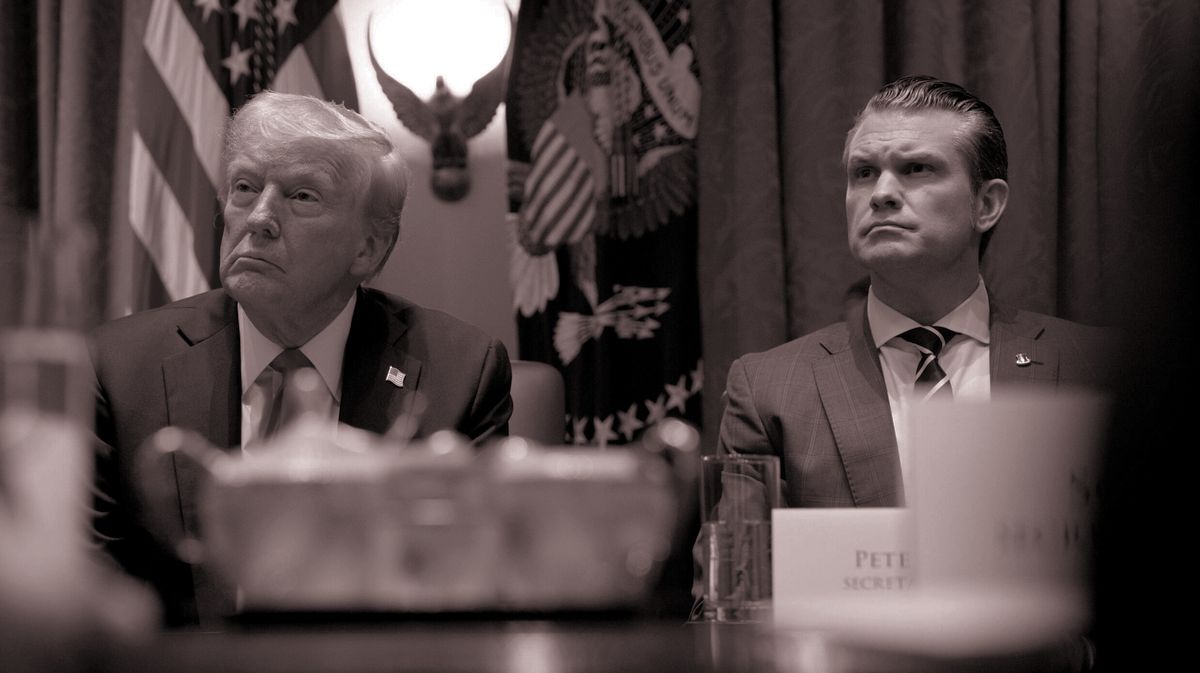
After an early U.S. intelligence assessment cast doubt on whether last weekend’s military strike destroyed Iran’s nuclear program or merely set it back a few months, an enraged Secretary of Defense Pete Hegseth held a press conference this morning to push back. He berated the press for fixating on whether or not “Operation Midnight Hammer” had indeed “totally obliterated” Iran’s Fordow facility instead of reporting on the heroic and amazing pilots who executed the bombing run. Had anyone written stories, he wondered, about just how hard it is to fly a B-2 for so damn long? These pilots, the SecDef claimed last night in The Hague, were “very upset” at how the press was ostensibly questioning their work.
Let’s set aside the fact that several stories had been published about the impressiveness of the mission (including by Fox News’s Jennifer Griffin, which didn’t stop Hegseth from attacking her with a particular viciousness). Moreover, it’s hardly insulting to the troops to ask probing questions about the results of a military operation. (I’m old enough to remember how George W. Bush and his acolytes characterized every critique of their disastrous decision-making in Iraq as grievous disrespect toward the rank and file.) And let’s be honest: The B-2 pilots, who endured a rigorous selection process and grueling training, are most certainly not going to have their feelings hurt by a kerfuffle in the press.
|
|
|
|
A MESSAGE FROM OUR SPONSOR
|
|
Decisions made in the halls of Congress have devastating impacts on the halls of local hospitals.
|
|
|
|
The real problem isn’t that the media is asking questions about the efficacy of the attack. It’s the politicization of intelligence—which is incredibly dangerous, as Iraq War veterans like Hegseth should know. And yet, it is something to which this town has sadly grown accustomed.
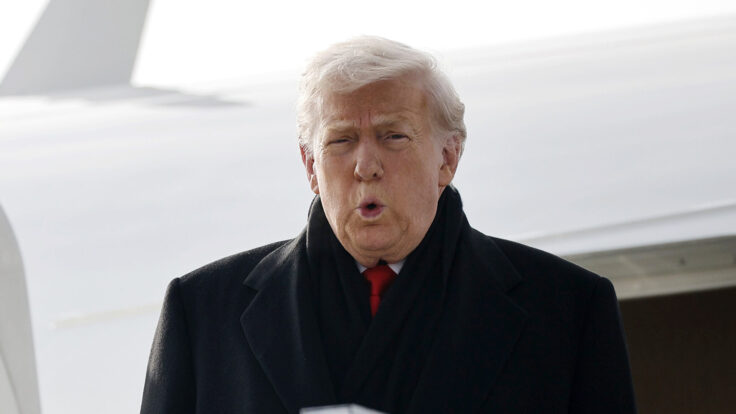
All of this, of course, is a mess of Trump’s own making. Had he not been so categorical about having “obliterated” Iran’s nuclear program, we wouldn’t be fighting over, well, words. It would have been more honest and responsible to say that early reports indicated that the damage to Fordow and the other Iranian nuclear facilities was substantial, but that both American and Israeli intelligence agencies were still gathering data and making their assessments. Trump could have just admitted that these things take time, especially when you’re trying to figure out if something was destroyed underground—since you can’t readily assess the damage via satellite imagery.
“When you run kinetic operations, you don’t [make public claims about the results] until the intelligence assessment and analysis comes through, because you’re almost always wrong—and that’s okay,” said Marc Polymeropoulos, a retired senior C.I.A. officer who served in the Middle East at the height of the Global War on Terror, and who went on to run the agency’s operations in Europe. “You have to wait to see if it worked or not.” Waiting doesn’t mean that the operation wasn’t successful. In fact, waiting might yield more evidence that it was.
But asking Trump to be patient would be asking him to be an entirely different person. Instead, Trump declared “Mission Accomplished” and, much like Bush, was immediately burned by it. “In my personal experience, after an immediate deployment of U.S. forces with any kind of lethal action, there is an almost irresistible urge for any politician of any stripe to claim success,” said one former intelligence official who used to brief the political decision-makers. “That is a near constant.”
|
Battle Damage Assessments
|
When the intelligence assessment first leaked on Tuesday, Trump’s critics pounced. According to CNN’s reporting, the Defense Intelligence Agency initially suggested that the strikes had only set the Iranian nuclear program back by a few months, a result well below the “obliterated” bar the president had set. In the eyes of Trump’s detractors, it was proof that he had taken an unnecessary risk, potentially miring the U.S. in yet another Middle
Eastern quagmire without congressional approval, with little to show for it.
But the critics had jumped the gun as well. According to Griffin’s reporting, the leaked assessment was “based on ‘one day’s intelligence reporting.’” And one day, at least according to everyone I’ve spoken with in the I.C., is far too little time to learn anything conclusive. In fact, even the D.I.A. assessment itself, delivered with low confidence and not in coordination with other intelligence agencies, noted that the battle damage assessment (B.D.A.) would take “days to weeks,” which is pretty standard.
For intelligence community insiders, it’s been somewhat funny to watch everyone latch on to an analysis from the D.I.A. as if it were gospel—apparently unaware that the agency is the butt of jokes in the I.C. and the national security world of Washington. They have traditionally been seen as the knuckle-draggers who don’t have access to the same sources of information as the other agencies—though that has been changing.
|
|
|
|
But that’s not the main reason that “the D.I.A. assessment is probably wrong,” said Polymeropoulos, who is no fan of Trump. “You have to take into account what the Israelis did with the nuclear scientists and all the other strikes,” which did damage not just to the facilities but also to the actual knowledge base of the program. “All of that probably did more damage than the D.I.A. thinks.”
People with experience in the world of intelligence, even those that can’t stomach Trump, are advising caution, and an even rarer trait in this political-media climate: patience. “I am personally hopeful we put some time on the clock—the question is just how much,” said one national security insider. “We also need to try to separate the objective realities of the situation from the warping lens of our domestic politics. This is not about whether you love Trump or hate Trump, but about how effective a military operation—which, frankly, was developed and exercised and refined across multiple presidencies—proved in its final application.”
|
For many, however, this whole episode actually is about whether you love or hate Trump, and the effectiveness of Midnight Hammer is secondary. From Trump’s premature declaration of success, to the D.I.A. leak, to the administration’s predictably angry and thin-skinned response to the criticism, it’s all playing out in a way that ensures that the people who most need to be convinced of the operation’s success, if not its wisdom— i.e., the president’s critics—won’t be. Meanwhile, the people who don’t need convincing— i.e., Trump loyalists—will further distrust an intelligence
community they already see as part of the anti-MAGA deep state.
All of this is par for the course. Trump’s first term was soured by intelligence, including in briefings he received before he took office, that the Russian government meddled in the 2016 presidential election with the intent of helping him win. Russiagate, which consumed his first two years in office, created an abiding sense in Trump and his supporters that the city’s intelligence apparatus was determined to take him down. (This despite the fact that the F.B.I. and C.I.A. are chock-full of conservatives, and that the intel community prides itself on being apolitical in their work and serving presidents of every stripe—the same way bomber pilots pride themselves on staying above the political fray.)
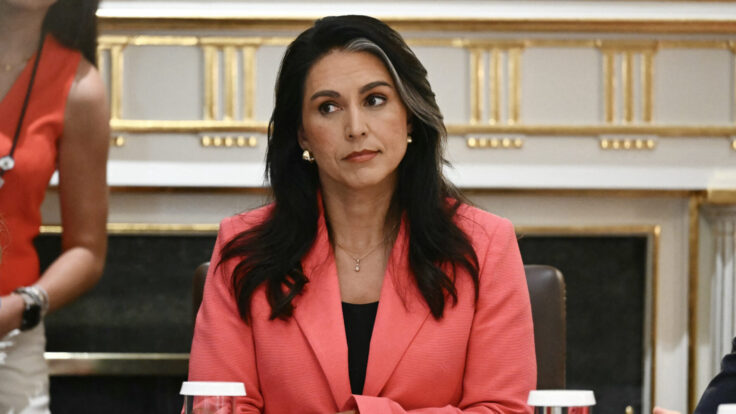
This purported politicization of the I.C. became a central MAGAworld obsession, and now with Trump back in office, he has moved not to depoliticize it, but to actually politicize it—in his favor. In April, for example, D.N.I. Tulsi Gabbard and her deputy reportedly pushed an analyst at the National Intelligence Council to change their assessment that the Venezuelan government did not control the Tren de Aragua gang. The analyst’s original conclusion contradicted the administration’s legal rationale for invoking the Alien Enemies Act to deport alleged Venezuelan gang members. Then in May, Gabbard fired the top two officials on the N.I.C.
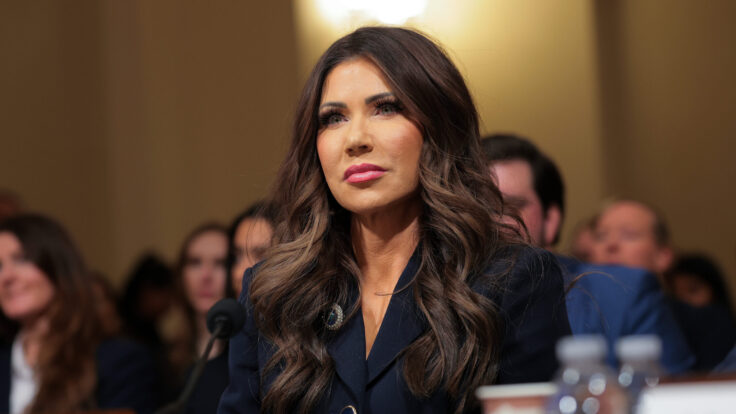
Of course, that didn’t help Gabbard. She had testified in March that Iran was not on the verge of acquiring a nuclear weapon—which seemed fine in March. But by June, when her boss decided it undermined his rationale for bombing Iran, it wasn’t. “I don’t care what she says,” Trump said last week. “She’s wrong.” (Cue the old Soviet joke about the future being certain, but the past being unpredictable.) Yesterday, even as she and C.I.A. chief John Ratcliffe raced to confirm that their intelligence vindicated the glorious success of the president’s mission, the White House made clear that it would be Ratcliffe and Hegseth briefing lawmakers on the Hill about the strikes. Gabbard, whose office is supposed to be the central hub for U.S. intelligence agencies, was not invited.
|
|
That’s all for me this week, friends. Next Thursday is the beginning of the Fourth of July holiday weekend, so I’ll see you back here in two weeks. Until then, good night. Tomorrow will be worse.
Julia
|
|
|
|
Unique and privileged insight into the private conversations taking place inside boardrooms and corner offices up and down Wall Street, relayed by best-selling author, journalist, and former M&A senior banker William D. Cohan.
|
|
|
|
Join Emmy Award-winning journalist Peter Hamby, along with the team of expert journalists at Puck, as they let you in on the conversations insiders are having across the four corners of power in America: Wall Street, Washington, Silicon Valley, and Hollywood. Presented in partnership with Audacy, new episodes publish daily, Monday through Friday.
|
|
|
Need help? Review our FAQ page or contact us for assistance. For brand partnerships, email ads@puck.news.
You received this email because you signed up to receive emails from Puck, or as part of your Puck account associated with . To stop receiving this newsletter and/or manage all your email preferences,
click here.
|
|
Puck is published by Heat Media LLC. 107 Greenwich St, New York, NY 10006
|
|
|
|



_01JY75NY2T5QA676ZF7VT30N67.png "Coalition to Strengthen America's Healthcare")
_01JY75P0TDPHGP5PE4ASQHTYN2.png "Coalition to Strengthen America's Healthcare")