{{ 'now' | timezone: 'America/New_York' | date: '%b %d, %Y' }} |
|
|
|
Welcome back to Dry Powder. I’m Bill Cohan.
As was inevitable, the
second-order effects of the Mad King’s war in Iran have begun spilling over into Wall Street, with stocks down, Treasury yields up, and borrowing costs increasing across credit markets ever since Trump started the military buildup in January. Commodity prices, meanwhile, especially energy and critical supplies like fertilizer, have surged, creating ripple effects across industries from agriculture to transportation. And as I
wrote last week, investors were already starting to test redemption limits and liquidity in the private credit market. Yes, the big Wall Street banks will likely benefit from the current climate, particularly with Trump’s regulators looking for ever more ways to take the brakes off while keeping the average investor in the dark. Is all this cause for panic? Are
we on the brink of an overdue correction? I’ll try to answer these questions below.
But first… |
- Zaz’s
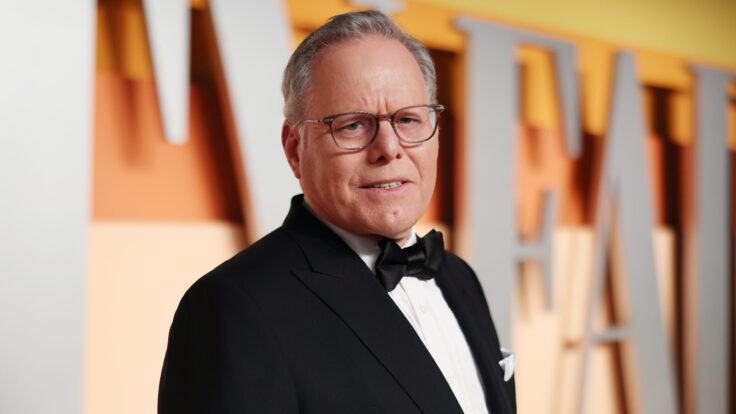
Hollywood legacy: Four years ago, David Zaslav blew into town with a deep nostalgic appreciation for old Hollywood—buying Bob Evans’s house and pulling Jack Warner’s desk out of storage. Alas, Hollywood never seemed to love Zaz back. As Warners prepares to change hands for a third time in a decade, I’ve been reflecting a bit on Zaz’s record. Sara Fischer, at Axios, wrote the other day that WBD’s Oscar
haul—a total of 11 awards, including best picture and best director—“solidifies” Zaz’s legacy “as a steward of creative work on top of his dealmaking savvy.” It’s a somewhat controversial assessment—and it seems like few in Hollywood’s creative community would agree.
To be sure, that community hasn’t always assessed its executive ranks in lockstep with the more charitable view of Wall Street analysts. Jason Kilar, who ran WarnerMedia, had a prescient view of streaming but
a theatrical nihilism that doomed his tenure. Bob Iger has been considered a hero of Hollywood due to his natural feel for talent and for deals, but the Disney stock has been mired in its own quagmire and Iger II has been a disappointment. (Everyone got Bob Bakish right, for what it’s worth, except for Shari Redstone…) Anyway, the town was peeved at Zaz for canceling or shelving such movies as Batgirl, Coyote vs. Acme, and
Scoob! Holiday Haunt. Creatives were frustrated that he focused so much of his efforts on paying down WBD’s $55 billion of debt, as his board desired, rather than investing in more projects. (The debt is down to around $30 billion these days.) And they’re especially peeved that he’ll soon be about $1 billion richer after just four years—when the sale to PSKY closes at the end of the third quarter.
That’s a lot of money, yes. But it’s based on the deal he cut with his
board, and the amazing job he did in selling WBD. Zaz took a company that was trading for as little as $7 a share in the fall of 2023, and ultimately flipped it for $31 a share earlier this month, all cash, by creating a near-perfect auction process between Netflix and Paramount Skydance. He got the Ellisons to raise their initial bid by more than 60 percent, and got them to fold on basically every other contractual provision he demanded. (Usual disclosure: Through a recent
transaction, Zaz is a de minimis investor in Puck.)
As my partner Matt Belloni has noted, Zaz never hit his EBITDA projections—the linear TV ice cube melted much faster than he anticipated during the last four years. But he did turn HBO Max into a global EBITDA-positive machine, even if there were some fits and starts along the way. And he recognized that he would have to jettison the company’s cable assets, which he was in the process of doing when the Ellisons
offered to take the whole thing off his hands.
I don’t know whether Zaz’s M&A orchestration is worth the generational fortune that he is receiving in return. But I do share Sara’s observation that, “In sweeping Sunday’s contest, WBD proved that traditional studios still hold power over Big Tech giants in Hollywood” and that Zaz deserves a lot of the credit for that. At least for one last year.
|
Now on to the main event… |
|
|
|
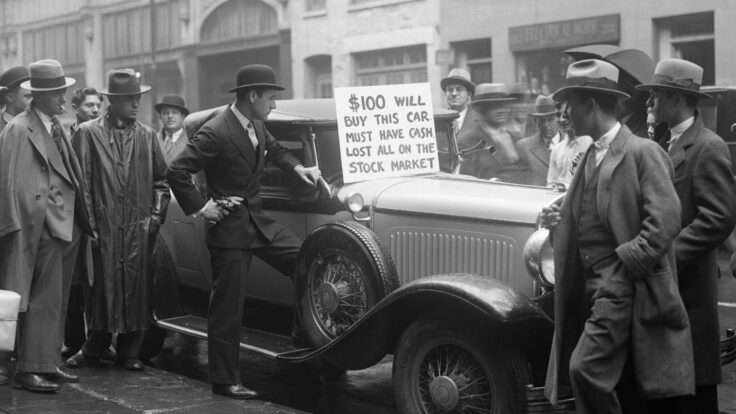
Markets are pricing in a wide range of Iran war scenarios, from a quick bounceback to a
prolonged global recession. Even professional contrarians warn that investors may be sucked into a bear trap if Trump abruptly changes course. But as the Mooch observes, hubris is one hell of a drug. |
|
|
|
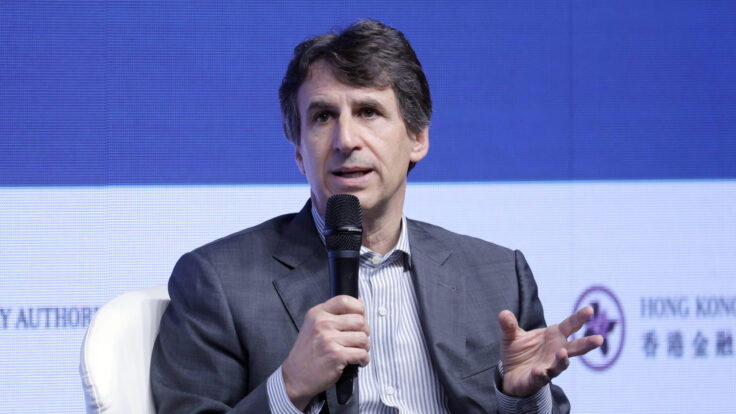
It’s at times like these when I turn to my old friend Mark Spitznagel, the professional
contrarian and co-founder of Universa Investments, a hedge fund that allows other hedge funds to protect themselves from massive declines in the debt and equity markets. As my readers know, Spitznagel does well when others do poorly. He is Wall Street’s foremost practitioner of so-called “tail hedging,” an investment strategy he has perfected with The Black Swan author and mathematician Nassim Taleb—it involves buying cheap, far “out-of-the-money” options (and other)
contracts to protect against the rare, cataclysmic plunge. It is, as he likes to say, the ultimate “insurance” policy.
Investors in Universa bleed small amounts of money as markets rise, but profit massively amid sell-offs. During the 2008 financial crisis, Spitznagel returned more than 115 percent to investors. In March 2020, when the coronavirus sent the S&P tumbling nearly 30 percent, his flagship fund returned more than 3,600 percent—a bet that places him alongside Michael
Burry and Bill Ackman in the pantheon of the most successful, as he likes to say, “risk mitigation” traders of all time. I haven’t written about Mark since 2021, more or less the last time he expected the sky to fall. |
|
|
|
Every so often you reach a moment that demands an important conversation. When it arrives, Glenmede is ready with
sophisticated wealth and investment management solutions delivered with the personalized service you deserve. LEARN MORE |
|
|
|
And with Trump’s boneheaded war on Iran precipitating what appears to be a
once-in-a-generation energy crisis, there are plenty of reasons that investors might panic. The Dow Jones Industrial Average is down more than 9 percent since hitting its all-time high of around 50,500 on February 10. It’s kind of amazing that it’s not fallen even more, honestly, and it probably will. (This is not investment advice.) The broader S&P 500 index is down around 6 percent since its all-time high on January 27. Then there is the bond market, which also has reacted negatively to
Trump’s war of choice. The yield on the 10-year Treasury, now 4.39 percent, was 3.9 percent before the bombing began—an increase of nearly 50 basis points, or some 12.5 percent, in a few weeks.
That’s eerily reminiscent of the 60-basis-point increase in 10-year Treasury yield following Trump’s “Liberation Day” tariff-palooza last spring. As you’ll recall, that was enough to make Trump reconsider some of his tariffs, which started the whole TACO movement. Will an ongoing increase
in the yield on Treasuries get Trump to reverse course in Iran, as he sort of did—but not really—on tariffs? Meanwhile, the average yield on riskier junk bonds is nearly 7.5 percent, up about 80 basis points, or 12 percent, from around 6.7 percent earlier this month.
But after I reached out to Mark, he sent me an intriguing response. “This is yet another instance of a bear trap, like last year and the year before,” he wrote.
A bear trap, of course, is when investors are tricked
into thinking we’re in a downward spiral in the market and then bet on such a fall—only to find out that things aren’t as bad as expected. The investors get burned by being short when the markets recover. Spitznagel may be making the simple TACO calculation that Trump Always Chickens Out—a winning trade, by the way, for most of Trump’s first year back in office. And yet, the next few days and weeks will likely determine whether this time is different. “The Greeks had a word for what happens when
power goes unchecked: hubris,” Anthony Scaramucci, Trump’s short-lived communications director in his first term, wrote in Fortune on Friday. “The pattern in their tragedies is always the same—a leader, swollen with success, decides the rules no longer apply to him.” |
Trump’s so-called excursion in Iran fits the diagnosis perfectly. And now the rest of us are
beginning to pay the price. A glance at the upward spike across commodity prices since the Peace President started warmongering in January tells part of the story. The price of a barrel of Brent Crude is hovering between $110 and $120, up about 45 percent; a gallon of gas is around $3.90, up nearly 40 percent; liquefied natural gas is up roughly 25 percent, and even more in Europe; fertilizer is up more than 30 percent; aluminum is up nearly 20 percent; vegetable oils are up more than 10
percent. As for jet fuel, it’s up at least 65 percent—and as much as 120 percent—from the $91 a barrel it was trading for in January. Meanwhile, speculative commodities such as gold, silver, and Bitcoin are all down double digits since the beginning of the year.
There are other consequences—in a butterfly effect kind of way—to the rising cost of these commodities. With nitrogen now around $610 per ton, up 35 percent in a month, farmers across America are making the hard choice right
now about whether to plant corn or soybeans this spring. Corn needs 180 pounds of nitrogen per acre; soybeans fix their own nitrogen. Don’t be surprised when farmers choose to plant soybeans, and the resulting corn shortage creates its own problems, including at the gas pump, where including ethanol—made from corn—in gasoline is an immovable federal mandate. Since 43 percent of the U.S. corn crop goes to fulfilling that mandate, you can be sure a corn shortage will push gas prices higher.
As my partner Ian Krietzberg recently reported, the Strait of Hormuz is also a major chokepoint for helium and sulfur—critical elements in the production of semiconductors, and thus the entire A.I. trade.
Meanwhile, Trump’s war seems to have exacerbated the ongoing private credit freak-out—to my mind, an overreaction, but real enough—with the escalating
demands for redemptions from a variety of illiquid private credit funds beyond their 5 percent quarterly thresholds. And once word starts circulating that one fund has requests for redemptions beyond the 5 percent threshold, redemption requests at other funds are likely to start rising, too—which is exactly what we’re seeing right now. |
|
|
|
Every so often you reach a moment that demands an important conversation. When it arrives, Glenmede is ready with
sophisticated wealth and investment management solutions delivered with the personalized service you deserve. LEARN MORE |
|
|
|
The financial media won’t be able to resist stories about a potential collapse of the private credit market,
which has exploded in importance since the 2008 financial crisis and may be as large as $40 trillion these days. It can’t, even if the concern is overblown. After all, you have the likes of Jamie Dimon, Jeff Gundlach, Howard Marks, and Boaz Weinstein pouring fuel on the fire. Never ones to miss out on an opportunity, JPMorgan Chase and Goldman Sachs are offering hedge funds a way to short the $2 trillion or so
leveraged-loan portion of the private-credit market. Considering the two banks sometimes compete with the big purveyors of private credit, such as Apollo, Blackstone, and KKR, that’s certainly an interesting development.
Dare I even mention that the national debt is now hovering near $39 trillion, up 93 percent from $18.8 trillion at the start of Trump I? Or the S.E.C.’s pending plan to end quarterly reporting? (Talk about a really dumb idea.) And what can I say about regulators’ plan to
relax capital requirement rules for the big Wall Street banks? Sure, the banks are happy, but as with the proposed change in S.E.C. reporting requirements, this change is not a plus for consumers or their confidence in the banks.
With all these financial market indicators flashing yellow, and maybe even red, will Trump’s own Gulf War push the U.S. economy into recession or cause the American consumers, who have driven much of our G.D.P. growth for decades, to close their wallets while we
wait and see how this all plays out? |
It’s healthy to ask whether we are on the precipice of another Bear Stearns moment, given the redemptions
being requested from various private-credit funds. Is this akin to what happened to the two Bear Stearns hedge funds in the spring of 2007, when they were gated and then liquidated as the value of the funds’ mortgage-backed securities fell dramatically?
For any number of reasons, I’m with Spitznagel: I don’t think so. Investors in those hedge funds were prevented from getting their money out. Then there was the liquidation. In the case of the private-credit funds and redemptions, some of
the funds are sticking to the 5 percent redemption limits, some have raised the limits to 7 percent and one—Blackstone’s BCRED—has met the redemption requests, even though they were above the limits.
Back then, too, Jimmy Cayne, the Bear Stearns C.E.O., made the fateful decision to have Bear Stearns guarantee the liabilities of the hedge funds. When they collapsed and were liquidated, Bear Stearns had to absorb several billion dollars’ worth of assets—the mortgage-backed
securities in the funds—that were rapidly losing value, a decision that flopped when Bear continued to try to use those assets as collateral for short-term loans. I don’t see anyone doing that at the moment for these credit funds. The other thing, of course, is that some 97 percent of the loans in these credit funds are first-lien and senior secured. A lot more would have to go wrong across the whole economy for those loans to become impaired in a meaningful way.
I’m not saying it can’t
happen. It’s certainly happened before and will happen again. But we’re talking about thousands of senior secured loans across many thousands of companies, all going bad at the same time. I don’t see that occurring, unless Trump decides to unleash Armageddon or gets us mired in a prolonged, unwinnable war in Iran—which he still might do, since he delights in doing precisely the opposite of what most people would like him to do. No wonder Wall Street is hedging its bets. |
|
|
|
Join Puck’s chief political columnist, John Heilemann, as he roams the corridors of power and influence in America on this
twice-weekly interview show, taking you beyond the headlines with the people who shape our culture: icons and up-and-comers, incumbents and insurgents, moguls and machers in the overlapping worlds of politics, entertainment, tech, business, sports, media, and beyond. The conversations are rich and revealing, unrehearsed and unexpected… and reliably impolitic. A Puck-Audacy joint, new episodes drop every Wednesday and Friday. |
|
|
|
Puck’s daily political newsletter from Washington on what’s really happening in this town, from the White House to the Pentagon
to Capitol Hill, K Street, and the campaign trail. |
|
|
|
Need help? Review our
FAQ page or contact us for assistance. For brand partnerships, email ads@puck.news.
You received this email because you signed up to receive emails from Puck, or as part of your Puck account associated with {{customer.email}}. To stop receiving this newsletter and/or manage all your email preferences, click here. |
Puck is published by Heat Media LLC. 107 Greenwich St., New York, NY 10006 |
|
|
|
|