• Washington
  • Wall Street
  • A.I.
  • Hollywood
  • Media
  • Fashion
  • Sports
  • Art
  • Join Puck Newsletters What is puck? Authors Podcasts Gift Puck Careers Events
  • Join Puck

    Directly Supporting Authors

    A new economic model in which writers are also partners in the business.

    Personalized Subscriptions

    Customize your settings to receive the newsletters you want from the authors you follow.

    Stay in the Know

    Connect directly with Puck talent through email and exclusive events.

  • What is puck? Newsletters Authors Podcasts Events Gift Puck Careers
 
Puck logo
 
Dry Powder

Hello and welcome back to Dry Powder. 


Thanks for being a part of Puck, our new media company covering the intersection of Wall Street, Washington, Silicon Valley, and Hollywood. And thanks for reading Dry Powder. If you're enjoying these private emails, consider sharing the subscription link with a friend.


Bill

SPONSORED BY

mayer brown
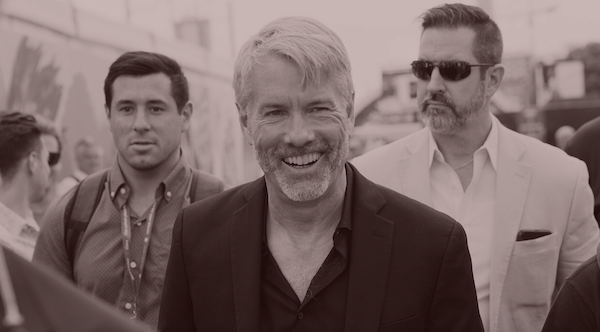
michael saylor

The Jack Welch of Crypto?

Why didn’t Microsoft buy Activision with its near-all-time-high stock? Why did Michael Saylor convert MicroStrategy’s treasury reserves into Bitcoin? Perhaps it’s because, as Ray Dalio says, “cash is trash.”

William Cohan

WILLIAM D. COHAN

In the near-zero interest rate environment that the Federal Reserve has imposed on us for more than a decade, a question vexing many of the most successful corporate executives is what to do with the cash building up on their balance sheets. Big Tech, no surprise, is sitting on the motherlode. Apple has $190 billion of cash. Alphabet, the parent company of Google, has a cash pile of $142 billion. Amazon has $79 billion in cash. Meta, formerly Facebook, has $58 billion. Microsoft, the second most valuable company in the United States, with a market value of $2.2 trillion, has a cash balance of $131 billion. Or it did, until last week, when the company announced that it would be using about $70 billion of it to pay for Activision Blizzard, its shiny, new gaming behemoth. 


It has not been fashionable in recent years for big companies to pay for big acquisitions using their own cash hordes. For starters, most companies don’t have enough cash on hand to expend on buying another company. And those that do have the cash often prefer to preserve that cash for other purposes, such as paying down debt, paying dividends to their shareholders or using it to buy back stock. Or to save it for a rainy day. Such decisions tend to ebb and flow depending on the economic cycles, of course, but after a 13-year bull-market, the biggest acquisitions lately have been done using stock, since the equity value of many companies is at or near all time highs (or was, until the ongoing correction kicked in). Why not use high-priced stock to make an acquisition, the thinking goes, since it may all be just so much funny money anyway? 


The use of stock as an acquisition currency is also usually tax-free until the beneficiary decides to sell it, whereas cash received is taxable. Activision C.E.O. Bobby Kotick, for instance, could receive around $600 million in cash—the value of his Activision stock plus a payment triggered by the change in control—followed by a whopping capital gains bill. Had Microsoft structured the deal in stock, Kotick wouldn’t face the tax man until he decided to sell the shares, giving him ample time to get his estate and liquidation strategy in order.


I’m not too worried about Bobby. The deal won’t close for around a year, which will offer what I presume is an armada of lawyers and tax-structuring  specialists ample time to chart a strategy to prevent too much leakage. More interesting to me is the flipside. If I were Satya Nadella, who has been the superstar C.E.O. of Microsoft for nearly seven years, I would have thought long and hard about paying for Activision with my high-priced (and possibly overvalued) stock. Despite being down around 15 percent from last month’s all-time high, Microsoft stock is still up close to 30 percent in the last year. But Nadella didn’t use Microsoft’s stock for the Activision deal. Nor did he choose to borrow money from a bank or to issue bonds to eager investors, which he certainly could have done easily given that Microsoft is one of the few AAA-rated companies around. It has long-term debt of only about $50 billion and net-debt—cash minus long-term debt—of negative $80 billion. 


Instead, Nadella will use a little more than half of Microsoft’s cash horde to pay for Activision. His strategy likely has to do with the fact that as Ray Dalio, the hedge fund titan, likes to say, “Cash is trash.” 

ADVERTISEMENT

mayer brown

The logic here is pretty simple. Why not use the billions in cash sitting on Microsoft’s balance sheet, where it’s not only losing its buying power due to rising inflation—running about 7 percent at the moment, the most in 40 years—but is also probably earning a paltry return in the vicinity of 2 percent annually, given the company’s disclosed mix of investments comprising commercial paper, CDs, Treasuries (some $93 billion of the cash), municipal bonds, mortgage-backed securities and the corporate debt of other companies. Between the historically low interest rates on the debt securities that Microsoft seems to be investing in and the rising rates of inflation, Dalio is right: cash is trash. Much better, Nadella must have thought, to use that cash to triple-down on gaming, a business Microsoft was already in but now will become one of the dominant players. 


But is there a better, less traditional, use of corporate cash that will potentially yield a higher return than investing it in short-term and long-term securities or doing complex M&A deals?  That’s a question that Michael Saylor, the C.E.O. of MicroStrategy, a small publicly traded enterprise software company, has been contemplating since at least July 2020, when he realized that his company’s $500 million cash balance was rapidly losing its purchasing power because of the combination of low interest rates and high inflation. He decided he couldn’t sit idly by and allow that to happen. Instead, he went whole hog on Bitcoin. Really whole hog—to the point where Saylor has become one of the cryptocurrency’s most zealous advocates, through thick and thin. 


Videos of Saylor extolling the virtues of Bitcoin are ubiquitous on the Internet. He spent more than an hour last November educating Tucker Carlson about the relevance of Bitcoin, especially in a high-inflation, low-interest rate environment. The encounter took place on Carlson’s non-Fox online video channel, Tucker Carlson Today. Carlson was smart enough to just let Saylor talk and talk and talk. A graduate of MIT, with a degree in aeronautics and astronautics, Saylor speaks in full paragraphs. He can make a Bitcoin believer out of the most ardent skeptics. I spent two hours with him on a Zoom call last week. He was mesmerizing. 


The past few weeks haven’t been a good stretch for Bitcoin, however, or for MicroStrategy. The price of Bitcoin is down nearly 20 percent since January 1; MicroStrategy’s stock is down 35 percent since then, including an 18 percent collapse on January 21 alone, after the Securities and Exchange Commission rebuked the company for the way it accounted for its Bitcoin holdings. Still, despite the recent Bitcoin rupture, Saylor’s decision to invest in Bitcoin has worked out pretty well for MicroStrategy—and certainly better than if he had kept that $500 million in cash. 


Back on August 11, 2020, Saylor announced that MicroStrategy was buying 21,454 Bitcoins for $250 million, or $11,653 per Bitcoin. He also announced that the company would use another $250 million in cash to offer to buy back stock from those shareholders who didn’t like his Bitcoin gambit. He used the cash that wasn’t returned to shareholders to buy more Bitcoin. But that wasn’t enough Bitcoin for Saylor. MicroStrategy then started borrowing money to buy Bitcoin. The company did two convertible debt deals and a senior debt offering, using the $2.2 billion, or so, of proceeds to buy more Bitcoin. MicroStrategy’s average purchase price for Bitcoin is around $30,000. It now owns 122,478 Bitcoins, worth about $4.7 billion, some $900 million more than the company’s market value. In November, when Bitcoin hit a peak of $67,682, MicroStrategy’s Bitcoin was worth $8.3 billion. Bitcoin is now trading at about half that price.


When he started the Bitcoin program, MicroStrategy’s stock was $120 per share, $60 of which was in cash. “Our investors told us the cash was trash,” he said on CNBC in 2020. “It was a liability on our balance sheet. And if we had given it all back, we would be trading at $60 a share. Instead, we rotated our shareholder base and transformed ourselves into a company that's able to sell enterprise software and to acquire and hold Bitcoin and we've done it successfully with leverage that has increased the power of the brand by a factor of 100. We just had our best software quarter in history or in the last 10 years last quarter. The core business is up 10 percent. The Bitcoin business is driving shareholder returns. I think the employees are happy and the shareholders are happy.” A year ago, the MicroStrategy stock hit $1,023 per share, up nearly 10 times in six months. Even with the stock now at around $370 a share, it still represents a tripling since Saylor made the decision to go long and hard on Bitcoin.

ADVERTISEMENT

mayer brown

Saylor remains utterly undeterred by the concerns around Bitcoin, despite the recent halving of its price. He’s said repeatedly that he’s never selling MicroStrategy’s Bitcoin. He told me the same thing. No other C.E.O. of a publicly traded company has become such an ardent Bitcoin zealot, and put his money where his brain is. 


But it’s hard to know if he’s right. Last November, with Bitcoin at $67,000, Saylor looked like some kind of visionary genius. With Bitcoin’s price cut in half in two months, it’s no longer quite so obvious. The $900 million of convertible debt that MicroStrategy issued a year ago to buy Bitcoin is now trading around 62 cents on the dollar, yielding twice what the average junk-bond is yielding. 


The volatility alone is not for the faint of heart, although Saylor doesn’t seem the least bit phased by it. At the moment, MicroStrategy’s shareholders are still close to three times better off than they were before Saylor decided to take the Bitcoin plunge in July 2020. And with interest rates still at historic lows, although on the rise, and inflation at a 40-year high, cash remains a deteriorating asset, which helps explain why Microsoft used it to buy Activision. What remains murky, at best, is whether Bitcoin is the answer to these problems. 

FOUR STORIES WE'RE TALKING ABOUT

cocktail

Netflix's Black Friday

With apologies to Wall Street, the streamer's stock price apocalypse is a market problem more than a business problem. 

MATTHEW BELLONI

money bag

Trump's Russia Guru Tells All

A conversation with Fiona Hill about the Russia-Ukraine crisis, Putin's next move, and where the White House goes from here.

JULIA IOFFE

ufo

Can Yuri Milner Cheat Death?

The inside conversation about Silicon Valley’s favorite charity, MacKenzie Scott, and Bezos’ latest effort to perfect his physique.

TEDDY SCHLEIFER

card

Winter Is Coming for Wall Street

Notes on Peloton’s market value collapse, Netflix’s future, M&A arbitrage, and Apollo’s next potential pound of flesh.

WILLIAM D. COHAN

 
swash divider
Facebook Twitter Instagram LinkedIn

You received this message because you signed up to receive emails from Puck.


Was this email forwarded to you?

Sign up for Puck here.


Sent to {{customer.email}}

Unsubscribe


Puck is published by Heat Media LLC.
64 Bank Street
New York, NY 10014


For support, just reply to this e-mail.

For brand partnerships, email ads@puck.news

SEE THE ARCHIVES

SHARE
Try Puck for free

Sign up today to join the inside conversation at the nexus of Wall Street, Washington, A.I., Hollywood, and more.

Already a member? Log In


  • Daily articles and breaking news
  • Personal emails directly from our authors
  • Gift subscriber-only stories to friends & family
  • Unlimited access to archives

  • Exclusive bonus days of select newsletters
  • Exclusive access to Puck merch
  • Early bird access to new editorial and product features
  • Invitations to private conference calls with Puck authors

Exclusive to Inner Circle only


Latest Articles from Wall Street

Geoffroy van Raemdonck
William D. Cohan • January 26, 2022
The Saks Financial Colonoscopy
Amid a torrent of bankruptcy filings, a blunt declaration by Saks Global’s newly appointed chief restructuring officer lays out precisely what went wrong and when, and who got screwed hardest—plus which risk-hungry investors are likely to call the shots moving forward. As it turns out, the company’s capital structure became “unsustainable” almost immediately after its $2.7 billion acquisition of Neiman Marcus Group in December 2024.
David Ellison
William D. Cohan • January 26, 2022
The Ellison Way of Parenting
David Ellison’s latest schemes to wrest Warner Bros. from Netflix have proved insufficient after his previous negotiating tactics ran up the price. Meanwhile, he’s losing the respect of the WBD guys across the table. But will his dad come to the rescue with another, say, $10 billion to bail him out?
Patrick Drahi
William D. Cohan • January 26, 2022
A History of Creditor-on-Creditor Violence
Wall Street invented the coercive liability management exercise, which allows companies to play their creditors against one another as they extract beneficial terms for themselves—a now-routinized tradition referred to as “creditor-on-creditor violence.” But now Apollo, Oaktree, BlackRock, and JPMorgan Chase are teaming up to put an end to this mess.


Larry Ellison, David Ellison
William D. Cohan • January 26, 2022
The Zaz–Ellison Dagger Contest
Warner Bros. Discovery’s most recent S.E.C. filing reveals the latest battle lines between the company and its hostile suitor. In particular, the document evinces a deep distrust of Paramount Skydance’s proposed deal financing, recasting the $108 billion all-cash offer as an $87 billion L.B.O. that could fall apart before closing.
David Zaslav
William D. Cohan • January 26, 2022
What Is Zaz TV Really Worth?
The battle for Warner Bros. Discovery is increasingly coming down to how Netflix and Paramount Skydance value the declining TV assets (and CNN) that David Zaslav is determined to separate from the Warners mothership. Versant, which just started trading on Nasdaq this week, may provide the answer.
greg abel
William D. Cohan • January 26, 2022
Make Berkshire Hathaway Great Again?
Greg Abel, the handpicked successor to Warren Buffett, faces one of the most exalted and daunting jobs in finance: determining what to do with the staggering $358 billion bequeathed to him by the most legendary investor of his generation. Herewith, three proposals for what Abel should buy with all that cash.


David Ellison, Larry Ellison
William D. Cohan • January 26, 2022
Zaz Is From Mars, the Ellisons Are From Venus
Murmurs from sources close to the Warner Bros. Discovery deal illuminate the latest machinations surrounding the Paramount-Netflix showdown—and where this thing is headed.


Get access to this story

Enter your email for a free preview of Puck’s full offering, including exclusive articles, private emails from authors, and more.

Verify your email and sign in by clicking the link we just sent.

Already a member? Log In


Start 14 Day Free Trial for Unlimited Access Instead →


Latest Articles from Wall Street

Larry Ellison
William D. Cohan • January 26, 2022
“Larry Didn’t Show Up, and David Got Ahead of His Skis”
Everything you wanted to know about the Warner Bros. Discovery board’s doubts with the Ellisons’ bid (but were afraid to ask) is revealed in its 14D-9 filing—a mother lode of alleged Paramount missteps, from squabbles over consent provisions and breakup fee reimbursements to junior lien debt and the financial capacity of the world’s fifth-richest man.
larry ellison david ellison
William D. Cohan • January 26, 2022
Ellison Irrevocable Trust Issues
Despite their numerous bids for all of WBD, a rift has opened between the principals at Paramount Skydance and the board and advisors of their target company—at least for now. Can money heal all wounds?
larry ellison david ellison
William D. Cohan • January 26, 2022
The Ellisons at the Gates
Paramount has raised the stakes in its hostile bid for Warner Bros. Discovery, and may yet go higher. Now Netflix must decide how much it wants to venture into junk credit-rating territory, or play games with its stock, to secure the prize.


Larry Ellison, David Ellison
William D. Cohan • January 26, 2022
Netflix’s $83B Math & The Ellison Hostile Meter
A talmudic reading of the mishegas following the $83 billion Netflix-WBD deal: Zaz’s personal economics; the likelihood that this turns hostile; the unusual consortium of banks underwriting the deal; the value of the Gunnar stub; regulatory open questions; the $5.8 billion breakup fee; and more.
Leon Black
William D. Cohan • January 26, 2022
The Epstein Monologues
The recently released, one-sided correspondence between Jeffrey Epstein and Leon Black illustrates a discourse between a hustler and a billionaire with too much money and too little time on his hands. So why couldn’t Black get rid of him sooner?
Mike Mayo
William D. Cohan • January 26, 2022
Wall Street Enters the “Cockroach” Wars
The multitrillion-dollar growth of private credit is fueling an acrimonious debate on Wall Street over whether this surging shadow market is the future of finance or the seed corn of the next crisis. Is Rowan right? Or Dimon? Or Gundlach? As Mike Mayo put it, someone is wrong.


david zaslav
William D. Cohan • January 26, 2022
Zaz the World Turns
News, notes, and palace intrigues from all sides of what might become the largest M&A deal of the year: the three-way tussle for David Zaslav’s Warner Bros. Discovery.
Get access to this story

Enter your email to get access to one article and free previews of our private emails from Puck authors and editors.

OR

Already a Member? Sign in


Latest Articles from Wall Street

wall street 1929
William D. Cohan • January 26, 2022
The Spirit of ’29
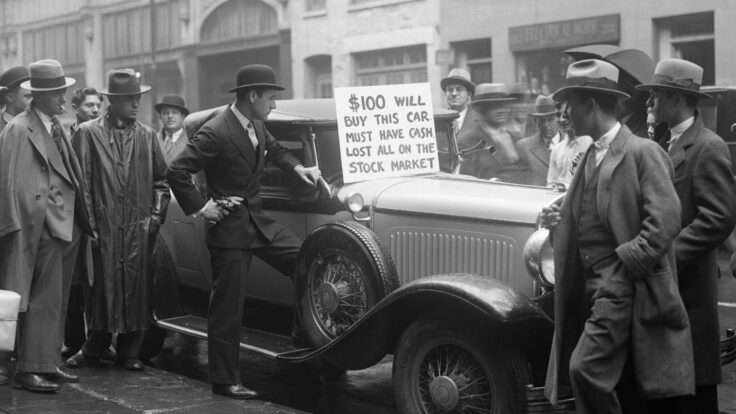
Financial history doesn’t repeat itself, but it does often rhyme. Amid a speculative frenzy, deregulation, trade wars, and a handful of megacaps propping up the markets, some of Wall Street’s brightest minds wonder whether 2026 might resemble 1929.
Marc Rowan
William D. Cohan • January 26, 2022
Street Credit
A recent string of bankruptcies and defaults suggests some challenges in the seemingly indomitable private credit market. And yet, according to some O.G.s, things have never been better. Apollo’s Marc Rowan lays bare the risks and rewards.
David Ellison
William D. Cohan • January 26, 2022
Ellisonology 101
In his first earnings call as C.E.O. of Paramount Skydance, David Ellison offered a masterclass in corporate optimism, promising “synergies” and artfully dodging questions about a possible Warner Bros. Discovery takeover. Alas, the time to act is here.


Michael Bloomberg
William D. Cohan • January 26, 2022
What Does Bloomberg Want for Bloomberg L.P.?
A modest proposal for how New York’s $100 billion man could bequeath his namesake, and its monumental profits in perpetuity.
Jim Chanos
William D. Cohan • January 26, 2022
The Mag Seven Itch
The market is notching record highs for the so-called Magnificent Seven—or should that be Mag 10?—but a subterranean counternarrative is forming as once-secure food and consumer staples crater, and cracks emerge in the $3 trillion private-credit boom.
Brian Roberts
William D. Cohan • January 26, 2022
The Brian Roberts–WBD Bull Case
A new analyst note highlights a heightened sense around Wall Street that Comcast co-C.E.O. Brian Roberts doesn’t merely want WBD, but also truly needs the company—and has a real shot at the asset.


Jamie Dimon
William D. Cohan • January 26, 2022
Jamie’s Castle in the Sky
Dimon’s $3 billion (or maybe as much as $5 billion, really) new headquarters is the physical embodiment of his fortress balance sheet and a metaphor for our fractional banking system. But the seeming permanence of its bronze facade shouldn’t fool old Wall Street hands, who know nothing is forever.


  • Terms
  • Privacy
  • Contact
  • FAQ
  • Careers
© 2026 Heat Media All rights reserved.
Create an account

Already a member? Log In

CREATE AN ACCOUNT with Google
OR YOUR EMAIL

OR

Use Email & Password Instead

USE EMAIL & PASSWORD
Password strength:

OR

Use Another Sign-Up Method

Become a member

All of the insider knowledge from our top tier authors, in your inbox.

Create an account

Already a member? Log In

Verify your email!

You should receive a link to log in at .

I DID NOT RECEIVE A LINK

Didn't get an email? Check your spam folder and confirm the spelling of your email, and try again. If you continue to have trouble, reach out to fritz@puck.news.

CREATE AN ACCOUNT with Google
CREATE AN ACCOUNT with Apple
OR USE EMAIL & PASSWORD
Password strength:

OR
Log In

Not a member yet? Sign up today

Log in with Google
Log in with Google
Log in with Apple
Log in with Apple
OR USE EMAIL & PASSWORD
Don't have a password or need to reset it?

OR
Verify Account

Verify your email!

You should receive a link to log in at .

I DID NOT RECEIVE A LINK

Didn't get an email? Check your spam folder and confirm the spelling of your email, and try again. If you continue to have trouble, reach out to fritz@puck.news.

YOUR EMAIL

Use a different sign in option instead

Member Exclusive

Get access to this story

Create a free account to preview Puck’s full offering, including exclusive articles, private emails from authors, and more.

Already a member? Sign in

Free article unlocked!

You are logged into a free account as unknown@example.com

ENJOY 1 FREE ARTICLE EACH MONTH

Subscribe today to join the inside conversation at the nexus of Wall Street, Washington, A.I., Hollywood, and more.

START 14-DAY FREE TRIAL

  • Daily articles and breaking news
  • Personal emails directly from our authors
  • Gift subscriber-only stories to friends & family
  • Unlimited access to archives
  • Bookmark articles to create a Reading List
  • Quarterly calls with industry experts from the power corners we cover