Hey there. Welcome back to Puck.
Today, I'm breaking some news on the world of MacKenzie Scott, who I believe to be the biggest story in the world of philanthropy. Below the fold, an inside look at how exactly MacKenzie's world operates: How her family office is structured; who at Bridgespan makes the decisions; and just how exactly this grand experiment in the world of big-money charity might fare.
As a reminder, you can buy a friend or an enemy a membership to Puck at this link or by emailing fritz@puck.news. And if this email was forwarded to you, you can sign up for previews of my columns here.
Thanks,
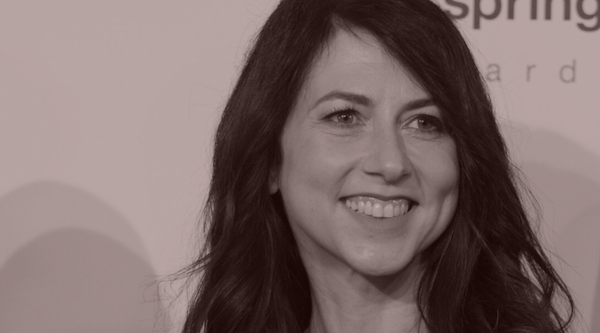
Ever since Scott split with her ex, Jeff Bezos, she has embarked on an utterly mysterious, totally disruptive, $9 billion-and-counting philanthropy spree. Here’s an inside guide to her aides and her checkbook. Something funny happened just before Christmas. MacKenzie Scott had returned to the spotlight to showcase her latest work and thinking about philanthropy, once again writing lyrically and provocatively on Medium about inequality and virtue. These twice-a-year reflections have become a celebrated ritual for the world’s fourth-wealthiest woman. That is why I was humored to find the Princeton-educated novelist somewhat sheepishly returning to the web just 48 hours later—first in a tweet, then in a postscript—brandishing screenshots of passages that she wished she had not edited out of her initial essay. MacKenzie Scott, like the rest of us, had been Misunderstood on the Internet.
What ensued wasn’t just a concession, or a plan gone awry. It was a rare display—really, the most vivid since she blasted Brad Stone’s biography of her then-husband Jeff Bezos with an iconic one-star Amazon review in 2013—that Scott was human, and not just some uber-polished deity hovering over the nonprofit sector. In her effort to not be the story, she had declined to offer any new details about her $9 billion-and-counting in donations, which of course had become a micro-drama itself. It was a tension I could sympathize with. I know many philanthropists who wrestle with how to be transparent without grandstanding or sounding like a showboat. I don’t think there’s an easy answer.
But the incident crystallized a contradiction about Scott. She is America’s single largest philanthropist—the singular force behind what I believe to be the most fascinating, even radical experiment in philanthropy today—and yet she remains an enigma, transparent in some remarkable ways and yet totally opaque in others. Every few weeks for the last two years, I receive a message from some friend, source or passerby asking the same question: How do they get in front of her? Scott’s enterprise, after all, has no website, no publicly identified staff or philanthropic vehicle. There is no way to even say hello, except to futilely plead in the comments section of one of her Medium posts, which some people do.
I usually recount to my interlocutors what it has been like to cover Scott. Ever since early 2020, I’ve regularly reached out to people I have identified as part of her team, with notes that I thought were solicitous, thoughtful and candid. I never heard anything back. This is true for other journalists, too, who similarly tell me that they’ve never detected a pulse, never mind an off-the-record steer, from Scott’s team. Investigative reporter Stephanie Clifford went to Herculean efforts to contact her when she spent months profiling her, and couldn’t get a single reply back from her camp. Despite being a student of Toni Morrison, I’ve been told through backchannels that Scott does not want her people engaging with outside writers. Even when she did seem to have some P.R. representative—I received a decline-to-comment email to a fact-checking question in 2020—the replies came from an unidentified person at an inquiries@ email address that is now silent. “Lol good luck” a source-friend in the sector texted when I told them I was working on this story.
This might all be strange, maybe even funny, if it wasn’t for Scott’s enormous power in the nonprofit sector. Scott has given away money at a faster clip than any living person in history. In 2020, for instance, she donated more money than did the next two biggest philanthropies—the Ford Foundation and the Bill and Melinda Gates Foundation—combined. And yet despite her enormous influence in society, Scott has appeared unsure of just how public a figure she wants to be. Like most people, she cares deeply about her public image, perhaps recognizing the complexity of her own story as someone who played an often under-appreciated role in the early days of Amazon before focusing on her family for years, only to re-emerge after a very public split, some tabloid theater, and the creation of an unprecedented philanthropic edifice. But she also cherishes her privacy, even though her donations unquestionably make her a public figure, whether she likes it or not.
And, if you couldn’t tell from the Amazon book review, she enjoys media criticism. “I want to de-emphasize privileged voices and cede focus to others, yet I know some media stories will focus on wealth,” she wrote this past June, a theme that recurs across her essays. “Putting large donors at the center of stories on social progress is a distortion of their role.” So when the time came for her second biannual post this December, Scott declined to list the places she donated, wagering (correctly) that it would reduce the amount of Scott-focused coverage. “You can’t have your cake and eat it too,” as one philanthropy adviser put it to me. “You can’t be transparent but also say, ‘Don’t pay attention to me’.”
The upshot is that Scott is not just America’s most powerful philanthropist. She is also America’s most mysterious philanthropist—a feat which only serves to maximize her allure. “EVERYBODY is asking around,” one very connected philanthropic consultant wrote me the other day when I asked if she had any insight into Scott’s philanthropic aides. Of course, it should be little surprise that I didn’t hear back from Scott’s team for this story.
MacKenzie Scott’s operation has fueled its own mythology—some of it true, some of it apocryphal. Based on my reporting, here’s a breakdown of how her machine does its business, much of which has not been made public before.
Scott’s family office is called Lost Horse LLC—that’s the Seattle-based vehicle set up in late 2019 that oversees her philanthropic donations, among other projects. I’m told the family office is run by president Carlos Rodrigues, who joined in mid-2020 after serving as a top executive at the family office of Josh Harris, a founder of the private equity firm Apollo. Other key aides at her family office who have been involved in communicating with nonprofits include Judy Wang and a philanthropic consultant named Hillary Chen. Chen previously worked in the Obama administration in the Office of Science and Technology under Tom Kalil, now a revered aide to Eric Schmidt. Chen then went on to work for Melinda French Gates at Pivotal Ventures before jumping to Team Scott. Scott’s and French Gates’ teams, including the principals, have grown quite close and talk regularly, I’m told. (Melinda’s team played a pivotal role in helping MacKenzie get set up in the early days.)
Other entities associated with Scott include Creative Property Investment LLC, which in 2020 executed a deal for a $4 million home in Seattle’s affluent Madison Park neighborhood. Other Scott friends involved in her affairs include Hether Clark and, according to documents, Hollywood wealth manager Mara Hofman, who was involved with Scott’s previous, smaller philanthropic entity, an anti-bullying group called Bystander Revolution. (There’s a third LLC I believe to be involved—feel free to email me privately for the details.)
Scott maintains at least three donor-advised fund accounts: one at the National Philanthropic Trust called “The 2020 Fund”; a second at Fidelity Charitable, the nation’s biggest DAF sponsor; and a third at Chicago Community Trust, the city’s community foundation. In a real retro move, her team recently moved into some physical office space in a beautiful new building in Seattle’s hipster Fremont neighborhood.
The experience of receiving a donation from the family office, as described to me, is highly peculiar. In a seemingly random act of kindness, a nonprofit C.E.O. receives an email from one of Scott’s aides, who have almost no online presence—no real LinkedIn, no URL accessible for Lost Horse. In the email, the aide claims to represent an anonymous major donor requesting a phone call. Oftentimes, the C.E.O. understandably perceives the email as sketchy, if not an outright scam, so they’ll pass it on to a colleague or a friend to double-check their operational security. Inevitably, some just take a flier. “They can’t hack me if I take the phone call, right?” as one C.E.O. said he put it to his tech support.
On the calls, they’re told that they’re speaking with emissaries of MacKenzie Scott and her science-teacher husband, Dan Jewett, and that they’ve won the philanthropic lottery: They have been granted a large, unrestricted donation that can come from a donor-advised fund, more-or-less whenever they’d like. It is not uncommon for grantees to cry. Nonprofits are asked to provide their wiring information to receive the contribution; to deliver a yearly, three-pages-or-less report on the anniversary of the gift for the next three years; and, above all else, to swear to total secrecy until the gifts are announced publicly. C.E.O.s are often asked not to inform their own senior staff and board members, a request that some nonprofit heads, who were made uncomfortable, have plainly ignored.
The second route to a large donation requires passing muster via a more traditional vetting operation helmed by the team at the consulting giant Bridgespan. (Other groups may be involved, too—one source told me that they have had some interactions with non-Bridgespan independent consultants.) Multiple rival consultants who are unaffiliated with Scott have recounted to me calls from Bridgespan aides who ask them, with some discretion, to share their due diligence on a nonprofit, only to see the nonprofit’s name appear in a Medium money-bomb a few months later. By the time that Bridgespan reaches out to the nonprofit for a diligence call, the group is typically already in the final stages. (Bridgespan, as a policy, doesn’t comment on individual clients.)
A sizable team of consultants at Bridgespan is involved, although the person most commonly identified as running point is firm co-founder Tom Tierney. (Also involved: Tierney’s co-founder, Jeff Bradach, and the team run by San Francisco partner Alison Powell.) Back in the day, before the consulting giant Bain spun out Bridgespan as a nonprofit in 2000, Tierney succeeded Mitt Romney as Bain’s leader. As one of his longtime friends told me, Tierney is a “cerebral” type—“not necessarily the guy you go out to a beer with”—and has a pretty crazy Rolodex that allows him to serve as a donor-whisperer. “He frames his life in terms of how much impact can you have per hour worked. If that’s your frame, where am I most leveraged?,” the friend continued. “I’m most leveraged talking to multi-billionaires about how I can allocate their money.”
Tierney’s firm is considered something of the gold-standard in nonprofit consulting; Bridgespan, with its hierarchical model and its emphasis on deep research and “thought leadership,” has the culture of a traditional management consulting shop, not dissimilar from Bain. It is a node of the entire philanthropy sector, with high-powered clients, such as the TPG’s Rise Fund and the Gates Foundation, where Tierney helped launch the Giving Pledge. (Disclosure: TPG is an investor in Puck.)
Scott promised in her addendum to unveil a website with more information about her team, donations and process. That is welcome, because hers is one of the grandest experiments in the history of the social sector, and the public would benefit from greater visibility into the lab hands who are doing the science. Until recently, it had been gospel in philanthropy that successful donors needed to conducts years, if not decades of study; needed legions of highly-paid staffers embedded in posh high-rises all around the globe; and needed a plodding bureaucracy to vet each and every opportunity in order to maximize the good-per-dollar. That’s why, say, the Gates Foundation has 1,700 staff, or why effective altruists flock to randomized-controlled trials, or why Giving Pledge signatories often wait until their deathbeds to actually make hefty contributions. “I have a PhD in understanding how [donors] work and how they like to give money and how they like to be cultivated,” said one MacKenzie Scott grantee. “They want you to need them. They want you to build a relationship. And she’s the only person that I’ve ever seen who has not followed that same playbook.”
With her own idiosyncratic process, Scott—alongside do-it-on-the-cheap donors like Jack Dorsey, who, because he has minimal staff and discloses contributions in real time on a Google Sheet, is frequently mentioned in the same breath—has threatened to obliterate this consensus. A donor-adviser the other day recounted a conversation he had with a San Francisco foundation head who told him that they felt MacKenzie represented a “very direct threat to their business model.” That seems ludicrous on its face, but on second thought, I’m not so sure I disagree. If Scott, with virtually no staff, manages to give away money at a faster clip than all of those Giving Pledge signatories—and not to sacrifice effectiveness in return for speed and scale—she will indeed expose the old fogeys at the big foundations as gratuitous overhead who are promoting a system because it promotes themselves, which is the opposite of a good deed. I know that many in the nonprofit industry are prepared to closely track the deployment of the MacKenzie checks. Academic books and Harvard Business School case studies will end up memorializing this era, I’m sure.
I’ve argued that some pundits and journalists have been too quick to crown Scott’s model as a raging success. The truth is that we probably won’t know about her track record for a few years. It is possible, of course, that the donations flop, reaffirming the need for the status quo lumbering bureaucracy. I will be maintaining an open mind. And yet at the least, I know many in the nonprofit sector are glad that Lost Horse, Bridgespan, and MacKenzie Scott are trying something truly unique—and introducing some rare innovation into a staid industry, where men often follow the moves of the men that preceded them. “How do we facilitate more divorces among the tech crowd?” another MacKenzie grantee wondered to me. “It would be so much better for philanthropy.”
FOUR STORIES WE'RE TALKING ABOUT 
'Yellowstone' could have been one of the biggest success stories of the streaming age. Here’s what actually happened. MATTHEW BELLONI 
Notes on the Cruz-Carlson struggle session, the persistence of MTG, and the slow-motion fracturing of the Trump coalition. TINA NGUYEN 
The world's richest mega-philanthropists have always presented themselves as above politics. That's begun to change. TEDDY SCHLEIFER 
Notes on the vaccination crackdown in banking, Zoom M&A, the legacy of Bob Iger, and Silicon Valley's new digital gold rush. WILLIAM D. COHAN 
You received this message because you signed up to receive emails from Puck.
Was this email forwarded to you?
Sent to {{customer.email}}
Puck is published by Heat Media LLC.
For support, just reply to this e-mail. For brand partnerships, email ads@puck.news |


SHARE