 |
|
Happy Sunday, welcome back to Dry Powder.
|
|
This afternoon, a look at three distinct Wall Street plotlines: Iger’s Disney+ dilemma and the fraught Big Media landscape; our politicians’ frustrating game of debt-ceiling Russian Roulette; and a few words on SoftBank, which is again making aggressive moves in venture investing.
But first…
- A rare Commanders victory: Just a quick kick-off note about the new high bar—$6 billion—set this past week for a NFL franchise with the purchase of the mediocre-at-best Washington Commanders by a group of savvy Wall Street investors, led by Josh Harris, one of the founding partners of Apollo Global Management, the asset management behemoth. Since Josh and Apollo parted ways, in 2021, he has more or less moved to Miami, raised an impressive $5 billion for his new buyout fund, 26 North Partners, and sealed the deal to buy the Commanders, along with his partners, billionaires Mitch Rales (of the famous Rales Brothers), David Blitzer (the Blackstone executive with whom Harris also owns the Philadelphia 76ers… Go Celtics!) and Magic Johnson, also a billionaire.
Harris’s group also includes his boyhood friend, Mark Ein, another buyout billionaire, Google billionaire and Democratic rainmaker Eric Schmidt, and Lee Ainslie, the founder of hedge fund Maverick Capital. Harris & Co. still must get the approval from a majority of the other NFL owners to finalize the deal but, given that the $6 purchase price is a whopping 29 percent higher than the staggering $4.65 billion paid by one strain of the Walton family for the Denver Broncos a year ago, approval should not be a problem.
|
 |
| Iger’s Existential Question |
| There’s no erasing his historic earlier tenure at Disney, but the company is looking increasingly vulnerable, especially since Iger’s last big deal will likely be the $9 billion he’d spend to buy Hulu. |
|
|
|
| My, my, it’s tough out there in Big Media these days: streamers are losing subscribers, most are losing money, linear TV is in decline, there’s a writers strike that looks like it’s here to stay, and Wall Street research analysts and investors are losing faith. What’s a legendary C.E.O. like Bob Iger, now some six months into his second tour of duty, to do?
The question is becoming harder to answer, especially after Disney announced last week that it lost some 4 million streaming subscribers in its latest quarter but nevertheless managed to cut its streaming losses to around $660 million, from more than $1 billion—exceeding analyst expectations—and yet the stock still got pounded. As Warren Buffett said last weekend regarding Berkshire’s large and losing investment in Paramount Global, the trouble is that there are “a bunch of companies who don’t want to quit” highly-expensive, extremely expensive, and low-margin streaming business. Ultimately, profitability requires fewer competitors and higher prices.
Buffett, who has always been skeptical of the economics of streaming, went on to compare the dilemma to what it was like for him to own a gas station in Omaha when he was in his 20s: There was one station across the street that kept cutting prices every time he did, and so there was just no way for him to increase his margin. In other words, unless the price that people are willing to pay increases dramatically, the streaming business is not going to be a good one for the foreseeable future. (Many on Wall Street assume that Berkshire’s Paramount position was advocated by Buffett and Charlie Munger’s heir apparents. This is not investment advice.)
It’s not just Buffett who is losing faith in the streaming business; some Wall Street media analysts are also scratching their heads more and more. Peter Supino, at Wolfe Research, downgraded Disney’s stock on May 12, without a new price target, raising the question about where the bottom might be. “With Disney+ subscriber forecasts looking risky, the linear TV outlook deteriorating, $2.5 [billion] of hard cost reductions now in consensus, and content amortization set to catch-up to cash spend in the coming years… we downgrade DIS,” Supino wrote. He adjusted his price target for the stock from $133 a share to “N/A,” which, needless to say, is more than a bit unusual and provocative.
On the call with analysts, last week, Iger sounded like it had been a sobering three months in Burbank as ongoing losses on the Disney+ side of the ledger took their toll on the company’s income statement. He had put “everything on the table” for reconsideration after he came back to the company last November, he said, and now he’s come to the realization that “the best chance for us to grow this business,” is via “a combination of the content that is on Disney+ with general entertainment.” He called what effectively would be the combination of Disney+ and Hulu into one streaming service “a very strong combination.”
I agree with the veteran cable executive Tom Rogers, who argued Thursday on CNBC that surely this was Iger’s way of saying that he knows now that Comcast is a seller of its one-third stake in Hulu and that Disney will be the buyer. Why else would Iger be talking about combining Hulu and Disney+ so publicly, setting expectations so firmly? Rogers pegged Disney’s purchase price at $9 billion, in and around the floor price set years ago. (Is Comcast selling to free up cash for a future WBD deal? Again, not investment advice…)
But Rogers also fretted that a great company, such as Disney, is running out of room, at its current stock price, to profitably manage the transition from linear TV (a business that once minted money) to streaming (a model that really only Netflix has mastered, at least when it comes to profitability). “They’re not at the precipice yet but those declines are precipitous,” Rogers said. “And while we’ve seen the whole streaming analyst world moved from sub numbers to the question of profitability, where it hasn’t moved yet and where all the media companies need to be pressed is: Is the growth of streaming as it moves toward profitability ever going to make up for the decline in the traditional television business? No one has really demonstrated yet how they believe the hole left by the decline of legacy media is going to be made up by streaming. And until that happens, it’s really hard to get too excited about anything on the streaming side, because that’s the essential question.”
So where does that leave Iger? Disney’s stock is essentially flat from when he returned. The decline of the linear TV business is accelerating and, at least for now, profits from the streaming business aren’t replacing them. It looks like Iger is going to have to add another $9 billion in debt to the company’s roughly $50 billion of existing debt to pay Comcast for Hulu, since I don’t see Brian Roberts taking Disney stock.
This is an existential moment for Iger and his legacy. There’s no erasing his earlier tenure at Disney, when he built it up into a behemoth by acquisition: the genius deals for Pixar, Marvel, LucasFilm and Fox, among others, at a cost of more than $100 billion. Disney’s market cap—equity plus debt—is now more than $200 billion. It’s the industry’s powerhouse, for sure. But it’s looking increasingly vulnerable, especially since Iger’s last big deal is looking more and more likely to be the $9 billion he would spend on Hulu, adding to the company’s debt load while also doubling down on a streaming business that has more red ink to wade through as far as the eye can see. That’s got to hurt. But he probably has no choice. Yes, Iger (round two) has seen off the threats from the hedge fund heavyweights Nelson Peltz and Dan Loeb, but he has not solved the streaming enigma yet. Maybe that’s a task he’ll leave for his second successor. |
|
|
| Meanwhile, Janet Yellen is all but shouting from the rooftops that “an economic and financial catastrophe” is looming should a debt-limit accord not be reached. Jamie Dimon seems to share her anxiety. Mostly, I’m just frustrated. Revisiting for the umpteenth time the debt ceiling debate is the very definition of insanity. Why are our politicians playing Russian Roulette with our world-beating capital markets? And why do they keep doing it over and over again?
You really have to wonder what is wrong with Republicans and just what they think they are trying to accomplish. Our capital markets are the envy of the world. Our dollar is the world’s dominant reserve currency, in large part because we have never defaulted on our debt payments—not since the Revolutionary War, anyway—and the full faith and credit of the powerful U.S. government is behind our debts and our currency. Our elected representatives are now just going to throw that credibility out the window? To what end? For whose benefit exactly? Because let me tell you something, Kevin McCarthy: Everyone in America will be a loser as a result of the government defaulting on its debts.
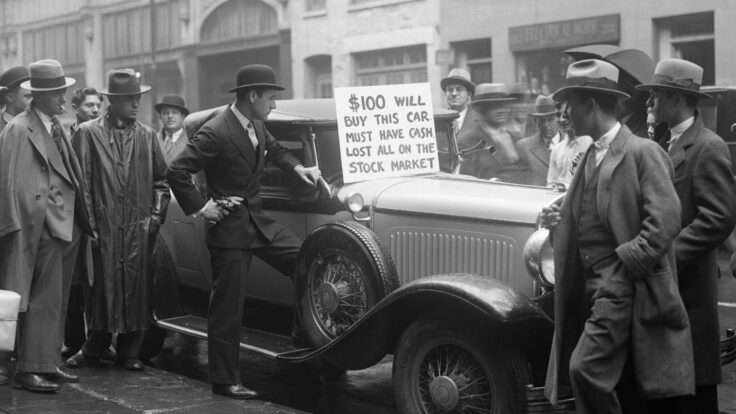
The federal government, after all, owes something like $32 trillion in debt to its creditors—one of the largest being China. And guess what happens when, and if, we default on it? The cost of borrowing, already much higher than it has been for the 13 years between 2009 and 2022, will go higher, much higher. What, then, do you think will happen to the cost of the money that American consumers borrow for mortgages, for car loans, and for the use of credit cards? It will soar, too. The rate corporations will have to pay to borrow money will also rise. We will be regarded as a dead-beat nation, no different than other nations that have defaulted on their debt, like Greece, Russia and Argentina.
And speaking of Argentina, from which I returned recently: If we think it’s tough for the Federal Reserve to curb inflation when it’s running at 6 percent a year, try inflation Argentina style. Inflation in Argentina these days is running at an annual rate of more than 100 percent. It has not only fostered political unrest and the increasing possibility that a wild right-winger might be elected president come this fall, but there is also a thriving black market for Argentina pesos in the back alleys of Buenos Aires. The official dollar exchange rate is about 195 pesos per $1. But on the black market, in the windy streets of the capital’s financial district, the rate is sotto voce closer to 390 pesos to the dollar. People can’t get enough dollars, preferably in the form of 100s, and they’ve taken to carrying around backpacks for the thick wad of pesos they will need to buy anything beyond the trifling things.
Are we prepared to deal with Argentina-style inflation if we default on our debts? Needless to say, nobody with a shred of financial sense—from Wall Street to Main Street—wants to see a debt default. Why can’t our elected leaders, for once, avoid the game of political wills and leverage and just do what needs to be done for the good of everyone? What a mess. |
|
|
| Finally, a few words on Softbank, which is again making aggressive moves in venture investing (hello, A.I.!) after its post-WeWork, post-QE, post-tech correction fall back to earth. Obviously, investing in Softbank, or alongside Softbank, is not for the faint of heart. I suspect that the big Softbank investors, such as Middle Eastern sovereign wealth funds, wouldn’t be along for the ride if not for the preferred stock dividends Softbank is paying them; any potential upside beyond that is just gravy, it seems to me. If you are Saudi Arabia or the United Arab Emirates, then fine, why not take a flier? There is always more money where that comes from. But for smaller investors, the potential rewards associated with an investment in Softbank don’t seem to justify the potential risks.
Softbank has always been a bit of an enigma, to be honest, with its massive swings into the unknown. On the one hand, its investments in Alibaba and Ant are home runs, but a whole host of others ones, especially including WeWork, ended up being unmitigated disasters. Now SoftBank C.E.O. Masayoshi Son is swinging for the fences again, having announced his intention to refocus Softbank’s investing strategy into artificial intelligence companies and technologies. If he’s right, and the current Silicon Valley fad turns out to be as transformative as the internet, then SoftBank could be among the biggest winners. If he’s wrong, well, Son has shown bad judgment before and seemingly paid the price for it, via a tarnished reputation if nothing else.
This kind of investing is not for me and shouldn’t be for other retail investors either. (But, again, not investment advice…) Let’s face it: This is a tough market for anyone. The equity markets have become very volatile again and just seem to be going sideways, although they have recovered some of their losses from 2021. I can’t quite believe I am writing this but it’s the bond market, not the stock market, that is looking more and more attractive as an investment opportunity for the first time in 13 years. (See above.) The bond market might even get more attractive in the coming months if the Fed keeps raising rates or if there is the aforementioned default on our government debt. Then things might start to get really interesting in the bond market if rates soar in the inevitable overreaction in the markets to the default. As Maddow likes to say, “Watch this space.” |
|
|
|
| FOUR STORIES WE’RE TALKING ABOUT |
 |
| WGA Red Lines |
| On the powder keg within the strike negotiations. |
| MATTHEW BELLONI |
|
 |
|
 |
| Tucker & Elon |
| Notes on Carlson’s pivot to social video. |
| TINA NGUYEN |
|
 |
|
|
|
|
|
 |
|
|
|
Need help? Review our FAQs
page or contact
us for assistance. For brand partnerships, email ads@puck.news.
|
|
|
|
Puck is published by Heat Media LLC. 227 W 17th St New York, NY 10011.
|
|
|
|