{{ 'now' | timezone: 'America/New_York' | date: '%b %d, %Y' }} |
|
|

| Jon Kelly
|
|
Good morning,
As always, it was an incredible week: Matt Belloni had a candid chat
about SNL past and future with the legendary Lorne Michaels; Eriq Gardner unearthed a new legal issue bedeviling David Ellison; Julia Alexander presaged Starz’s scale issues and ESPN’s streaming challenges; John Ourand surfaced fresh gripes about Bristol’s O.T.T. future; Dylan Byers weighed in on MSNBC’s identity crisis; Bill Cohan deduced Trump’s Fed
challenges and scrutinized Perplexity’s $35 billion Hail Mary; Ian Krietzberg revealed the motives behind Mark Zuckerberg’s A.I. leadership switcheroo; Lauren Sherman unveiled Proenza Schouler’s new designer and Nicole Kidman’s Chanel play; Rachel Strugatz dug into Sephora’s Huda problem; Sarah Shapiro explored the pro sports bling ring; guest star Teri Agins
philosophized on how we became a fast fashion nation; Marion Maneker dabbled in the art metaverse; and Julie Davich diagnosed Sotheby’s post–Antiques Roadshow hangover.
Meanwhile, Julia Ioffe translated the fallout from the Trump-Putin confab; Leigh Ann Caldwell pinpointed the president’s next theater of gerrymandering; John Heilemann studied the latest
Gavin-ology; and Abby Livingston covered the fault lines in California.
Finally, if you’re in D.C. on September 2, Abby Livingston is hosting a special Puck Live event with House Agriculture Committee chairman Glenn “GT” Thompson from 5 to 8 p.m. ET, presented by the Modern Ag Alliance. You can RSVP
here.
Check out these stories, and others, via the links below. And stick around for the backstory on how it all came together. |
|
|
A MESSAGE FROM OUR SPONSOR |
|
|

| FASHION
|
|
Lauren Sherman
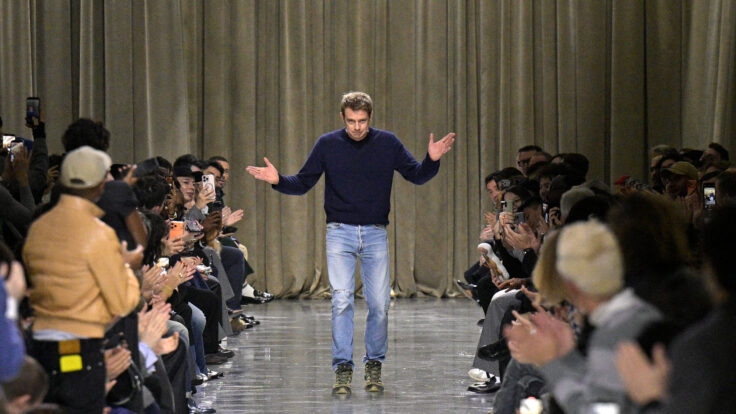
reveals the new Proenza Schouler designer, details Nicole Kidman’s potential Chanel bag, and examines Prada’s beauty issues.
and…
Rachel Strugatz
reports on Sephora’s counter to a very chilling Huda Kattan scandal.
meanwhile…
Sarah Shapiro enters the realm of the tunnel fit.
and a special
guest…
Teri Agins, the trailblazing fashion journalist, chronicles how fast fashion took over the culture. |
|
|

| ART MARKET
|
|
Marion Maneker
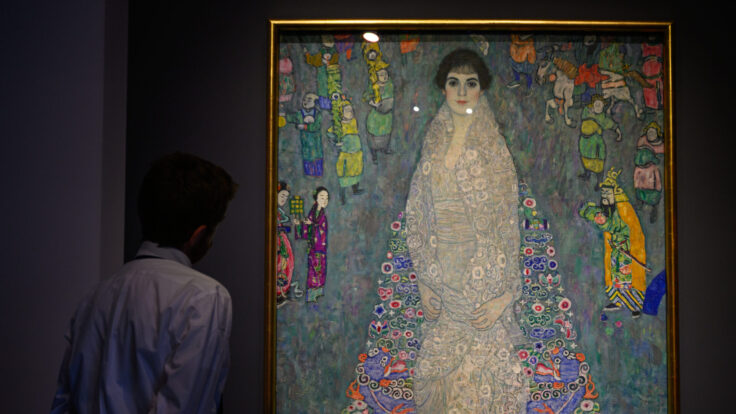
details a newish Wildenstein initiative and ponders art in the age of A.I.
and…
Julie Davich
surveys an upheaval in the decorative arts marketplace. |
|
|

| HOLLYWOOD
|
|
Matt Belloni
presents his exclusive conversation with the one and only Lorne Michaels about comedy in the age of Trump, the Colbert cancellation, and the future of SNL.
and…
Eriq Gardner uncovers David Ellison’s latest Top Gun legal headache.
meanwhile…
Julia Alexander predicts the endgame for Starz, and hears from the talented casting directors
behind three Emmy-nominated Apple TV+ shows. |
|
|

| A.I.
|
|
Ian Krietzberg
explains what’s really behind Zuck’s A.I. shake-up. |
|
|

| MEDIA
|
|
Dylan Byers
decodes MSNBC’s naming blues.
and…
John Ourand studies the collateral damage in the ESPN streaming rollout.
and…
Julia Alexander
prophesizes the agonies and ecstasies of sports habits in the A.D.D. age. |
|
|

| WALL STREET
|
|
Bill Cohan
rationalizes Perplexity’s $35 billion offer for Google Chrome and digs into the Jay Powell dot plot. |
|
|

| WASHINGTON
|
|
Leigh Ann Caldwell
unveils the next theater of Trump’s gerrymandering war.
and…
Abby Livingston investigates the vestigial Pelosi-McCarthy blood feud in
California.
and…
Julia Ioffe dissects how Putin played the president at his own geopolitical game. |
|
|

| PODCASTS
|
|
Dylan and producer turned newsfluencer Mosheh Oinounou discuss the
transformation of TV news on The Grill Room.
and…
Yahoo Media Group president Ryan Spoon unveils his new FAST play to Ourand on The Varsity.
and…
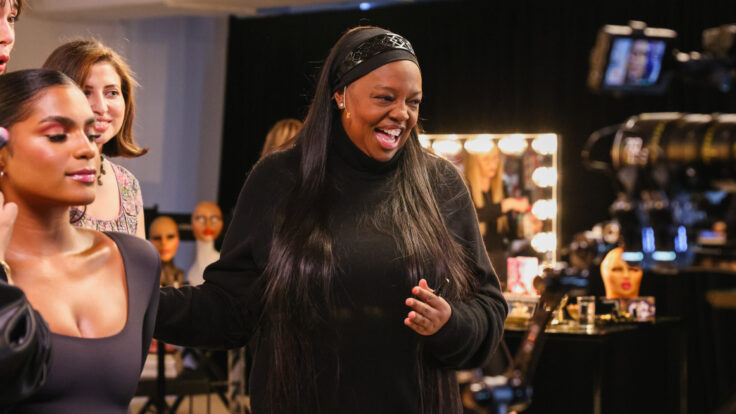
Lauren welcomes the designer and founder
Aurora James back to Fashion People.
and…
John Heilemann and old Obama comms director Dan Pfeiffer assess the ’28 field on Impolitic.
and…
Matt
and Fox One C.E.O. Pete Distad discuss the Murdochs’ streaming ambitions on The Town.
and…
Peter Hamby and Bill delve into the A.I. bubble on The
Powers That Be. |
|
|
As a reminder, you can update your profile at any time to get more stories like these directly in your
inbox. Click here to customize your email settings. |
You don’t need me to tell you that we’re living through an age of reinvention. For generations, companies
settled on tried-and-tested formulas and competed on marketing, scale, and the most incremental feature adjustments. The if-it-ain’t-broke mantra reverberated across industries and professions, while the very notion of innovation—a now ubiquitous, increasingly corrupted piece of corporate pablum—was the kind of sophistry associated with mad-hatter lab scientists and regrettable misadventures, like New Coke.
This obviously changed rapidly, more than a quarter-century ago,
as Microsoft and Google, among others, began to introduce a series of cascading platform shifts into our economy—the consumer internet, followed by social media, mobile, and artificial intelligence, etcetera—that have since made the analog era of my youth feel positively prehistoric. Throughout this era, even the most hegemonic businesses were confronted with a startling but entirely obvious reality: They didn’t simply have to transform themselves; they had to make transformation,
itself, a key function of their operating plan, or else they would be toast. Few companies have embodied this as naturally as the O.G.s, Microsoft and Google, which have a combined market cap of nearly $6 trillion and have nimbly evolved from software and search to a full array of tools and capabilities—hardware, media, gaming, cloud, and so on—before establishing themselves at the forefront in the A.I. race. |
|
|
A MESSAGE FROM OUR SPONSOR |
|
|
For reasons both vexing and understandable (I have my own pet theories), traditional media has had a
challenging time embracing this reality. And yet a series of recent events highlighted various companies’ quest for their own reinvention: Earlier this week, MSNBC—originally conceived as a test-tube baby between Microsoft and GE’s NBCU—announced that it will soon be reborn as MSNOW under Versant, the Comcast cable spinoff. Meanwhile, Fox and ESPN finally entered the streaming space, albeit with decidedly different objectives.
Of course, media products don’t scale like software; they are
imbued with ever-changing facts, personalities, and touchpoints that an algorithm will never be able to manage. And yet, as Marc Andreessen once forewarned, software has indeed eaten the world, and user demands for how to experience these products are continually shifting. In Apocalypse MSNOW, Dylan Byers digs into the real
evolution beneath the simple name change at 30 Rock. Can a very profitable TV business gradually transform itself for an audience that isn’t reading the programming guide on the back of their newspaper? And can president Rebecca Kutler achieve this subtle evolution without alienating the older audience that feeds her revenue? Indeed, the time to figure it out is right now.
Meanwhile, I’ve often been transfixed by the media industry’s response to the streaming
wars. A decade ago, the industry’s hegemons awoke from their collective stupor to the understanding that Netflix had been eating their lunch, and merely extending its lead by licensing their content. Alas, in retrospect, their reaction was an overreaction. Disney, Comcast, Paramount, Time Warner, et al. collectively invested billions in a new streaming business model that would turn out to be far more capital-intensive and less lucrative to second-movers than many realized. The
industry has since reset, of course, and belt-tightening has ensued.
In some ways, the ESPN streaming service and Fox One represent the sort of second-marriage iteration of the business. ESPN’s new product isn’t aimed at full-scale disruption, but rather luring a critical mass of cord-cutters, cord-nevers, sports bettors, and A.D.D. second screeners. Similarly, Fox One is targeting the millions of consumers who love the NFL but don’t want to pay for cable. Notably, these two entities are
hedging their bets by offering a bundled package for $40 a month—the latest sign that the era of rampant spending and walled gardens has been replaced by a more nuanced latticework of collaboration.
If you only have time to read one piece this weekend, I’d suggest curling up with Julia Alexander’s latest masterstroke, ESPN Meets Gen
A.D.D., which offers a primer on how the most dominant player in sports and cable history is preparing for a new age of consumption. The piece is filled with unique insights on the space, and its underlying theme couldn’t be clearer: In the churn of industrial revolutions, the biggest players are also the most vulnerable. Indeed, that’s one of the hallmarks of our time, and exactly what you should expect to read about in Puck. |
|
|
Need help? Review our FAQ page or contact us for assistance. For brand partnerships, email ads@puck.news. You received this email because you signed up to receive emails from Puck, or as part of your Puck account associated with {{customer.email}}. To stop receiving this newsletter and/or manage all your email preferences, click here. |
Puck is published by Heat Media LLC. 107 Greenwich St, New York, NY 10006 |
|
|
|