 |

|
|
Welcome back to Dry Powder. I’m Bill Cohan.
|
|
Will Nelson Peltz’s finally released, 133-page white paper outlining his plan for Disney to “Restore the Magic” land him the two board seats he’s long been pining for? In today’s issue, my thoughts on what his paper gets right, what it gets wrong, and what I think happens next.
But first: My partner Eriq Gardner has the scoop on an extraordinary boardroom development, wherein a group of shareholder lawyers are using the recent $55 billion ruling against Elon Musk to turn the screws on Jeff Bezos—for failing to discuss a deal with Musk. Talk about irony…
|
| Elon Aftershocks & Bezos’ Blues |
|
|
Is there a bigger loser in the history of the chancery court than Elon Musk, who was recently ordered to relinquish $55 billion in compensation after a judge struck down his Tesla pay package? The jury is still out, especially if Musk files an appeal. In the meantime, however, Tornetta v. Musk has already produced a surprising legal aftershock: Shareholder lawyers are seeking to leverage that landmark decision to go after Jeff Bezos. And in a cosmic twist, it’s Musk who most stands to benefit.
Bezos, of course, isn’t just the chairman of Amazon. He’s also Musk’s leading competitor in the commercial spaceflight industry via Blue Origin, which boasts more than 11,000 employees and has sent more than a dozen payloads into orbit. However, Blue Origin has always played second fiddle to Musk’s SpaceX in terms of launches, government contracts, and hype. Over the years, Musk has seemingly relished his upper hand, taunting Bezos with his successes in the billionaire space race.
Inside Amazon, however, it’s SpaceX that’s being treated like a second-tier competitor. Back in 2019, Amazon announced “Project Kuiper,” a high-speed, satellite-based internet service that would require sending hundreds of payloads into orbit. Perhaps unsurprisingly, Bezos’s Blue Origin secured the contract; more worryingly, from a fiduciary perspective, SpaceX was allegedly never invited to bid on the project.
Sure, there could be a justifiable reason for that. Kuiper will compete with Starlink, Musk’s own satellite-based internet service. But lawyers at Grant & Eisenhofer, representing a Cleveland pension fund, are crying foul. In August, the firm accused Amazon of essentially prioritizing Bezos’s ego—and his feud with Musk—over the best interest of shareholders, who might have seen lower costs from a deal with SpaceX. Musk himself, they note, has stated that SpaceX’s launch services are available to Starlink’s competitors. Instead, according to the complaint, the Amazon board’s audit committee held two brief meetings about the matter and “rubber-stamped” the multibillion-dollar contract with Blue Origin.
Amazon’s rebuttal is being handled by Wachtell’s William Savitt (yes, the same legal luminary who faced off against Musk in the Twitter saga), which has made a case for the integrity of its board. Watchell attempted to wave away any whiff of fiduciary oversight gone awry, arguing that while directors “can always do more,” bad faith claims should be reserved for “disciplining directors who deliberately do essentially nothing.”
But in the wake of Tornetta, the shareholder lawyers have seized an opening. On February 16, they revised their complaint to underscore Bezos’s status as a “superstar,” like Musk, who is “so familiar to the world that no first name is required,” shrugging off how Bezos relinquished the C.E.O. role to Andy Jassy and now owns just 12 percent of Amazon’s stock. They asserted that Amazon’s board remains under Bezos’s spell, describing it as having “succumbed to a controlled mindset.”
Whether this strategy succeeds remains uncertain, but it could lead to an investigation of Bezos’s influence over his board, and whether additional measures beyond Bezos’s recusal were necessary to ensure the fairness of the Amazon-Blue Origin deal. Ironically, this might be the one occasion where Bezos finds himself rooting for Musk’s success in the courtroom: If Tornetta is upheld, it could establish a tougher governance standard. —Eriq Gardner
|
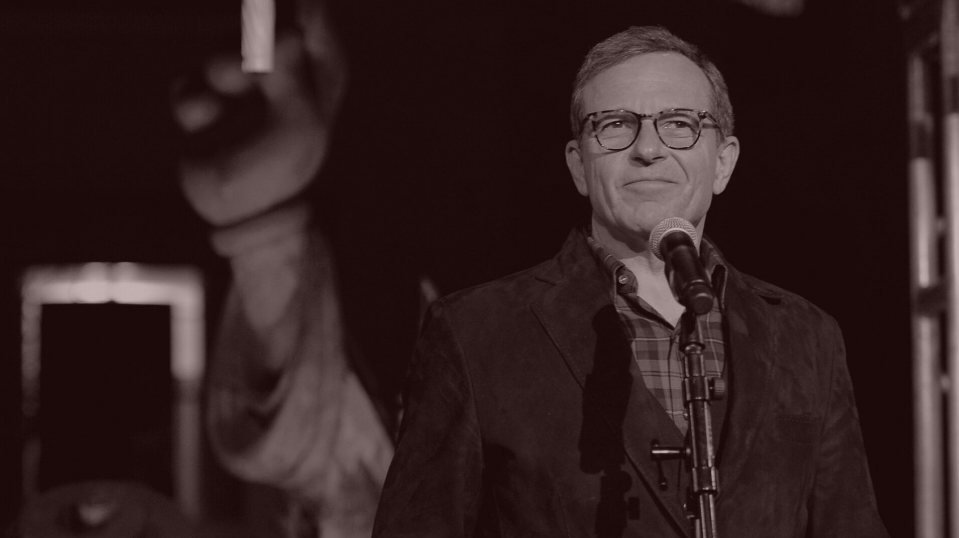 |
| Iger’s Crocodile Tears |
| A candid assessment of Nelson Peltz’s 133-page dissertation on Disney—the latest salvo in his failing proxy battle. |
|
|
|
| At long last, Nelson Peltz, lovingly known to my loyal readers as “the Smiling Crocodile” for his past boardroom chicanery, dropped his long-promised white paper on Disney this past week. At 133 pages, Peltz’s PowerPoint passes the ostensible heft test, one important measure of relevance on Wall Street. But does it pass the substance test? To me, it’s a mixed bag.
On the one hand, the latest version of his plan to “Restore the Magic” does a decent job of identifying Disney’s problems: the obvious and ubiquitously mentioned lack of a clear succession plan; the $14 billion lost to date in Disney’s direct-to-consumer businesses; the recent spate of films that have disappointed at the box office; the decline in Disney’s operating margins; the underwhelming returns, so far, on Bob Iger’s decision to spend $72 billion on the 21st Century Fox assets; the failure to take action, starting in 2015, when ESPN started shedding cable subscribers, and on and on.
Nelson also took aim at the Disney board of directors. “We believe the Board suffers from a culture that impedes effective oversight,” Peltz wrote in the PowerPoint. “The Directors, in our view, lack focus, alignment and accountability, causing the Board to fail at fulfilling its primary responsibilities.” |
|
A MESSAGE FROM OUR SPONSOR
|
|
|
THE GENTLEMEN sees Eddie Horniman (Theo James) unexpectedly inherit his father’s sizable country estate - only to discover it’s part of a cannabis empire. Moreover, a host of unsavory characters from Britain’s criminal underworld want a piece of the operation. Determined to extricate his family from their clutches, Eddie tries to play the gangsters at their own game. However, as he gets sucked into the world of criminality, he begins to find a taste for it.
Now Available on Netflix
|
|
|
| The Smiling Crocodile also took issue with the idea that Iger has managed to solve some of Disney’s problems since he returned to the corner office in Burbank some 15 months ago. Peltz claims that Disney’s share price is “barely” higher than it was a year ago (not true, it’s up 15 percent). But his other assertions ring truer, including that Disney’s streaming business, with some $22 billion of run-rate revenue, is still losing money, with no timetable for profitability; that the studio business is still suffering from a lack of hits and has lost more than $200 million in the last quarter; that ESPN announced two recent strategic initiatives but without any meaningful details; and that the purpose of Disney’s recent $1.5 billion investment in Epic Games seems open-ended and vague. Peltz also has argued that, under Iger, Disney’s “culture” has become dysfunctional. “It appears that executives who express contrarian views risk being pushed out and that Disney’s culture seemingly rewards those who avoid debate,” he wrote in the white paper.
And yet, the 81-year-old hedge fund manager and co-founder of Trian, who has routinely pulled off C.E.O. defenestrations in the past, is certain to lose this proxy battle. After all, the most notable element of this white paper is that no one on Wall Street really cares. Will that force Peltz to capitulate before the shareholder vote on April 3? Alas, sometimes activist investors have to launch a doomed proxy fight just to prove they still can, as my friend Rob Kindler, the lawyer turned banker turned rainmaker at Paul Weiss, told me the other day.
While Peltz has been heralding his “Restore the Magic” campaigns, Iger has been quietly pivoting Disney and consolidating his support—outfoxing the crocodile, as it were. The Disney stock price keeps gaining; it currently sits around $110 a share, up 35 percent in the last six months. And this past week, Iger won the blessing of nine members of the Disney family, including some previously inhospitable to him. (My partner Matt Belloni also recently noted that the Peltz white paper was essentially a ripoff of documents produced by Elliott Management, another activist investor.)
In fact, Peltz’s proxy fight for Disney has been a loser ever since he tried to pass off the 32.3 million Disney shares he speaks for (including the Ike Perlmutter tranche) as his own, when really Trian owns just 6.77 million Disney shares. Peltz also sold some 600,000 shares during the fourth quarter of 2023 for a nifty profit. What kind of alleged long-term-minded investor sells shares for a nice profit in the middle of a proxy fight? |
|
|
| So, fine, let’s stipulate that Nelson has correctly identified the problems at Disney, even if he may be exaggerating for effect, here and there. But what about his proposed solutions? This, to me, is where the Trian argument truly falls apart. Nelson’s primary remedy is to put both him and Jay Rasulo, a former Disney C.F.O. (whom I had never heard of before Nelson put a spotlight on him), on the board. If shareholders were to grant them seats, they would replace Michael Froman, the new director of the Council on Foreign Relations, and Maria Elena Lagomasino, a former JPMorgan Chase executive. Nelson is a highly successful activist investor who used to be known as a corporate raider, once upon a time. There’s no disputing his record. He’s worth around $2 billion these days, and he’s in-laws with David Beckham. But even though he’s been around forever and knows his way around a boardroom, his knowledge of the Big Media industry is extremely limited. In the bio he included in the white paper, he doesn’t even try to argue that he’s a media expert, or even a media dabbler.
Furthermore, I still don’t understand the logic of having two seats on a board of directors of 12 people—I know the Smiling Crocodile can be charming when he wants to be, but talk about going into a hostile environment, and one where he is certain to see his efforts marginalized. Some 30 pages of the presentation is devoted to the many failings of the Disney board; how is that going to make it easier for Nelson and Rasulo to accomplish their goals if and when they get on the board? |
|
|
| And it’s not as if his other proposed strategic initiatives are transcendently brilliant, either. After revamping the Disney board, he wants to make sure there’s a real succession process in place, while at the same time aligning management compensation with well-articulated goals and initiatives. Nelson also wants higher profitability for Disney. Who wouldn’t? But I’m not seeing the path he is proposing to get there, other than a vague call for Disney’s EBITDA margins to resemble those of rival Netflix by 2027. He also seems to be a proponent of jettisoning, to some degree or in some way, Disney’s legacy linear media assets. But that notion is highly opaque, too. He wants to “[r]ight-size legacy media business cost structure in light of industry dynamics,” he wrote, whatever that means.
He’s also advocating a reboot of Disney’s once-vaunted “creative engine.” I’m all for that, and lord knows the company needs to find a path back for its creatives. But Nelson’s solution here is just to mention the Disney “flywheel” a few times and call it a day. (The “flywheel” is broken, Peltz argues. Clever stuff…) Finally, he wants to refine the company’s strategic goals. For instance, he wants to know how Disney is going to spend the $60 billion that Iger has earmarked for its parks businesses. That’s a legitimate question, for sure, but not one that putting Nelson or Rasulo on the board will help answer. He also hints at wanting to explore strategic alternatives for Disney’s “non-core linear assets,” without saying what those are or what “exploring” actually means.
For instance, Nelson is silent on Disney’s ongoing negotiation with Comcast to acquire the one-third of Hulu it doesn’t already own. Is that a good purchase, Nelson? It’s going to cost Disney a minimum of $10 billion. Is that the best use of Disney’s money at this moment? Should Disney consider using ESPN as the currency for its Hulu deal? Should Disney even continue to own ESPN? Or ABC? And why, Nelson, do you have nothing to say about Iger’s “everything is on the table” philosophy that he famously articulated last summer in Sun Valley, only to basically abandon it later? In fact, nothing seems to be on the table anymore at Iger’s Disney. These are all gaping holes in the justifications for a proxy battle that, according to the Journal, will likely cost some $70 million.
It’s certainly true that even failed proxy fights can catalyze change on a board of directors. Take, as one example, Nelson’s failed proxy fight at DuPont, where he still got his way in the end. But I don’t see Nelson repeating what happened at DuPont, at Disney. Yes, he will lose this proxy fight if he lets it get to the vote. And no, he will not get his board seats. As for his vague and feckless operational suggestions? Iger’s gonna do what Iger’s gonna do, regardless of Nelson’s guidance. But don’t despair, Nelson, all is not lost. You are in the money on your Disney shares, and that’s really what this is all about anyway, right? |
|
|
|
| FOUR STORIES WE’RE TALKING ABOUT |
 |
| Red Carpet War Games |
| Digging into the lucrative business of dressing marquee celebrities. |
| LAUREN SHERMAN |
|
 |
| ‘Michael’ Biopic Murmurs |
| A look at the first Jackson estate-approved biopic to address his controversies. |
| MATTHEW BELLONI |
|
 |
|
 |
|
|
|
|
|
 |
|
|
|
Need help? Review our FAQs
page or contact
us for assistance. For brand partnerships, email ads@puck.news.
|
|
You received this email because you signed up to receive emails from Puck, or as part of your Puck account associated with . To stop receiving this newsletter and/or manage all your email preferences, click here.
|
|
Puck is published by Heat Media LLC. 227 W 17th St New York, NY 10011.
|
|
|
|