{{ 'now' | timezone: 'America/New_York' | date: '%b %d, %Y' }} |
|
|

| Jon Kelly
|
|
Good morning,
Welcome back to The Backstory, your Saturday review of the best of Puck.
It was
another remarkable week: Matt Belloni charted the trajectory of Star Wars after Kathy Kennedy and translated Ted Sarandos’s Sony deal logic; Kim Masters considered John Landgraf’s portfolio post-Iger succession; Julia Alexander scrutinized the wisdom of combining Hulu and Disney+; Eriq Gardner chronicled Kevin Spacey’s legal quagmire;
Dylan Byers pondered Bari Weiss’s latest on-the-job training; John Ourand dissected the ESPYs’ cross-country move; Bill Cohan offered the freshest scholarship on the Paramount-Zaz beef; Ian Krietzberg prophesied Tim Cook’s A.I. ambitions; and Marion Maneker checked in on the rollicking collectibles market. Meanwhile, Lauren Sherman gathered the
latest news in the Saks Global saga; Sarah Shapiro enumerated Madewell’s options; and Rachel Strugatz reported from the front lines of the beauty M&A wars.
In Washington, Abby Livingston composed her California watchlist for the midterms; Leigh Ann Caldwell assessed John Thune’s impossible task; Peter Hamby measured the depth of ICE’s polling plunge; and Julia Ioffe
analyzed a breakthrough in a yearslong intel community mystery.
Check out these stories, and others, via the links below. And stick around for the backstory on how it all came together. |
|
|

| FASHION
|
|
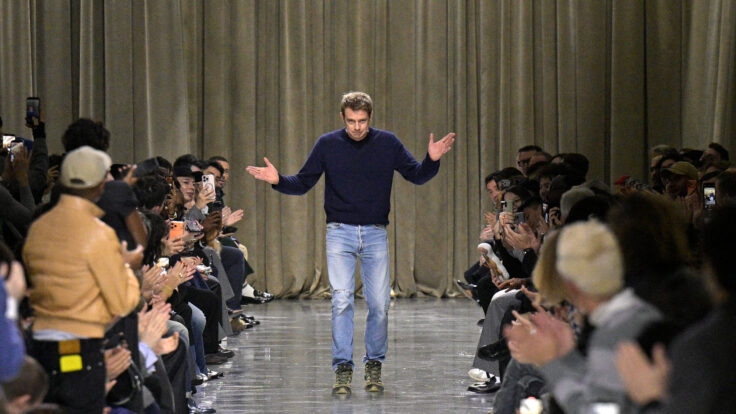
Lauren Sherman
maps out Saks Global’s journey through Chapter 11.
and…
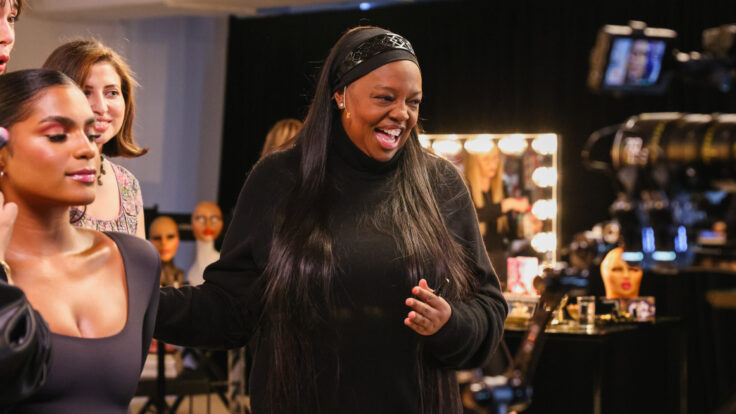
Rachel Strugatz explains why Makeup by Mario can’t get the bag.
meanwhile…
Sarah Shapiro
wonders if Madewell can turn it around. |
|
|

| ART MARKET
|
|
Marion Maneker
catches up with Heritage C.E.O. Steve Ivy after a $2 billion year. |
|
|

| HOLLYWOOD
|
|
Matt Belloni
imagines Lucasfilm after Kathy Kennedy and crystalizes Ted Sarandos’s WBD fantasies.
and…
Eriq Gardner
details Kevin Spacey’s stunning legal drama while Julia Alexander runs the numbers on a Disney+/Hulu combo.
meanwhile…
Kim Masters
tests the Landgraf method in the superstreaming age. |
|
|

| A.I.
|
|
Ian Krietzberg
unpacks Apple’s low-key A.I. strategy. |
|
|

| AIR MAIL
|
|
Evgenia Peretz
explores the MAGA scene at Harvard
and…
Alexander Larman investigates Meghan Markle’s publicist. |
|
|

| MEDIA
|
|
Dylan Byers
documents the freshest CBS News scandalette.
and…
Julia Alexander elucidates the Dish-Disney beef. |
|
|

| SPORTS
|
|
John Ourand
evaluates ESPN’s attempt to reinvigorate the ESPYs. |
|
|

| WALL STREET
|
|
|
|

| WASHINGTON
|
|
Leigh Ann Caldwell
spotlights John Thune’s Gordian knot.
and…
Julia Ioffe returns to the Havana syndrome saga.
and…
Abby Livingston
weighs in on Pelosi succession as Peter Hamby reveals a Trump immigration vulnerability. |
|
|

| PODCASTS
|
|
Dylan and Axios C.E.O. Jim VandeHei discuss the latest digital media
darlings on The Grill Room.
and…
Ourand and OBB Media C.E.O. Michael Ratner dig into his Fanatics deal on The Varsity.
and…
Lauren and Times media
reporters Jessica Testa and Michael Grynbaum manifest the next editor of GQ on Fashion People.
and…
John Heilemann and former Council of Economic Advisers chair Jason Furman chew over the war against Jerome Powell on
Impolitic.
and…
Matt and SAG-AFTRA’s Duncan Crabtree-Ireland preview the next wave of negotiations on The
Town.
and…
Peter and Matt predict the Oscar nominees on The Powers That Be.
As a reminder, you can update your profile at any time to get more stories like these directly in your inbox. Click here to customize
your email settings. |
A handful of years ago, amid the depths of that endless Covid slog, I had a memorable, socially distanced
conversation with another dad during pick-up time following a kid’s birthday party. He was a nice guy, and a familiar type—exquisitely educated, worked in finance, played tennis, and struggling to manage the endless family time bestowed upon him via the realities of remote school, Zoom everything, and the ever-present blurring of pastime and profession. And yet, he had found a way to cope. Out of the blue, he told me that he’d started actively buying and selling sports cards for tens of
thousands of dollars on the internet.
Like a lot of sports fans my age, I grew up trading cards. At the time, almost inexplicably, Greenwich Village was home to two separate card and memorabilia stores—one on Great Jones Street, and the other only a few blocks away on Sullivan. Some of my earliest memories are of perusing those aisles, my trusted copy of the Beckett reference guide in hand. Occasionally, if I’d swiped some cash from my parents’ wallets, I’d
invest in a card, like an Andy Stankiewicz rookie. My investments rarely appreciated with time. Anyway, it was a passing phase of my life, and I hadn’t thought much about it in the 30 or so years that had intervened. Who knew where those albums had gone?
And yet, my interlocutor informed me, the online sports card market had never been hotter. So much so, in fact, that he was beseeching his mother to comb his old bedroom in suburban Maryland for hockey cards that
suddenly had a bull market. He suggested that I do the same. I’ll admit that I thought about it for a second before moving on, once again endlessly bemused by the circle of life and the sorts of conversations you find yourself having in the suburbs.
It wasn’t until a couple years ago, when my partner Marion Maneker joined Puck, that I fully understood the error of my ways. As it turned out, the booming collectibles market that was birthed during the pandemic had only
grown in scope and magnitude. Heritage Auctions, the Dallas-based firm that has become the platform for this marketplace, did more than $2 billion in sales last year. Incredibly, the company has become the third-largest player in the auction market, behind only Sotheby’s and Christie’s. “I’ve always said, Collecting is a genetic disorder. It literally is a compulsive thing. Either you have that gene or you don’t,” Heritage C.E.O. Steve Ivy told Marion in a
recent issue of Wall Power, his industry-defining newsletter.
In his latest Condition Report column, Marion explores this increasingly common genetic disorder with characteristic wit and aplomb. Indeed, as my generation finds its way into middle age and
economic comfort, collectors are remaking the market in their self-image—driving up the value for not only cards and comics but also Birkins and Jordans. And that self-image isn’t always flattering.
Alex French recently surveyed this cultural and economic landscape in a brilliant and memorable profile, entitled The Goldin Boy, of
the innovative memorabilia mogul Ken Goldin. As Alex noted in the piece, Goldin recently auctioned off a 3½-inch Flamin’ Hot Cheeto that resembled a Pokémon character for $87,840. As Goldin told Alex, “It goes to show that anything can be a collectible if somebody wants it. I don’t get to decide. It’s in the eye of the beholder.”
Markets can work in absurd ways, and yet they are never wrong. In another recent piece,
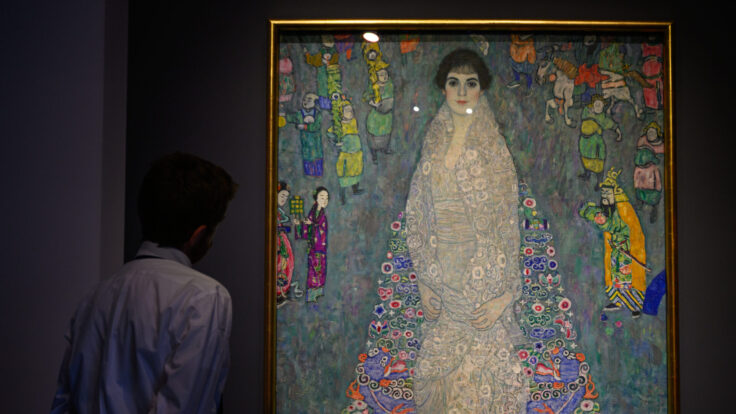
Is the Art Market Ready for a Bull Run?, Marion parsed troves of proprietary data across price ranges to suss out the true state of the industry. Is the art market seeing green shoots after a historic drought? The data is auspicious, but the truth is that rebounded markets rarely reflect the past and are instead imbued with new characteristics and nits, Flamin’ Hot
Cheetos and all. It’s one of the stories of our time and an obsession here at Puck. |
|
|
Need help? Review our
FAQ page or contact us for assistance. For brand partnerships, email ads@puck.news.
You received this email because you signed up to receive emails from Puck, or as part of your Puck account associated with {{customer.email}}. To stop receiving this newsletter and/or manage all your email preferences, click here. |
Puck is published by Heat Media LLC. 107 Greenwich St., New York, NY 10006 |
|
|
|