 |
|
Welcome back to Dry Powder, I’m Bill Cohan.
|
|
Happy Sunday, I hope you’re all enjoying the last weekend of summer. In this evening’s edition, my analysis of the potential buyers emerging for Bob Iger’s linear assets, from Byron Allen to Marc Rowan, Nexstar, KKR, and everyone in between. Plus a few thoughts on how the Arnault family succession drama is likely to play out.
But first, a few thoughts on the other wealthiest man in the world, who’s back on top of the Bloomberg Billionaires Index after a few months as Arnault’s understudy…
- The Real Musk Mystery: My copy of Walter Isaacson’s new Elon Musk biography has yet to arrive, so I can’t judge it for myself, although I have been a big fan of Walter’s previous efforts, especially his biography of Steve Jobs, which pulled only a few punches (earning the endless enmity of Jobs’ widow, apparently). I’m a little surprised by the negative reaction thus far about the Musk book, particularly from people whose insights I trust and respect. My pals Kara Swisher and Scott Galloway didn’t seem to like the book one bit, or the way Walter portrayed Elon. (Kara’s interview with Walter where he answers her “thorny questions” drops today.) “I feel like almost everyone that comes into [Elon Musk’s] orbit leaves with a damaged reputation, really, and it's already happened to Walter Isaacson,” said Scott, while also arguing that Isaacson is one of our greatest living biographers.
Kara said she didn’t like the book and then offered her “mini-review” of it, which she also posted to Twitter/X: “Sad and smart son slowly morphs into mentally abusive father he abhors, except with rockets, cars and more money, often right, sometimes wrong, petty jerk always. Might be crazy in a good way, but also a bad way. Pile o’ babies. Not Steve Jobs. You’re welcome.”
I was most surprised by the writer Gary Shteyngart’s review, in The Guardian, which essentially ripped it to shreds. He called it a “dull, insight-free doorstop of a book.” And then for good measure, Shteyngart wrote of Walter’s oeuvre, “To go from Einstein to Musk in only five volumes is surely an indication that humanity isn’t sending Isaacson its best.” Other critics are on the same page. The book is “long on behind-the scenes moments (plus just plain long), but it comes up short in the other category that matters,” read the sub-headline of my friend Adam Lashinsky’s review in The Information. (And this was while Adam had to confess that Walter is a friend who had generously blurbed two of his books.) “He provides little analysis, next to no investigative research and positively zero condemnation for his subject’s behavior, no matter how odious it may be,” Adam wrote. My friend Rana Foroohar, the esteemed Financial Times columnist, wrote of finishing the book feeling “depleted,” and “wishing the world had less patience” for supposed great men of history who also happen to be great jerks.
Jim Kelly, the books editor at Air Mail and who used to work with Walter at Time, wrote that the Musk book “is a remarkably vivid and revealing biography of a man who is undoubtedly a genius and is arguably nuts.” But I have to agree with Rana that we’ve reached peak Elon and the time has come to move on from him, if we can. Why are we collectively so obsessed with him, just because he has a fortune of nearly a quarter of a trillion dollars? Tesla stock is up 153 percent this year. His personal fortune has grown $112 billion so far in 2023, to $249 billion. This is simply unsustainable, isn’t it?
Meanwhile, I’d read a long book about why investors are so obsessed with Tesla, which somehow still has a price-to-earnings ratio near 80, despite being a car company that’s slashing prices and facing all sorts of competition from nearly every other car company on the planet. I’m not suggesting that Tesla will disappear, but I’d sure like to know why investors have lost their minds about this company and its founder. It’s pretty safe to say that the Isaacson biography doesn’t come anywhere near answering that question.
|
|
Alright, on to the main event…
|
|
|
| With potential buyers emerging for ABC, the next challenge for Bob Iger and his bankers will be deciding on a price, and determining who can pay it. Once upon a time, in 1995, Disney agreed to pay $19 billion for Cap Cities, the then parent company of ABC. What’s the network worth today? Good question. ABC and its other “linear networks” had operating income of around $8 billion in the last 12 months, according to Disney’s financial filings. But it’s unclear whether Iger wants to sell that whole division or just ABC alone—or if he really has a choice—and how much EBITDA is generated by each unit, including by ABC.
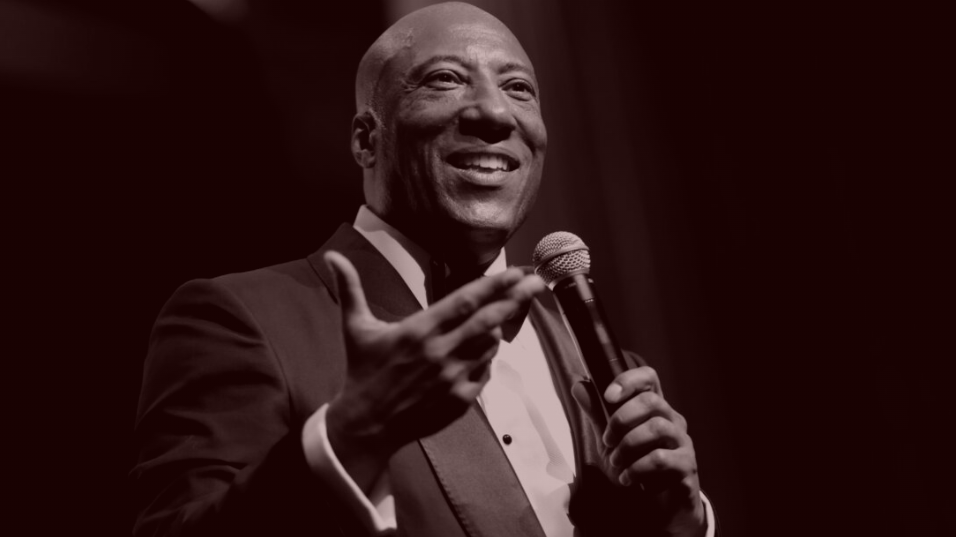
Media mogul Byron Allen reportedly has offered $10 billion for ABC and some local affiliates, plus the FX and National Geographic cable channels. Who knows, though, whether that’s an appropriate offer or not. I’d assume by now—since Iger told the world in July that he would sell ABC—that Disney and its bankers have cobbled together a book about whichever “linear networks” it wants to sell, and that NDAs have been signed, and the financial projections slapped together into the Excel spreadsheets. My partner Dylan Byers reports that Nexstar and other potential suitors, including strategic buyers and private equity firms—Apollo? KKR? Blackstone? etcetera—have called to express their interest, although the talks aren’t particularly far along. Allen’s initial reported offer, of $10 billion, sounds a little low, especially if EBITDA is around $8 billion and, say, heading to $6 billion, for example. Less than 2x EBITDA? In this economy? Things are probably bad, financially, at ABC, but not that bad. Sorry Byron but there’s no way Iger can sell ABC to you for that low a number, unless things are a lot worse than most people think they are.
I can almost see why Allen, who is 62, would want ABC, FX and NatGeo. The former comedian turned entrepreneur has assembled an impressive portfolio of assets in his Allen Media Group, including the Weather Channel, as well as roughly 30 owned or operated television stations in 20 small and medium sized markets reaching about 5 percent of the U.S. population. He also partnered with Sinclair Broadcasting, in 2019, to buy 21 regional sports networks for $10.6 billion. (These were the assets that Disney had to buy and then sell as part of the $71 billion 21st Century Fox deal.)
But I just don’t think $10 billion is enough to get the deal done and I also wonder if Allen Media has the financial wherewithal to pay $10 billion, let alone more than $10 billion. Rich Greenfield, at LightShed Partners, tweeted on Friday that the “Odds of Byron Allen buying ABC” were essentially infinitesimal. Count me in the Greenfield camp, again unless the ABC numbers are much worse than anyone thinks.
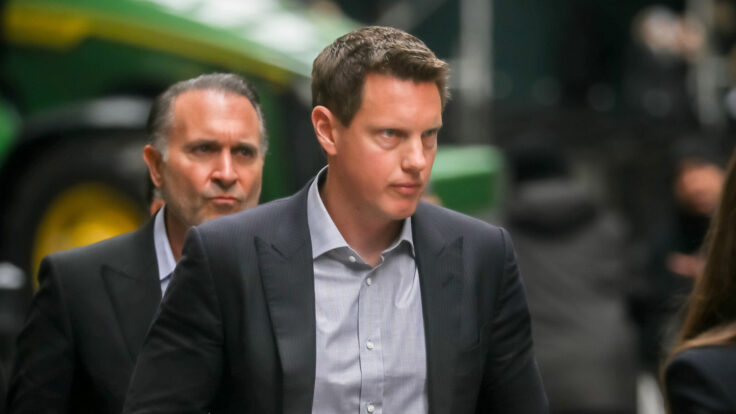
What about Nextstar, the other company mentioned in the Bloomberg article as having talked to Iger about buying ABC? With a market value of $5.5 billion, it would be a minnow swallowing a whale, and that doesn’t happen that often anymore. Could either Nextstar or Allen find partners in the land of alternative asset management? Absolutely. There’s plenty of dry powder in the coffers of the big private-equity firms. But, of course, bringing on a partner could get very complicated, very quickly.
Nexstar is also public, and so bringing in a large equity investor is immediately going to spook the market and likely be dilutive to existing shareholders. I don’t see Disney taking back Nexstar stock as part of the deal, which would in effect make Disney the largest shareholder in Nexstar/ABC—that’s not clean, plus Iger will likely have to contemplate a similar structure with ESPN. So it would have to be a cash deal with a private-equity partner. Not sure I see that happening. Meanwhile, Allen is private and, unless the acquisition of ABC is kept separate from Allen Media (which doesn’t make much sense), Allen might lose control of his business by bringing in the equity that would be needed for a deal for ABC. Heavy cake. |
| The Higher Calling of Private Equity |
|
| I think the better path for Iger remains a big, well-capitalized private equity firm: Apollo (which owns its own slew of local television stations), Blackstone, KKR, etcetera. These firms can borrow plenty of money, as Steve Schwarzman told me the other day (Blackstone is the biggest payer of fees to Wall Street, which makes him a very desirable client). They also would probably love the free cash flow that ABC would throw off as it shrinks away. They may be willing to pay more than Byron Allen, but they aren’t going to pay a premium to a desperate seller like Bob Iger. (One can only dream about Apple, or Amazon, or Google, or Microsoft buying ABC.)
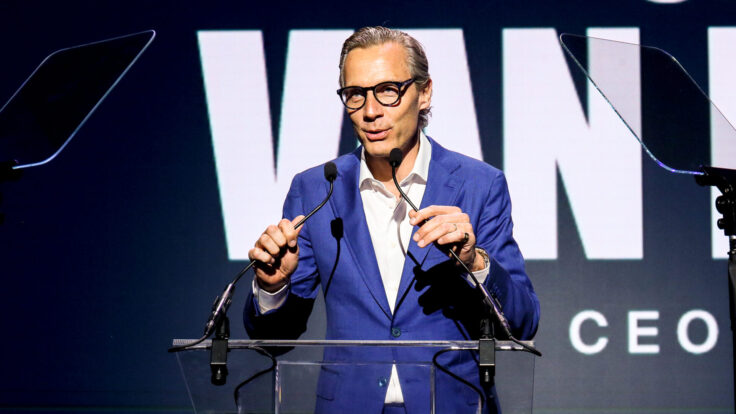
Dylan has written about the agony inside ABC over the saga of leaving the Disney family for a less exalted parentco. But that may be short-sighted. Of course, there could be plenty of upside for ABC executives, if not their employees. Just look at how things appear to be working out for Jonathan Karp, the C.E.O. of Simon & Schuster, after the book publisher was acquired from Paramount Global by KKR earlier this year. He’ll be free of the Paramount mishegas and he and his leadership team will probably get a boatload of stock and stock options that could be quite valuable if Karp can keep the gravy train going.
A similar scenario could play out with ABC, especially if it remains independent as a standalone company. There is a scenario whereby a private equity firm could take control of the network, its affiliated stations and whatever other cable channels get blended into the mix, and turn the whole lot into a free cash flow generating machine that pays down debt with abandon, making its executives at the top rich and its private equity managers richer. You could just keep re-levering and paying dividends out to shareholders until the cash-flow disappears.
It’s one scenario, anyway, although it’s hard to say how likely it is, at this point, until I have a better sense of Disney linear networks’ individual projections. Feel free to share the “book,” if you have it. I’d love to read it. Heck, I’ll even sign an NDA. |
| The Wambsgans Option at LVMH |
|
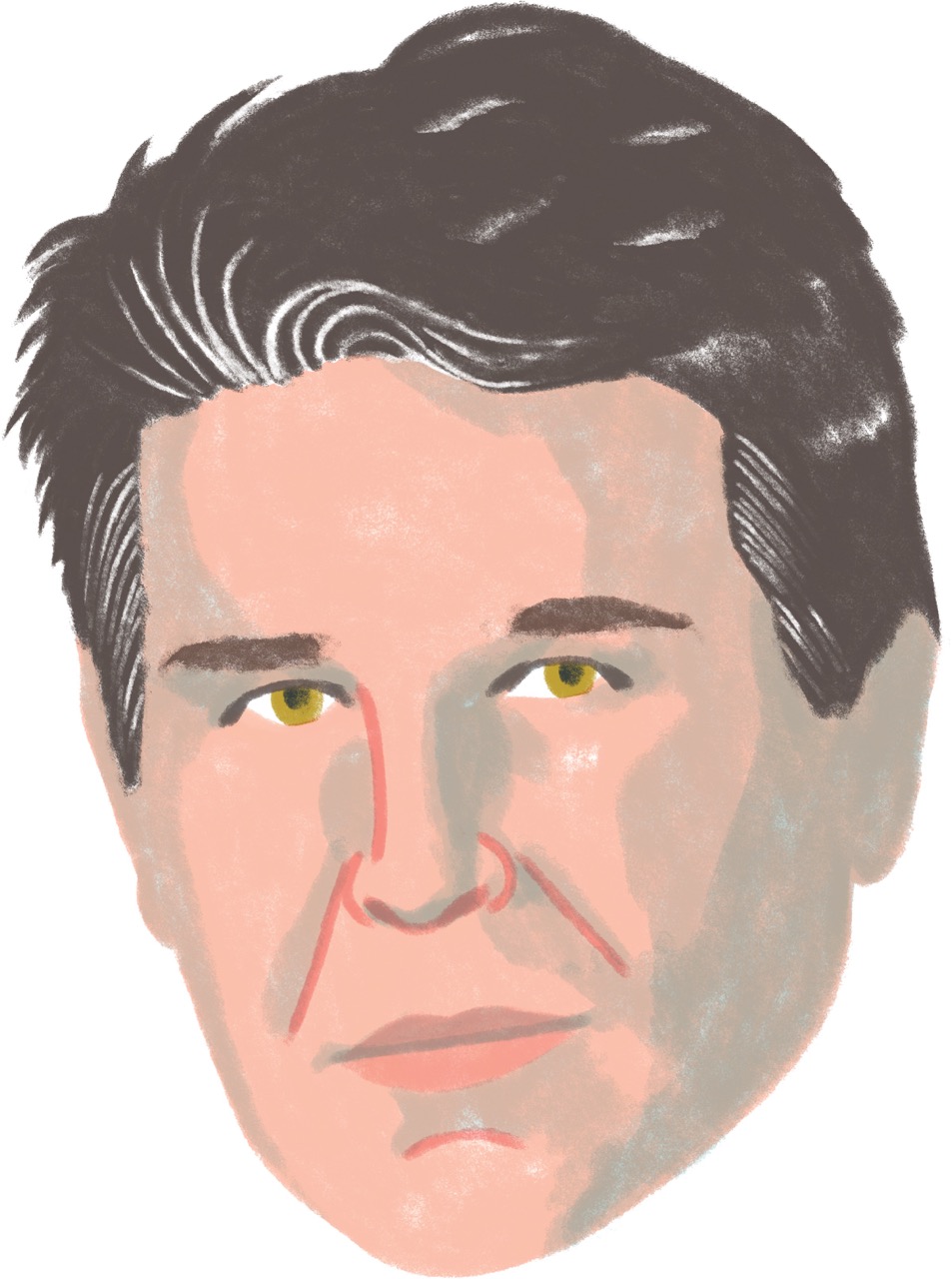
| There has been an explosion of smart reporting recently about the fate of LVMH, the nearly half-trillion-dollar luxury goods conglomerate, and its corporate-raider-turned-elder-statesman C.E.O., Bernard Arnault, currently the second wealthiest man in the world, who has spent decades carefully preparing his children to inherit his business empire.
The truth is I think we have another five years or so before this succession story truly plays out. The LVMH board recently extended the mandatory retirement age for the C.E.O. job from 75 to 80 years old, presumably at the urging of the Arnault family, which owns 48 percent of LVMH’s capital stock and has about 64 percent of the voting rights. Arnault, after all, is 74 years old, so the 75 mandatory retirement age was, understandably, a little too close for comfort. So he’s bought himself more time. And he may even get his board, which he controls, to extend the mandatory retirement age again.
The good news for Arnault is that he’s raised a highly accomplished group of five children—all of whom are in the business and doing well, by many accounts—from which to choose a successor. There is Delphine, his only daughter, who is 48, a member of the LVMH board and executive committee and the C.E.O. of Christian Dior Couture. Her brother, Antoine, 46, is also a member of the board, in addition to overseeing Berluti, Loro Piana, and Christian Dior. He also seems to be his father’s confidant on the topics of LVMH brand integrity and company communications. They have three, younger half-brothers: Alexandre, 31, is an executive vice president at Tiffany, after a successful stint running Rimowa, the high-end luggage brand. Frederic, 28, is the C.E.O. of Tag Heuer, the fancy watchmaker. Jean, 24, is responsible for watches at Louis Vuitton.
In other words, Arnault père has a lot of good choices among his children if he wants to perpetuate the Arnault name atop LVMH. That’s pretty rare, as far as these things go. The Arnaults all look the part of potential C.E.O.s, and they are all young enough still to have a long reign atop the company. Of course, as Bernard told The New York Times the other day, “It’s not an obligation, nor inevitable, that a kid is my successor… The best person inside the family or outside the family should be one day my successor. But it’s not something that I hope is a duel for the near future.”
How very French. Sounds like he’s been listening to my late boss at Lazard, Michel David-Weill, who used to make similar observations when it came to whether his son-in-law, Edouard Stern, would succeed him atop Lazard. (Needless to say that didn’t happen.)
So who knows what will happen at LVMH in the next five years? Maybe Arnault will end up going the Tom Wambsgans route, choosing an outsider to be the orchestra leader and leaving the children to run each of their fiefdoms. Or it’s possible the children themselves have some idea of who among them would be the best leader, and the rest can be happy being heirs while continuing to run their individual LVMH companies.
Indeed, that is the genius of the LVMH model that Arnault has created. It’s quite possible that being the C.E.O. of LVMH would be a less fun and desirable job than being the C.E.O. of Tiffany’s, or Tag Heuer or Dior, or one of the incredible French wineries that LVMH owns. Maybe bringing in a professional manager would be the safest choice for Arnault, as he indicated it could be, unless, of course, one of his children wants the job and has proven that he or she can handle it well.
I suspect, in the end, it will be either Antoine or Delphine—the elder siblings—who will get the top job in four or five years, and then, after a hopefully successful run, will make way for one of their half-brothers to take it from there. In any event, it’s all good news for the Arnaults, who seem to be on the verge of doing family succession right, unlike pretty much every other family succession situation I can think of, with the notable exception of places like Ford, Mars and Smucker. Last year, Bernard restructured the family holding company to be controlled by Agache Commandite SAS, which is held equally by his five children and has a rotating two-year chairmanship (Delphine is first at the helm). Agache Commandite, which is designed to create a balance of power within the family, requires them to reach unanimity in order to make major decisions.
In short, succession can be done, and done well, but it’s not necessarily easy to pull off or obvious that it will work. Arnault “has a very smart family around him, he’s putting them in a position to get trained, to progress, to be more relevant when it comes to the business,” Jean-Jacques Guiony, who I used to work with at Lazard and is now the CFO of LVMH, told Bloomberg. “It doesn't mean that he's launching one more than the others in a perspective of succession. I’m not even sure he himself knows his plans.’’ No matter how this works out, the LVMH corporate succession will be one of the most fascinating to watch in the next few years. |
|
|
|
| FOUR STORIES WE’RE TALKING ABOUT |
|
|
|
|
|
 |
|
|
|
Need help? Review our FAQs
page or contact
us for assistance. For brand partnerships, email ads@puck.news.
|
|
You received this email because you signed up to receive emails from Puck, or as part of your Puck account associated with . To stop receiving this newsletter and/or manage all your email preferences, click here.
|
|
Puck is published by Heat Media LLC. 227 W 17th St New York, NY 10011.
|
|
|
|