 |
 |
|
Happy Sunday, and welcome back to Dry Powder.
|
|
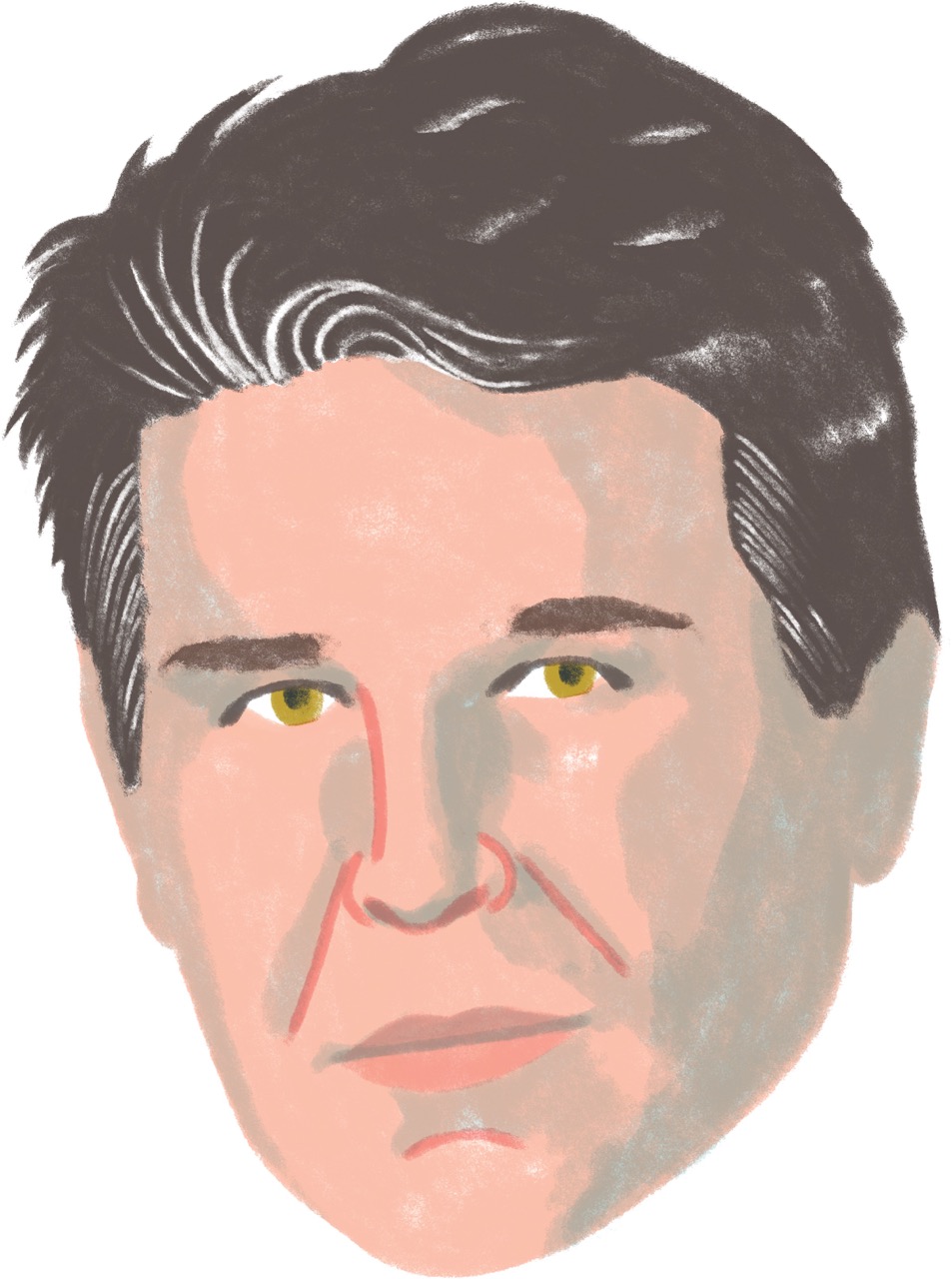
Are U.K. regulators on the verge of approving Jeff Zucker and RedBird IMI’s bid to buy The Telegraph and The Spectator? In today’s issue, fresh reporting around how much Zucker & Co. are preparing to fork over, notes on the fallout from Elon’s F-bomb bonanza at DealBook, and the latest on the Bob Iger-Nelson Peltz cold war.
|
|
|
| On Friday, the cash changed hands. Jeff Zucker’s RedBird IMI and Sheikh Mansour bin Zayed Al Nahyan, one of his partners in the deal for The Telegraph and The Spectator, wired their respective millions—totaling some $1.4 billion—to the Barclay family, which then presumably paid off their debt, in full, to Lloyds Bank. The auction to sell both The Telegraph and The Spectator is also presumably over, or on hiatus, pending the outcome of the U.K. regulatory review of the foreign money in the deal. To that end, RedBird IMI also exercised its option to buy the two publications from the Barclay family.
As a source close to Zucker told me, RedBird IMI is paying about $750 million, or 10x 2023 EBITDA, for the two publications. That’s not a bargain price by any means, but it’s a lot less than what appeared to be the sticker price of 20x EBITDA that had been floating around before the price got clarified. Instead, it seems like the RedBird guys will move forward with the number they could get to in the room, and the other $650 million will come from Sheikh Mansour in the form of a separate loan to the Barclays, secured by other of their assets. Three things are clear with this structure: Zucker wants the deal, his boss Gerry Cardinale wants the deal, and so does the sheikh.
Now, of course, the rumors are flying about whether the British regulators will let the foreigners buy the two publications. What I am hearing is that a member of Parliament has been added to the deal team to “soothe people’s minds” and that the deal will likely get approval after an advisory board of some sort is set up to ensure the publications can maintain their editorial independence. (RedBird IMI has committed to an editorial advisory board as part of the transaction.) There are also rumors that Zucker & Co. are less interested in The Spectator than The Telegraph, and may be willing to sell the former, although a person close to RedBird IMI told me that The Spectator is “a real opportunity” for Zucker & Co. and there are no plans to part with it. If he ends up getting the two publications, Zucker will now be able to contend for any assets that fall off the Murdoch turnip truck, given that Lachlan is fully in charge and may want to pare back some of what his father built. Who knows if and when that will happen, but if it does, Zucker will be front and center, I have to believe, as a buyer.
As for Sheikh Mansour, his roughly $650 million, I’m told, was lent to The Very Group, the Barclays’ quirky combination of an online retailer and financial services company. The Carlyle Group, the Washington-based private equity behemoth, lent affiliates of The Very Group some $380 million in 2021 to pay off debt owed to Greensill Capital, the U.K. lender that is in the process of being liquidated. According to The Very Group’s financial statements, it has additional debt of more than $3 billion. In the last 12 months, The Very Group generated EBITDA of more than $300 million. It is not clear where in The Very Group’s capital structure Sheikh Mansour’s debt will end up, or what Sheikh Mansour has been able to negotiate as security for the loan—whether it’s secured by The Very Group’s assets or the stock of an intermediate holding company. I am told that there is “collateral against” the sheikh’s loan and that it has a two-year payback period. That is money the Barclays now owe the sheikh.
Team Zucker seems quite sanguine about getting regulatory approval, although it might take four or five months, and believes that the deal will be a good one for them. “Ten times EBITDA for these assets that have been underinvested and that there is actually a growth trajectory for” could very well turn out just fine, a person close to the Zucker team told me. |
|
A MESSAGE FROM OUR SPONSOR
|
 |
| A Green Energy Opportunity
Amid volatile fuel prices and the need for lower-emission energy solutions, hydrogen is emerging as an increasingly viable alternative. Explore how the Global X Hydrogen ETF (HYDR) invests in companies advancing this green opportunity.
Learn more about HYDR
|
|
|
| Notes on the Elon F-Bombs |
|
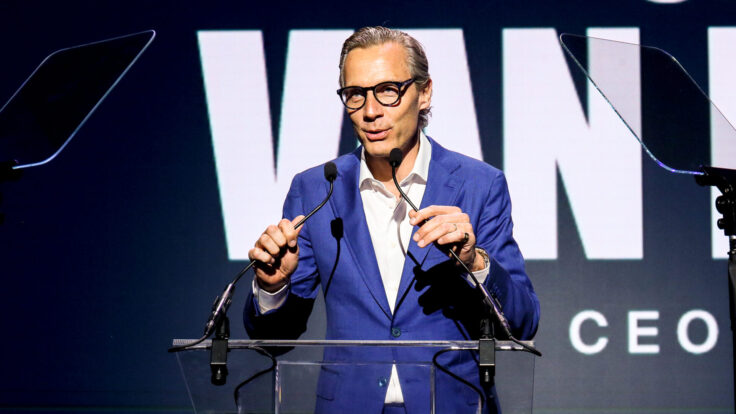
| So what would happen if Twitter/X’s advertisers actually did what Elon suggested and went and “fucked themselves” and stopped advertising completely on the platform? Is this just hyperbole, or is there a real threat that the company will go bankrupt? And if it does, what are the consequences of a Twitter/X bankruptcy?
Firstly, the only reason Twitter/X hasn’t already gone bankrupt is because it’s owned by the world’s richest man, whose wealth has somehow increased by $85 billion since he bought Twitter and now stands at $222 billion. It has $13 billion in debt, most of which is secured, and very little if any EBITDA. That’s a recipe for financial disaster, straight away. Not only did Elon way, way, way overpay for the company, at $44 billion, but he also saddled it with too much debt.
If Elon weren’t around to make the quarterly interest payments to the seven banks that own Twitter’s $13 billion of debt, to the tune of roughly $1.2 billion a year, there would already have been an event of default. The banks would already have put the company into a Chapter 11 bankruptcy or tried to engineer an out-of-court restructuring or forced a Chapter 7 liquidation of the company or sold off their debt at a severe discount and let some vulture investors, such as Apollo or DoubleLine, deal with Elon and his Twitter carcass. But none of that has happened because Elon has been making the quarterly $300 million of interest payments out of his own pocket. Not many people can afford to do that.
So if Elon is willing to spend $1.2 billion a year to avoid a financial default on the debt, why is he repeatedly talking about bankruptcy and trying to assign blame for this latest advertiser boycott? As long as Elon is willing to make those quarterly interest payments, Twitter is not going bankrupt (although three creditors who have not been paid, such as landlords, cloud-service providers, etcetera, could put Twitter into an involuntary bankruptcy). But what if Elon decides to stop making those interest payments? Well, that’s when things could get really interesting. The debt would start to move. The big banks—including Morgan Stanley, Barclays (no relation to the family that owns The Telegraph), and Bank of America—that have clung to the debt would begin to sell it into the market, for whatever low price it would command, and they would take their large write-offs and say goodbye and good luck.
At that point, Elon would be dealing with Apollo, or DoubleLine, or some other wiseguys. That could get ugly. If Elon were to somehow engineer an out-of-court restructuring with his new, aggressive, non-par-buying lenders, he would most definitely lose control of the equity of the company, and the new creditors would own Twitter and be free to do with it what they want—revamp it, resurrect it, sell it or liquidate it. If instead of a consensual, out-of-court restructuring, there is a Chapter 11 filing, then there will likely be a drawn-out, court-supervised process where almost anything could happen.
Imagine the possibilities: The creditors could end up with the company (the most likely scenario). Or the lender that provides the debtor-in-possession financing could end up with the company—an increasingly clever trick in bankruptcy proceedings lately, wherein the DIP lender asks for warrants in the reorganized company or a right-of-first refusal to buy it out of bankruptcy. Or a new source of capital could come in and “sponsor” a plan of reorganization by buying the newly issued equity in the reorganized company as part of the way the company exits bankruptcy.
But guess what? Elon could be the new source of capital. Elon could buy the equity of the reorganized company from his former creditors. He could also buy the debt of Twitter at a discount and retire it and just keep control of Twitter that way. In fact, there are many scenarios under which Elon could keep control of Twitter even if he defaults on the debt and even if it goes bankrupt. As I have suggested before, if he were particularly Machiavellian, he could be deliberately telling advertisers to go fuck themselves and talking about bankruptcy as a way to drive the EBITDA further into negative territory, further freaking out the creditors, and then come in to rescue them by buying their debt at a deep discount.
I’m not sure Elon is this clever, but if anyone could pull off a stunt like that, it would be him. I’m betting Elon is willing to play chicken with his creditors before this is all over. He may say on a big stage that Twitter is going to go bankrupt, but I bet that is just the beginning of the next phase of the game he is playing. |
|
|
|
|
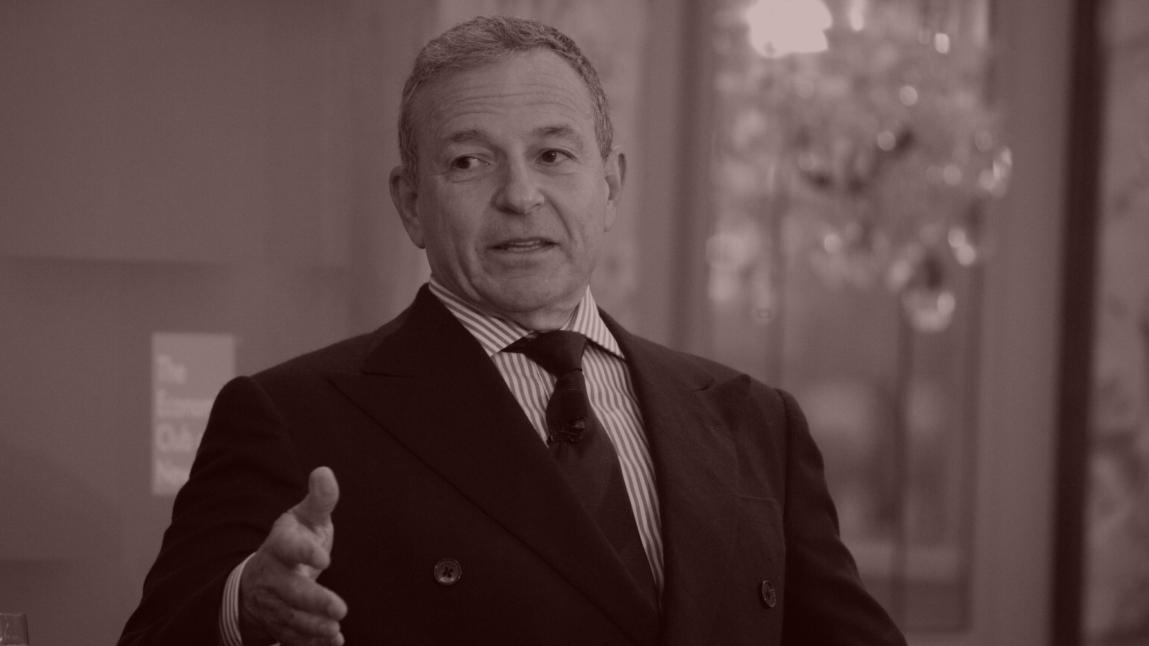
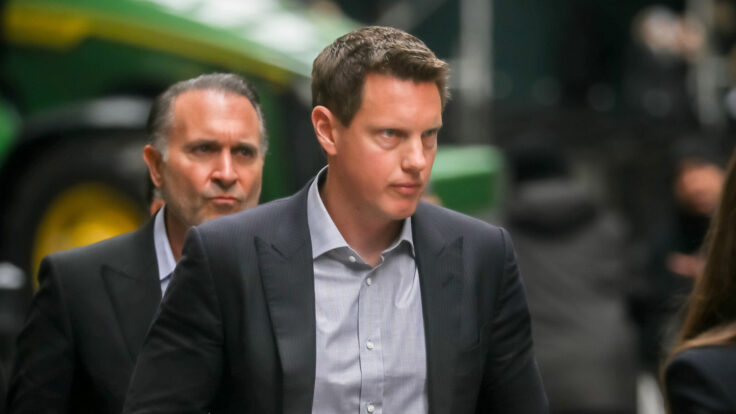
| I’m starting to get the feeling that the Bob Iger-Nelson Peltz proxy battle sequel will be far more feisty than their first encounter, almost a year ago, when Iger made just the right noises about restoring the dividend and cutting expenses, which allowed Nelson to fold up his tent and declare victory. Now, Peltz’s Trian Partners is back. But this time, not only has he teamed up with Ike Perlmutter, a fellow octogenarian billionaire with a special animus toward Iger (who fired him from Disney earlier this year), but he’s also demanding three board seats, not just one. He’s also got control of three times more stock than he did in the first proxy fight—$3 billion versus less than $1 billion—and he wants the representation to match the economics. What a lovely symmetry. But will the outcome be any different for the “Smiling Crocodile” this time around?
A proxy battle of this magnitude is like a grandmaster chess match. The tactics and strategy evolve over time before reaching their crescendo. By teaming up with Perlmutter and demanding three board seats, Peltz has already made some aggressive moves with his bishops. For his part, Iger is keeping most of his pieces on his side of the board, at least so far. When Andrew Ross Sorkin asked Iger about Peltz last week at the DealBook conference, and whether the fight with him was “personal” at this point, Bob was careful to spout the standard corporate pablum: “This is not a headline that I’m going to create right now. The board has an obligation to listen to investors. Ike with Nelson represents a certain amount of shares of our stock. I’m certain that the board will hear them out in terms of what their plans and what their ideas are.”
Actually, the board probably won’t hear them out, but it’s a nice thing to say. (Shareholders, on the other hand, will hear out Nelson and Ike by reading their new, as-yet-unfiled proxy statement and then voting next spring regarding board seats for them.) But Iger did move some chess pieces last week, too, in addition to blathering corporate niceties. He announced that Disney would be restoring part of its dividend, starting in January, which had been one of Peltz’s demands from his first proxy fight. He also announced that both James Gorman, the retiring C.E.O. of Morgan Stanley, and Sir Jeremy Darroch, a former chief executive of Sky, would be joining the Disney board, which is starting to look awfully crowded these days. (When these appointments become effective in the first two months of 2024, the size of the Disney board will temporarily increase to 13 members.)
Not only does Gorman add serious financial gravitas to the board amid the proxy fight, he also knows a thing or two about running a smooth succession process, having just elegantly handed over Morgan Stanley to his chosen successor, Ted Pick. It all seemed to come off without a hitch, unlike the recent succession process at Disney, where Iger roared back to life after he decided his chosen successor, Bob Chapek, wasn’t working out. (Iger had no qualms about throwing Chapek under the bus, repeatedly, at the DealBook conference.)
With the board already at 13 members, will there be room for three more if Peltz gets his way? Fifteen is a large corporate board, almost too large to be effective. (It won’t be 16 because Francis deSouza is leaving the board after the annual meeting, this coming spring.) So I’m not sure I see that happening. Iger may have put Peltz in check with that move. Of course, the Crocodile is also baring some teeth. On Thursday, Trian announced that it intends to once again take its fight for board seats to the shareholders. “Since we gave Disney the opportunity to prove it could ‘right the ship’ last February, up to our re-engagement weeks ago, shareholders lost ~$70 billion of value,” the firm wrote in a statement.
The statement continued: “Disney's share price has underperformed proxy peers and the broader market over every relevant period during the last decade and over the tenure of each incumbent director. Investor confidence is low, key strategic questions loom, and even Disney’s C.E.O. is acknowledging that the Company’s challenges are greater than previously believed. While James Gorman and Sir Jeremy Darroch represent an improvement from the status quo, the addition of these directors will not, in our view, restore investor confidence or address the root cause behind the significant value destruction and missteps that this Board has overseen.”
When you cut through it all, of course, Nelson cares about making money. In the six weeks since he leaked that he had bought more Disney stock, had teamed up with Ike, and was demanding board seats, the Disney stock has actually increased about 10 percent. That may not be enough vig for a smiling crocodile, but if the Disney stock keeps bouncing off the floor—it’s up 14 percent in the past month—I wouldn’t be surprised to see Nelson take his winnings and go home. After all, proxy fights are expensive and time-consuming, and you would think that a couple of octogenarian billionaires would have better things to do with their remaining days. |
|
|
|
| FOUR STORIES WE’RE TALKING ABOUT |
|
|
|
|
|
 |
|
|
|
Need help? Review our FAQs
page or contact
us for assistance. For brand partnerships, email ads@puck.news.
|
|
You received this email because you signed up to receive emails from Puck, or as part of your Puck account associated with . To stop receiving this newsletter and/or manage all your email preferences, click here.
|
|
Puck is published by Heat Media LLC. 227 W 17th St New York, NY 10011.
|
|
|
|