{{ 'now' | timezone: 'America/New_York' | date: '%b %d, %Y' }}
|
|
|
Welcome to Dry Powder. I’m Bill Cohan.
It appears David
Ellison didn’t take my suggestion last week. As you’ll recall, I wrote that if he really wanted to own Warner Bros. Discovery and leave Netflix on the curb, all Paramount Skydance had to do was raise its current $30-a-share hostile bid to $34, all cash, and we can all go home. But where’s the fun in that? Below, I’ll get into the granular details of why the WBD board has some trust issues around PSKY’s proposed equity financing, and more of what I’m hearing from those close to
the deliberations.
But first…
|
- Reed’s
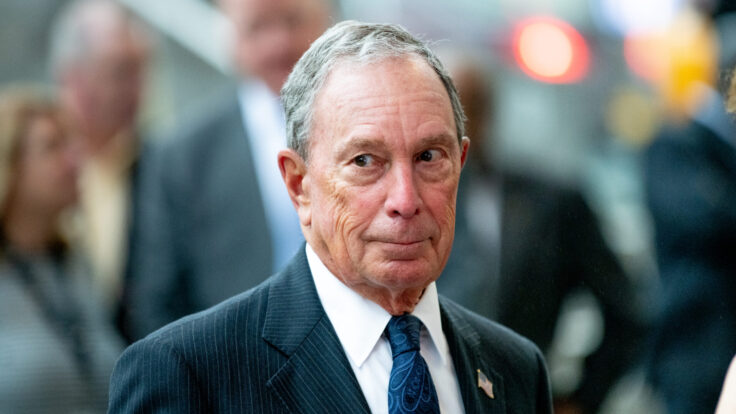
bread crumbs: I wanted to share some salient bits from Reed Hastings’ on-the-record interview with Bloomberg TV’s David Westin at the Economic Club of New York on Thursday. The conversation took place at a luncheon ostensibly devoted to the club honoring Mike Bloomberg with the annual Peter G. Peterson Leadership Excellence Award. Hastings—the founder, former C.E.O., and current chairman of Netflix, who also serves on the board of Bloomberg
L.P.—was there to support Mike as well as to chat about A.I. But what many of the 400 or so people in the audience really wanted to hear were his musings on the current Warner Bros. Discovery auction. Was Netflix gearing up for a battle with Paramount Skydance over Warners, or would the half-trillion-dollar company find a way to leave the stage with its dignity still intact (and maybe a long-term supply agreement from PSKY-WBD, plus the $2.8 billion break-up fee)?Westin didn’t
even have to ask Hastings directly about the WBD situation—he brought the topic up himself after Mike made a passing reference to the “news this week.” Initially, Reed tried to defuse the situation with a joke. “You know that I’m enamored with subscription models,” he said, “and now I’ve become more aware about tender offers, and I like TV channels, so we’re announcing today my tender offer for Bloomberg. We hope you will consider it appropriately. Your board members are willing to
debate the transaction. But unfortunately, as you would suspect, as a [Netflix] board member, that’s all I can say on the ‘news of the week.’”
“So you’re not going to answer my boss’s question?” Westin wondered.
“I think it’s all answered,” Hastings replied.
Given that the Netflix stock has lost nearly 18 percent of its value in the last month, I suspect that Reed and co-C.E.O.s Ted Sarandos and Greg Peters
will be highly disciplined here and try to avoid a bidding war with Larry Ellison. Unlike Paramount, which is controlled by the Ellison family with some minority shareholders along for the ride, Netflix is widely held, and the management team has to think long and hard about whether to lard up its pristine balance sheet with debt in order to win WBD. Obviously, its shareholders don’t want Netflix to do that. I think Reed et al. are smart enough to
listen.
|
Now on to the main event…
|
|
|
Despite their numerous bids for all of WBD, a rift has opened between the principals at
Paramount Skydance and the board and advisors of their target company—at least for now. Can money heal all wounds?
|
|
|
On November 18, nearly a month after Warner Bros. Discovery had put itself up for sale and two days before
the first round of bids was due, Variety reported an interesting new twist. According to the trade, the Ellisons were bringing in the Public Investment Fund of Saudi Arabia, the Qatar Investment Authority, and the Abu Dhabi Investment Authority—with each contributing $7 billion in equity to the Ellisons deal. That same day, notably, Paramount Skydance
denied the Variety report in the strongest possible terms. “The information Variety published is categorically inaccurate,” the company said in a statement.
The source of any equity financing was always going to be a critical factor in the tug-of-war between Paramount Skydance and Netflix for
Warner Bros. Discovery. The involvement of foreign investors, after all, could trigger additional regulatory hurdles, such as an unappealable review by CFIUS (the Committee on Foreign Investment in the United States) or a lengthy F.C.C. evaluation process. And these were not inconsiderable factors for the Ellisons, especially given that a hallmark of the Paramount Skydance bid was always its perceived advantage on the regulatory front—to say nothing of Larry Ellison’s vast
fortune.
On November 20, the day that preliminary bids were due, the Ellisons and RedBird Capital, their equity partner in the original deal for Paramount, submitted what turned out to be their fourth bid for the company: $25.50 a share, or roughly $94 billion, including WBD’s net debt of $30 billion. The letters from PSKY to WBD accompanying their previous failed bids had made clear that the Ellison family would be “backstopping” the equity for their bid. They also said they were willing
to “underwrite the full equity requirements” for the deal, according to the PSKY tender offer documents.
Yet, as we now know from PSKY’s tender offer documents and various press releases, the Variety story was largely accurate. In fact, those three sovereign wealth funds were providing a combined $24 billion—or 60 percent of the $40 billion in equity that the Ellisons and their partners were ponying up. Someone familiar with Paramount Skydance’s bidding strategy said they were
not ready to disclose their partners at the time because they were still just talking to the sovereign wealth funds, and their allegation of “inaccurate” reporting referred only to the numbers and the fact that no deal with the funds had been reached. (Indeed, Variety incorrectly stated that the Ellisons were putting together a $71 billion bid.)
|
|
|
A MESSAGE FROM HARRY WINSTON
|
The magic of the holidays begins at Harry Winston. We invite you to step inside a winter wonderland of dazzling diamonds, whimsical
treasures, and timeless beauty.
|
|
|
Regardless, the Variety mess sowed credibility questions for the WBD board and its advisors. “What’s
sort of clear is, [the Ellisons] have shown, time and time again, that they don’t mind lying,” a source close to the deal told me. “The Variety article is a very good article; they were the first to break [news of the sovereign wealth funds’ involvement]. [PSKY] lied on the record denying it.”
Lying is a strong word, of course. What is abundantly clear in retrospect, however, is that a critical rift had opened between the two sides over a fundamental misunderstanding of
the role that Larry Ellison intended to play—or at least how to define that role. What we actually have here, I fear, is failure to communicate, as Strother Martin once said. The WBD board and advisors, it seems, wanted the Ellisons to guarantee the equity for their bid in writing—just as Elon Musk had done, for better or worse, during his acquisition of Twitter. In fact, that guarantee from Elon was the mechanism that required him to close the
$44 billion Twitter deal even after he tried to get out of it. Likewise, WBD wanted the Ellisons on the hook legally.
But while the Ellisons have been insistent on their commitment, the deal terms indicated that they were not quite going there, at least as WBD was interpreting the documents. As their 265-page, $30-a-share tender offer filing makes clear, a deal that originally seemed like a family’s full-throated quest for a rival has morphed into a big old-fashioned
leveraged buyout using Other People’s Money—and one in which Larry himself only has a relatively minor $12 billion in exposure. (He also invested $6 billion in the original Paramount deal.)
As a person familiar with PSKY’s strategy told me, of course the second-richest person in the world would stand behind the equity for the deal. But a theory nevertheless began to take hold inside WBD that the Ellisons weren’t as personally committed as they had originally seemed. “Maybe Dad’s
looking up and basically saying, You don’t get to be worth $350 billion by doing crazy things,” explained one of my sources familiar with the deliberations on the WBD side of the deal. “Maybe Dad’s looking up and saying, I’m not sure I’m willing to bet $40 billion behind my kid.’” (A spokesman for WBD declined to comment. A spokesperson for Paramount Skydance also declined to comment.)
|
Feelings aside, this deal was always going to come down to the actual money on the line. In the wake of the
November 20 preliminary deadline, it was clear that Netflix had the superior bid. The company submitted an offer of $27 per WBD share, but only for the Streaming and Studios business, which left the stub equity in its linear TV assets, to be spun off as Global Networks, as additional consideration for the WBD shareholders. The Netflix bid was 81 percent cash and 19 percent stock, which was highly liquid given its roughly $500 billion market cap.
Of course, the Ellisons weren’t done. After
the first round of bidding, there were plenty of meetings between the lawyers and bankers for both sides. The PSKY board also met to decide whether or not to raise its final bid, due December 1. And on November 24, the Ellisons had dinner with WBD C.E.O. David Zaslav. The father and son reiterated their enthusiasm about the combination and commitment to a smooth regulatory review and a structure that would make Zaz the co-C.E.O. of the combined entity with David
Ellison. (Disclosure: Through our recent acquisition of Air Mail, Zaz is now a de minimis investor in Puck. Through the same deal, RedBird is also a minority shareholder in Puck.)
Five days later, according to the PSKY tender offer documents, Paramount Skydance’s attorneys at Cravath and Latham met via videoconference with their counterparts at Wachtell and Debevoise, who represented WBD, to discuss the markup of the merger agreement. The WBD attorneys again pressed the
PSKY attorneys on the sources of the company’s equity financing. In particular, they wondered whether any of their foreign partners would require CFIUS or F.C.C. approval.
The Cravath team representing Paramount Skydance explained that neither CFIUS nor F.C.C. approval would be a condition of its equity financing. “The representatives of Debevoise and Wachtell also noted that, rather than a single equity backstop from the Ellison family and RedBird, the equity financing documents
contemplated separate but cross-conditioned funding commitments from the equity funding sources,” according to the PSKY tender offer.
When the final bids were submitted on December 1, Netflix had once again put together the clearly superior deal: $27.75 per share, 85 percent in cash and 15 percent in stock, with a collar, plus the value of the Discovery Global stub. PSKY, meanwhile, had bid $26.50, all cash. The final PSKY bid included a $54 billion debt financing package from Bank of
America, Citigroup, and Apollo, along with an $11.8 billion equity commitment from the Ellisons, $24 billion from the three Mideast sovereign wealth funds, $1 billion from Chinese company Tencent, and commitments from RedBird and Affinity Partners— Jared Kushner’s private equity fund, which is funded mostly by the Saudis.
Understandably, the WBD board favored the Netflix offer and set about signing a merger agreement. “They had submitted a very, very clean
proposal that we knew could get executed within days,” explained the source familiar with the board’s deliberations. The WBD board told Netflix that it wanted to get a deal done quickly, before the end of the week. (The board also gave feedback to Comcast, which soon thereafter dropped out of the bidding.)
The board told PSKY that it did not have the highest bid and that there were serious concerns with the markup of the merger agreement as well as with its financing structure, which was
increasingly resembling an L.B.O., with a lot of debt on top of equity coming from sources other than the Ellisons. The multiparty, cross-contingency structure of the equity also remained a problem for the WBD side, which they communicated to their PSKY counterparts. But the Ellisons wouldn’t change the structure of the equity, primarily because they believed it was already clear that Larry Ellison was fully backstopping the deal and could be sued successfully for “specific
performance,” just as Elon had been in the Twitter deal. But the communication glitch persisted. “We told [the Ellisons] this wasn’t going to fly,” the person involved in the deliberations relayed to me. “We couldn’t convince them.”
|
|
|
A MESSAGE FROM HARRY WINSTON
|
This holiday season, give the gift that shines forever. Celebrate the holiday season with the timeless brilliance of diamond jewelry by
Harry Winston.
|
|
|
The final bid also did not seem to the WBD folks to have the Ellison guarantee that WBD and its advisors
coveted, in the terms they wanted. WBD representatives also told the Ellisons that they had regulatory concerns with their foreign equity investors. WBD shared all this feedback after the December 1 final bid deadline to provide the Ellisons with one more shot at a revised bid before a deal was signed with Netflix.
|
Anyway, things quickly went downhill from there. On December 3, Paramount’s lawyers at Quinn Emanuel sent
that bizarre letter questioning the “fairness and adequacy” of the process, which caught even some members of the PSKY team by surprise. That same day, Zaz called David Ellison and explained his ongoing concerns with their equity financing. The lawyers for both sides had a similar conversation—highlighting in particular the questions surrounding Tencent, given its close ties to the Chinese government.
According to the PSKY tender documents, WBD’s lawyers once again raised their issues
with the “lack of a full backstop from the Ellison family and RedBird,” especially “in light of the cross-conditionality of the equity financing.” This was, apparently, especially frustrating to the PSKY crew because, again, they believed Larry was backstopping the equity in full and had said so repeatedly. But for whatever reason, the message still wasn’t getting through to WBD.
At 11 a.m. on December 4, Paramount Skydance submitted its sixth proposal, even though the final bid
deadline had passed, offering $30 a share, all in cash. PSKY eliminated Tencent from the equity and reiterated that the Ellison family and RedBird Capital had agreed to “backstop the full amount of the equity financing” of some $40.7 billion, supported by something called the Larry J. Ellison Revocable Trust, from 1988, with the balance of the financing needed coming from Citi, BofA, and Apollo. The three sovereign wealth funds, which were still providing the majority of the equity financing,
had agreed to give up their board seats and their voting rights, which hopefully would eliminate the need for both CFIUS and F.C.C. reviews. “The Ellison family and RedBird are now entirely backstopping 100% of our equity commitments—a radical simplification of our prior funding sources that entirely removes any funding concerns that you have expressed,” the Ellisons wrote in a December 4 letter to the WBD directors.
But despite the Ellisons’ revisions
and repeated promises, the WBD board still had serious questions about their commitment to underwriting the equity for the deal. First, there were questions about the Larry J. Ellison Revocable Trust, which PSKY claimed owned 1.16 billion Oracle shares, worth $220 billion, representing a 40.6 percent ownership stake in his company. Among them: The 2025 Oracle proxy lists Larry Ellison as the owner of the shares, not his revocable trust. (Nor is the revocable trust listed as the owner of
the Ellison shares in other required S.E.C. filings.) Also, a revocable trust is just that—it can be changed unilaterally by Larry Ellison, even if it hadn’t been in years. Neither of those facts gave much comfort to the WBD board. However, that is the same entity that made Larry’s $1 billion equity investment in Elon’s Twitter deal. In fact, according to those familiar with the PSKY strategy, the revocable trust is the right entity, even if the S.E.C. filings don’t make that point
clear. In any event, this represented another point of communication breakdown.
Then there was the problem of Larry’s “ limited guarantee,” which is included on page 185 of the tender offer filing, which circumscribed Larry’s “aggregate liability,” in case the equity is not funded, to 7 percent of the overall $40.7 billion equity commitment, or $2.8 billion, which the document refers to as “The Cap.” In other words, if any one of the cross-conditioned equity investors dropped out
and the deal fell apart, WBD could only go after Larry for $2.8 billion, not the full $40.7 billion.
But that could be another instance of trains passing in the night. The Ellisons, I’m told, believe they can still be sued for “specific performance” to fund the deal, just as happened with Elon and Twitter. The “limited guarantee” language exists, just like it did in the Twitter deal, in case WBD somehow chose to sue not for “specific performance,” but only for damages. In that
unlikely case, Larry’s exposure would be limited to $2.8 billion, just as Elon’s was limited to $1 billion. (The person familiar with the PSKY thinking reiterated that Larry Ellison is good for the money and that Larry could be sued. “There is no financing condition in the deal,” this person said, “and Paramount and the Ellisons/RedBird, along with our lenders, are legally obligated to close regardless of future financial or business performance at Paramount.”) And yet that
provision, included in the revised $30-a-share bid, seemed to be yet another nonstarter for the WBD board—even before taking into consideration the tight covenants related to how WBD management could operate its business between signing and closing.
After staying up all night, representatives from WBD and Netflix announced their deal on Friday, December 5. The two parties also signed a merger agreement, with a $2.8 billion breakup fee payable to Netflix if a superior bid comes
along. Netflix, for its part, agreed to pay a $5.8 billion fee if regulators or the courts end up blocking the deal.
But that doesn’t mean the Ellisons still can’t pull this out—far from it. After all, David Ellison has already said publicly that PSKY’s $30-a-share bid was not their “best and final offer.” Indeed, the WBD stock closed Friday at nearly $30 a share, suggesting that a higher bid is sure to come.
A little over a week from now, on December 22, WBD will file its response
to the PSKY tender offer with the S.E.C. I’m told that the document will contain the full chapter and verse of WBD’s perception of the flaws in the various PSKY bids, including a thorough review of the multiple requests for a Musk-like personal guarantee from Larry and a change in the troublesome operating covenants, among other issues. At that point, there should be very little confusion about what the Ellisons need to do if they want to win. “There’s a way to solve all of this,” my source
explained: “Let Daddy come with a personal guarantee, like Elon Musk did on Twitter, and show up with the bid that’s truly a superior proposal.” Or perhaps, just learn how to communicate.
|
|
|
Ace media reporter Dylan Byers brings readers into the C-suite as he chronicles the biggest stories in the industry: the future
of cable news in the streaming era, the transformation of legacy publishers, the tech giants remaking the market, and all the egos involved.
|
|
|
Join Emmy Award-winning journalist Peter Hamby, along with the team of expert journalists at Puck, as they let you in on the
conversations insiders are having across the four corners of power in America: Wall Street, Washington, Silicon Valley, and Hollywood. Presented in partnership with Audacy, new episodes publish daily, Monday through Friday.
|
|
|
Need help? Review our
FAQ page or contact us for assistance. For brand partnerships, email ads@puck.news.
You received this email because you signed up to receive emails from Puck, or as part of your Puck account associated with {{customer.email}}. To stop receiving this newsletter and/or manage all your email preferences, click here.
|
Puck is published by Heat Media LLC. 107 Greenwich St., New York, NY 10006
|
|
|
|