 |
|
Hello, and welcome back to The Best & The Brightest, foreign policy edition, which, thanks to the Labor Day weekend, comes to you on Wednesday this week.
Before we get to the meat of this week’s letter—hot coup summer—a gentle reminder to listen to Tara’s awesome 2024 election podcast. Our friend and colleague Teddy Schleifer just stopped by and I had a blast listening to these two.
Anyway, off we go, this time to Africa. But first, the latest drama on Capitol Hill…
|
McConnell Doubts & Dems’ M.T.G. Plan
By Abby Livingston |
|
- Mitch’s Witches: Earlier this afternoon, before Mitch McConnell’s frenzied newser at the Ohio Clock (he did fine), Republican senators were subjected to wave after wave of questions from reporters about the health and capability of the Senate minority leader. By all appearances, his support within the conference is unchanged from before the August recess and his pair of startling mid-press conference “freeze ups.”
But even before today’s scrum, most senators have been defending McConnell to any reporter who would listen. The conference’s No. 2, John Thune, said McConnell has his “full support, and… I think, support of the conference.” Third-ranking Senator John Barrasso said “He has my full support.” And so on down the line. (Fourth-ranking Joni Ernst described him as “sharp, sharp, sharp”; Shelley Moore Capito said he’ll “be well-equipped to lead us”; Steve Daines called him “as feisty and sharp as ever.”) There were also words of support from John Cornyn—McConnell “feels good,” he said—a de facto member of leadership and a potential successor.
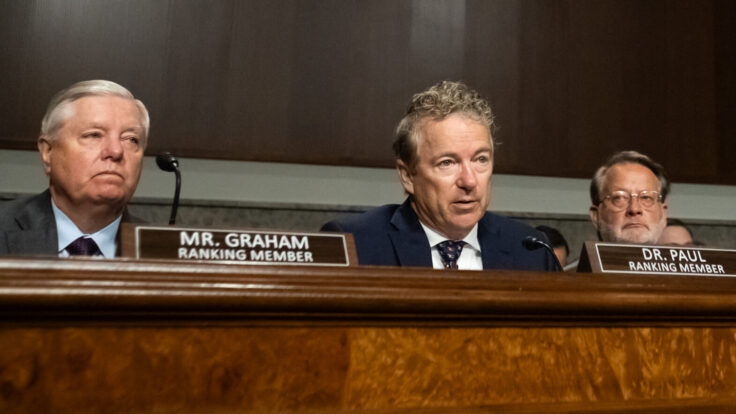
Still, there was at least some uncertainty voiced by the likes of Mike Braun, who opposed McConnell last year and withheld judgment this week. Josh Hawley, another one of the ten senators who opposed McConnell last fall, said he is “concerned.” Fellow Kentuckian Rand Paul questioned the dehydration diagnoses put out by McConnell’s doctor, though he added a day later that his medical assessment “has nothing to do with [McConnell’s] fitness to serve and whether he’s doing a good job or a bad job.” And then there were Lindsey Graham and Tommy Tuberville. Graham vouched for McConnell this week (“He sounds good to me… I’m all good with Mitch”) after voting against him as leader in 2022. Meanwhile, Tuberville raised questions about McConnell in recent days (“The last freeze-up, it puts into question in everybody’s mind whether he can do it or not,” he said) after supporting him in the 2022.
- Almost Famous: Democrats are considering making Marjorie Taylor Greene a central character in the coming House ad wars of the 2024 cycle, I hear, following polling that shows M.T.G. has strikingly high name ID. The plan, sources say, would be to tie her incendiary rhetoric, most of which has taken place on camera, to vulnerable House Republican incumbents.
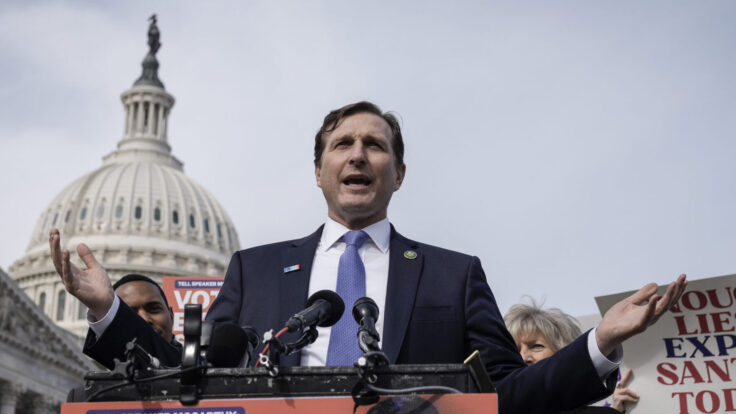
Interestingly, however, M.T.G. is not the most famous House Republican on the map, according to at least one Democratic group’s internal polling, nor is Speaker Kevin McCarthy. Rather, that honor goes to House Republican fabulist George Santos, who’s facing a daunting primary challenge next year. One operative I spoke with chalked it up, in part, to the Santos scandal exploding during the quiet holiday period last year, allowing the drama to break through into the culture more broadly. Nevertheless, it’s doubtful that Santos will appear at all in the Democrats’ national advertising next fall; there’s a good chance that he won’t even be on the ballot by then.
|
 |
| The “Coup Belt” & a New Cold War |
| As the U.S., China, Russia, and the Gulf states compete for power across the continent, Africa’s fragile semi-democracies have grown more and more cynical about the real value of democracy. |
|
|
|
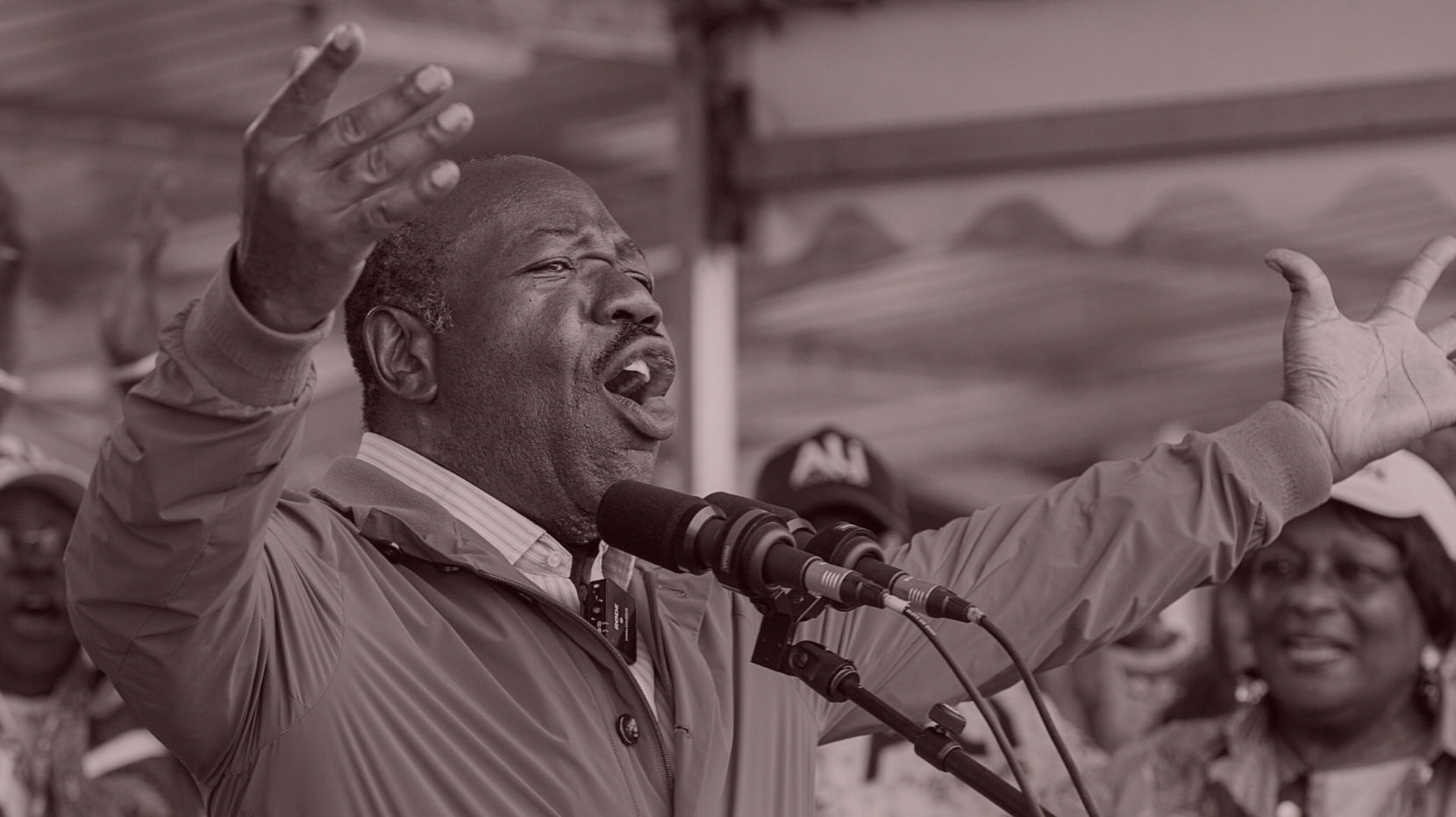
| Last week, as the summer drew to a close, President Ali Bongo Ondimba of Gabon found himself under house arrest, locked in his luxurious palace in the capital, Libreville. His cousin, General Brice Clotaire Oligui Nguema, announced that he and his soldiers had taken over the oil rich country on Africa’s Atlantic coast and would be ushering in a transition period. A month earlier, something similar had happened in Niger, when Colonel-Major Amadou Abdramane and his soldiers arrested Niger’s president, Mohamed Bazoum, and, blaming his regime for “poor economic and social governance,” declared an end to it.
While the coup in Niger received plenty of attention—the Biden administration put out strongly worded statements condemning it and calling for the release of Bazoum—few in the West noticed that Sierra Leone narrowly avoided a coup of its own in August. Or what happened after the continent’s other attempted coup, in Sudan, which set off another round of bloodshed in April, prompting the U.S. and other countries to evacuate their embassies. It would be tempting to call it a hot coup summer, were it not all part of a far longer season of discontent on the African continent, one that kicked off in late 2020. Since then, there have been coups in Tunisia, Burkina Faso, Mali, Niger, Gabon, Guinea, and Chad, as well as failed coups in Sierra Leone, The Gambia, and Guinea-Bissau.
Most of these coups have happened in the last two years and are concentrated in a swath spanning the continent from the Atlantic to the Red Sea, now known as the “coup belt.” “I would not want to be a commander sitting in ECOWAS headquarters right now,” said Paul Nantulya, a researcher with the Africa Center for Strategic Studies. He was referring to the Economic Community of West African States, an alliance which has been saddled with the unenviable task of trying to keep its members from overthrowing their own governments. “How do you roll back nine coups that have taken place in the space of 18 months? That’s basically one every three-and-a-half months. They must be tearing their hair out.”
And while all these coups have happened for individual and intensely domestic factors—in Niger, it was led by the head of the presidential guard who got wind that he was going to be fired; in Chad, the military intervened to ensure the dead ruler’s son inherited the throne, rather than the head of parliament, as per the constitution—there is clearly something larger going on. And, given the factors at play, it seems this is only the beginning. “I don’t think we’ve seen the end of it,” Nantulya told me from Dar es Salaam. “I think we’re going to see more coups, and many of them will succeed.” |
|
|
| No two coups are alike, but there are some important throughlines in the most recent rash. Coups are more likely to happen in poor countries with anocracies—that is, ruling systems that are neither liberal democracies nor brutally repressive autocratic regimes (coups are very unlikely in both of these extremes). But the thing that predisposes a country to a coup is, well, coups. The more coups a country has had, the more likely it is to have coups in the future. It’s what political scientists call “the coup trap.” Mali went through three coups in nine years, in 2012, 2020, and 2021. Burkina Faso went through two coups in 2022 in the span of just nine months—and it had one that failed in 2015.
This makes sense: once a taboo is broken and not reinforced, it loses much of its power. Why should the institution of government remain sacrosanct, especially if it itself is the product of the extrajudicial seizure of power? “In much of Africa, there’s little faith placed in democracy’s stock,” said Michael Shurkin, a senior fellow with the Atlantic Council’s Africa Center. “You don’t have a political culture like here. I watched January 6 completely horrified and I think a lot of Americans did, too. In a lot of African countries, you don’t have that. Africans have very little experience with democratic political culture before 1960, and after that, it’s been very up and down.”
Most African countries gained their independence from their colonial overlords at the height of the Cold War, and quickly became the subjects of a different imperialist game: a tug-of-war between Moscow and Washington. Most of these newly independent countries were undemocratic, one-party states, backed either by the West (America and its allies) or the East (the Soviet Union and its bloc). “Democracy was not part of the agenda at the time,” Nantulya said of the West and the U.S.S.R’s objectives in Africa. “What was important was the establishment of governments who would extend their influence. So coups became very, very fashionable.” Soviets would install a leader, and the U.S. would try to stage a coup against him, or vice versa, which often led to bloody proxy wars in places like Angola and Mozambique—as well as Afghanistan, East Asia, and Latin America. There were so many coups all over the world during the Cold War, that, at its peak, they averaged nine a year.
The trend abated with the collapse of the Soviet Union in 1991. Now, democratization was all the rage and African countries were not exempt. Countries like Nigeria, South Africa, and Ghana all moved away from military dictatorship and became democratic states, however flawed. Many others implemented reforms and set up democratic institutions. Militaries pivoted more toward protecting constitutions rather than their leaders, and the newly formed African Union adopted a policy of non-indifference to what went on in its member states.
But certain things didn’t change. Countries all over the continent were plagued by economic underdevelopment, gross governmental mismanagement and corruption, and were ruled by an entrenched, wealthy elite while the majority lived in grinding poverty. Gabon is a perfect example. Despite its natural wealth, Gabon’s population is quite poor, while the ruling Bongo family has properties all over France. “Gabon has been ruled as a piece of family property since shortly after independence,” said Nantulya.
In places like the Sahel, a jihadist insurgency from north of the Sahara took root and blossomed, dressing up local grievances in terms of holy war. In countries like Mali, Niger, Chad, Burkina Faso, and Sudan, local governments either struggled to provide security for their people or did so in a way that was so hamfisted that their policies pushed locals into the jihadists’ arms and made the insurgencies worse.
As a result, the idea of Western liberal democracy became less and less attractive. What do elections matter if you don’t know where your next meal is coming from? Or if you’re a young person with no job prospects? Or if you’re one of the millions of people made homeless by jihadist violence? One of the reasons there is a resurgence of coups on the continent is democratic backsliding, said Kwaku Nuamah, who teaches at American University’s School of International Service. “It’s happening because when African countries went through a period of mass democratization around 2000, but even the ones who did well haven’t been able to answer the core question of whether the state can provide for its people,” Nuamah argued. “At some point, it doesn’t matter what kind of government you have because legitimacy is measured by what can you do for me, not how did you get your mandate.” |
|
|
| All of this has been playing out in the larger context of the U.S. losing its post-Cold War perch as the world’s sole hegemon. Vladimir Putin made it his mission to bring back the Cold War and make the world multipolar again. In the meantime, China boomed and began looking for natural resources and markets abroad. “We’re no longer the only game in town,” said Naunihal Singh, author of Seizing Power: The Strategic Logic of Military Coups. “China has made it clear that it would deal with any incumbent,” as long as it can continue to do the business of mining, drilling, and building. In the countries of the Sahel, the Kremlin has offered security assistance in the shape of Wagner mercenaries. “Before, it used to be France, the old colonial power,” Singh explained of the security arrangement, but because the French, even with all their fancy equipment, can’t seem to get a handle on the jihadist threat, “there’s been a disillusionment with France and, by extension, the U.S.” This plays into anti-colonialist sentiment in these countries, which Moscow is only too happy to exploit.
Which is ironic, of course, because both Russia and China have taken a very colonialist approach to the continent, seeing it almost as a Monopoly board full of natural resources and allies they must accumulate to achieve great power status. It’s why Putin and Wagner were quick to swoop into Niger this summer. The late mercenary boss Yevgeny Prigozhin praised the coup in Niger and, a couple days later, Nigerien coup leaders flew to Mali to meet with its leaders. At the time, there were 1,500 Wagner fighters stationed in Mali, which had invited the Russians in after the French left last summer. (They’ve been busy committing atrocities while not managing the jihadis all that well.) A few days after the visit of the Nigeriens, the interim president of Mali—himself the leader of a successful coup—initiated a call with Putin to discuss “the peaceful resolution” of the crisis in Niger, where protestors were seen waving Russian flags in the wake of the seizure of power. “Where are they getting those flags from?” Nantulya asked. “People are saying they’d rather have Russia than France in Niger. On what basis these citizens are making that connection, why Russia and not, I don’t know, Brazil? There’s a clear Russian hand here, there’s very heavy Russian interference.”
The West, for its part, hasn’t comported itself well either. France still has close ties to its old Francophone colonies, which frequently send their elites to Paris for school and to build their networks. “It is their social elevator,” said Nuamah. It is also where many of these former colonies keep their national reserves. “France is essentially running their monetary policy for them,” Nuamah continued. Until recently, the close relationship between France and some of its former colonies bestowed some protection on the old regimes. “When there were coup attempts, France intervened in some of them to reverse them,” Nantulya explained. “It happened in Gabon, Guinea, and Mali as well. These are all former French colonies and when they had coups, they had to contend with French forces and French reaction. France had the military muscle to enforce its will.”
That’s changed. Now, France has pulled back from Mali and, despite its protestations about the coup in Niger, hasn’t done much to back up its statements. After the coup in Chad, Emmanuel Macron went for the swearing-in of the coup leader and then hosted him in Paris. Africans have noticed—as have potential coup plotters. Coups generally have domestic drivers but if your neighbor pulls one off and doesn’t get sanctioned or punished, if he even gets accepted, why not try one at home? “When a coup happens and no one does anything, it encourages more coups,” Nuamah said.
For the U.S., democratization has largely taken a backseat to security and counter-terrorism concerns. While China has invested in the continent economically, the U.S. has invested in training local militaries to fight the jihadist threat in the Sahel so that it doesn’t reach the homeland. The Pentagon built an airbase in Niger for launching drones, for instance. The Chadian military has become a key ally in the War on Terror. Burkina Faso has been the recipient of millions in security aid. And though Antony Blinken recently made good on his threat that the U.S. would suspend some of its aid to the Nigerien government, the measure excluded some security operations and the air base was not shut down. “It’s an important investment and the officers launching a coup must know this,” Singh posited. “Now, Niger is not just a country in the middle of nowhere, it’s a country with important U.S. military assets. Niger and Chad are important allies in the War on Terror so feel comfortable in making that gamble [in staging a coup], that the U.S. wouldn’t abandon them—and, in Chad, they were right.”
“African countries are hip to the hypocrisy of the north,” Nuamah explained. “Nobody cares about condemnation of human rights violations from the U.S. When Americans call you out, you don’t care that much, because you can point to 20 other times when they’ve done business with someone worse than you. You also know that the West will not impose sanctions on you if you have value.”
In some ways, it’s a return to the 19th century colonial race for assets in Africa. China, Russia, Turkey, and the Gulf are all vying for influence on the continent. Only this time, African countries have far more agency and control over who gets access to their land and resources. “Now they know that they can use great power competition to make it clear to the West that maybe we don’t need you,” Singh said. Nuamah put it differently: “It’s a game and Africans know how to play this game—and to blame outsiders when things don’t go their way.” |
|
|
| That’s all from me this week, friends. I’ll see you back here on Tuesday, same as ever, this time for a very special dispatch. Until then, good night. Tomorrow will be worse.
Julia |
|
|
|
| FOUR STORIES WE’RE TALKING ABOUT |
|
|
|

|
 |
|
|
|
Need help? Review our FAQs
page or contact
us for assistance. For brand partnerships, email ads@puck.news.
|
|
You received this email because you signed up to receive emails from Puck, or as part of your Puck account associated with . To stop receiving this newsletter and/or manage all your email preferences, click here.
|
|
Puck is published by Heat Media LLC. 227 W 17th St New York, NY 10011.
|
|
|
|