 |
|
Hi you,
I’ll skip the long intro this week in the interest of time. If you haven’t yet paid for a Puck subscription to read my last piece about President Joe Biden’s struggles with Black voters, or if you prefer me to read it to you, I did a special YouTube Live reading on Super Tuesday and took some questions. I’m going to experiment more with this format, so keep an eye on my channel.
The president gave a mostly strong State of the Union address last week, though he did look a little claymation-y to me—and probably set the record for coughs by someone giving a joint address to Congress. Brittany Packnett Cunningham has an explanation of the G.O.P. rebuttal from Alabama Senator Katie Britt that’s truly worth watching.
In the meantime, with the Oscars getting underway just as this email arrives in your inboxes (follow Puck’s Twitter account for my colleague Matt Belloni’s live commentary from inside the Dolby Theatre, starting at 4 p.m. PT), I’m focusing this week on a nascent part of the film industry: A.I. filmmaking. I spent some time talking with writers, directors, and an entirely new cadre of creators who are excited to tell stories in a new way.
|
|
|
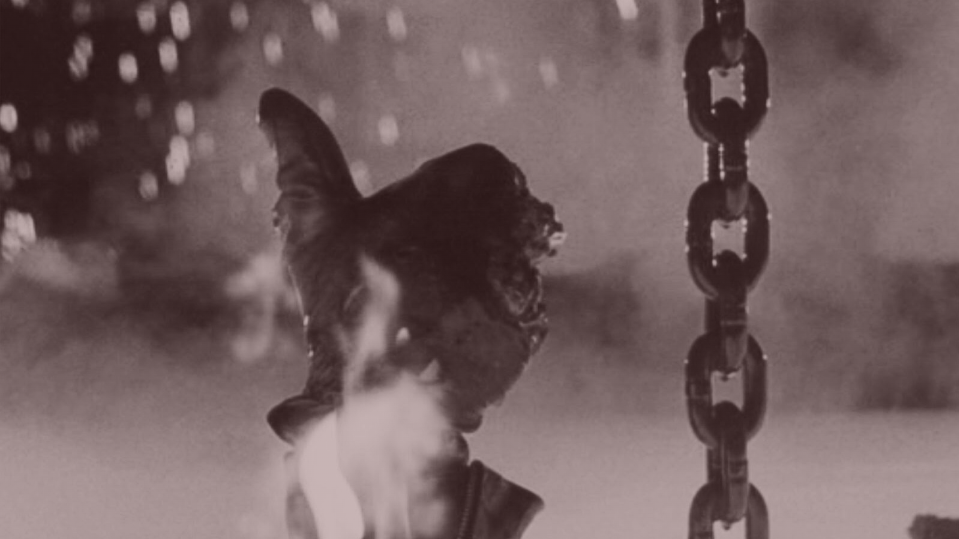
| Just a few days before the Oscars, eight miles west of the Dolby Theatre, I drove to the old Nuart Theatre on Santa Monica Boulevard to glimpse what may be the future of filmmaking in Hollywood. It was a screening of Our T2 Remake, an almost entirely A.I.-generated parody of James Cameron’s Terminator 2. I had stumbled across the film while watching one of my favorite YouTubers who covers A.I. and, without overthinking it, bought two tickets.
After all the agitation over whether artificial intelligence will destroy Hollywood, I was eager to see if “one of the world’s first A.I. feature-length films” was actually any good. Less than a month earlier, OpenAI had revealed Sora, its breakthrough generative video tool that appears to be leaps and bounds ahead of its competitors’, allowing just about anyone to turn a simple text prompt into practically photorealistic moving images. It landed with such an impact that Tyler Perry immediately decided to put his $800 million studio expansion on hold, blaming the technology’s “mind-blowing capabilities” for his reticence to invest. Maybe it was a scapegoat, but the panic in the industry is real.
Inside the Nuart, however, the tech-savvy crowd was mostly excited. I immediately ran into Willonius Hatcher, a fellow Black creator I first met at SXSW Interactive over a decade ago. He’s embraced A.I. video making, and some of his work has gone viral on Instagram, including a trailer for a fake movie featuring famous Black comedians as the Avengers. Willonius, who had flown in from South Florida for the screening (and to take a meeting with Kevin Hart’s production company), walked me through the theater lobby and introduced me to other members of the A.I. filmmaking community: Dave Clark, a commercial filmmaker whose A.I.-based spec Adidas ad has been generating buzz; Shelby and Caleb Ward, who created Curious Refuge, the online A.I. filmmaking academy behind viral videos re-creating I.P. like Star Wars in the style of Wes Anderson; and Jeremy Boxer, a creative director and co-founder of the L.A.-based Friends With A.I. collective. I was also joined by my friend Matt Klinman, a comedian, TV writer, and tech critic whom I first met during our days at The Onion.
It was an extraordinary night, capped off by Clark screening a hybrid A.I./live-action horror short. So much of the vibe in Hollywood these days is fear or outright opposition to A.I., but as Nem Perez, one of Our T2 Remake’s executive producers, said, “We’re really not out here to destroy the world. We just want equal opportunity. We just want to make movies and films.” Perez is now one of the ringleaders of this creative community, and for a few hours I was at its physical epicenter: a screening of a parody of a film about a deadly superintelligence, made by creators using A.I., in Los Angeles, a few days before the Oscars. So here are a handful of observations, thoughts, and predictions about what A.I. filmmaking tools are going to do for us… and also what they’re likely to do to us. |
|
|
| After the screening, I reached out to the Oscar-winning director Guillermo del Toro, an A.I. critic who once said that using the technology in a film would be an “insult to life itself.” Surprisingly, perhaps, he offered a more nuanced take. “The most powerful art is alchemical, not chemical,” he texted me. “It comes from the sometimes illogical choice that sums up a point of view and a life fully lived.” A.I. developers, he suggested, ought to “walk back the discourse and present it as a tool, but not a substitute for creation.”
I’m not sure if del Toro has watched Our T2 Remake, but I doubt he’d be too concerned on the substitution-for-creation front. On the contrary, the parody was more like a pastiche, with the movie broken up into 50 segments, produced by 50 different artists, and the “scenes” stitched together after the fact. To avoid legal hangups, the artists weren’t allowed to use original footage, music, sound, or dialogue, and the entire work was billed as a parody. The result felt more like an artistic interpretation of Terminator 2 and its themes, rather than a coherent feature film.
Still, it mostly worked. The visual styles included animation, video games, music videos, ’90s suburban sitcoms, and more—but what really distinguished each scene was how it interpreted the story. A handful of the film’s 50 scenes stood out for their narrative clarity and the cleverness of their satire. There were fake commercials and fake news segments commenting on the original film. The morality of traveling back in time to kill one scientist and save billions in the future was literally adjudicated in a satirical Law & Order courtroom scene that I will never forget. But there were also a lot of misses. As Perez said in a Q&A after the screening: “A lot of artists are not really known for their comedy, but they wanted to be part of this. People had to find a way to be funny, and that’s probably why there’s eight fart jokes in it.” His co-producer Sway Molina added, “It’s hard to translate what’s funny from social media to the theater.”
The whole experience was a reminder that just because A.I. tools are accessible, that doesn’t necessarily make it any easier to produce quality. A film still needs a compelling story, character development, a narrative arc, meaningful tension, emotion, and everything else that makes a work work. As my friend Matt said to me on our walk to the afterparty (yes, we went to the afterparty), seeing this reminded him “how amazing the original film was.” After the screening, the idea that A.I. filmmaking is on the cusp of replacing, or even displacing, traditional films and television felt far-fetched and a long way off.
And, obviously, Our T2 Remake still required the skills of a trained editor like Perez, who made the final cut of the film, making sense of the jumble of scenes and layering a sound mix over the top. “This whole thing was a huge experiment,” he told the audience at the post-screening Q&A. “So I wasn’t sure if it was going to work, being able to cut from one scene to another.” Each of the artists who contributed to the film were also encouraged to collaborate on Discord, with each scene getting its own dedicated channel.
After the screening, curious to learn more, I asked Willonius about his own creative process when making an A.I. film. He said he uses ChatGPT to help with scripting, Midjourney for images, Runway to make those images move, Elevenlabs to generate voices, and Suno for music. As he put it, he was most excited about “putting it all together.” He sounded like a one-person studio. Matt, texting me the morning after the screening, reflected “the thing I think I learned last night is that gen A.I. video is for editors.”
For now at least, editing is the key talent required to get the most out of A.I. tools. As Perez said, “I feel like the best A.I. artists are the best editors because it’s really a postproduction workflow that you’re dealing with; it’s not really production.” Once a project is underway, the question then becomes what images should be used, how they should move, and what sounds should accompany them. Some of those elements are generated entirely by A.I., while others involve live-action filming against a greenscreen and the application of visual effects. Coordinating all these tools and elements takes skill, and a certain type of mind, like remix artists or music producers who heavily integrate sampling. That means people with talent are going to be able to do amazing things with these tools. But it also means that A.I. creators will have a different skill set than traditional storytellers in other formats. |
|
|
| One of the first things Matt noticed at the T2 screening was the age of the people at the Nuart. Sure, there were a few Gen Z kids. But for the most part, the theater was filled with people in their 30s, 40s, and 50s, many of whom were film and television veterans or folks who had been trying to break into Hollywood.
Ironically, it was last year’s dual writer and actors strikes that gave many of them the push they needed: Willonius told me he had just completed a year-long fellowship designed to eliminate barriers for pre-WGA Black writers, and was preparing to meet with agents, when the strike hit. He filled his time exploring A.I. tools. Perez likewise decided to lead the T2 effort because of the industry-wide work stoppage. “It was in the middle of the strike,” he explained. “I myself am a film director. Sway is an actor. We were out of work, and we were also really exploring this A.I. community.”
So far, at least, one of the great fears animating those strikes—that studios will use A.I. to replace writers and actors—hasn’t materialized. Yes, some artists are threatened by A.I. tools, but others are discovering new artistic opportunities. “What I’m going to look forward to more and more is not what’s going to be replaced, but what can be done that wasn’t able to be done before,” said Boxer. Curious Forge’s Shelby and Caleb Ward told me their A.I. film students hail from 67 countries. One duo, a husband and wife from Kyiv, were able to document their war experience by using A.I. to set scenes they wouldn’t have otherwise been able to capture. “These are people that are non-traditional storytellers,” they told me.
According to the team behind Our T2 Remake, those who dismiss A.I. art as illegitimate are missing the point. “This is what people outside the community don’t understand,” Molina told the audience after the screening: “We’re not just clicking buttons; we’re just more curious than you.” Nevertheless, there are legitimate questions about whether A.I., in making film production more accessible, will also drive down labor costs in addition to allowing hobbyists to operate at a similar level as professionals. Content will be easier than ever to make, but will the compensation model follow? After all, A.I. filmmaking might create a whole new pipeline for people to break into the industry, but making art and making money are two different things. As Matt succinctly put it: “Are these the artists of tomorrow, or the suckers?”
For decades now, we’ve been exchanging “analog dollars for digital pennies” as the distribution cost for virtual products—digital ink, streaming music, video on-demand—has plummeted. I have no doubt that artists will continue to adapt and make incredible things with new tools, including generative A.I. The best of them will shine, make money, and even have genuine careers. I plan to be among them. But in order for these to not just be exceptions, we’ll need some new rules about how the money flows. When I asked Perez and Molina about their own vision for compensation, they told me that while theirs was a nonprofit experimental film, they foresee direct distribution of future projects with sales revenue going directly to the contributing artists via more decentralized systems like blockchain, not traditional studios. “It’s just the artists taking control of their work,” Perez said. I hope he’s right, but recent history suggests it will take a more robust and organized approach to deliver a financially stable industry that supports careers, not just creativity. |
| Disrupting the Disruptors |
|
| There’s a beautiful hacker spirit to the people in this nascent A.I. film community. They feel the need to create by any means. But it’s becoming increasingly difficult, maybe even futile, to try to keep up with the speed of the technology. As Nem said in his opening remarks, “a month in the A.I. world is like a year.” Parts of Our T2 Remake already look outdated, even though it was made over the last six months, simply because many of the tools they used have undergone significant upgrades. But that’s just the current reality of using A.I.: Right as you master the latest version of Midjourney and Runway, your knowledge might become obsolete with the arrival of even newer tools like Sora. A.I. progress is on an exponential curve, which is both exciting and daunting; it also means disruptors no longer have as much time to enjoy their disruption before they, themselves, are disrupted.
When I first started writing about generative A.I., a very distant 15 months ago (or was it 15 years?), I expressed hope that we would be able to get ahead of the threats because we were quick to name and organize against them, unlike previous waves of technology. As del Toro put it to me, “The moral and ethical aspects of [A.I.] will need to be regulated and the nature of copyrighting and creation will necessitate a long, long time to happen.” But we don’t have a long time. The emergent problem is that the thing we’re organizing for is also changing faster than anything else we’ve dealt with. We can pat ourselves on the back for moving quickly against A.I., but if A.I. is progressing at an exponential rate compared to the explosion of social media, are we making progress? It melts my brain to even think about this, but we must work hard to figure it all out. It won’t sort itself out magically.
At the theater last week and elsewhere, I’ve seen firsthand how A.I. can be used as a tool to unleash creativity and create beauty—and, perhaps most importantly, offer new inroads for people who have been traditionally excluded from a very gatekept industry. Whatever revolution is ahead of us in entertainment, it is all but certain that A.I. will play a central role. But if that technology evolves too fast, and the old industry burns to the ground before we can establish the pillars of support and safety that will protect the creators and businesses that keep it propped up, the potential utopia that A.I. evangelists continue preaching about will evolve into something much darker. |
|
|
|
| FOUR STORIES WE’RE TALKING ABOUT |
 |
| Red Carpet War Games |
| Digging into the lucrative business of dressing marquee celebrities. |
| LAUREN SHERMAN |
|
 |
| ‘Michael’ Biopic Murmurs |
| A look at the first Jackson estate-approved biopic to address his controversies. |
| MATTHEW BELLONI |
|
 |
|
 |
|
|
|
|
|
 |
|
|
|
Need help? Review our FAQs
page or contact
us for assistance. For brand partnerships, email ads@puck.news.
|
|
You received this email because you signed up to receive emails from Puck, or as part of your Puck account associated with . To stop receiving this newsletter and/or manage all your email preferences, click here.
|
|
Puck is published by Heat Media LLC. 227 W 17th St New York, NY 10011.
|
|
|
|