|
|
Welcome back to The Stratosphere, my weekly dispatch from Silicon Valley on the biggest egos and power plays bridging tech and politics. In today’s note, a few scoops: 1) A new philanthropic plan from Hillary Clinton, 2) The latest on a shake-up at Thiel Capital, the family office of Peter Thiel, and 3) A possible major speech in the offing from Gavin Newsom that will perk up ears at the White House…
But first…
There’s always been an inherent tension to be navigated by Bill and Melinda French Gates when it comes to their Giving Pledge, the promise by some 200-odd billionaires to donate at least half of their net worth to philanthropy in their lifetime or wills. Pledge officials, including the Gateses themselves, try to avoid dictating to these mega-successful signatories what they should or shouldn’t do with their money, a posture that encourages billionaires to sign the damn thing. But the Pledge’s “Relationship Managers” also want to be hands-on enough to make sure that these aren’t empty commitments—that the signers actually do give away the money, and thoughtfully, too. Alas, therein lies the tension.
In recent years, the Giving Pledge team, led from Seattle by the hyper well-connected Rob Rosen, has tried to find a middle ground by not telling signers what to do, but giving them educational programming and opportunities to fund things together. To that point, I have learned that this week, the Giving Pledge is hosting its first “Learning Trip” in many years, bringing billionaire donors and their teams to Montgomery, Alabama, the so-called birthplace of the civil rights movement, according to an invitation I’ve seen. About 30 signatories, associated family members, and their attendant senior staff will spend time with Bryan Stevenson of the Equal Justice Initiative, which erected the new, much-celebrated National Museum for Peace and Justice and its memorial to the victims of lynchings.
The Giving Pledge has organized a few such field trips in the past—one in Washington, D.C., hosted by Carlyle founder David Rubenstein on “Patriotic Philanthropy,” and another in Tulsa in 2018. And they’ve also organized a half-dozen or so “Learning Sessions” a year for the last decade, where outside speakers and donors discuss their work outside of the Annual Gathering. But the focus on racial justice issues is a new focal point for the Gates team, following a series of Learning Sessions on equity after the George Floyd murder in the summer of 2020. We’ll see what all of this actually leads to.
|
|
|
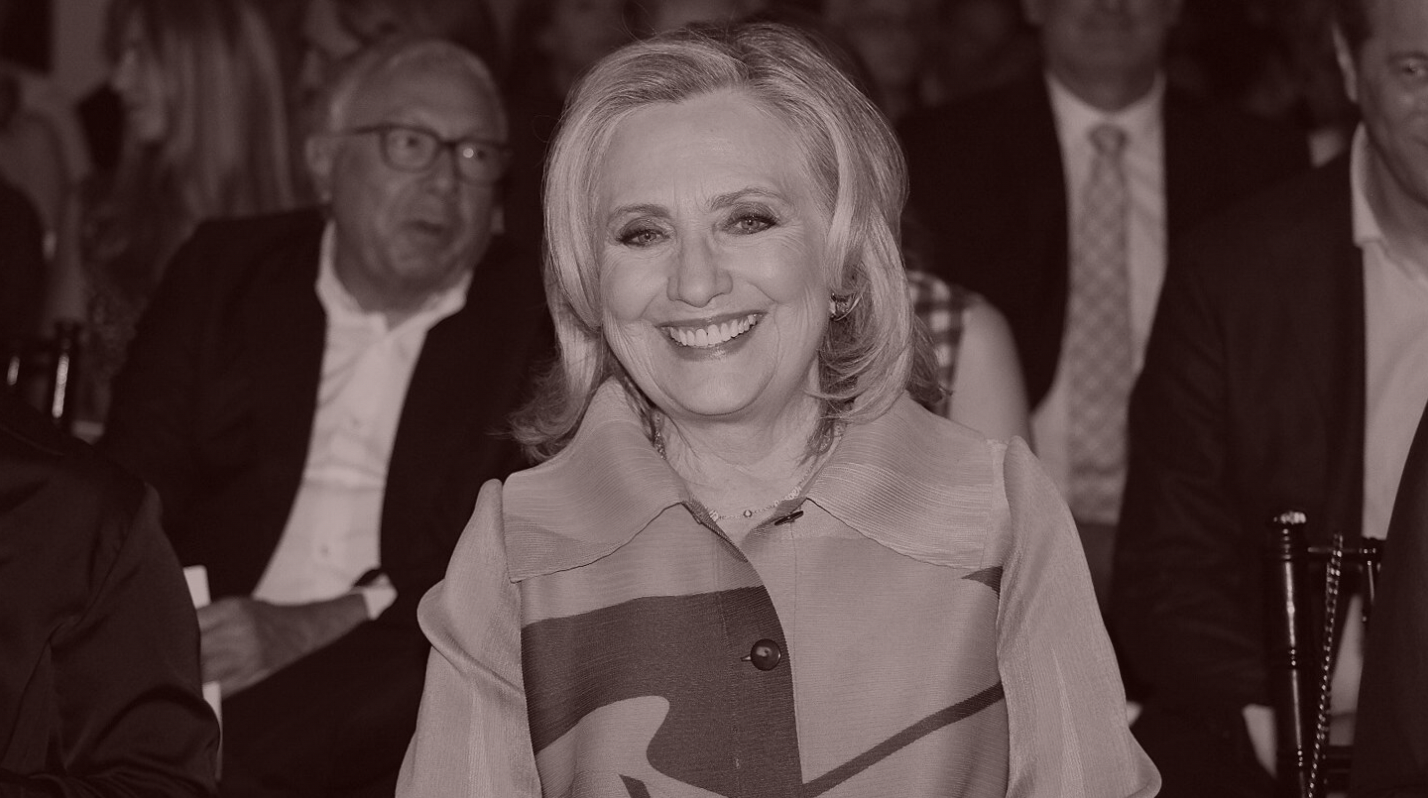
| On Monday evening, Hillary Clinton gathered about 100 of her top donors and longtime supporters at the St. Regis in New York to talk about her future. No, no, she’s not running for anything, but Clinton turns 75 on Wednesday, and the former first lady, senator, and secretary of state wanted to convene her network to say thanks and rally the troops ahead of the final sprint before Election Day. She was described to me by attendees as upbeat and enthusiastic.
Clinton, though, has also been thinking about what’s next for herself—and there is a new project on the horizon. She has been pitching donors on a new philanthropic entity called the Hillary Rodham Clinton Leadership Project, I’m told, which will be housed at the Clinton Foundation. The new Clinton initiative will both highlight what Clinton has already done, particularly for women around the world, and serve as a new home for Clinton to talk about her own philanthropic work going forward—on democracy, global health and leadership development.
Clinton does a lot of fundraising for her existing entities, such as Onward Together, her 501(c)4, its associated 501(c)3 foundation, and I’m told that Clinton’s 2016 finance chief Dennis Cheng has also been raising money to beat back litigation from Donald Trump and John Durham. But Hillary will now have a trademark philanthropic project within the foundation that, after all, was originally founded by her husband (it was retitled in 2013 to include her name). To that end, in early December, Hillary is bringing her network to Little Rock for a new Women’s Voices Summit. |
|
|
| There are almost no aides to Peter Thiel with larger public profiles than Eric Weinstein, the mathematical physics PhD who came to prominence over the past few years as the founding father of what he called the “intellectual dark web.” Since then, Weinstein has become a sort of public intellectual to various contrarian thinkers, populist reactionaries, and a small but devoted following among the Silicon Valley crowd, frequenting Joe Rogan’s podcast and dispensing daily provocations to his 700,000 followers on Twitter. All the while, Weinstein has maintained a day job as a Managing Director at Thiel Capital, the investor’s family office. Or he did, until recently. I learned this week that Weinstein quietly exited Thiel’s shop sometime over the last few months. (Weinstein didn’t return a request for comment.)
Weinstein is the second senior executive to leave Thiel’s family office in recent months in a broader shake-up at the firm. As I previously reported, Jimmy Kaltreider, the executive director of the Thiel Foundation, was fired earlier this summer over primarily personal, and some political, issues. I’m also told that Sebastian Kurz, the former chancellor of Austria who is being investigated for corruption, has had his part-time role diminished. Jack Selby, another Thiel Capital investor with a Managing Director title, launched his own venture fund earlier this year, although he technically remains at Thiel Capital. And then there is, of course, Blake Masters, the firm’s chief operating officer and Thiel’s longtime de facto chief of staff, who resigned this year to run for Senate in Arizona.
In the wake of Kaltreider’s ouster, I’m told that the firm’s new chief operating officer and Kaltreider’s successor at the Foundation, Brian Rowen, has worked to clean up the family office, which led to Weinstein’s own departure. But Weinstein’s departure is significant because, short of Masters, no Thiel aide has anything resembling Weinstein’s public stature. After all, most family office aides intentionally avoid the spotlight. But Weinstein is indisputably a brand in his own right, hosting a culture podcast, popularizing the “I.D.W.” (half-jokingly, according to Bari Weiss’s memorable profile) alongside fellow travelers like Lex Fridman and Jordan Peterson, and cultivating a fan base that overlaps with Rogan’s.
In P.T.’s orbit, Weinstein was a “man of many hats,” Thiel once said, calling him “a truly great heterodox thinker.” Weinstein has worked for Thiel since 2013, when Thiel asked him to help him “think things through from first principles,” as Weinstein once told Tim Ferriss. Weinstein has different politics than Thiel—like Rogan, he voted for Bernie, and like Rogan, he fashions himself a “contrarian,” with a wide range of heterodox fans from across the tech industry.
Weinstein has relished touching controversy on topics from Ivermectin, the purported Covid drug, to Jeffrey Epstein. I have no doubt that in this era, when everyone, even family-office aides, can become influencers, that Weinstein will maintain his following even without the Thiel paycheck. “I’m really only interested in building this intellectual movement,” Weinstein told Weiss a few years ago. “The I.D.W. has bigger goals than anyone’s buzz or celebrity.” |
| Gavin’s Midterm Post-Mortem |
|
| Gavin Newsom has been very voluble and caustic about the Democratic Party’s feebleness in the culture wars du jour. “Where the hell is my party?” Newsom memorably said in the wake of the Dobbs decision leak in May. And at the well-attended Texas Tribune festival last month, Newsom said Republicans are “winning right now.”
“Where are we?” Newsom said. “Where are we organizing, bottom-up, a compelling alternative narrative? Where are we going on offense every single day?” Newsom has summarily dismissed speculation that he is running for president in 2024, but intra-party rebukes like those certainly raise his profile in case Joe Biden decides to bow out.
Now, I hear, Newsom’s team is giving thought to him delivering a major post-mortem speech about politics in the first few weeks after Election Day. No decision has been made yet on whether the speech even happens. What exactly he says—and how big a rhetorical swing he takes or doesn’t take—depends, of course, on what happens in the midterms, and just how badly Democrats get shellacked.
It’s possible, I hear, that he plays it small and focuses on his plans for his second term as governor of California, in which case this will end up being a disappointing spectacle for national media salivating over the prospect of someone other than Biden running for president—and essentially serve as a flag-marker for 2028. But if he goes big and talks about the need for fresh leadership and ideas in the party, expect the speculation about a hypothetical ’24 Democratic primary fight to amplify—and become more distracting for the current occupant of the Oval Office. |
|
|
|
| FOUR STORIES WE’RE TALKING ABOUT |
 |
|
 |
|
 |
| Star Wars Woes |
| A memorandum on the (mis)management of ultra-lucrative Star Wars I.P. |
| MATTHEW BELLONI |
|
 |
| Tapper Troubles |
| A check-in on the Tapper experiment, Murdoch curiosities, and Semafor’s launch. |
| DYLAN BYERS |
|
|
|
|
|
 |
|
|
|
Need help? Review our FAQs page or contact us for assistance. For brand partnerships, email ads@puck.news.
|
|
|
|
Puck is published by Heat Media LLC. 227 W 17th St New York, NY 10011.
|
|
|
|