|
Welcome back to Dry Powder, I’m Bill Cohan.
As you might have noticed, the tribulations of Saks Global, the seemingly misguided $2.7 billion roll-up of Saks Fifth Avenue, Neiman Marcus, and Bergdorf Goodman, is becoming something of a leitmotif here at Dry Powder. The big question on Wall Street—whether the private company will be able to make a $121 million interest payment due at the end of June—has led to other questions. The analysts at Debtwire shared their recent reports on Saks Global with me, and I’ll get into their forecasts, below.
But first…
|
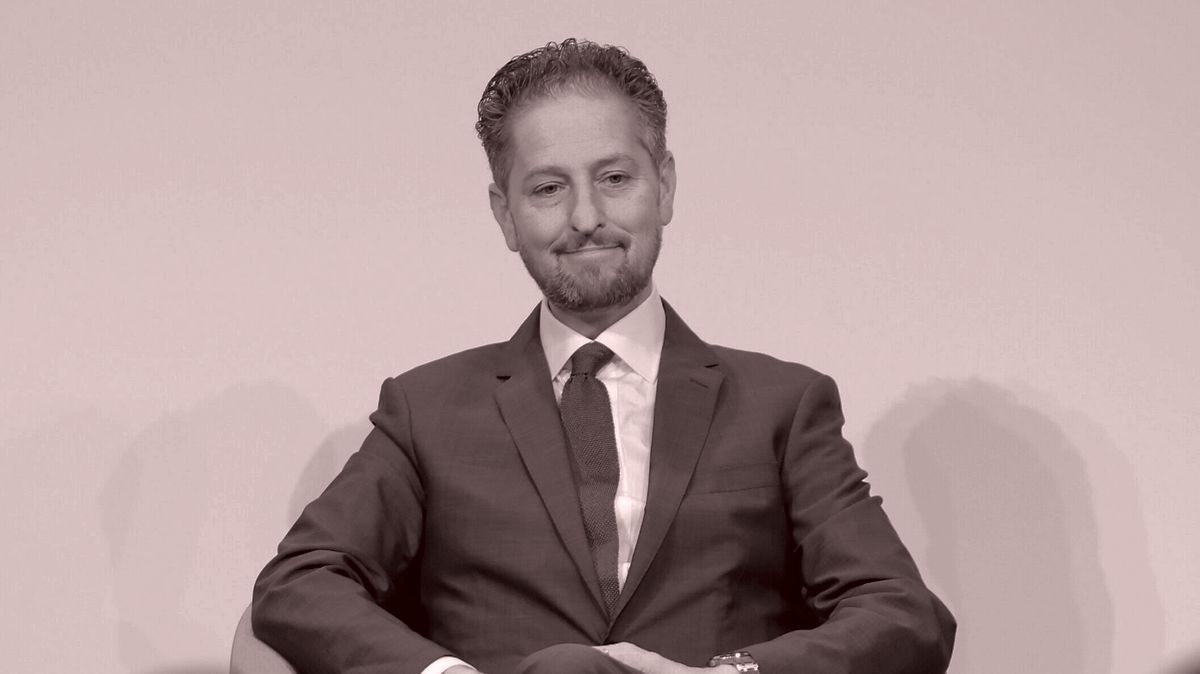
- Hired by Hegseth: Jeff Bornstein, the former C.F.O. of GE, has worked for some serious corporate heavyweights in his time, including Jeff Immelt and his successor, John Flannery. More recently, he’s been dabbling in private equity and venture capital, taking stakes in companies including ZincFive, a manufacturer of nickel-zinc batteries, and Holobiome, a biotech startup.Now, it looks like Bornstein will have a new boss: Pete Hegseth, the former Fox News personality turned Trump’s embattled secretary of Defense. According to Inside Defense, Trump has nominated Bornstein to be the comptroller at the Pentagon—he will be the one designing and promoting the department’s $1 trillion annual budget. That’s even more than what he oversaw at GE, where he was once under serious consideration to succeed Immelt as C.E.O. before losing out to Flannery. Good luck, Jeff!
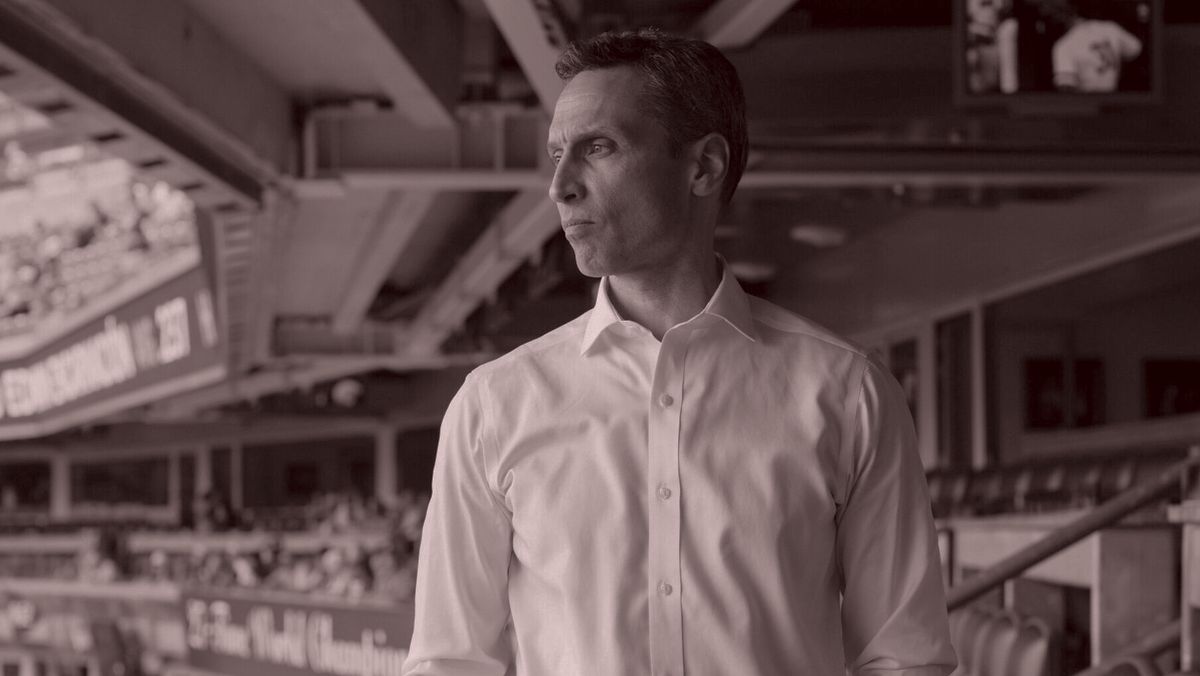
- Josh’s sporting life: Our old friend Josh Harris, fresh from Crystal Palace’s first FA Cup in the team’s 164-year history, has a new toy: a minority stake in financial services firm Cantor Fitzgerald. On Monday, Cantor announced that Howard Lutnick, its longtime chairman, and now Trump’s Commerce secretary, had transferred his ownership position in Cantor to a trust controlled by his two Gen Z sons—Brandon (Cantor’s new C.E.O.) and Kyle (Cantor’s new executive vice president)—as well as to his other adult children, who aren’t involved in Cantor. Lutnick also sold stakes, together worth more than $360 million, in two other companies in which Cantor is, and remains, an investor.As part of the ownership transfer, Harris’s new firm, 26North Partners, will become a minority investor in Cantor Fitzgerald, alongside Glenn August, the C.E.O. of Oak Hill Advisors. “These transactions divest his ownership, voting, and economic interests in the companies, complying with Mr. Lutnick’s U.S. government ethics agreement,” according to the press release announcing the transactions.
Trump, of course, has not divested himself of his own corporate ownership interests while serving as president. But Lutnick will get a nice tax break for his service: He won’t have to pay any capital gains taxes on the transfers or the sales, as long as he moves the proceeds into Treasuries. Nice work if you can get it.
|
|
And now back to the debt journey of our time…
|
|
|
|
The strife continues at Saks Global as the luxury retailer faces a $121 million interest payment due next month and a possible $100 million-plus shortfall in August. Meanwhile, executives have questions about the art and jewelry that Saks claims accounts for nearly a third of its $689 million of inventory—and which the company is desperately trying to sell.
|
|
|
The situation at Saks Global, one of the most venerable names in American retail, continues to deteriorate. To “level set,” as the consultants like to say, the price of Saks Global’s $2.2 billion of senior secured bonds, due 2029, is now around 47 cents on the dollar, yielding 34.5 percent. Bond prices fluctuate all the time, of course. But it’s striking for a bond to have fallen in price by half in about five months, and to be yielding more than 30 percent. That is often a leading indicator of trouble with a capital T. Meanwhile, Saks is facing its first interest payment, of $121 million, on the bonds at the end of June—a payment that the market is wondering if the company will make. I’ve spent four decades working on and covering Wall Street, and this is a wowza situation. My bet is they’ll make that interest payment—because honestly, they have to—but it’s going to be dicey, nonetheless, and they may end up regretting it.
As I reported last week, high-priced legal and financial advisors have been hired—Kirkland & Ellis and PJT Partners for Saks Global; Paul Weiss and Lazard for the bondholders—kicking the restructuring process into a higher gear. Wall Street research analysts have also started weighing in on Saks Global’s precarious financial situation with growing urgency. One of them, Debtwire, which is part of Ion Analytics, shared with me its troubling May 7 report on the company’s tribulations.
Per the report, the $2.7 billion combination of Saks Fifth Avenue and Neiman Marcus Group, which closed last December and precipitated this mess, was “in distress right out of the gate. … The merger increasingly appears to have been underwritten on optimism rather than defensible economics.” Debtwire also noted that Saks Global’s deferred payment plan for its vendors, known in the industry as “the Valentine’s Day Massacre,” underscored “its fragile liquidity position.” That’s a phrase you don’t ever want to see, or hear, if you’re in the retail business.
The Debtwire report echoed some of what I’ve previously written, as well: The EBITDA and synergy assumptions found in the bond prospectus “likely leave Saks Global in a far more precarious leverage situation than advertised.” Saks Global’s “recourse” debt-to-EBITDA ratio could be as high as a whopping 20x, based on EBITDA of $162 million for the fiscal year ended January 31, Debtwire warned. (Although it’s not clear to me where they got that number, it’s a number sources close to the company also confirmed to me.) Even giving management the benefit of the doubt on $150 million of realized synergies so far, the debt-to-EBITDA ratio is still a scary 10x, according to Debtwire.
|
|
Then there’s the matter of a real estate joint venture that might put Saks on the hook for another $100 million or more beyond the upcoming $121 million interest payment. According to Debtwire, Saks Global owns a 62.4 percent stake in HBS Global Properties LLC, with the balance owned by real estate developer Simon Property Group. The joint venture—which owns 10 Saks stores and 20 defunct Lord & Taylor locations, in addition to various ground leases—has a $599 million commercial mortgage-backed security (with a “distressed collateral profile,” as Debtwire put it) due in August 2025.
The way Debtwire figured it, the properties owned by HBS Global were recently appraised at $525 million, 53 percent below their appraised value in 2019. Assuming the market would refinance the CMBS at maturity, at a 60 percent loan-to-value ratio, that would generate new proceeds of $315 million—leaving a hole of roughly $275 million, of which $170 million or so would need to come from Saks Global, as soon as August. “Fully funding the capital call could severely impair Saks Global’s already constrained parent-level liquidity,” Debtwire wrote. Yikes. Sources close to the company confirmed with me that the CMBS debt is payable in August, but “there is no shortfall,” as Debtwire thinks there might be. We shall see about that, of course.
The report also noted that there could be a problem with structural subordination of the current bondholders, leaving them further removed from the equity that supposedly exists in the flagship Saks Fifth Avenue store in Manhattan, once the $1.25 billion CMBS on that property is paid off. The actual “realizable value” on the flagship could be less than advertised in the bond prospectus because of the building’s landmark designation, and the fact that its air rights were sold off, in 1986, to Swiss Bank Corp., now part of UBS, under a 100-year lease. “We expect the actual value of Saks Global’s equity in the property to be meaningfully below what the company contends,” Debtwire wrote.
In a follow-up report on May 19, Debtwire also warned that Saks Global could be in for some creditor-on-creditor violence. A group of bondholders owning some 51 percent of the $2.2 billion of bonds might seek to improve their collateral position in relation to the other 49 percent of the bondholders, and even be willing to provide Saks Global an additional $250 million of badly needed financing. (The bond indenture may permit such a move.) Saks could presumably use the extra cash, or the availability under its $1.8 billion asset-based loan (ABL) line, to make the June interest payment and to handle whatever true-up might be needed as part of the refinancing or repayment of the HBC Global Properties CMBS due in August. In any event, things are really heating up on Fifth Avenue.
|
|
Recently, an increasingly nervous Saks executive told me about several other potentially disturbing developments, among them that Saks Global is delaying bonus payments to certain executives—those exempt from state minimum wage and overtime laws—until November, some six months after the payments have traditionally been made. This executive also pointed to inventory-related concerns regarding a large cache of so-called “artworks” that Saks has been trying to sell without much luck, as well as a cache of “high jewelry.”
The executive’s worry stems from the fact that Saks is valuing the “artworks”—more than 100 pieces in total, mostly framed prints—and the “high jewelry” at $100 million each, meaning together they account for 29 percent of Saks’ $689 million in total inventory. I’m told that Saks paid an art dealer $2 million for the artworks, plus future commissions—so for those keeping track, Saks is valuing the art at about 50x (or a bit less, depending on the commissions) what it paid. But also, the art isn’t selling! Only some $400,000 worth sold in 2024, and some $50,000 so far this year. A similar story pertains to the jewelry, I’m told, which Saks purchased from diamond vendor Grandview Klein for $33.3 million, and is also valued at $100 million, even though the vendor took half of the inventory back. “It’s crazy,” the executive said. (A source close to the company said neither the artworks nor the fancy jewelry is included in the ABL borrowing base, although the source confirmed Saks is valuing both at $100 million each.)
I’m also told that the Saks Fifth Avenue Club program—personal shopping and styling services available in some Saks stores, as well as various upscale hotels and resorts—is “an absolute disaster” that is “hemorrhaging money,” with costs exceeding the revenue that the clubs generate. Projected revenue at each club of some $4 million is looking to be closer to $500,000. “They’re just bleeding out,” the executive told me. “It’s like a joke. People in the company just snicker.” For their part, the source close to the company said the clubs were designed less to make money and more for marketing purposes, and that Saks is happy with their performance.
|
|
I recently spoke with Alison Diboll, the C.E.O. of Gabriella Rossetti, which she described to me as a “plus-size, attainable luxury brand” that she built herself “by bootstrapping every step” of the way. Until recently, Gabriella Rossetti was selling some of its clothes in Saks. After the Valentine’s Day Massacre, she reached out to Marc Metrick, the Saks Global C.E.O., because her company had not been paid for its merchandise. On April 14, Metrick called her back. “During that 57-minute call, he said—twice—‘I’m not a bad person,’” she told me. “He seemed to grasp, perhaps for the first time, that Saks had inflicted real harm on our small business. Only after I walked him through the impact of the direct and collateral damage he’s caused—including cutting our possibility of raising a seed round—did he acknowledge that Saks had caused damage. He seemed blissfully unaware of the downstream effects his team’s decisions were having on small vendors like us.”
To make things right, according to Diboll, Metrick proposed a seven-figure advance purchase order for Gabriella Rossetti inventory. “For us,” she told me, “that would have changed everything. But since that night? Nothing. He went silent. Total ghosting.” She’s now trying to raise new capital from investors, knowing that she probably won’t be able to sell her clothing through Saks anymore. “It’s a real-time example of how power isolates leadership,” she said, “and how Saks can quietly gut the brands it depends on—without ever looking them in the eye.” (The source close to Saks said the company made Diboll whole on what it owed her and gave her back the returned inventory gratis. As for the advance purchase order, the source said Diboll rejected the offer because Gabriella Rossetti is a made-to-order operation.)
In recent calls with staff, according to the nervous executive, Metrick has been blaming the media for Saks’ woes, saying the company’s challenges are being used to generate subscriptions to paywalled sites—perhaps a jab at Puck and Bloomberg. In another call, Metrick apparently told the merchant group that Saks wasn’t afraid to start flexing its muscles with vendors. “In this new world order,” Metrick reportedly said to his top executives, “you’re either a hydrant or a dog, and we are the dog.”
According to the executive, people on the call were “just dumbfounded” that Metrick would make such a statement, knowing it would inevitably get back to vendors, who would not be happy to be pissed on by Saks, as indeed appears to be happening in the wake of the Valentine’s Day Massacre. (The source close to Saks Global said Metrick made these comments in order to inspire the troops during a difficult time for the business.) Said the Saks executive about the situation unfolding inside the company: “I make the analogy of, Lord & Taylor is in the graveyard, Hudson’s Bay is on the coroner’s table, Saks is on the operating table, and Neiman Marcus is in the waiting room.”
|
|
|
|
Puck’s daily political newsletter from Washington on what’s really happening in this town, from the White House to the Pentagon to Capitol Hill, K Street, and the campaign trail.
|
|
|
|
Join Puck’s chief political columnist, John Heilemann, as he roams the corridors of power and influence in America on this twice-weekly interview show, taking you beyond the headlines with the people who shape our culture: icons and up-and-comers, incumbents and insurgents, moguls and machers in the overlapping worlds of politics, entertainment, tech, business, sports, media, and beyond. The conversations are rich and revealing, unrehearsed and unexpected… and reliably impolitic. A Puck-Audacy joint, new episodes drop every Wednesday and Friday.
|
|
|
Need help? Review our FAQ page or contact us for assistance. For brand partnerships, email ads@puck.news.
You received this email because you signed up to receive emails from Puck, or as part of your Puck account associated with . To stop receiving this newsletter and/or manage all your email preferences, click here.
|
|
Puck is published by Heat Media LLC. 107 Greenwich St, New York, NY 10006
|
|
|
|