Hello, and welcome back to The Best & The Brightest. I’m Julia Ioffe, and since
I’ll be off for Yom Kippur tomorrow, it’s foreign policy Wednesday. We’ll return to our normal schedule next week.
Tonight, I checked in with the town’s Pentagon contingent to get their thoughts on Pete Hegseth’s speech to the generals. “That could have been an email,” one former senior defense official remarked. But others found it pretty galling that the secretary of Defense—or War—ordered hundreds of officers stationed all across the globe to drop whatever
they were doing, which is usually a lot, and come to Washington to be props in his political theater on the eve of a government shutdown. “The taxpayers just spent millions on a vanity project for the secretary,” another former Pentagon official noted. “And you’re doing it on the day of the shutdown, so all the people in that room are about to go without a paycheck.”
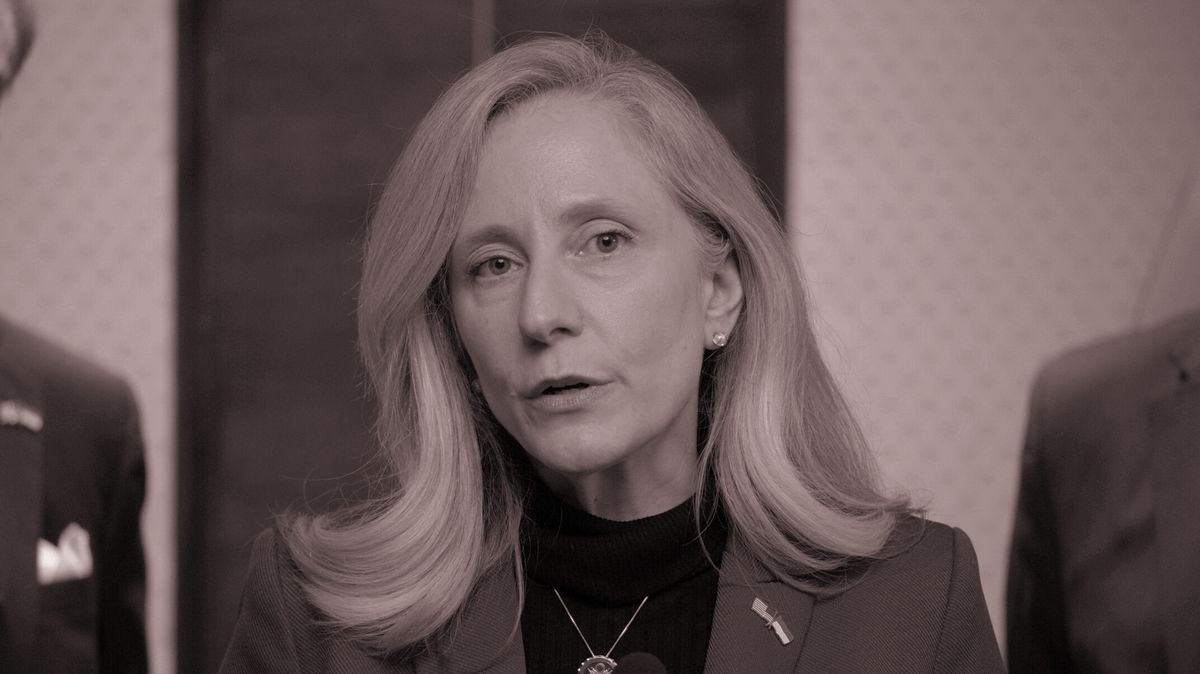
Speaking of which, here’s Abby with a snapshot of the latest… |
|
|

| Abby Livingston
|
|
- Scenes
from a government shutdown: The Great American Shutdown of 2025 commenced early this morning, and it’s widely assumed around Capitol Hill that the rest of the country is simply uninterested in watching more Washington dysfunction. Nevertheless, this drama has been chewed over endlessly and will persist for news cycles to come—even if it’s boring, tedious, depressing, jejune. “Part of what makes this shutdown unique is that it doesn’t feel that interesting. It’s very quiet. The halls are
very quiet,” a Senate G.O.P. aide told me. When I probed sources for an unexplored, dare I say interesting, element of the morass, one senior Democratic Hill staffer shrugged. “That’s a great question, and I don’t know.”
Others caught in the maelstrom sent their own impressions. “Lots of jeans with only Dem House members in town. Golf shirts. Ball caps. It’s regular ole recess vibes,” a House Dem chief of staff said. A House Republican operative concurred: “I think it’s about how
casual everyone is that this could go on for weeks. The attitude is very blasé.” A Dem lobbyist grouched about the last-minute flood of members making calls to donors with an aim to get ahead of last night’s Q3 fundraising deadline and the inevitable reduction in fundraisers amid a shutdown. Member calls were “coming in fast and furiously,” the lobbyist told me yesterday.” Meanwhile, a House G.O.P. leadership aide quipped: “The amount of members who don’t do the simple thing of signing that
letter to withhold their pay. It’s crazy that every member doesn’t do that. It’s the easiest positive comms you can get, and I don’t understand why people don’t do it.”
|
|
|
By the way, a quick reminder that Puck’s fourth anniversary sale is ending imminently, so
click here for a discount. Now, on to the main event… |
|
|
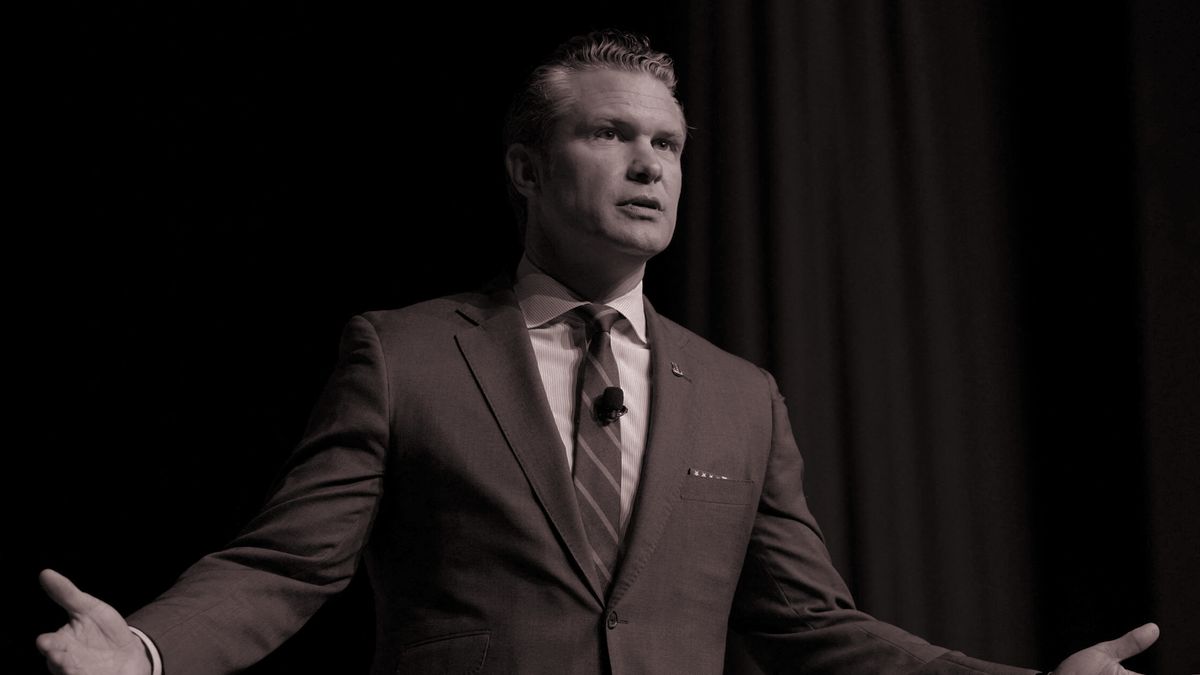
Pete Hegseth summoned hundreds of generals from all over the globe to Virginia to hear him
talk about shaving and fitness standards. If this seems below the pay grade of a four-star, chances are the generals weren’t his real audience. |
|
|
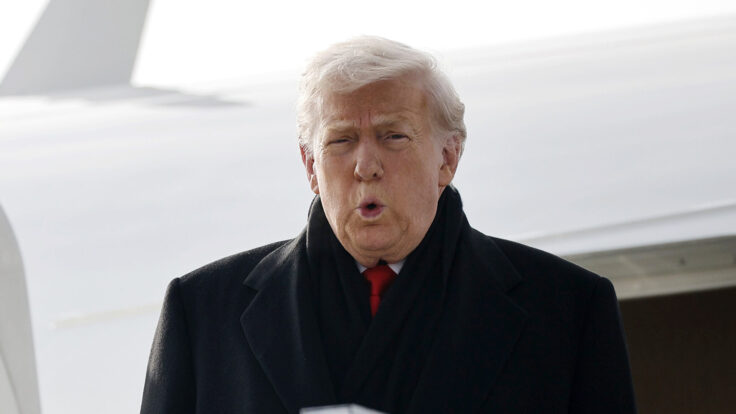
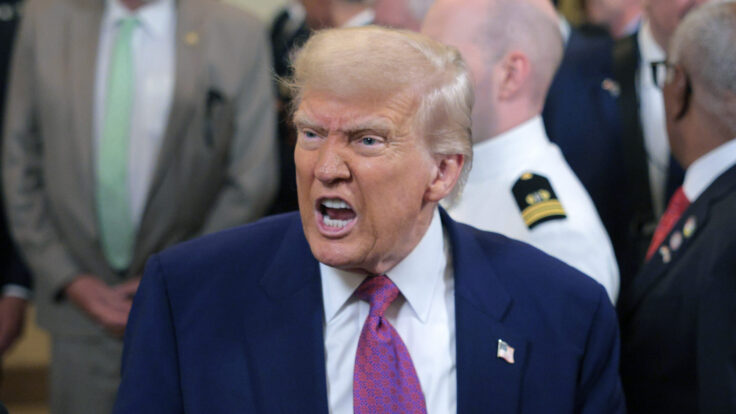
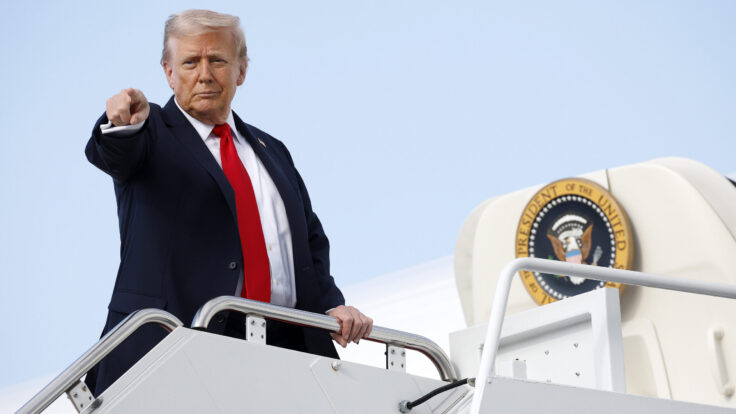
On Tuesday morning, almost every U.S. general was summoned to Quantico to be lectured by Donald
Trump about the dangers of Democratic governance and why he’s always careful walking down stairs, and by Pete Hegseth about the
“warrior ethos.” According to one estimate, the uniformed men and women in the room had some 25,000 years of military experience between them. Yet in
a rigidly hierarchical institution where the chain of command is sacrosanct, everyone understood that despite their medals and ribbons, they were subordinate to the two men onstage: the president, who famously evaded service in Vietnam and reportedly called fallen American soldiers “suckers” and “losers,” and the
secretary of Defense, who served three overseas deployments (including one at Gitmo) and topped out at the rank of major in the Minnesota National Guard before becoming a Fox News personality and, subsequently, the civilian leader of the world’s most powerful military.
In the days leading up to the event, there had been almost no information made public about why the
nation’s top brass had been recalled, on short notice, from far-flung stations like Okinawa and Djibouti. Presumably, the meeting had to be important enough to justify the security no-no of convening hundreds of generals and the president in one place. Instead, they got a low-energy hourlong stump speech from their commander in chief, who mused about using American cities as training grounds, after a warm-up act from their civilian boss, who coyly plugged his book and complained about “beardos”
and “fat generals.”
But when I called up people who had served with the military, both in uniform and as civilians, it wasn’t the president’s usual norm-busting monologue that anyone wanted to talk about. Rather, it was Hegseth’s speech that stood out to them, for passages both puzzling (the hyperfocus on fitness and grooming standards seemingly far beneath a SecDef’s pay grade) and alarming (the dismissiveness toward “stupid” rules of engagement that are supposed to keep troops from
committing war crimes). One retired three-star general I spoke to put it this way: “You can be sure the officers sitting in the audience are thinking, Who the fuck does he think he’s talking to?”
“This was the sad irony of these two people lecturing hundreds of generals and N.C.O.s about a warrior ethos,” the retired three-star continued. “Hegseth can do a shitload of pushups, I’ll give him that. But all the other stuff? What a joke. I’ve deployed to combat how many times? My
family has sacrificed for how many decades? All the things I’ve learned about leadership from childhood, about accepting responsibility, about self-sacrifice—those two guys don’t have the ability to even do that. I’m so glad I didn’t have to be sitting there.” |
“Stupid
Rules of Engagement”
|
It wasn’t Hegseth’s opinion on standards of appearance—height and weight requirements, passing fitness tests,
shaving—that fazed my sources. No one I spoke to had an issue with promoting fitness, and several people admitted that there were officers who, once they got their stars and were more desk-bound, did balloon a bit, as did some soldiers during the isolation of the pandemic. Physical fitness is central to the culture of the military, so sure: Tighten it up.
The problem was that Hegseth, as a strategic leader overseeing a nearly trillion-dollar budget and some 3 million personnel, felt
compelled to concern himself and hundreds of generals with what was, frankly, more of a sergeant major’s job. “People bitched about Mark Milley being overweight and that he couldn’t have passed a fitness test if his life depended on it,” a former senior defense official recalled. “But fuck that, that’s not what his job was. His job was to give strategic advice to the president of the United States and be an interlocutor with the agency he led.”
The same went for grooming
standards. Yes, said the former defense official, some people abused exceptions to shaving regulations by, for instance, claiming to be Vikings. (“That’s obviously batshit,” said the former senior defense official.) There were also legitimate religious exemptions for Orthodox Jews and
Sikhs, as well as medical exemptions for many soldiers for whom shaving caused painful ingrown hairs. Hegseth said he wanted to get rid of almost all of them, reasoning that “it’s like the broken windows theory in policing. It’s like, you let the small stuff go, the big stuff eventually goes.” But another former senior defense official told me that Hegseth’s reasoning was backward. “The secretary is a strategic officer and should be thinking about things that only he can illuminate, like the National Defense Strategy,” this person said. Hectoring four-stars about facial hair and fitness is “beneath the level of the secretary. And
frankly, beneath the flag officers.”
More chilling, though, was Hegseth’s cavalier attitude toward the use of violence—whether on the military’s own recruits, or in a combat setting. In the first instance, Hegseth declared that drill sergeants could reinstate hazing rituals like shark attacks and even
“put their hands on recruits” during basic training—which, as one retired officer pointed out to me, is also not something generals typically think about. But more to the point, Hegseth’s idea that hazing and physical abuse are “tried-and-true methods to motivate new recruits, to make them
the warriors they need to be” astonished the people I spoke to, with one of them calling it “backward” and the retired general noting, “That’s what they do in the Russian Army.”
The Russian Armed Forces are notorious for their dedovshchina—hazing so brutal that, every year, it leaves scores of recruits and draftees wounded, disfigured, or dead. Moreover, as the retired general pointed out, it does not lead to better-quality soldiers. Instead, it has produced an army that still
can’t conquer Ukraine, a country a fraction of Russia’s size, despite three and a half years of trying their absolute hardest. “When I was a cadet, we had to memorize Schofield’s Definition of Discipline,” the retired general said, referring to Major General John Schofield’s 1879 address to the cadets at West Point,
which states that harsh or tyrannical treatment doesn’t make soldiers of a free country reliable in battle. “And that’s the point,” the retired general emphasized. “We are soldiers in a democratic society.”
Which is also why so many people in the military community were so dismayed by Hegseth’s call to do away with the rules of engagement that govern the way American troops can use force. “We untie the hands of our warfighters to intimidate, demoralize, hunt, and kill the enemies of our country,” the secretary proclaimed on Tuesday. “No more politically correct and overbearing rules of engagement, just common sense, maximum lethality, and authority for warfighters.” He added, “That’s all I ever wanted as a platoon leader.” (“For fuck’s sake!” the former official
exclaimed. “You’re not a platoon leader anymore—and neither are these people!”)
Unshackling the military has long been a cause célèbre on the right, and was a major theme of Trump’s 2016 campaign, during which he said, to give one example, “You have to take out [terrorists’] families.” In 2019, Hegseth successfully
lobbied Trump to pardon Navy SEAL Eddie Gallagher and others who were accused of committing war crimes in Iraq and Afghanistan. But there’s a reason the military’s rules of engagement exist, not least the moral case against killing innocents. There’s also the strategic case against creating more enemies. “In the emotion and heat of combat,
you can see how people can lose their heads,” said the retired general. “You have to have people in command who understand: Why do we have force? What is the mission? The mission isn’t to go and destroy everything. Killing a whole bunch of civilians doesn’t accomplish the mission. If anything, it makes it harder.”
There is, finally, the domestic political case as well: It may feel good to retaliate with brute force when your buddy’s head has just been blown off, but when
retaliation violates certain moral rules and laws, it can turn public opinion against the entire effort. “When the My Lai massacre came to light, Americans didn’t feel good about that,” said the former senior defense official, a civilian. “We don’t feel good when our soldiers are killing women and children. That’s why we have rules of engagement.”
For what it’s worth, it’s not just American civilians who don’t feel good about such things. It’s American troops. Eddie Gallagher was
turned in by his own platoon, who called him “freaking evil” and “perfectly O.K. with killing anybody that was moving.” |
“Norms Are a
One-Way Street”
|
Another explanation for Hegseth’s preoccupation with ending what he called “the war on warriors”—which, as he
winked to the audience, was also the title of one of his books—and eradicating “wokeness” is that he wasn’t really addressing the generals at all. Some veterans I spoke to saw Hegseth’s speech as a culture war message to lower-level subordinates or to the MAGA base. Hegseth, the former senior defense official surmised, isn’t comfortable focusing on the job the SecDef should be doing—ending the war in Ukraine, say, or strengthening deterrence against China, or conducting defense diplomacy.
“Lloyd Austin, Ash Carter, Jim Mattis were all very good at this,” this person said. Hegseth, on the other hand, “defaults to what he is comfortable doing, which is culture war as performance art.”
Nevertheless, Hegseth had commanded all these flag officers to fly into Washington, just a few hours before the federal government shut down, not to consult them or to learn from them, but to lecture them and use them as political
props. For a military leadership that takes exceptional pride in running the most professionalized military in the world—and even greater pride in their apolitical posture—this could not have gone down very well. Schofield’s dictum on military discipline, which Hegseth would have had to learn in the R.O.T.C., says something very important about this. “He who feels the respect which is due to others cannot fail to inspire in them regard for himself,” Schofield told those 19th century West Point
cadets, “while he who feels, and hence manifests, disrespect toward others, especially his inferiors, cannot fail to inspire hatred against himself.”
From everything I’ve heard in the last 36 hours, a great many in the military community found Hegseth’s stunt insulting. “But what are they going to do about it?” said the former senior Pentagon official. “They’re not going to do anything about it. They can’t. Norms are a one-way street here. It’s what civilian control of the military is.”
|
That’s all from me, friends. For those of you observing the holiday, may you have an easy and meaningful
fast. I’ll see you back here next Thursday. Until then, good night. Tomorrow will be worse.
Julia |
|
|
Join Puck’s chief political columnist, John Heilemann, as he roams the corridors of power and influence in America on this
twice-weekly interview show, taking you beyond the headlines with the people who shape our culture: icons and up-and-comers, incumbents and insurgents, moguls and machers in the overlapping worlds of politics, entertainment, tech, business, sports, media, and beyond. The conversations are rich and revealing, unrehearsed and unexpected… and reliably impolitic. A Puck-Audacy joint, new episodes drop every Wednesday and Friday. |
|
|
Unique and privileged insight into the private conversations taking place inside boardrooms and corner offices up and down Wall
Street, relayed by best-selling author, journalist, and former M&A senior banker William D. Cohan. |
|
|
Need help? Review our FAQ page or contact us for assistance. For brand partnerships, email ads@puck.news. You received this email because you signed up to receive emails from Puck, or as part of your Puck account associated with {{customer.email}}. To stop receiving this newsletter and/or manage all your email preferences,
click here. |
Puck is published by Heat Media LLC. 107 Greenwich St, New York, NY 10006 |
|
|
|