 |
 |
|
Welcome back to The Best & The Brightest, I’m Peter Hamby. Tonight, the truth about the Obama 2008 analogy that’s been kicking around Republican circles as inspiration for how DeSantis might also pull off a come-from-behind underdog victory. There’s just one problem: DeSantis isn’t the Obama of the 2024 presidential race. If anything, he’s Hillary.
All that and more, below the fold. But first, here’s Abby Livingston with the latest drama on Capitol Hill…
|
Shutdown Forecasting & Hakeem’s Challenges
By Abby Livingston |
|
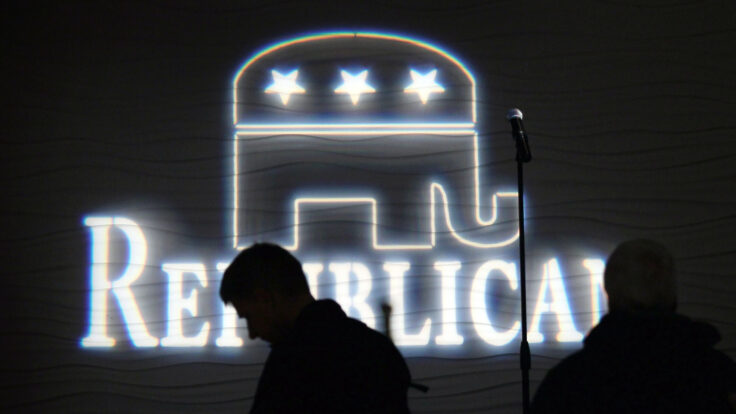
- House G.O.P. Shitshowology: For weeks, sources have pointed to the upcoming House G.O.P. conference meeting on Wednesday as the first opportunity to get a sense of Republicans’ intended strategy for the fall—a particularly perilous moment given their leadership, the looming shutdown, impending retirements, candidate recruitment and the like (not to mention the impeachment fever that has gripped the party). These private gatherings, which over the years have been characterized as cringey open mic sessions, are the most charged and entertaining when members return from recess.
A shutdown, which members increasingly view as a foregone conclusion, is particularly top of mind. One Republican strategist told me that some House campaigns are currently in the field trying to get a sense of a pre-shutdown favorability benchmark to compare to a follow-up poll in October, amid the anticipated shutdown. Polls are not cheap (quality surveys register on F.E.C. reports at over $30,000…) and this is not a normal expense at this point in the cycle, when candidates should be focusing on banking their money for next fall’s ad wars.
There is also the issue of recruitment. October is typically the last window for candidates to jump into competitive races. Some G.O.P. strategists worry about what kind of Republican candidates will—and will not—be attracted to serving in Congress amid such a chaotic backdrop. And lastly, there is increasing retirement speculation. Incumbents have until their state’s candidate filing deadline to decide whether to run for another term. The first filing deadline (Texas) is in December. There is concern that more normal Republican members, who don’t cause trouble and do pay their N.R.C.C. dues, will have had their fill by the end of the fall.
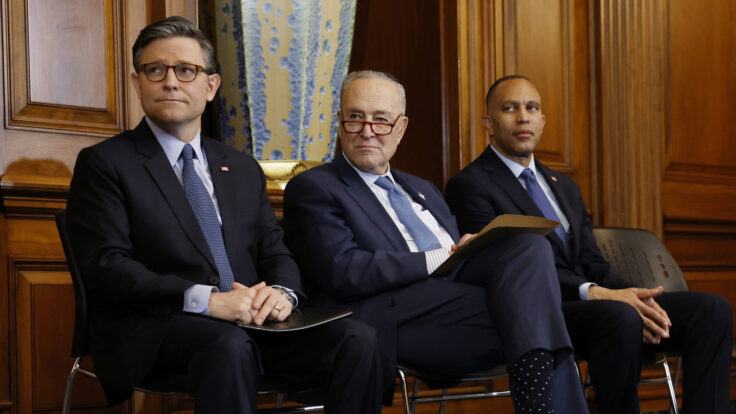
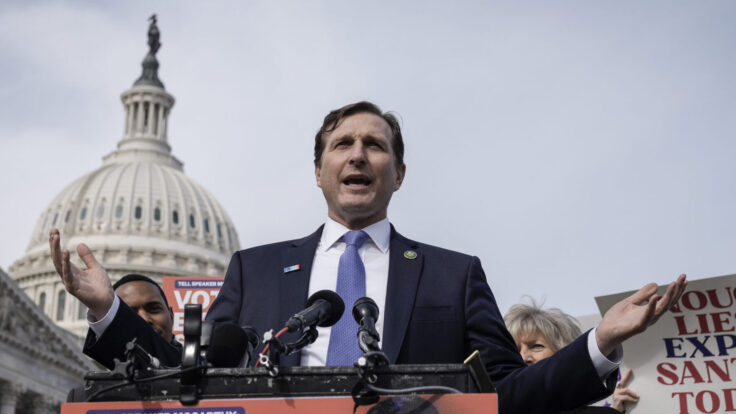
- Empire State of Play: My Puck partner Tara Palmeri just published a thoughtful look at how New York City’s surge of migrants and asylum seekers is complicating Democratic ambitions to retake the House next fall. At the center of this struggle is the potential future speaker, Hakeem Jeffries. Per Tara, some New York Democrats are increasingly impatient with Jeffries for not doing enough to both mitigate the influx and temper the bombastic nature of certain Empire State politicians (specifically, Mayor Eric Adams). In the background, the entire House Democratic strategy runs through winning seats in the greater New York City metropolitan area.
I was a bit surprised with the scale of anger directed at Jeffries, who is still very much in a honeymoon phase with the broader House Democratic caucus. In dozens of conversations over the last several months, Democratic sources are pretty happy with the guy. First, House minority leader is the easiest of the leadership jobs because it has the least amount of governing responsibility and little opportunity to piss off colleagues in dividing up political spoils. Second, Jeffries is (so far) more of a conciliatory leader than Nancy Pelosi (we’ve yet to see him take on The Squad via a Maureen Dowd column…). And the ripple effect of the old regime’s exit released a pressure valve of ambition: Many in the caucus had a chance at climbing a rung in subcommittees or in leadership.
But of course, that’s all to say that Jeffries remains untested, and Tara is prescient in looking around a corner that non-New Yorkers may not have yet considered. If Adams is successful in relocating migrants into the suburbs, especially in red-blue districts that Jeffries needs to swing back into the Democratic column in 2024, or if Governor Kathy Hochul can’t convince Biden to take the political hit and send aid (federal funds, work authorizations, etcetera), the House could remain another two years in Republican hands.
|
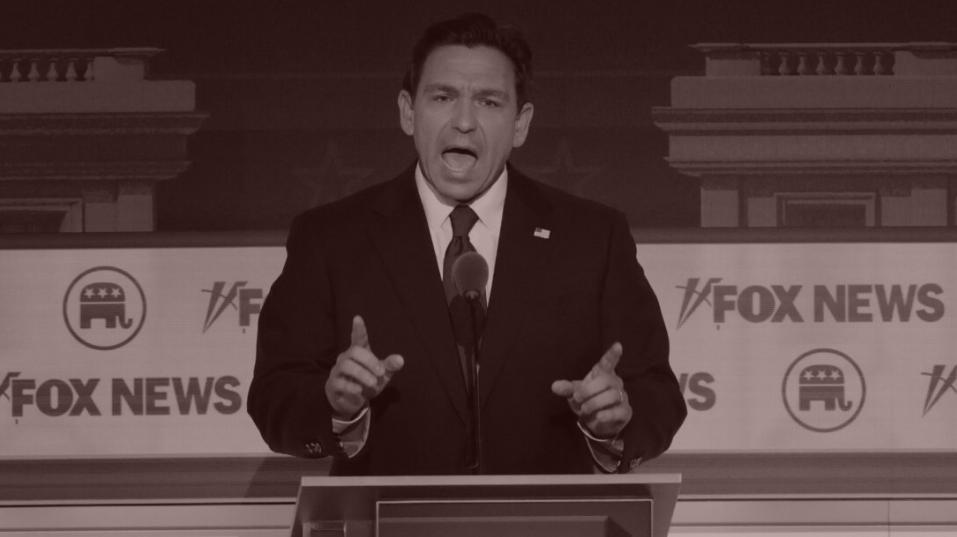 |
| The DeSantis Hillary Complex |
| One of the bizarre ironies of DeSantis’s flaccid campaign is that the guy who wanted to out-MAGA Trump has ended up looking like Clinton: an overly professionalized Franken-candidate who could never conjure the enthusiasm of a more charismatic rival. |
|
|
|
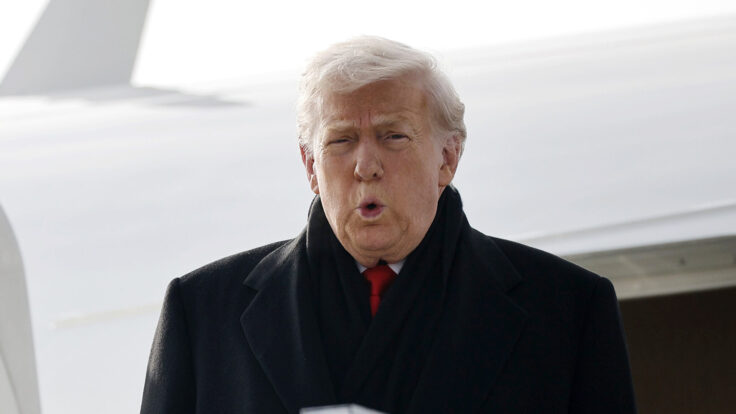
| For the class of people rooting for a singular Trump rival to emerge in the G.O.P. primary—Republican donors, NeverTrumpers, some Democrats—time is running out. The Iowa caucuses are only four months away. And the Republican who was hyped as Trump’s toughest opponent, Ron DeSantis, is currently trailing Trump by some 40 points nationally and around 20 points in Iowa.
DeSantis is still better positioned than his rivals in terms of money, fame, and organization, at least in Iowa. Unlike everyone else in the race, he has both MAGA credibility and establishment support, which seems like the only cocktail that can sideline Trump. But DeSantis has only a faint whiff of the support he had earlier this year, and he could very well be lapped in the coming months by another workhorse rival, like Vivek Ramaswamy or Nikki Haley, who trail him by only a few points. But the prospect of any of them overtaking Trump in the next few months? It’s wishcasting. With Labor Day now behind us, it’s time for everyone involved in the Republican presidential primary complex to admit that this is simply not a two-person race. Right now, it’s just Trump swatting away flies. |
|
A MESSAGE FROM META
|
| |
 |
| Trained in the metaverse. Serving real patients.
Across the world, millions go blind due to lack of access to eye care. To help, FundamentalVR and Orbis International deploy cataract surgery training in the metaverse. With this virtual reality tool, surgeons everywhere can practice as many times as needed before working with real patients.
Explore the impact. |
|
|
| Still, those rooting against Trump continue to cite one lonely analogy that supposedly proves the G.O.P. race isn’t quite over: Barack Obama’s come-from-behind victory over Hillary Clinton in the 2008 Democratic Primary. New Hampshire Gov. Chris Sununu was the latest big G.O.P. name to do so, in an interview last week with CNN’s Jeff Zeleny, who asked him if the Republican primary was a fait accompli. “Of course not,” the media-thirsty Sununu responded. “Was it over when Clinton was leading Obama by 20 points at this point back in 2008? When no one could beat the Clinton machine? No, not at all.”
I’ve heard that line over and over again this year. And while it’s a tempting comparison, it has obvious limits. “We were losing badly in national polls and by a smaller margin in Iowa, but the race was always tighter than the Trump/DeSantis margin,” said Tommy Vietor, the Crooked Media podcast host and former White House adviser who worked for Obama in Iowa in 2007 and 2008. Obama was an underdog, yes, but he had a clearly differentiated message and brand from Clinton, who was simply next in line. Obama kept pace by raising almost limitless money from big and small donors alike, keeping the money spigot on even when he was behind in the polls. DeSantis, apparently, is not.
Obama beguiled the media, less fractured back then, and reporters generally gave him the benefit of the doubt when he screwed up on the trail, a sort of goodwill rarely granted to Clinton (and never to DeSantis today). Clinton might have been the frontrunner, but she had little grassroots enthusiasm, making her vulnerable to a challenge from the left. That campaign came down to a three-person race between Clinton, Obama and John Edwards. The Iowa winner back then only needed a plurality to score a win and crucial momentum, and Obama won the caucuses with 37 percent of the vote. By comparison, DeSantis needs to grow by 20 points to reach that number, and even that might not be enough to win.
Trump’s support in Iowa is softer than it is nationally, as I wrote last month. But it’s still a blowout, with Trump leading DeSantis 42-19, according to the most recent Des Moines Register poll. There are multiple non-Trump candidates acting in their own self-interest, diminishing any possibility that any single one of them can get to 50 percent, 40 percent—or hell, even 30 percent! Trump is just less vulnerable than Clinton was back then; he has a deep well of grassroots support, and given his fiery bond with the Republican base, he’s made it next to impossible for any candidate to outflank him. DeSantis is trying, by running as Trump Lite. But Obama never ran as Hillary anything. He was just different all the way down. |
|
|
| Comparing the 2024 G.O.P. primary to the 2008 Democratic race actually makes sense—but only if you compare DeSantis to Hillary. His message is so ill-defined at this point, he actually reminds me of Clinton during the final weeks of those Iowa caucuses. She was trying to flex her credentials, her governing experience and electability against her rival, but none of that could compete with the energy and passion carrying Obama to his eventual victory.
As the race closed, Obama had big crowds, especially by Iowa standards. By comparison, Clinton’s events were mostly just a bunch of humdrum meet-and-greets. Obama was by no means a sure thing, but their different trajectories were apparent to anyone paying close attention. Clinton’s Iowa collapse was perhaps best summed up by her final campaign slogan of that caucus race, a Mad Libs assemblage of meaningless buzzwords. It was emblazoned on the Clinton campaign bus as she barnstormed the state on her way to a third-place finish: “Big Challenges, Real Solutions: Time to Pick a President.” Huh? |
|
|
| The elections analyst G. Elliott Morris recently went back and looked at the success rate of primary candidates who were polling above 50 percent nationally, which is about where Trump stands now. Four other candidates were above 50 percent in late August before the primaries: Ted Kennedy in the 1980 cycle, Bob Dole in 1996, Al Gore in 2000 and Hillary Clinton in 2016. A few things jumped out at me. First, of course, is that Kennedy was above 50 percent in a primary against a sitting president, Jimmy Carter, and somehow blew it. (Roger Mudd, Chappaquiddick, etcetera…)
I had also forgotten that Clinton was polling so well in August against Bernie Sanders during their 2016 primary, given how close that race became just a few months later. Even come November of 2015, Clinton was still up by some 20 points on Sanders in Iowa. But in the closing weeks, the bottom almost fell out of the ship, and Clinton only barely eked out a win, setting up an ugly nomination slog against the aging democratic socialist from Vermont. Indeed, that 2016 primary—not the 2008 one—might offer a better framework to think about DeSantis, or any non-Trump candidate, come next January.
It’s possible one of these Republicans could come from behind and win Iowa. But that challenger then has to capitalize quickly, in New Hampshire, South Carolina, and elsewhere, cobbling together a bunch of wins in many more primary and caucus states to come, while also raising a huge pile of money and pressuring the other G.O.P. candidates to drop out (assuming they don’t cut their own deals with Trump). Sanders came close to toppling Clinton, temporarily catching fire and thrilling certain corners of the Democratic party and the media.
He also came up short. And that feels like another under-discussed scenario for these Republican challengers in this overhyped campaign. Sure, Trump could get a temporary scare by losing Iowa, or almost losing it. But he also possesses the brute force—and money—required to snuff out any rival who pops his or her head up.
The last thing that caught my attention from those past primaries was the dominance, in 1996, of the respectable and very boring Bob Dole, who was the establishment pick to run against Bill Clinton. Dole more or less coasted to the nomination against a crowded field of Republicans, who each scored some temporary buzz but failed to go the distance. Lamar Alexander, Alan Keyes, Steve Forbes, and several others all made a run for the G.O.P. nomination but couldn’t compete against Dole’s institutional support.
Like a lot of authors who decide to hop out on the campaign trail every four years, the journalist Michael Lewis wrote about that campaign, expecting something more electric than the contest that actually unfolded before him. The book he wrote about that primary was called Trail Fever. But later, it was re-published under a more accurate title: Losers: The Road to Everyplace but the White House. It was a rare miss in the Lewis oeuvre, but it might have an instructive shelf life. This year’s G.O.P. primary began with similar expectations, but it might conclude the same way it did in 1996, with a discarded pile of Republican strivers who really weren’t up to the mission in the first place. |
|
|
|
| FOUR STORIES WE’RE TALKING ABOUT |
|
|
|

|
 |
|
|
|
Need help? Review our FAQs
page or contact
us for assistance. For brand partnerships, email ads@puck.news.
|
|
You received this email because you signed up to receive emails from Puck, or as part of your Puck account associated with . To stop receiving this newsletter and/or manage all your email preferences, click here.
|
|
Puck is published by Heat Media LLC. 227 W 17th St New York, NY 10011.
|
|
|
|