Hello and welcome back to The Best & The Brightest. I’m Leigh Ann Caldwell.
Early, in-person voting kicks off today in D.C. My husband, Greg Jaczko, is on the ballot. Check him out!
There are also a lot of other candidates on the ballot tomorrow in Nevada, South Carolina, North Dakota, and, of course, Maine, where Graham Platner is limping into a Senate primary that he will win—much to the consternation of many Democrats, who now wish they had a less baggage-laden candidate to go up against Sen. Susan
Collins.
For today’s issue, I’ve got more on how Platnergate is playing in Washington and why key Democratic senators are circling the wagons. Elsewhere in Maine, Marianna Sotomayor takes a closer look at the race to replace Blue Dog Rep. Jared Golden. And for the main event, our colleague Ian Krietzberg reveals why the A.I. bros and their super PACs suddenly support many of the industry regulations they were trying to
kill.
Also mentioned in this issue: Sam Altman, JB Pritzker, Bernie Sanders, Janet Mills, Brian Schatz, Tina Smith, Al Franken, Kirsten Gillibrand, Paul LePage, Joe Baldacci, Matt Dunlap, Jordan Wood, Paige Loud, Michael Kleinman, Greg
Brockman, Scott Wisor, Chris Lehane, Steve Bannon, and more. |
|
|
|
Innovation is at the heart of modern agriculture.
Regenerative agriculture is helping farmers produce more high‑quality food for the nation. Not only does this work help safeguard crops and reduce risks to harvests, but it also improves soil health, conserves water, and increases biodiversity. At Bayer, we succeed when farmers succeed.
Learn more. |
|
|
|
- The
Platner primary: By tomorrow night, embattled Maine Senate candidate Graham Platner will officially be the Democratic nominee. But he’s hardly the guy whom Democrats originally envisioned taking down Sen. Susan Collins. The incumbent was already a formidable campaigner; now she has at her disposal an encyclopedia of oppo research with which to sway the moderate Democratic and independent voters who will decide the general election.
Democratic Gov.
Janet Mills is still on the ballot tomorrow, despite having suspended her campaign more than a month ago. And while there’s no expectation that she’ll win meaningful support, everyone will be closely watching her vote tally as an indicator of how allegations of domestic abuse (which Platner denies) and extramarital
sexting (which Platner admitted) have impacted his candidacy. Maine’s election law allows unaffiliated voters to vote in either primary.
On Capitol Hill, Senate Democrats are deeply divided over Platner. A faction of the party thinks he’s a scumbag who doesn’t deserve to be on the ballot, and they’re dreaming of a new candidate before the July 14 Maine certification deadline. (There are no real conversations about trying to replace him.) Another faction has come out in support of
Platner, acknowledging that he’s the party’s best and only chance at beating Collins. Hawaii Sen. Brian Schatz, who is running for whip in the next Congress, hosted a virtual fundraiser for Platner on Saturday, though this perhaps was less about leadership’s enthusiasm for the candidate than the senator’s hopes for overwhelming support in his upcoming leadership elections. Meanwhile, both factions are fretting that there will be more negative stories to come.
I’ve been
watching Sen. Tina Smith, who endorsed Platner early even though Mills was still in the race. Smith, who replaced Sen. Al Franken after he resigned following allegations of inappropriately kissing and touching women, has come out in support of Platner. “He’ll win because he’s not part of the Washington establishment,” she wrote on X. “If I
voted in Maine he’d have my support, no question.” One interesting dynamic: D.C. insiders pushed out Franken without the input of voters in Minnesota, and the senator who first called for Franken’s resignation, Kirsten Gillibrand, is now the chair of the D.S.C.C. Once the votes are tallied, she’ll likely have to get behind Platner as the party’s nominee.
|
|
|
|
| Marianna Sotomayor
|
|
- The other Maine event:
While Platner-gate dominates headlines, Maine Democrats are also closely watching the state’s vast 2nd congressional district, where four primary candidates are fighting to take on former Republican Gov. Paul LePage in the race to replace Democratic Rep. Jared Golden. A co-chair of the moderate Blue Dog Coalition, Golden was a uniquely perfect fit for a purple-ish constituency—he’s been elected three times in a district that also voted for
Trump by double-digit margins.
Naturally, House Republican strategists are giddy about the prospect of finally flipping Golden’s district—especially since all four of the Democrats hoping to replace him are running to his left. The D.C.C.C. has backed State Sen. Joe Baldacci, whom strategists consider the most palatable moderate for the general election. State Auditor Matt Dunlap has been campaigning as a progressive and championing
causes like Medicare for All, while also touting his Second Amendment credentials. Former House chief of staff Jordan Wood is also running to the left and has outraised his opponents, but campaign strategists don’t see him or social worker Paige Loud making it through several rounds of ranked-choice voting. The nomination process could take about a month.
Of course, all the Democratic candidates have been hitting LePage on healthcare, specifically his
refusal to expand Medicaid, defying voters who approved of an expansion ballot measure back when he was governor. Strategists from both parties acknowledge that could sway independent voters, but it’s unclear whether Republicans will just fall in line come November. Notably, several Maine Democratic operatives have told me that this race is LePage’s to lose.
|
|
|
|
With public opinion—and a slew of presidential hopefuls—beating back A.I.’s “no rules”
agenda, the lobbyist armies of Andreessen Horowitz and OpenAI are suddenly supporting safeguards they rejected just a year ago. |
|
|
|
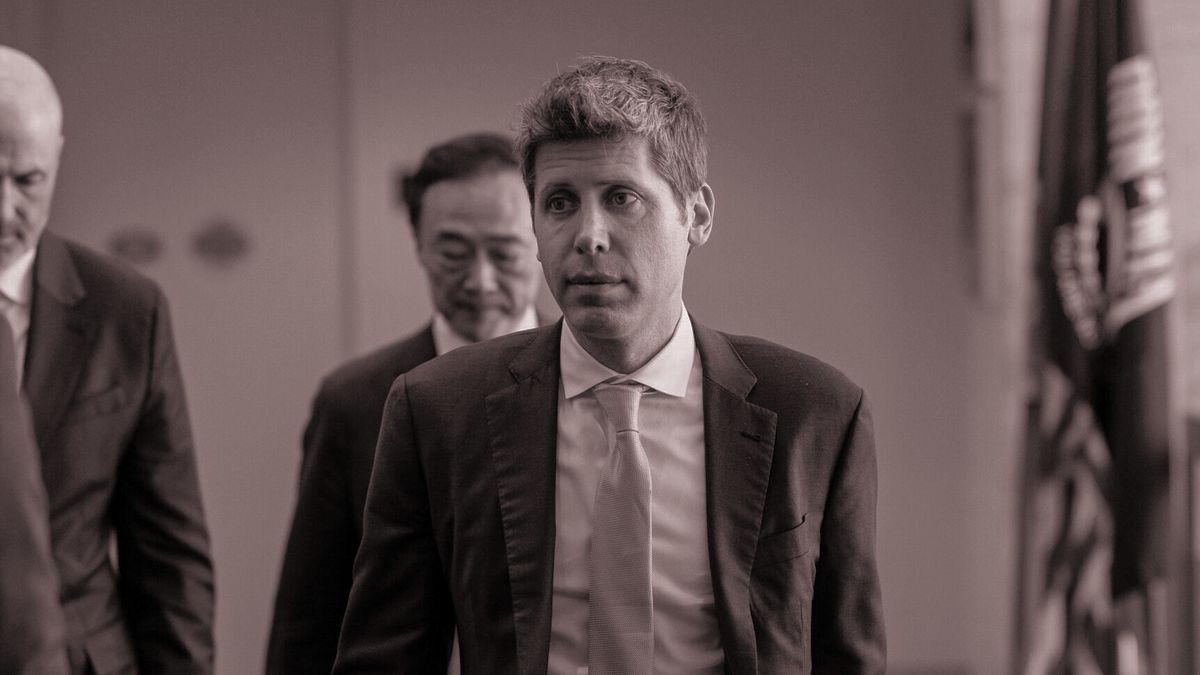
Last week, OpenAI C.E.O. Sam Altman was back in D.C., taking meetings with White House
officials and lawmakers of both parties. As usual, he was there to hype the industry’s safety policies and the rapid progression of frontier models, and to offer his wisdom on various cybersecurity challenges—all with the subtext of persuading Washington not to strangle his company in red tape.
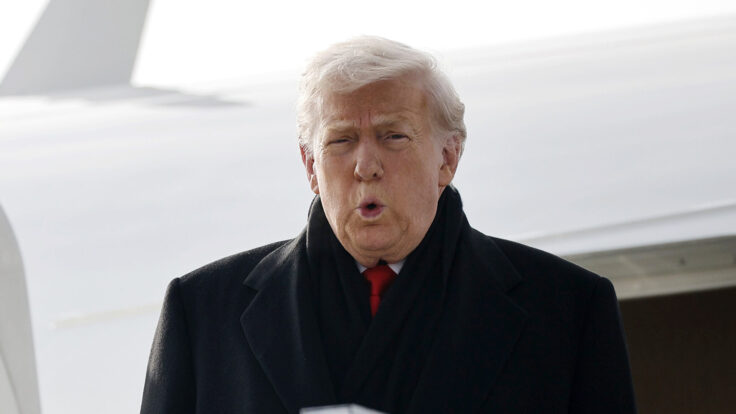
In many ways, Altman was already too late. Just a day earlier, President Trump had signed an executive order requesting that A.I. models be submitted to the government for
prerelease vetting—a voluntary submittal, to be sure, but a new imposition nonetheless. Meanwhile, beyond the Beltway, a growing confederation of blue and red states has been loudly advancing regulations of their own. |
|
|
|
Regenerative agriculture propels progress, helping farmers grow more food sustainably. Access to modern agricultural technology gives farmers more choices and strengthens their yields. That’s why Bayer is investing in innovative solutions that help growers boost yields and improve soil health so they can keep quality, affordable food on the table for Americans. At Bayer, we succeed when farmers succeed.
Learn more. |
|
|
|
The latest bureaucratic headache is Illinois’s SB 315, a landmark A.I. safety bill now awaiting the eager
signature of Gov. JB Pritzker, the billionaire Democrat and almost certain 2028 presidential candidate. Indeed, while the Illinois bill was partly modeled after similar legislation in California and New York, it goes further than either by requiring every frontier lab with more than $500 million in revenue to submit to annual, third-party audits of their A.I. safety plans. California and New York lawmakers had originally included similar provisions, but faced massive backlash
from tech lobbyists. In the end, Govs. Gavin Newsom and Kathy Hochul signed updated versions that stripped out that pesky requirement.
But the political ground has shifted massively in the six months since those two bills became law. SB 315 had unusually broad, bipartisan support from 93 percent of Illinois’s Democrats, 87 percent of independents, and 88 percent of Republicans, according to the Secure A.I. Project, a nonprofit advocacy group. In
the end, both OpenAI and Leading the Future—the pro-industry super PAC that fought the California and New York laws—decided to get on board rather than double down.
The industry has hardly given up on lobbying against regulation. But the strategic retreat did not go unnoticed by insiders tracking the shifting political winds. “I do not think the super PACs are going to get a particularly good return on their investment,” Michael Kleinman, the head of U.S. policy at the
Future of Life Institute, told me. “They have had over a year to create a narrative, and they have completely failed,” he said, noting there’s a limit to what money can do when majorities of both parties are skeptical of the industry. “It’s not that they’re powerless, but they are fundamentally fighting a rearguard action.” |
For OpenAI, the about-face began in April, when the company
threw its public support behind a different Illinois bill, SB 3444, which would have established liability shields for A.I. companies in instances where their tech might cause “critical harms.” It was not exactly a popular position. Less than a month later, after heavy criticism, OpenAI
backtracked—testifying that the company did not, in fact, support liability shields and backing SB 315 instead. In its testimony, OpenAI specifically lauded the third-party audits that had once caused so much of its ire, noting that
audits can “play an important role in frontier A.I. governance.”
After 315 passed, OpenAI praised the “real bipartisan leadership” behind the bill and its “thoughtful framework for frontier A.I. safety.” The legislation, OpenAI said, demonstrated the “power of reverse federalism—where states lead the way toward establishing a national framework through complementary approaches.” Build American A.I., an arm of Leading the Future, also released a supportive
statement, though it noted “potential concerns” about the audit provision. While the group insisted that it believed in a “comprehensive federal framework,” it acknowledged that state legislatures were “helping shape an emerging national model for A.I. governance.”
Industry support for the Illinois bill was not universal. The American Innovators Network, an advocacy
group launched less than a year ago to ostensibly represent “little tech” on the political stage, called SB 315 “misguided.” (Curiously, Andreessen Horowitz is funding both Leading the Future and American Innovators Network—an attempt, perhaps, to hedge its bets.) Jeremy Kudon, the executive director of American Innovators Network, told me he’s concerned that too many overlapping, incongruent state laws will create an overly burdensome, inconsistent regulatory
“patchwork” that will be impossible for smaller companies to navigate. “What happens if we end up shutting out the next Google, the next YouTube, the next Netflix, because we’re rushing to listen to the two big players?” he said. What happens when a startup crosses the $500 million revenue threshold and suddenly has to “comply with audits that are probably going to be designed for Anthropic and OpenAI”?
Ideally, Kudon argued, “over the next 12 months, you get six to eight more states,
maybe 10, that adopt the California SB 53 model.” At that point, he suggested, you essentially end up with a bottom-up, de facto national standard for A.I. Alas, he said, Illinois’s legislators just had to go a little further than California and New York. Now, any company wanting to do business in America’s third-largest metropolitan market will have to comply. |
|
|
|
Anyway, the divergence between Leading the Future and the American Innovators Network is just one of the
early visible cracks in the battle for A.I. policy influence. On June 1, OpenAI published a blog post in which it sought to distance itself from Leading the Future, which co-founder Greg Brockman and his wife (in addition to Andreessen Horowitz) have funded to the tune of tens of millions of dollars. “We want to be explicit: No outside political
group speaks for OpenAI or represents our company’s views,” the post said. Two days later, OpenAI acknowledged that there’s “real momentum right now for A.I. safety policy,” and issued a blueprint for frontier A.I. governance in which it called for transparency, declared it good and necessary for states to function as “laboratories
of democracy,” and said that independent, predeployment testing should become a requirement. That’s a pretty dramatic 180 compared to the company’s position even a year ago.
The lesson that Scott Wisor, a policy director at the Secure A.I. Project, has taken from the Illinois saga is simple. “There was a lot of money that came through the Illinois primaries from groups associated with tech companies. All of the legislators who cast a vote in favor of 315 knew that, and
they were not scared,” he said. “They looked around, saw the policy, saw the political dynamics, and voted unanimously in favor.” In short, tech money “didn’t change anyone’s mind on how they wanted to cast their vote.” And once tech lobbyists saw which way the wind was blowing, they acted as if they’d been allies all along. |
Between Newsom, Hochul, and now Pritzker, the Democratic Party appears to be coalescing around a poll-tested,
moderate-ish position on A.I.: implementing guardrails and encouraging innovation. And Republicans, at least so far, aren’t reflexively adopting the opposite position. While there are a few extreme voices on both sides—Sen. Bernie Sanders has called for a total shutdown on data center construction, and Steve Bannon has called A.I. “the most dangerous technology in the history of mankind”—most politicians are somewhere in the middle. And very few are
advocating for letting Silicon Valley run wild. “It’s a really untenable position for companies to just say, ‘No rules,’” Wisor said.
Of course, the policy and communications gurus working for these trillion-dollar companies aren’t idiots, either. As OpenAI’s Chris Lehane told me last month, “the moment” has
changed—and the hyperscalers need to be active participants in the political conversation. Wisor offered a blunter characterization of this pivot: “Public opinion, concern about your users, concern about your enterprise users and what they’re going to think of you as a company, concern about what your employees are going to think about you as a company—I think it’s all driving the public policy teams at these companies to reevaluate.”
Kleinman, for his part, sees these pivots and
policy divergences between industry groups as simply a product of losing. “It’s hard to maintain a coalition when you’re getting beaten back, and so they’re starting to splinter,” he said. “If they were winning, they would all be singing from the same hymn sheet.” |
|
|
|
Join Emmy Award-winning journalist Peter Hamby, along with the team of expert journalists at Puck, as they let you in on the
conversations insiders are having across the four corners of power in America: Wall Street, Washington, Silicon Valley, and Hollywood. Presented in partnership with Audacy, new episodes publish daily, Monday through Friday. |
|
|
|
Unique and privileged insight into the private conversations taking place inside boardrooms and corner offices up and down Wall
Street, relayed by best-selling author, journalist, and former M&A senior banker William D. Cohan. |
|
|
|
Need help? Review our
FAQ page or contact us for assistance. For brand partnerships, email ads@puck.news.
You received this email because you signed up to receive emails from Puck, or as part of your Puck account associated with {{customer.email}}. To stop receiving this newsletter and/or manage all your email preferences, click here.
|
Puck is published by Heat Media LLC. 107 Greenwich St., New York, NY 10006 |
|
|
|
|