Hello, and welcome back to The Best & The Brightest, your daily politics dispatch from Puck. It
is, once again, foreign policy Thursday, and I’m your host, Julia Ioffe.
There’s so much to write about tonight, like the insanity (and inanity)
going on at the St. Petersburg International Economic Forum, which had long been Putin’s attempt at a domestic Davos that would flaunt Russia’s potential to foreign investors. Yesterday, Ukrainian drones made short work of that Potemkin village.
But what I really want to share with you tonight is an update
on my antifa story from a couple of months ago. If you recall, I reported that the Trump administration was quietly continuing with its quest to prioritize law enforcement actions against left-wing networks (such as they are) in the wake of Charlie Kirk’s murder. But because the First Amendment makes it hard to surveil and charge
Americans for their political viewpoints and associations, the White House found a workaround: using the State Department’s ability to designate groups abroad as foreign terrorist organizations—and then targeting Americans with connections to those groups as “providing material support to terrorism.”
Our reporting, which was also echoed in the Times, exposed what the administration was up to, which in turn created resistance inside State. This week, the department’s political leadership held a bit of a reeducation seminar to convince Staties that left-wing extremism is a real problem and the administration’s efforts to combat it are legitimate—rather than an attempt to target critics at home. More on all that below the fold. Plus, up top, Leigh Ann Caldwell has an update on the Republican
resistance to Trump’s “anti-weaponization” fund, and a new poll that should make G.O.P. operatives nervous.
Also mentioned in this issue: Bill Pulte, Stephen Miller, Susan Collins, Jay Solomon, Sebastian Gorka, Adam Schiff, Thom Tillis, George Floyd, Calla Walsh, Katie Gorka, Eric Swalwell,
Greg LoGerfo, Thomas DiNanno, Elizabeth Warren, Steve Scalise, Lisa Cook, Letitia James, and more. |
|
|
|

| Leigh Ann Caldwell
|
|
It was a morning of political jockeying on the Senate floor, and the latest reminder of the schizophrenia
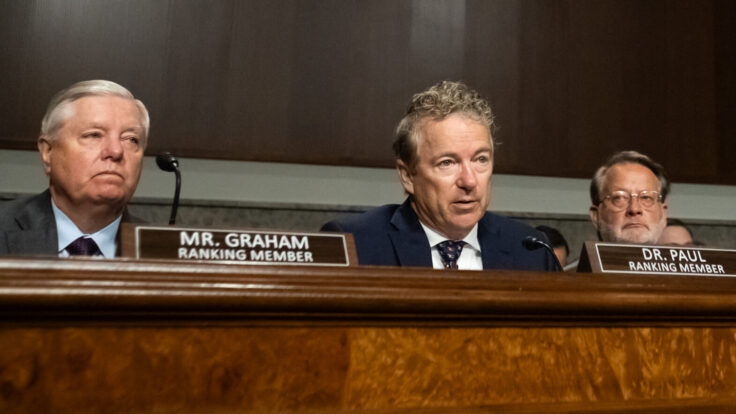
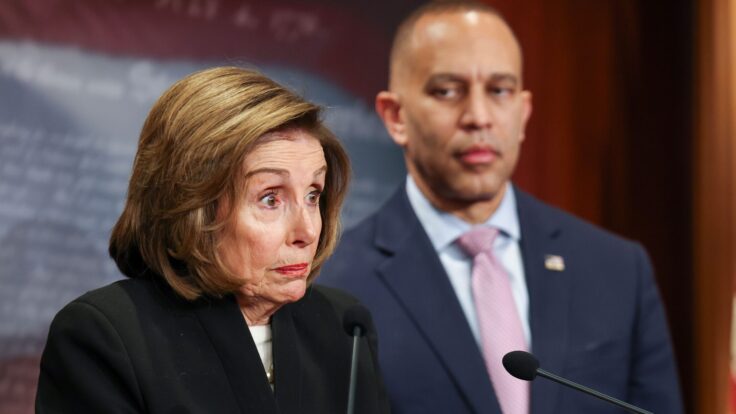
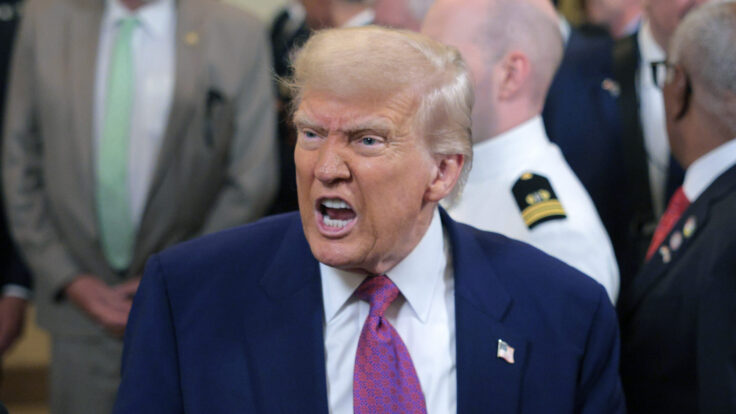
descending on the Republican Party. G.O.P. Sens. Susan Collins of Maine, John Husted of Ohio, and Dan Sullivan of Alaska—all facing challenging reelection campaigns and trailing Democratic opponents in recent polling—backed an amendment sponsored by Senate Minority Leader Chuck Schumer to abolish President Trump’s $1.8 billion “anti-weaponization” fund. It was an interesting coalition, representative of the challenging political
environment facing Republicans and how unpopular Trump’s slush fund is. After three hours of haggling while a handful of senators withheld their votes, Sullivan and Husted voted in favor once it became clear that Schumer’s amendment would fail—not necessarily profiles in courage, but votes they could own back home.
Among the holdouts, notably, was Sen. Bill Cassidy—who just lost his primary after Trump helped sink his candidacy. But Cassidy cast the deciding vote
against the measure, allowing the three vulnerable senators to support it without giving Schumer a win and Trump a major loss.
Meanwhile, 14 Republican senators voted for an amendment offered by Republican Sen. Thom Tillis that would have prohibited money from being used for the anti-weaponization fund, and redirected it instead to “fraud enforcement.” The measure failed, but the vote nevertheless revealed that plenty of Republicans would like to kill Trump’s
slush fund. |
A new monthly pulse survey of moderate white rural and suburban women—the largest voting bloc in battleground
districts—found that 63 percent of respondents disapprove of Trump, including 45 percent who said they “strongly disapprove.” Three-quarters of respondents also disapprove of the job Congress is doing. The survey, conducted by Galvanize Action, found that corruption has become an increasingly relevant issue for these voters. Last month, 80 percent of respondents identified
corruption as a top concern. This month, when the survey asked more-specific questions about corruption, 28 percent said they were troubled by tech deals with foreign governments that benefit the Trump family, while 20 percent pointed to the influence that tech industry leaders have over the federal government. |
I keep hearing that lobbyists are starting to shift their attention from Republicans to Democrats as
Washington increasingly concludes that control of Congress could change hands in the midterms. One Democratic lobbyist told me today that firms are already working to put clients in front of Democratic lawmakers, ranking members of committees, and their staff. Corporate clients, the lobbyist said, “want to brush the dust off relationships” with Democrats. |
|
|
|
And now, back to Foggy Bottom… |
|
|
|
The State Department spent Tuesday trying to convince diplomats that antifa is the new Al
Qaeda—but Foggy Bottom isn’t buying it. |
|
|
|
On Tuesday morning, about 100 State Department officials gathered in the building once known as the U.S.
Institute of Peace—now renamed the Donald J. Trump U.S. Institute of Peace—for an event billed as a “Symposium on the Rise of Far-Left Political Terrorism.” Organized under the auspices of Thomas DiNanno, the undersecretary for arms control and international security, the event featured a “comprehensive threat briefing” from the F.B.I. on “Domestic and Trans-National Far-Left Terrorism,” along with a case study on left-wing radicalization.
According to an email
sent to staff and shared with me by two State Department sources, the symposium was intended “to socialize a key Administration and Department priority: countering the transnational threat posed by violent far-left terrorist groups.” One attendee told me there was deeper meaning between the lines: Press coverage of the State Department’s push to elevate antifa as a top counterterrorism concern—which I first reported on
here—had generated substantial resistance inside the building, and the symposium was an attempt to persuade Staties that left-wing extremism was, in fact, a clear and present danger. The point, as the invitation made clear, was to “ensure we are moving forward with one voice on this critical issue” before an international summit, scheduled for July 15 in
Washington. (Though as I and others have reported, interest from foreign governments has been scant.)
The Institute of Peace event was part of a broader effort by the Trump administration to reorient the counterterrorism machinery of the U.S. government, which grew exponentially after 9/11, toward fighting left-wing extremists—a threat, they believe, that has been ignored by previous presidents. It’s all nonsense, said a former senior counterterrorism official who served under
Biden: “We acknowledged violent far-left organizations, but the reality is they are minuscule compared to the far right.” But elements within the Trump administration see something more sinister. “There are people in the C.T. structure who genuinely believe there’s this giant conspiracy funded by Soros and that no one’s been paying attention for ideological reasons because it’s the deep state,” said one recently retired counterterrorism official.
As I
previously reported, the administration decided to right this wrong by adding antifa as a top counterterrorism concern to the National Intelligence Priorities Framework, a classified document that tells the nation’s 18 intelligence agencies where to direct their focus. But critics fear the move is less about national security than weaponizing the intelligence
community against Trump’s ideological opponents. They point, for example, to Trump’s presidential memo on countering “organized political violence” and “domestic terrorism,” which was issued in the weeks after Charlie Kirk’s murder and explicitly directs the U.S. government to investigate “American
citizens residing abroad.”
Since the president issued that memo, the State Department has designated several small and obscure left-wing groups as foreign terrorist organizations (F.T.O.s) and instructed U.S. embassies to gather information on any connections they might have to U.S. citizens back home. Americans enjoy constitutional protections for freedom of speech and association, but providing material support to a foreign terrorist organization is, in fact, a crime. And many
counterterrorism and civil liberties experts worry this is the Trump administration’s one neat trick to sidestep those legal protections, and to target American citizens it disagrees with.
Now that Bill Pulte is serving as acting director of national intelligence, the top intelligence posting in the country, those fears have only grown stronger. Pulte, in his previous perch at the Federal Housing Finance Agency, used his position and access to confidential information to
aggressively pursue the president’s perceived enemies, including Adam Schiff, Letitia James, Lisa Cook, and Eric Swalwell. None of those criminal referrals resulted in successful indictments, but they had their intended effect: spreading fear. Now, Pulte will have full control of the vast U.S. intelligence apparatus—and there is little confidence that he won’t actively deploy it against Trump’s opponents. |
This week’s symposium began with an unannounced speaker whose name did not appear on the invitation: Dr.
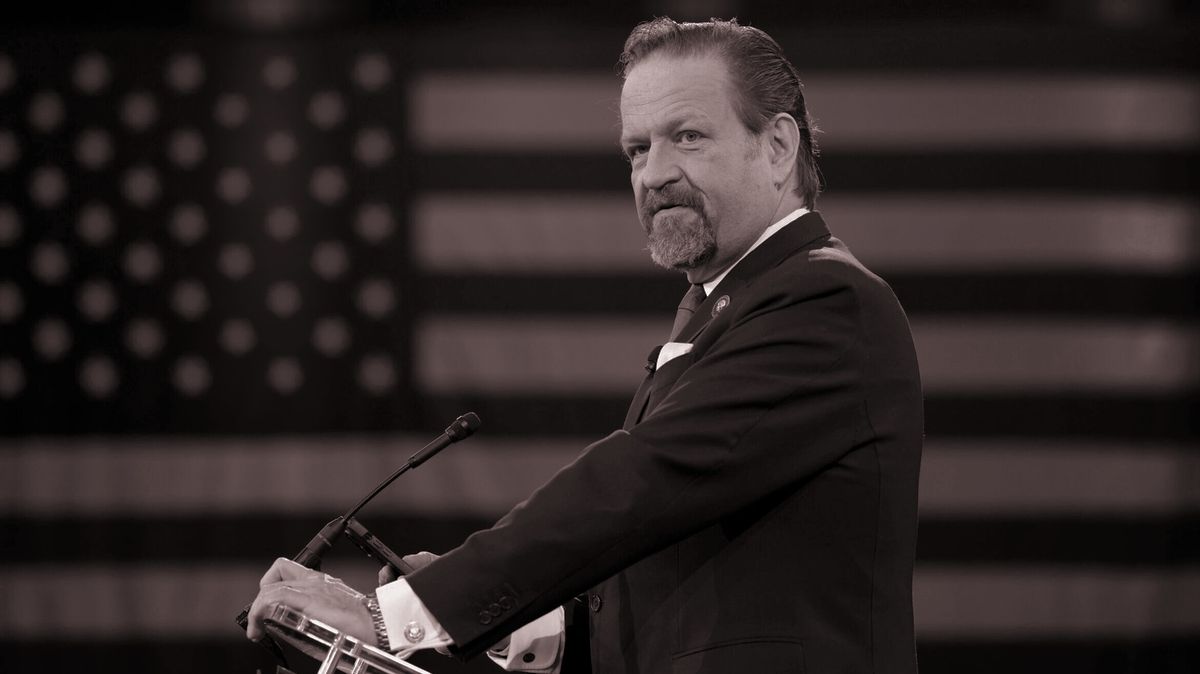
Sebastian Gorka, the N.S.C.’s bombastic and bellicose counterterrorism czar. (Gorka, who insists on being addressed by his honorific, is known around town for driving a black Mustang with the vanity plate “ART WAR,” a nod to Sun Tzu.) Addressing the group, Gorka declared that the Trump administration was “leading counterterrorism from a
common-sense standpoint.” He explained that while Stephen Miller was responsible for drug cartels, his own purview was “jihadists and left-wing terrorists.”
This was fitting. Gorka has long been on a clash-of-civilizations crusade against Islamist terrorists—and has long had a
dim view of Islam itself. He’s also a well-known fixture of the far right. During the first Trump administration, reports surfaced that he had
publicly supported Magyar Gárda, the hard-right, antisemitic Hungarian militia that harassed the country’s Roma communities and was dissolved after a ruling from
the European Court of Human Rights. For Gorka, the hard-right activism is a family affair. His wife, Katie Gorka, served in D.H.S. during Trump’s first term, where she worked to reorient the Countering Violent Extremism program away from targeting right-wing groups. She also pushed to defund Life
After Hate, a program that helped right-wing militia members deradicalize. This week, she was tweeting infographics purporting to show how left-wing protests are never truly organic, grassroots affairs.
At Tuesday’s forum, Gorka laid out a timeline of what he dubbed left-wing domestic terror attacks, including the 2017 shooting at a congressional baseball practice that
injured Steve Scalise; protests at U.C. Berkeley featuring clashes between left- and right-wing groups; and unrest in Portland over George Floyd’s murder. Though only some of the incidents he cited were investigated as acts of terrorism, Gorka, according to an attendee and a source familiar with the proceedings, presented them as evidence of a metastasizing leftist threat. He also cited a
September report from CSIS—which, Gorka noted, was hardly a Trump-friendly think tank—that showed that left-wing political violence is in fact on the rise. The report also said, however, that “left-wing attacks are remarkably less lethal overall than jihadist or right-wing attacks” and that violence from the left, though rising,
“is still well below historic levels of violence by right-wing and jihadist actors.” (Gorka did not respond to a request for comment.)
Afterward, a very uncomfortable F.B.I. official focused on efforts by the Chinese and Russian governments to exploit left-wing groups to foment unrest, and newly confirmed Counterterrorism Bureau coordinator Greg LoGerfo argued that pro-Palestinian groups had become the connective tissue linking far-left activists and jihadist elements. To
illustrate that point, conservative journalist Jay Solomon talked for a long time about Calla Walsh, a 21-year-old American woman from Boston who traveled in Massachusetts progressive circles as a teenager and gradually became radicalized. She was ultimately convicted of vandalizing the offices of Elbit, a tech company in New Hampshire that worked with the I.D.F. More recently, Walsh has taken up residence in Beirut, where she regularly goes on Iranian state
television spouting anti-American, anti-Israeli, and antisemitic talking points.
When I asked Solomon about this monologue, he wondered why I’d write about the symposium at all. “That’s so random,” he said, asked me to call back later, then stopped picking up the phone. An administration official I asked about Walsh told me she was a great example of how elite white kids are the face of radicalization. The official noted that it also allowed the right to connect Walsh’s radicalism to
Elizabeth Warren and accentuated the point Republicans have been hammering at for the last three years: “‘Dems love Hamas,’” the official said. “It’s an easy caricature and object lesson to invoke. It hits a lot of tastebuds.” Still, this person was surprised to discover that the State Department had featured a lecture about Walsh in its symposium. “LMAO,” the official texted. “I didn’t know that.”
When I asked others about the symposium’s focus on Walsh, they responded
with both alarm and laughter, a common emotional combination in Washington these days. Two State counterterrorism officials, one current and one former, feared that her case was a blueprint for how the Trump administration will go after radicals abroad and use them to ensnare left-wing citizens at home. “This woman has a misdemeanor conviction in New Hampshire related to a protest, and is hanging out in Beirut, saying some stupid shit on Twitter,” one official told me. “She isn’t exactly
Osama bin Laden.” The second official noted that, given her young age and ideological fervor, she could be a prime hire for the Trump administration—if only she resided on the other end of the political spectrum.
In the end, though, the symposium seemed to be a dud—both for its champions and its critics. One source familiar with the proceedings told me “there was more discussion of ‘wokeness’ than actual C.T.” Another reported that Gorka’s speech was just his usual
bombast. “It sounds like the stuff he’s said for ages,” this person said. A third source told me that most of the attendees were political appointees, rather than career foreign service or civil service officers—a fact that spoke, they felt, to Foggy Bottom’s quiet resistance to the policy pivot. And the organizers clearly felt it, too. About an hour into the symposium, they sent out another email blast telling people they could still join if they wanted. |
That’s all for me today, friends. I’ll see you back here next week. Until then, good night. Tomorrow will be
worse.
Julia |
|
|
|
Finally, a media podcast about what’s actually happening in the media—not the oversanitized, legal-and-standards-approved
version you read online. Join Dylan Byers, Puck’s veteran media reporter, and Julia Alexander, a longtime media analyst, as they sit down with TV personalities, moguls, pundits, and industry executives for raw, honest, sometimes salacious conversations about the business of media and its biggest egos. New episodes publish every Tuesday and Friday. |
|
|
|
Puck’s daily art market email, anchored by industry expert Marion Maneker, offers unparalleled access to the mega-auctions and
galleries, elite buyers and sellers, and the power players who run this opaque world. |
|
|
|
Need help? Review our
FAQ page or contact us for assistance. For brand partnerships, email ads@puck.news.
You received this email because you signed up to receive emails from Puck, or as part of your Puck account associated with {{customer.email}}. To stop receiving this newsletter and/or manage all your email preferences, click here.
|
Puck is published by Heat Media LLC. 107 Greenwich St., New York, NY 10006 |
|
|
|
|