{{ 'now' | timezone: 'America/New_York' | date: '%b %d, %Y' }} |
|
|
Hello and welcome back to The Best & The Brightest. I’m Leigh Ann
Caldwell.
The shooting at Annunciation Catholic School in Minneapolis is every parent’s worst nightmare—and the national reaction has quickly fallen into a depressing and predictable pattern. Democrats are calling for laws to further prevent access to firearms. Republicans are offering thoughts and prayers. The shooter’s reported identity as a trans woman is already being politicized. Sadly, little will likely change.
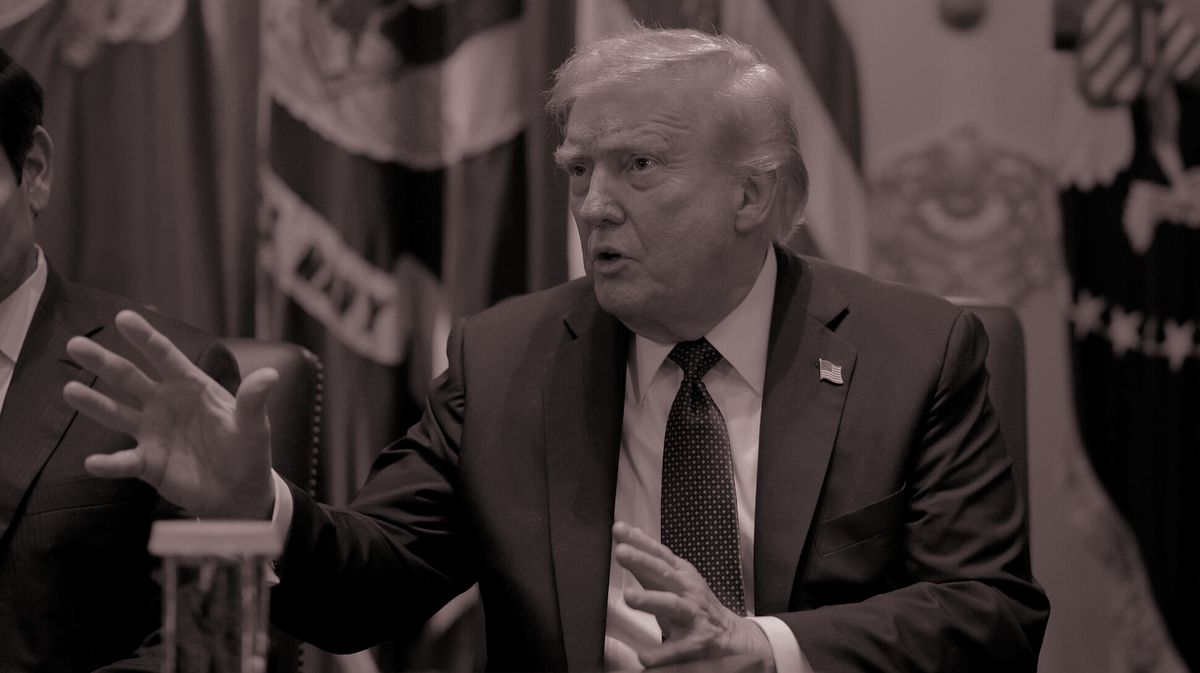
President Donald Trump says
he is intent on combatting violent crime in Democratic-led cities—the latest maneuver in his attempt to depict urban centers of liberal states as lawless wastelands. We’ll see if he comes up with a national plan to address mass shootings. “Please join me in praying for everyone involved,” he posted on social media.
Today, I have some news, notes, and developments on Trump’s efforts to expand federal authority. Many of them, including his wrist-twist negotiated equity stake in Intel and
attempt to control the Federal Reserve, will soon come to a head in Congress. It could be a very uncomfortable fall for Republicans.
But first… |
- Hoosier
resistance: Nearly 50 Republican members from the Indiana legislature were summoned to Washington yesterday to discuss their reluctance to redistrict the state outside of the normal 10-year schedule. The president, of course, wants them to create two extra Republican districts with a new gerrymander.
I’ve heard conflicting reports from several people following the group huddle. One Republican source said that the meeting “went a long way” and that the legislature is “close to moving
forward now.” Another Indiana Republican source, however, said that while the meetings went well, and Vice President J.D. Vance was “thoughtful and kind,” lawmakers didn’t seem persuaded to move forward.
Indiana Gov. Mike Braun, who wasn’t at the meeting, has remained ambiguous about possible next steps. “It’ll be driven by what I think Hoosiers need most,” Braun
told reporters in Indiana today, adding that he won’t move forward without the support of the legislature. - The U.S. behaving badly: Over the past two months, a
not insignificant number of U.S. diplomats have been called in by their host governments to be admonished over “unacceptable” behavior. The most recent country to take umbrage is Denmark, which has summoned the top U.S. diplomat for a meeting about a reported influence campaign in Greenland to encourage the population to support annexation, according to multiple media reports. Of course, this has long been one of Trump’s fixations. Denmark’s foreign minister, Lars
Lokke Rasmussen, called the alleged covert effort “unacceptable.”
Meanwhile, earlier this month, France called in Ambassador Charles Kushner, father of Trump’s son-in-law Jared, after he wrote a letter to President Emmanuel Macron alleging that the country wasn’t doing enough to combat antisemitism. The French foreign ministry called Kushner’s statement “unacceptable” (there’s that word
again). Ukraine’s government summoned a top U.S. diplomat in July after a weapons shipment to the country was halted. (The shipment was later released.) And Brazil called in a top U.S. diplomat after the embassy posted a statement in Portuguese defending former President Jair Bolsonaro, who is facing trial for attempting a coup after losing the 2022 election.
|
|
|
Starting on the other side of Labor Day, Congress will be tasked with confronting the
president’s increasingly alarming socialist experiment. Will Republicans blink on making the Fed an extension of the White House? Is Intel just the first shoe to drop? |
|
|
Both shockingly and somehow also unsurprisingly, during his second term, President Trump has
deployed virtually every conceivable statute, code, and emergency declaration to try and gain control over as many government agencies and functions as possible—the real prize after he warmed up with universities, law firms, and arts institutions—and he’s mostly been successful. But his attempts to claim many of these trophies—the Federal Reserve, the congressional power of the purse, the mayoralty of Washington, D.C.—will come to a head in Congress this fall. It will be a major test for
Republicans, both the pliant variety and the silent minority who have been screaming into their pillows every day since January 20.
A fight over the Fed is first in line when the Senate returns to town next week, and will come in the form of a confirmation battle. Exasperated Democrats, furious over Trump’s expansive use of authority, will face off against Republicans who are increasingly pissed off by their counterparts’ unwillingness to allow even low-level, uncontroversial nominees to clear the chamber
with ease. But Trump is pushing the Senate to confirm Stephen Miran, who currently serves in the White House as chair of the Council of Economic Advisers, for an open seat on the Federal Reserve Board before the body’s next meeting on September 16. He is neither low-level nor uncontroversial.
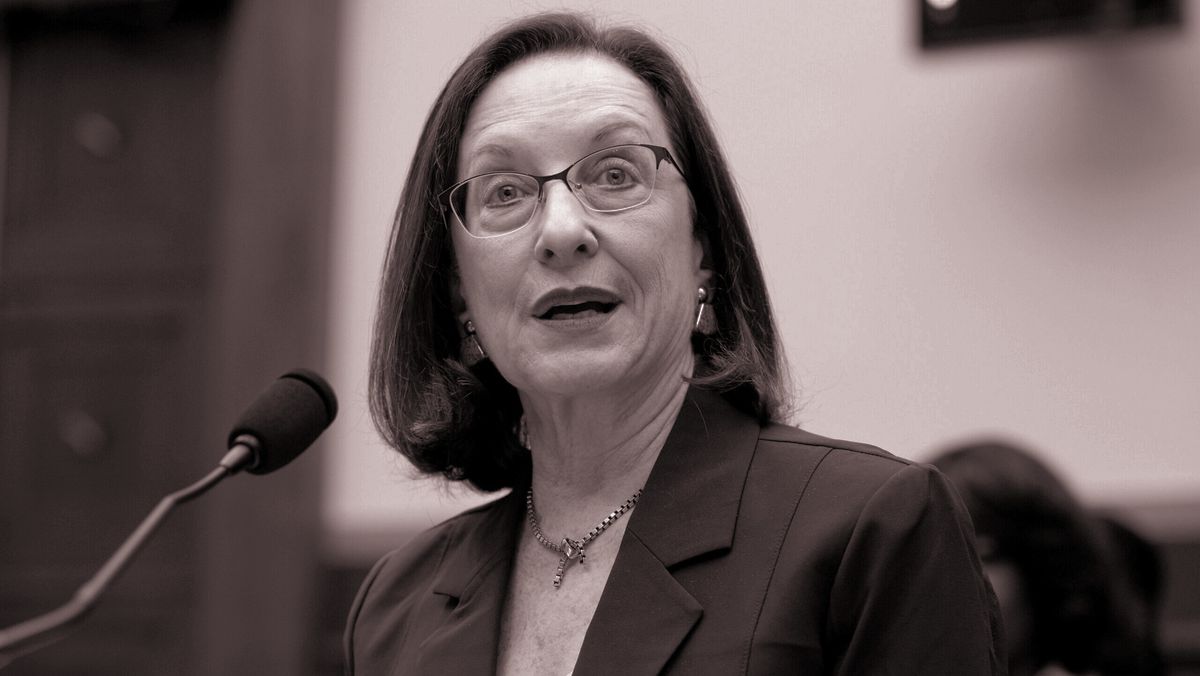
To begin, Trump’s attempt to fire Biden appointee Lisa Cook, who is only three years into her 14-year term, has
complicated Miran’s confirmation; so has Trump’s unprecedented request to keep Miran on the C.E.A. should he end up on the Fed board. Zero Democrats will support Miran, and I’m told that he might even have trouble securing enough Republican support. “There’s a good amount of trepidation,” one Republican aide told me. “I think Fed independence is where they’ll break with the administration.” We’ve heard that before…
Meanwhile, the Health, Education, Labor and Pensions Committee is
expected to take up the nomination of E.J. Antoni, Trump’s pick to lead the Bureau of Labor Statistics after he fired its previous head, Erika McEntarfer, over insufficiently sanguine jobs numbers. Antoni, the chief economist at the Trump-placating Heritage Foundation, whom the Journal editorial board has called “highly
partisan,” will also put Republicans in a tough spot given the statistical agency’s nonpartisan history. For their part, Dems will no doubt take the opportunity to spotlight Trump’s habit of exacting retribution on those who share politically inconvenient facts, and raise foreboding questions about the significant downstream consequences if markets lose trust in the economic data produced by the U.S. government.
Of course, all this disagreement has been complicated by a history
of inimical behavior. The Democrats have been resistant even to the most noncontroversial nominees, and Republicans are about to make them even madder by changing Senate rules to further bulldoze the powers of the minority. While Republicans have confirmed 135 Trump nominees—a rather high number—none has passed through the Senate gantlet without time-consuming votes and devoured floor time. A working group of senators has been deep in conversations about how to make the process less painful and less time
consuming (for them, at least), and Republican aides are confident that a rule change will come to fruition. Sen. John Barrasso, the Republican whip, previewed the effort on the Journal’s op-ed page today, excoriating a “radical Democratic resistance strategy” and vowing that Senate Republicans “are determined to confirm Mr. Trump’s
qualified nominees one way or another.”
Among the most likely changes: limiting the number of votes needed to confirm a nominee; eliminating the need for the Senate to move from legislative session to an executive session (which requires a vote without the consent of all 100 senators); and decreasing the allowable time for debate from two hours to… little or no debate. Republicans might also try to bundle nominees who have passed out of committee on a bipartisan basis into one vote. The question is, what tranche of the 1,200 nominees can be subjected to lighter scrutiny. Rule changes for confirming cabinet officials are not on the table.
There still seems to be a lot of reluctance to let the president recess appoint nominees, I’m told, a practice he’s agitated for that bypasses the Senate and allows a nominee to fill a role for a specified period—usually the remainder of the Congress. Some Republicans have balked, because doing this cuts the Senate out of the
“advise and consent” role spelled out for it in the Constitution. Plus Trump—or any president, theoretically—could use the tactic to easily install people whom Republicans don’t support. In sum, the fight over nominations got ugly before the Senate left town, and an even uglier phase awaits lawmakers come September. |
Trump’s decision to take a 10 percent ownership stake in Intel, the vaunted, $100-ish billion computer and
semiconductor company, will be another Republican loyalty test for the fall semester. Back in 2022, when the bipartisan CHIPS and Science Act was being negotiated in the upper chamber, Democratic Sens. Bernie Sanders, Elizabeth Warren, and even Majority Leader Chuck Schumer pushed Republicans to allow the government to take an equity stake in U.S. chip manufacturers. The unorthodox (some would say socialist)
idea was seen as a way to get some return on the $280 billion that the government was pouring into the U.S. semiconductor market over a 10-year period. Of course, Republicans were adamantly against it then, and the idea didn’t make it into the final legislation that Biden signed into law.
So when Trump announced the government would take a 10 percent stake in Intel after he met with C.E.O. Lip-Bu Tan earlier this month, the silence from many Republicans was
awkward—and significant. Sen. Todd Young, the Indiana Republican who negotiated the CHIPS Act, was pressed by reporters this week for his thoughts. “There are clear concerns about precedent and what is allowed under the law,” he told me and others, an answer that seemed meticulously crafted to avoid criticizing the president. “It was not the intent of the law to allow an equity stake to be taken, but it was the intent to ensure that we enhance our economic
security and national security, which is the objective that the administration is trying to advance.”
Republicans, I’m told, are expected to justify the deal as a national security issue—an effort to ensure that chips are made in the U.S., and to bolster Intel financially, given its not-inconsiderable economic challenges and
waning share of the GPU market. But Republicans, as recently as a few weeks ago, had expressed concern about Intel’s C.E.O. Sen. Tom Cotton, for instance, wrote a letter to Intel’s board of directors on August 5, six days before Tan’s meeting with Trump, asking that they respond to questions about
Tan’s investments. Per the letter, Tan “reportedly controls dozens of Chinese companies and has a stake in hundreds of Chinese advanced-manufacturing and chip firms.” Cotton’s office did not respond to my questions about what he thinks about Trump’s Intel stake.
There are some outliers, however. “I don’t care if it’s a dollar or a billion-dollar stake in an American [company], that starts feeling like a semi-state-owned enterprise, à la [the U.S.S.R.],” Sen. Thom
Tillis told Major Garrett. Sen. Rand Paul posted on social media, “Wouldn’t the government owning part of Intel be a step toward socialism?” But a Republican aide told me that party members are likely to stick with the president, regardless of how uncomfortable they are and how much they fought Democrats who wanted the
same thing. (Attacking New York City mayoral candidate Zohran Mamdani for being a socialist is going to be a bit laughable now.)
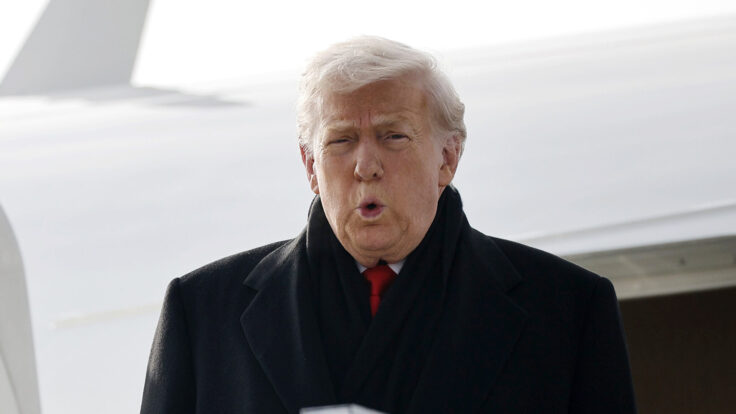
And it’s not going to stop there, as Trump and his top aides have made blatantly clear. When Trump was asked in the Oval Office on Monday whether the Intel deal would be a model for other industries, he said, “There will be other cases. If I had that opportunity again, I would do that.” Meanwhile, Treasury Secretary
Scott Bessent said, “Could there be other industries where we’re reshaping, something like ship-building? Sure, there could be things like that.” On Monday, White House economic Advisor Kevin Hassett told CNBC that the Intel stake was a “down payment” toward the creation of a sovereign wealth fund. (After all, Trump has long been impressed with the Saudis’.)
It all fits within a larger pattern of blending the government and economy in a way that makes the Carrier air conditioning
imbroglio from Trump 1.0 seem quaint. The U.S. now owns a stake in U.S. Steel. Trump has trotted major tech leaders in front of the cameras, thanking them for their promise to invest billions in the U.S. He stopped a wind project in Idaho and another one off the coast of Rhode Island that was 80 percent complete. He even got Cracker
Barrel to reverse its rebranding.
When President Obama took an ownership stake in General Motors and Chrysler, at a time when both American car companies were on the brink of collapse after the 2008 financial crisis, Republican outrage gave rise to the small-government Tea Party movement, which then led to the election of Tea Party supporters in Congress and eventually, the creation of the House Freedom Caucus. But not a single member of the Freedom Caucus has said a word
about Trump’s stake in Intel. Their social media feeds are busy championing Trump’s federal takeover of Washington, D.C.—an issue Trump and Republicans want to keep front and center because they think it’s good politics. But the federal takeover is another issue Republicans will likely have to address in September if Trump wants to extend his control of the city beyond the allowable 30 days. |
|
|
Join Emmy Award-winning journalist Peter Hamby, along with the team of expert journalists at Puck, as they let you in on the
conversations insiders are having across the four corners of power in America: Wall Street, Washington, Silicon Valley, and Hollywood. Presented in partnership with Audacy, new episodes publish daily, Monday through Friday. |
|
|
Unique and privileged insight into the private conversations taking place inside boardrooms and corner offices up and down Wall
Street, relayed by best-selling author, journalist, and former M&A senior banker William D. Cohan. |
|
|
Need help? Review our FAQ page or contact us for assistance. For brand partnerships, email ads@puck.news. You received this email because you signed up to receive emails from Puck, or as part of your Puck account associated with {{customer.email}}. To stop receiving this newsletter and/or manage all your email preferences,
click here. |
Puck is published by Heat Media LLC. 107 Greenwich St, New York, NY 10006 |
|
|
|