Welcome back to Dry Powder. I’m Bill
Cohan.
No, I’m not at the Milken conference in Beverly Hills, as is most of the rest of the financial universe (including a few of my partners at Puck). I’m afraid I’ve been on Milken’s no-fly list since at least 2017, when I wrote a cover story for Institutional Investor and dared mention that he spent 22 months in Pleasanton federal prison after pleading guilty to crimes related to his highly influential years at the now-defunct investment bank
Drexel Burnham. (Milken does feature prominently in my new book about Leon Black and Apollo, out September 8—preorder here!—since, of course, Leon, Marc Rowan, and Josh Harris all got their start at Drexel. In fact, Leon and Marc were both Milken protégés.)
Anyway, in today’s issue, my analysis
of eccentric GameStop C.E.O. Ryan Cohen’s very (faux) Milken-esque gambit to buy eBay with a mix of cash and stock, and a whole lot of O.P.M. Cohen, who pitched the takeover during a ridiculous CNBC appearance that will go down as one for the ages, is basically the laughingstock of Wall Street right now. But you’ve got to admire the chutzpah, I guess. I get into all the details below.
Also mentioned in this issue: Carl
Icahn, Andrew Ross Sorkin, Becky Quick, Elon Musk, William Farley, Greg Brockman, Mike Santoli, Melissa Lee, Sam Altman, Larry Ellison, Asher Edelman, Charles Payne, and more… |
|
|
|
A MESSAGE FROM OUR SPONSOR |
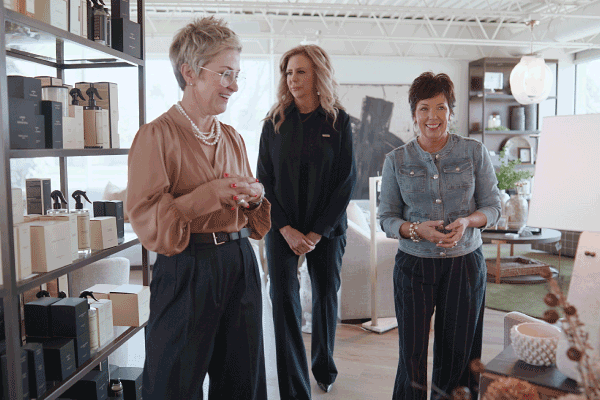
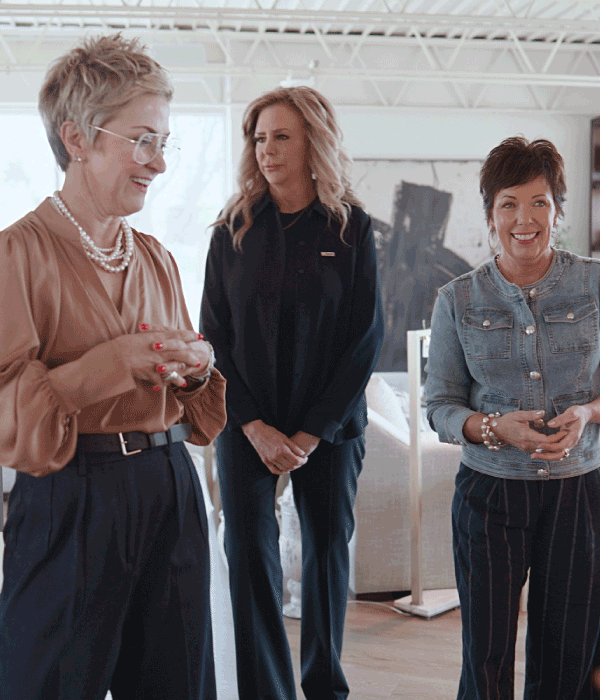
Houndstooth House started as a shared vision between two friends – now it’s been named a Small
Business of the Year. Over the past 20 years, founders Denise Cotter and Michelle Marino have grown their two-woman design firm into a thriving business with a 10,000-square-foot showroom and eight employees.
At U.S. Bank, we know that bold growth starts with meaningful support. That’s why we support over 1.1 million small businesses with personalized resources and expert guidance. For visionaries like Denise and Michelle, we’re more than a bank –
we’re a partner in progress.
|
|
|
|

| Ian Krietzberg
|
|
- What if
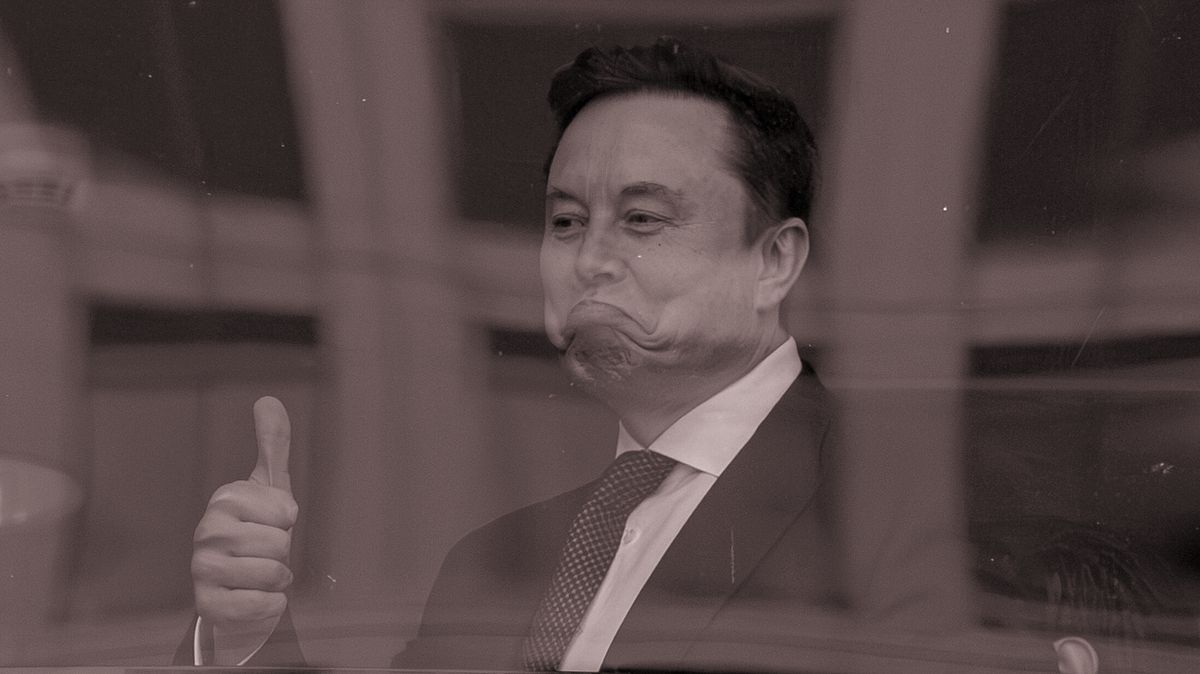
Elon wins the OpenAI trial?: While media reporters and industry insiders are gabbing about the irresistible drama of Musk v. Altman—including OpenAI president Greg Brockman’s testimony yesterday that he’s worth nearly $30 billion, and Musk referring to himself as a “fool” for funding the startup—few have really grappled with the possibility, however remote, that Musk could actually win. Yes, most of his claims have been tossed, narrowed, or
dismissed (some at Musk’s own insistence). But three of his core demands will be considered: $134 billion in damages, the removal of Altman from the board of directors, and the return of OpenAI to its original nonprofit structure.
That last demand, obviously, would have the most seismic impact. OpenAI has raised more than $100 billion since ditching its initial nonprofit model, making it the most heavily capitalized private company in history. And since the
business is likely years away from profitability given the preposterous costs of A.I. compute, a public offering remains essential. After all, much of the money that OpenAI has raised over the past two years was predicated on its conversion into a for-profit entity; not only would Elon’s preferred remedies complicate the company’s ability to raise funds—nonprofits can’t I.P.O.—but they might also jeopardize earlier deals… [Read More]
|
|
|
|
Meme stock king Ryan Cohen is the laughingstock of Wall Street after
launching an absurd bid to buy eBay for $56 billion—largely with cash and equity that GameStop doesn’t have. The market isn’t taking the proposal seriously, but the math itself is actually pretty interesting… |
|
|
|
On Monday morning, I witnessed one of the worst corporate executive performances in
the history of TV. (I’ve seen more than a few.) Ryan Cohen, the chairman and C.E.O. of GameStop, was on CNBC, presumably to explain the logic of his company’s unsolicited bid for eBay. The morning crew—Andrew Ross Sorkin, Becky Quick, Mike Santoli, and Melissa Lee—had questions. It’s not every day that a company like GameStop, with a market capitalization of around $10.6 billion, tries to take over one with a
market cap of around $50 billion. It’s even rarer when the would-be acquirer has been little more than a meme stock for years.
But rather than make a cogent case or recognize that his hosts were politely offering him the opportunity to drive a narrative of legitimacy around his unconventional bid, Cohen was dismissive, laconic, and devoid of persuasive answers about the economics. “I don’t understand your question,” he said to Becky. “We’re offering half cash, half stock, and we have the
ability to issue stock in order to get the deal done, but the full details of the offer are on our website.”
It made me wonder if, when the mics came off, Cohen realized he had just doomed his deal to the trash heap of Wall Street history. GameStop generated $418 million of net income in fiscal 2025, largely from cost-cutting—a major turnaround from previous years. But the stock, of course, is famously volatile, befitting a meme play. It is down 41 percent in the past five years, which is
roughly the time that Cohen has been chairman. In the past year, it is down 10 percent. (So far in 2026, for what it’s worth, it is up 16 percent.) |
|
|
|
A MESSAGE FROM OUR SPONSOR |
Behind every thriving local business is a story worth telling. For Houndstooth House, that story
begins with Sioux Falls entrepreneurs Denise Cotter and Michelle Marino – and a partnership with U.S. Bank.
What started as a shared vision for a flexible, family-first design studio has grown into an award-winning business with a 10,000-square-foot retail space, an eight-person team. Now named a Small Business of the Year, their journey is proof that heart and hard work go hand in hand.
U.S. Bank is proud to be a part of their story – and over 1.1 million others like it.
|
|
|
|
How does a business with a market cap of $10 billion buy a company with a market cap
of $50 billion without, say, the backing of a Larry Ellison? Why, you produce a highly confident letter and hope it works. Cohen has asserted that his $125-a-share bid, or $55 billion in equity value, reflects a 46 percent premium to the eBay stock price from early February, when GameStop started buying shares on its way to accumulating its current 5 percent stake in the business. Cohen also claims that GameStop has $9.4 billion in cash on its balance sheet and a highly
confident letter for $20 billion in cash from TD Securities, the big Canadian bank, with the rest of the consideration coming in the form of GameStop stock.
We’ve seen this film before. Cohen—GameStop’s largest individual shareholder, with around a 9 percent stake—is trying to lift a page from the Mike Milken playbook. Milken, along with Leon Black, you’ll recall, came up with the idea in the 1980s of the so-called highly confident letter, which gave
corporate raiders such as Drexel clients Carl Icahn and William Farley the appearance of having the money they needed to take over a much bigger company—without actually having to pay for expensive committed financing.
The idea was straightforward: If Leon, who was then the head of M&A at Drexel, could tell clients that Milken was “highly confident” he could raise the money needed if the raider were to succeed in his hostile quest, that was usually enough
to get the board of directors of the target company to take Icahn, Farley, KKR, Asher Edelman, or whomever seriously. Now Cohen is trying the ploy on eBay. |
No offense, but TD isn’t quite Drexel Burnham back in the day. I can’t come up with a
single example where TD has been the lead bank in a hostile deal, especially one where the two protagonists are U.S. companies. But let’s not be petty about TD. Frankly, the math alone shows just how ridiculous Cohen is being here.
Let’s give him credit for having nearly $30 billion in cash that he can use to buy eBay, between his balance sheet and the TD commitment. That leaves $25 billion in GameStop stock to fund the balance. Since the total value of the stock is currently $10 billion,
he’d have to massively dilute his shareholders in order to issue $25 billion of stock. According to my back-of-the-envelope math, issuing those shares would give eBay ownership and control of around 71 percent of GameStop. Existing GameStop shareholders would own the balance of roughly 29 percent. So, yes, one reason Cohen had a hard time explaining his deal to Becky is that he’s actually proposing that eBay buy GameStop, not the other way around—a fact he no doubt did not want to admit
on national television.
If eBay were somehow willing to agree to this insanity, the company would become GameStop’s largest shareholder and controlling owner. In other words, Cohen’s bid is a joke. That probably explains why eBay is trading at a roughly 12 percent discount to his $125-per-share bid for the company. The market, wisely, is not taking the bid seriously.
This would all seem highly embarrassing for Cohen—until you examine his new compensation package, which awards him
options on 171 million new GameStop shares based on his achievement of certain EBITDA and market cap goals. For instance, he gets 10 percent of the new stock award if GameStop’s market cap doubles to $20 billion and its “cumulative” EBITDA, whatever that means, reaches $2 billion. (Cohen is predicting $2 billion of cost savings at eBay, by the way.) There are nine hurdles for Cohen to receive his new option package, with the final 15 percent tranche coming his way if GameStop’s market cap hits
$100 billion and its cumulative EBITDA hits $10 billion.
I guess that explains why Cohen is far more concerned with growing GameStop’s EBITDA and market cap than with what would be massive ownership dilution to him and the existing GameStop shareholders. He basically told Melissa Lee as much. “There’s an opportunity to build a much larger business, to make the business much more efficient, and to accelerate revenue growth,” Cohen said. “And eBay is a very strong business. You
look at GameStop as an example—GameStop, very difficult. The business should have been bankrupt multiple times over, and it’s doing okay. It’s making a few bucks. eBay is in a very, very strong position, but it could be in a much stronger position, and it could be a much larger business than what it currently is.” By the way, Cohen had an equally farcical appearance the following day on Fox Business, with Charles Payne cheering every step of the way (while admitting, toward the
end, that he is a rah-rah GameStop shareholder, too).
The GameStop deal for eBay will never succeed as currently structured, but it’s certainly a valiant attempt by Cohen to make his option package get in the money. Back to the drawing board, Ryan. |
|
|
|
An essential, insider-friendly Hollywood tip sheet from Matthew Belloni, who spent 14 years in the trenches at
The Hollywood Reporter and five before that practicing entertainment law. What I’m Hearing also features veteran Hollywood journalist Kim Masters, as well as a special companion email from Eriq Gardner, focused on entertainment law, and weekly box office analysis from Scott Mendelson. |
|
|
|
Puck sports correspondent John Ourand and a rotating cast of industry insiders take you inside the executive
suites and owners boxes where the decisions that shape the entire sports business are made. You’ll hear interviews with players, network execs, and everyone in between. The Varsity is an extension of John’s private email for Puck by the same name. New episodes publish every Wednesday and Sunday. |
|
|
|
Need help? Review our FAQ page or contact us for assistance. For brand partnerships, email ads@puck.news. You received this email
because you signed up to receive emails from Puck, or as part of your Puck account associated with {{customer.email}}. To stop receiving this newsletter and/or manage all your email preferences, click here. |
Puck is published by Heat Media LLC. 107 Greenwich St., New York, NY 10006 |
|
|
|
|