 |
|
Welcome back to The Best & The Brightest. I’m Abby Livingston. Tonight, we have a special treat—news and notes on a big day in both chambers, plus a forensic accounting of a new Washington watercooler topic: Could Musk and Trump really contemplate some sort of social media merger? My partner Bill Cohan runs the numbers and has an answer. But let’s start with all the developments on the Hill.
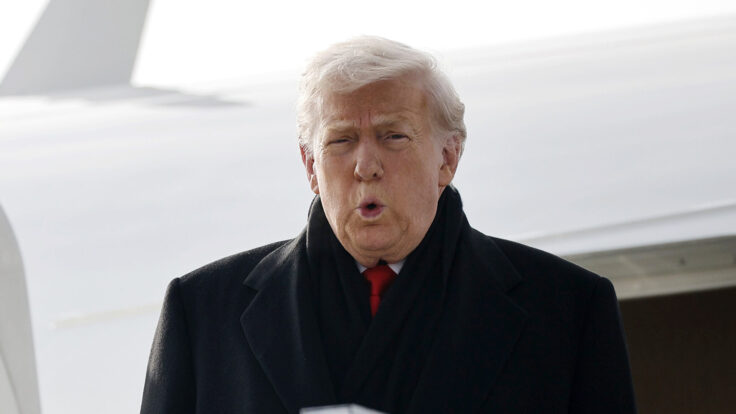
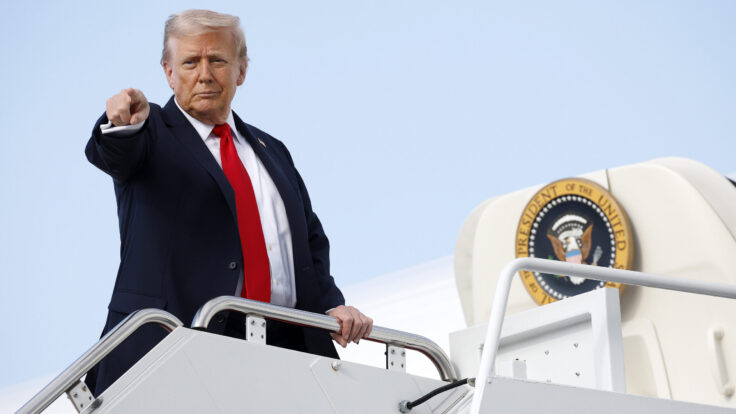
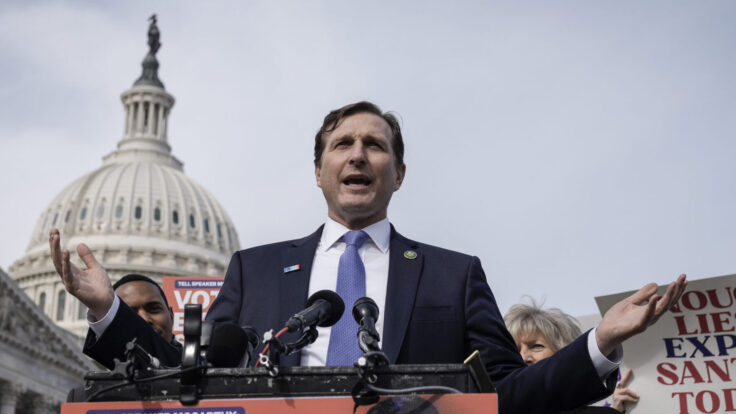
It’s been a rolling jubilee for Republicans during the past week now that the party is on track to dominate in all three branches of government. Just today, the Senate crowned John Thune as its new leader, spurning far-right favorite Rick Scott; House Republicans held their victory pep rally at the Hyatt Regency; and Trump returned to D.C. to make the rounds as their conquering hero.
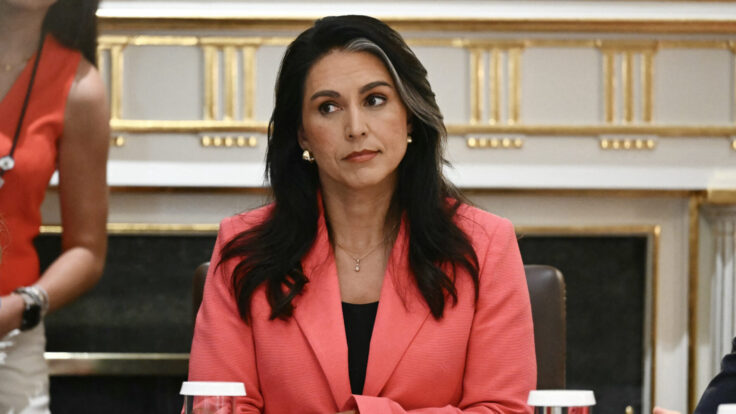
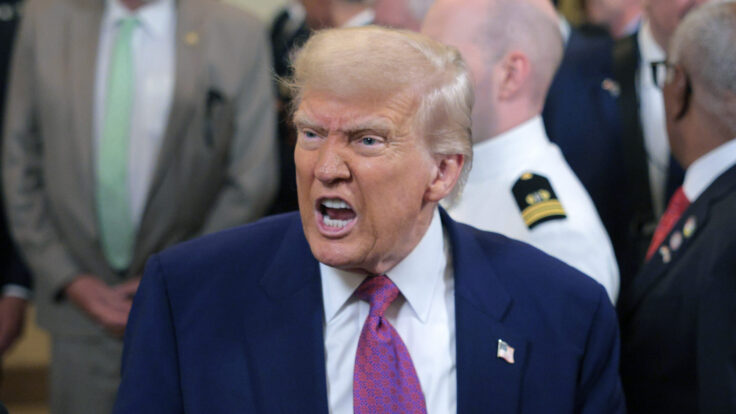
But as Wednesday wore on, it became increasingly clear just how willing Trump is to put the screws to Hill Republicans. The greatest loyalty oath will come in the form of votes to confirm his nominations of legal lightning rod Matt Gaetz for attorney general, Tucker Carlson Tonight guest host Tulsi Gabbard for director of national intelligence, and Fox & Friends co-host Pete Hegseth for secretary of defense. The nominations have been met with eye rolls on the Hill for their perceived lack of seriousness. But the Gaetz nomination is on a different plane from the others, both because it can be assumed Gaetz will eagerly do Trump’s bidding at the D.O.J. and because of the sensitive nature of the A.G. appointment.
Whether this confirmation is a hill that Republicans are willing to die on is the most urgent question in Washington right now. As for Gabbard and Hegseth, the extreme nature of the Gaetz nod may make their nominations more palatable. If anything, expect the Senate to pick a battle over one of Trump’s nominees and grudgingly acquiesce to the rest. But it’s too early to speculate too much in these uncharted waters.
A little more on all this…
|
|
|
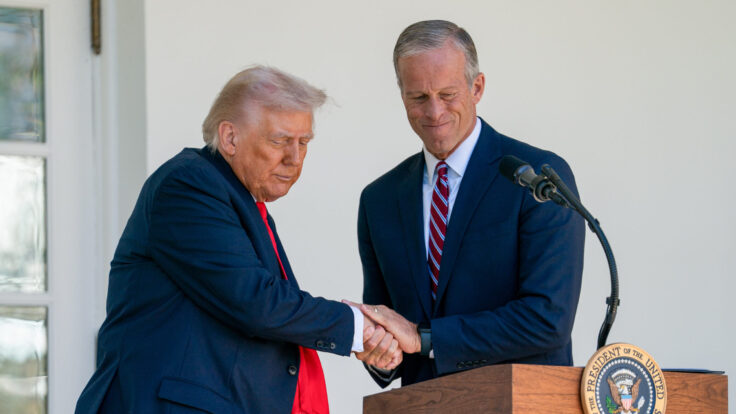
| In a much-anticipated leadership fight, John Thune defeated his longtime rival for Senate majority leader, John Cornyn, by a 29-24 vote—not quite the outcome Cornyn might have wanted as he prepares to potentially face Texas A.G. Ken Paxton in a Senate primary in 2026. Notably, Thune’s first action was to reinforce a sense of normalcy, making public his intent to keep the filibuster. So, yes, Wednesday started out as a good day for what’s left of the old G.O.P. establishment. After all, Senate Republicans effortlessly blew off the MAGA pressure campaign to install Rick Scott.
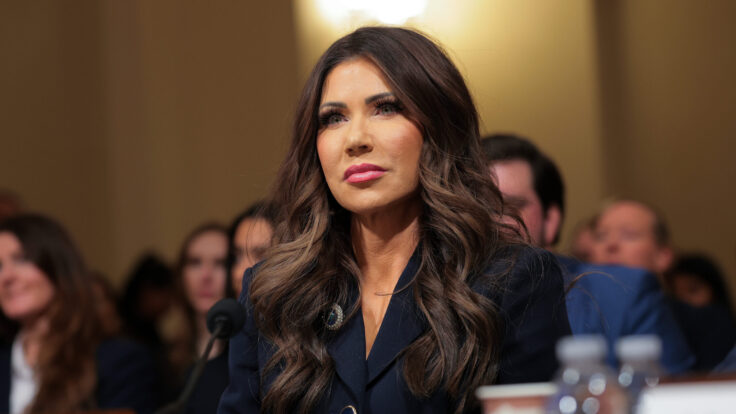
But only hours later, Trump dropped the Gaetz bomb. Senate Republican sources have been telegraphing to any reporter who will listen that they’re displeased with the lack of seriousness in some of Trump’s nominations thus far. But it’s worth recalling that Trump has not necessarily always chosen the most MAGA contenders. As my partner Tara Palmeri noted yesterday, there’s MAGA grumpiness that Marco Rubio got the Foggy Bottom nod over Ric Grenell. Yes, D.H.S. pick Kristi Noem shot her 14-month-old dog Cricket and has sought to align herself with Trump by every means possible, but she is downright mainstream compared with M.T.G., who was also mentioned for the job.
Then there’s Gaetz, who was investigated but not charged by the D.O.J. in connection with sex trafficking, and is still being investigated by the House Ethics Committee over allegations that he “engaged in sexual misconduct and illicit drug use,” among other claims. The Hill seemed completely stunned by the pick. “Are you shittin’ me,” Gaetz’s House colleague Mike Simpson remarked to The Huffington Post. Senator Lisa Murkowski told Politico she doesn’t “think it’s a serious nomination.” Susan Collins said she was “shocked.”
Those reactions underscore the tight vote margin that Gaetz would face in the Senate—as well as the importance of the outstanding Senate race in Pennsylvania, which the Associated Press has called for Republican David McCormick. (Other news organizations are holding off until more provisional ballots are counted.) If McCormick hangs on, the Senate Republican margin will be 53-47. A Bob Casey comeback win would make the Gaetz nomination that much harder to push through.
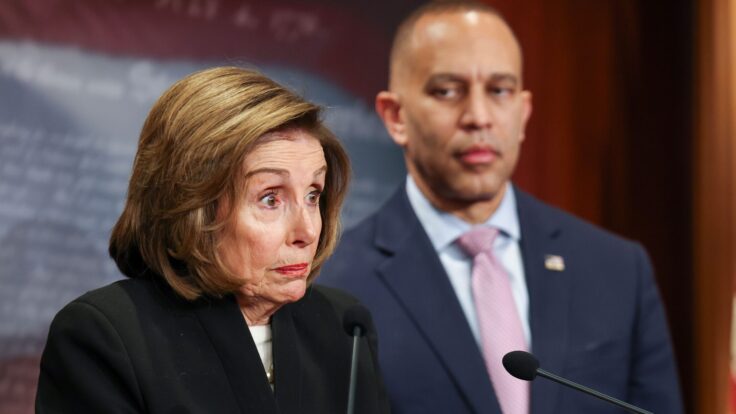
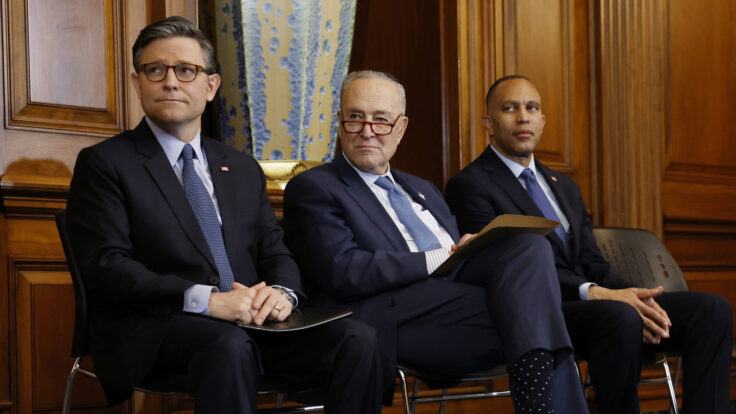
In better news for the Republican establishment, and especially for Speaker Mike Johnson, most news organizations have now made the call that control of the House will stay with the G.O.P. The bad news for them is that Trump keeps nominating members of Congress—Gaetz for A.G., Elise Stefanik for U.N. ambassador, Mike Waltz for national security advisor—whose appointments would erode Johnson’s margin. Just yesterday, House Republican leaders pleaded with Trump in front of cameras to stop cutting into their majority, but their entreaties fell on deaf ears.
And now, my partner Bill Cohan runs the numbers on the town’s latest parlor game: Will Elon Musk and Trump merge their social platforms? |
|
|
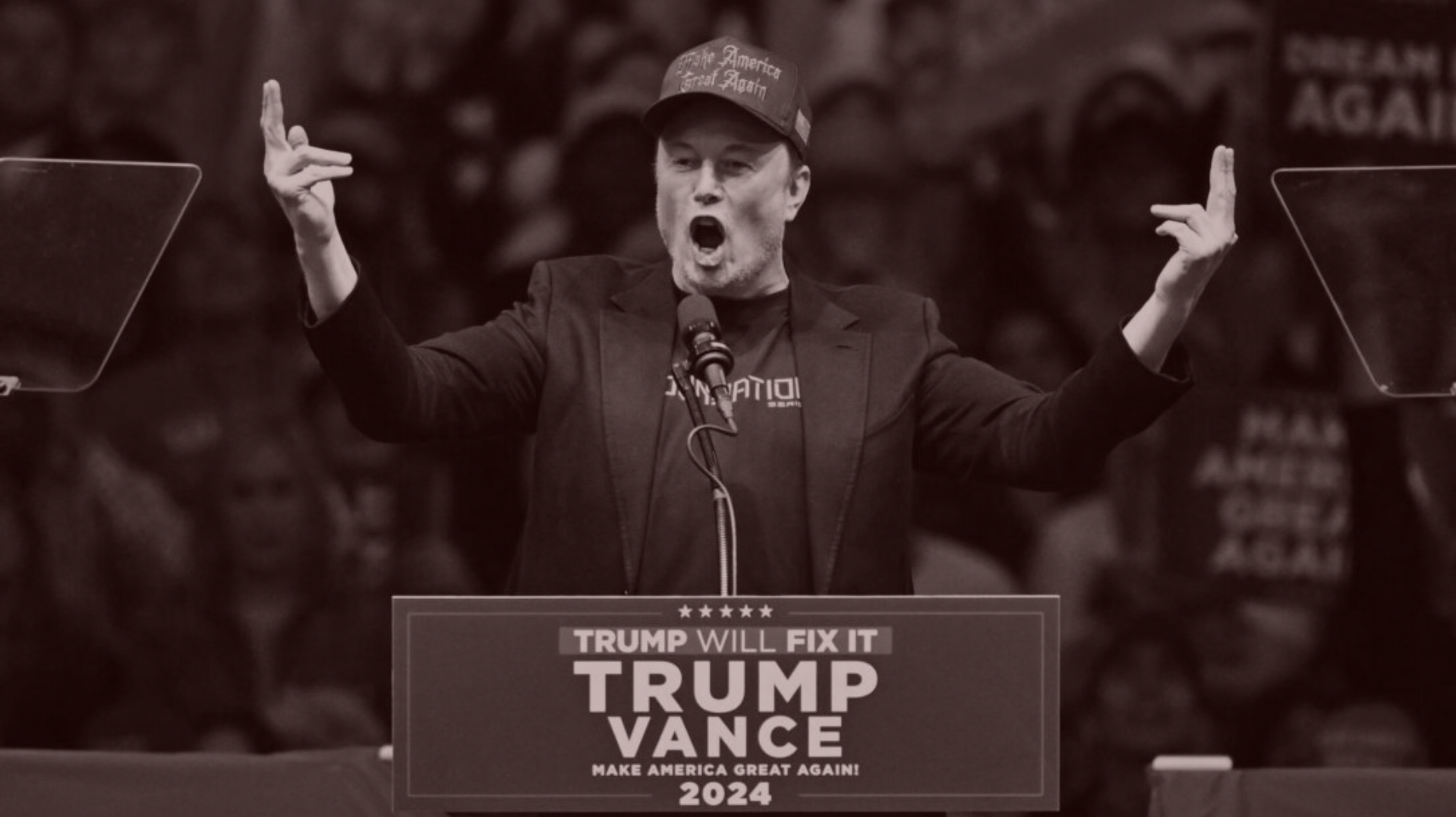
| One of the more interesting post-election fever dreams making the rounds on Wall Street involves X, formerly known as Twitter, and Trump Media & Technology Group, the publicly traded SPAC that merged with Donald Trump’s Truth Social and now trades under the symbol DJT, naturally. The idea is that the privately held X, owned largely by Trump’s new buddy Elon Musk, would merge with DJT, owned largely by the next president of the United States, as a way for X to go public. In theory, the merged public company’s value would soar, making both Trump, who owns around 60 percent of DJT, and Musk, the world’s richest man, even richer. Kara Swisher even mulled the possibility on a recent episode of Pivot.
But does a deal between X and DJT make any sense at all? Well, almost anything is possible on Wall Street, as long as it’s legal. And there’d be nothing illegal about a combination of X and DJT, at least from a regulatory perspective. I don’t even think Lina Khan, the crusading, soon-to-be defenestrated commissioner of the Federal Trade Commission, would object to the deal on antitrust grounds. But does it make good business sense? Or any business sense?
The ingredients for a combination of X and DJT do seem to be in place, at least at first blush. The principal owners of the two companies appear to be enjoying a particularly vibrant bromance, with Musk reportedly camped out at Mar-a-Lago since last week. (There were even rumors that Musk would accompany Trump today during his trip to visit Biden in the White House.) Trump has also named Musk to be co-head of a so-called Department of Government Efficiency (DOGE, like the meme shitcoin)—a self-aggrandizing euphemism for what is essentially a blue-ribbon committee—supposedly to weed out waste in the federal government. So if they have the inclination to do a deal, their friendship would make that more likely. But could they reach a deal? Here’s where it gets complicated. |
|
|
| At the moment, DJT’s equity is valued at roughly $6.3 billion, meaning Trump’s 60 percent stake is worth around $3.8 billion. But, as is well known by now, that preposterous valuation—about the size of Bausch & Lomb or Alaska Airlines—is not based on economic fundamentals. In the first nine months of 2024, DJT generated a mere $2.6 million in revenue (not a typo) and generated losses of $363 million. That kind of financial performance is pretty hard to fathom. When you somehow try to reconcile that income statement with the $6.3 billion valuation, you’ve entered the land of the absurd. DJT released third-quarter earnings on Election Day, with C.E.O. Devin Nunes, the former California congressman, declaring, “This has been an extraordinary quarter for the company.” Thanks, Devin, that’s nice to hear. But Nunes did not offer any insight on a business model that makes no economic sense or a company that trades at an incoherent, batshit crazy 2,192x revenue.
The only bright spot at DJT is that the company has no debt, and cash on hand of $673 million. Since there is no debt, there’s no immediate threat of bankruptcy, which would distinguish DJT from Trump’s other public and private companies, six of which filed for bankruptcy because of debt burdens that could not be repaid. (Others, such as Trump University and Trump Steaks, simply shut down.)
Then there’s X. You’ll recall that Musk paid $44 billion for Twitter two years ago by raising $31 billion of equity—some $24 billion of his own cash, plus funds from friends and family including Larry Ellison ($1 billion) and Saudi Arabia’s Prince Alwaleed, who rolled over his $1.9 billion of Twitter winnings into Elon’s X—and borrowing the other $13 billion from a group of Wall Street banks, led by Morgan Stanley and Bank of America.
X is now a private company, so information regarding its financial performance is hard to come by and is necessarily of the leaked variety, and thus needs to be taken with a whole brick of salt. But according to “internal documents” obtained by Bloomberg, X is expected to generate nearly $3 billion in revenue in 2024, most of it from ad sales, down from $3.4 billion in 2023 and $4.4 billion in 2022. Andrew Hutchinson, writing in Social Media Today, predicts that with annual interest expenses of $1.2 billion on the $13 billion of debt, X “looks set to post a significant loss in 2024, which could even result in bankruptcy for the former bird app.” In fact, if Musk, with a fortune these days of an astounding $319 billion—an increase of $90 billion so far in 2024 alone—weren’t making those $1.2 billion in annual interest payments, most of which is probably coming out of his own pocket, Twitter/X would likely have filed for bankruptcy long ago.
Is there any equity value in X? I have long argued that the equity value of X has evaporated and that its $13 billion of debt would probably trade around 50 cents on the dollar. But as best as I can tell, none of that debt has been sold, although some of the banks have likely taken their writedowns while keeping those marks very quiet. Wall Street banks like to say they’re in the moving business, not the storage business, and they need to get that X sludge off their balance sheets, even though the interest payments are current thanks to Elon’s ongoing largesse.
Some of X’s equity investors, though, are starting to face the reality that their investment in the company is close to worthless. Fidelity, for one, has marked down its equity investment by 80 percent. That’s still generous, but directionally correct, at least. |
|
|
| According to Fidelity’s valuation, the X equity is worth 20 percent of $31 billion, or $6.2 billion. To calculate the enterprise value of X, we need to add in some value for the debt. Let’s be extremely generous and put that debt value at 75 cents on the dollar—less than par, but higher than the 50 percent whispers I’ve heard previously. That’s another $10 billion or so. This back-of-the-envelope math pegs the enterprise value of X these days at a charitable $16 billion.
At a $16 billion enterprise value, X is valued at 5.3x 2024 revenue, as compared to DJT’s enterprise value of $5.7 billion (the $6.3 billion of equity value, less the $640 million of cash), which represents the aforementioned 2,192x revenue. In other words, even though the equity value of X and DJT are roughly similar—merger of equals, anyone?—it’s clear that DJT is wildly, insanely overvalued.
Any arm’s-length negotiation of an X/DJT combination would have to acknowledge the absurdity of the DJT valuation. Without that concession, DJT shareholders and X shareholders could each end up owning 50 percent of the combined company, with Trump owning 30 percent (50 percent of his 60 percent of DJT) and Elon owning 39 percent (50 percent of his 78 percent of X). But that would be ridiculous. In the real world, Elon and his fellow X shareholders would have to end up with a disproportionate share of the equity of the combined company in recognition of DJT’s irrational stock price. That would mean massive dilution for DJT shareholders, including and especially Trump.
Maybe Trump would go for a deal with X anyway—after all, he got his stake in DJT for free, so it’s all gravy for him. But most of the other DJT investors paid real money for their shares, and I figure they would be mighty upset to have their ownership diluted. That could mean shareholder lawsuits up the wazoo.
Of course, it’s likely the normal M&A rules wouldn’t apply to this deal. I’m sure Elon would be more than happy to do whatever deal made Trump happy (after all, Elon apparently now works for The Donald—or vice versa), even though it would be foolish and not remotely fair to his shareholders. But who among them would complain? Ellison? The prince? A16z? Fidelity? (Okay, maybe Fidelity.) In other words, if Elon wants to make a sweetheart deal with Trump to get X into the public markets without getting underwriters involved or having to explain the company’s decline, he probably could.
There are other complexifiers, too. Remember, X/DJT would also have to absorb X’s $13 billion of debt. Given the lousy income statement that the combined company would have, the value of the debt would be even more suspect than it is now. Elon could try to buy the debt back at a discount and retire it—something I’ve long suspected he might do. But absent an understanding that Elon would keep paying the interest on that $13 billion of debt, it seems highly unlikely that cash flow from the combined X/DJT would be able to cover those interest payments, suggesting that a default could be around the corner.
I suppose that the equity of an X/DJT combination could benefit from the ultimate meme stock supernova, and Elon could contemplate selling out at a high—a Vulcan chess, theater-of-the-absurd possibility. (This is not investment advice.) Of course, that outcome would really leave the $13 billion of debt dangerously exposed, capsizing a hypothetical combined entity and leaving Nunes without any life rafts. I don’t know what happens to Linda Yaccarino, the C.E.O. of X, in this scenario. Probably nothing good.
In truth, there’s no merger of X and DJT that makes any economic sense, not even close. But Musk is not a rational owner; he’s proven that with X already. And a normal president wouldn’t have failed to put his real estate company into a blind trust, nor would such a president want to own 60 percent of a public company with huge opportunities for manipulation and favor-currying. Most presidents would want to avoid any appearance of a conflict of interest or the suggestion that someone could influence him or her. In fact, the more I think about it, the more I am convincing myself that a deal between Trump and Musk to create X/DJT says all you need to know about the state of the country at this very absurd moment. |
|
|
|
| FOUR STORIES WE’RE TALKING ABOUT |
 |
| Warners’ I.P. War |
| The latest twist in the legal feud over Max’s ER reboot. |
| ERIQ GARDNER |
|
 |
| The Grenell Snub |
| The blowback as Trump begins stocking his cabinet. |
| TARA PALMERI |
|
 |
|
 |
|
|
|

|
 |
|
|
|
Need help? Review our FAQs
page or contact
us for assistance. For brand partnerships, email ads@puck.news.
|
|
You received this email because you signed up to receive emails from Puck, or as part of your Puck account associated with . To stop receiving this newsletter and/or manage all your email preferences, click here.
|
|
Puck is published by Heat Media LLC. 227 W 17th St New York, NY 10011.
|
|
|
|