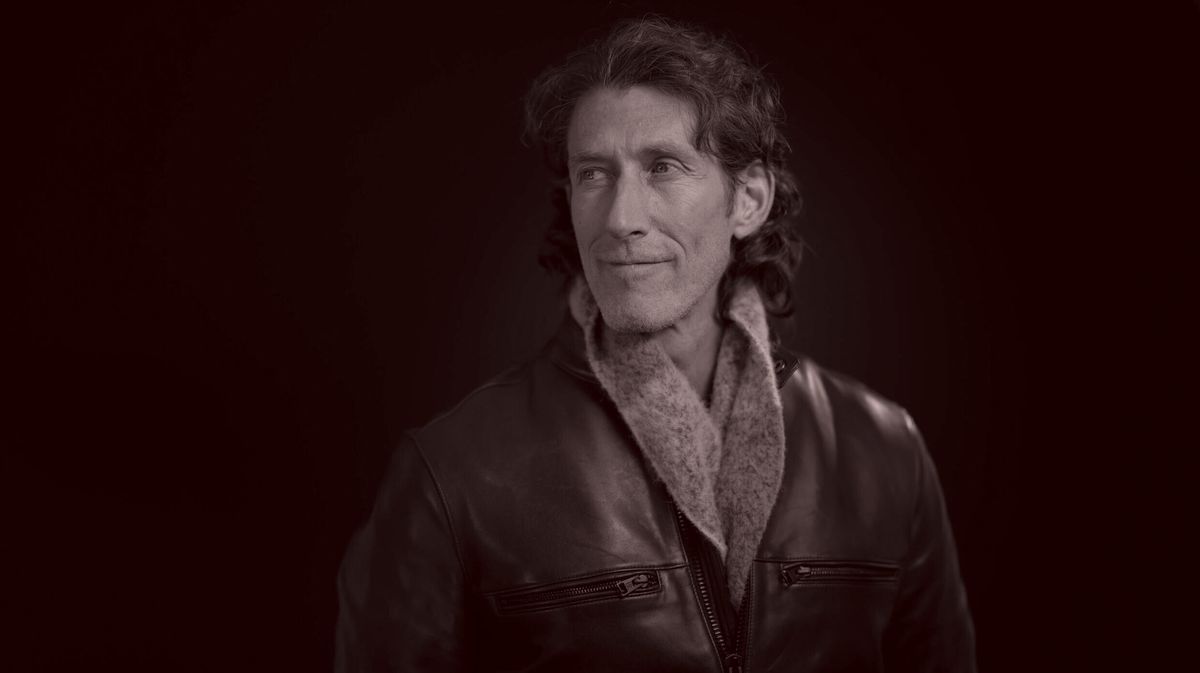
Welcome back to the Inner Circle of Wall Power. I’m Marion Maneker—and I’ve put the art world on double secret probation. (I’ve got my eye on you, mister.)
I started this year with a dispatch about Manuela, the Hauser & Wirth restaurant where art and hospitality meet. As I wrote at the time, the commercial logic was to build a separate, but related, business off the gallery’s primary asset: their relationship with artists. But Hauser & Wirth weren’t the first to do this. Nearly 20 years ago, contemporary art collectors Laura Lee Brown and Steve Wilson launched the 21c chain of boutique museum-hotels as a way to share their experience of living with art. (You might have seen that they sold some works at Christie’s last year from their vast collection of more than 5,000 artworks.) For tonight’s issue, I sat down with 21c’s chief curator, Alice Gray Stites, to talk more about the intersection of art and hospitality.
But first…
|
- Beaumont Nathan’s new equity partners: Beaumont Nathan began 10 years ago as a scrappy startup “in the shed at the bottom of the garden,” as art advisor Wentworth Beaumont remembers it. That’s when he and Hugo Nathan first envisioned an advisory firm that could one day be more than a lifestyle business run by two restless colleagues. Now, a decade on, Beaumont Nathan has a phalanx of advisors—often seen sitting five abreast in auction rooms—with thriving offices in London and New York. (A full 60 percent of the deals managed by the firm are handled by advisors other than the founders.) In recognition of this growth, and of the importance of their New York offices, Beaumont Nathan will be naming Emma Lasry, Stephanie Armstrong, and Martha Craig as equity partners. Armstrong and Lasry are based in New York; Craig works in London.
- More Fair Warning: Loic Gouzer and Alexandra Bonetti are expanding their Fair Warning auction platform into private sales and advisory. Art advisor Sarah Calodney is joining Fair Warning as a partner. A director at Lehmann Maupin in London for nine years before opening her own eponymous advisory firm, Calodney will “play a crucial role in business getting and sales, as well as client development,” the company said in its press release. Gouzer added that Calodney “really gets the mission: selecting artworks with the greatest possible conviction.”
- S.F. makes a meal of Qualeasha Wood’s Girl Dinner: The Fine Arts Museums of San Francisco has acquired Qualeasha Wood’s Girl Dinner, from 2023, in advance of Wood’s second solo show with Pippy Houldsworth in London this March, called Malware. The gallery announced this latest museum acquisition for the artist, who often combines self-portraiture, internet and operating system imagery, and textile techniques into a distinctive, immediately recognizable body of work. A former artist in residence at the Studio Museum of Harlem, Wood has already had her work acquired by the Art Institute of Chicago, the Metropolitan Museum of Art, the Rennie Collection in Vancouver, the Studio Museum in Harlem, the Dean Collection, and the Museum of Fine Arts in Houston.
|
|
Qualeasha Wood, Girl Dinner (2023), Fine Arts Museums of San Francisco
|
|
Now, let’s get to the main event…
|
|
|
|
A discussion with the top curator of Laura Lee Brown and Steve Wilson’s boutique museum-hotel chain, about the importance of bringing art to the public and the complicated logistics of their hybrid hospitality business.
|
|
|
|
A full decade before Iwan Wirth and Manuela Hauser launched Artfarm—the hospitality and development company behind their famed Manhattan gallery-restaurant hybrid, Manuela—the major contemporary art collectors Laura Lee Brown and Steve Wilson founded 21c Museum Hotels: a boutique museum-hotel chain that offers the broader public a way to experience living with art, at least temporarily. Over the past 20 years, the award-winning business has expanded from its initial location in Louisville to Bentonville, Durham, St. Louis, Lexington, Cincinnati, and Chicago.
Late last month, I chatted with Alice Gray Stites, the museum director and chief curator at 21c Museum Hotels, to discuss the idea of “living with art,” the complicated logistics of a museum-hotel hybrid, and the chain’s program to “elevate” local artists. The following conversation has been lightly edited and condensed for clarity.
|
|
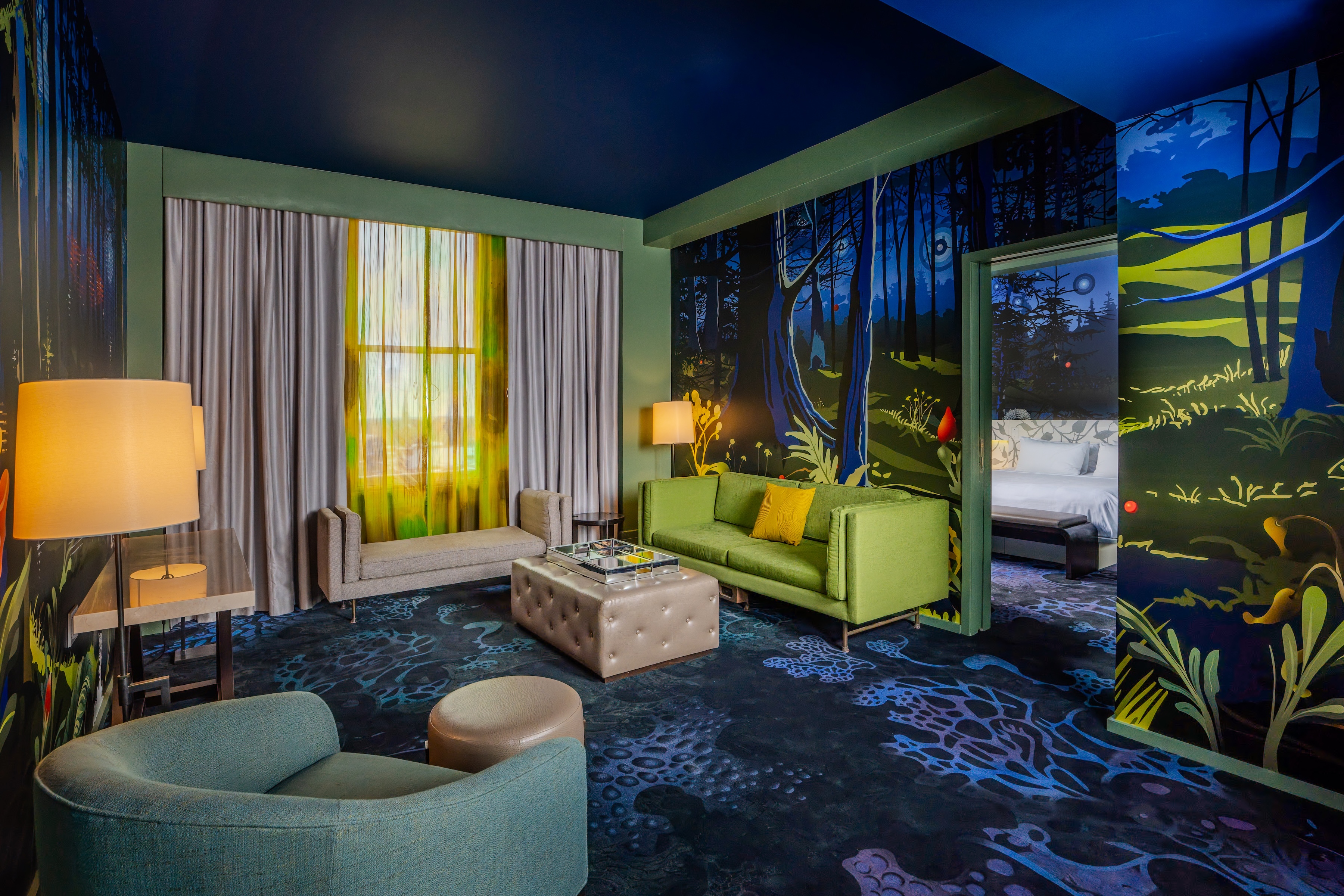
21c Museum Hotel Lexington. Photo: Courtesy of 21c Museum Hotels.
|
|
Marion Maneker: Tell me about how 21c was founded, and how you think about the interaction of art and hospitality.
Alice Gray Stites: One of the primary motivations was that Steve and Laura Lee had been collecting for a number of years, prior to 2006, and were often asked by groups and individuals to come see their collection at their home. They talked about how living with art had been so gratifying and so inspiring. And they wanted to share that opportunity—to have your perspective on any number of topics expanded by art—with the public.
I just love the fact that you don’t know when people are going to have a meaningful experience. But I will say that nothing gives me more satisfaction than walking into, say, Lexington on a Friday. It’s nine o’clock at night, and there are people coming in off the street and looking at the artwork—and some of them are even reading the labels. I could see people talking to one another.
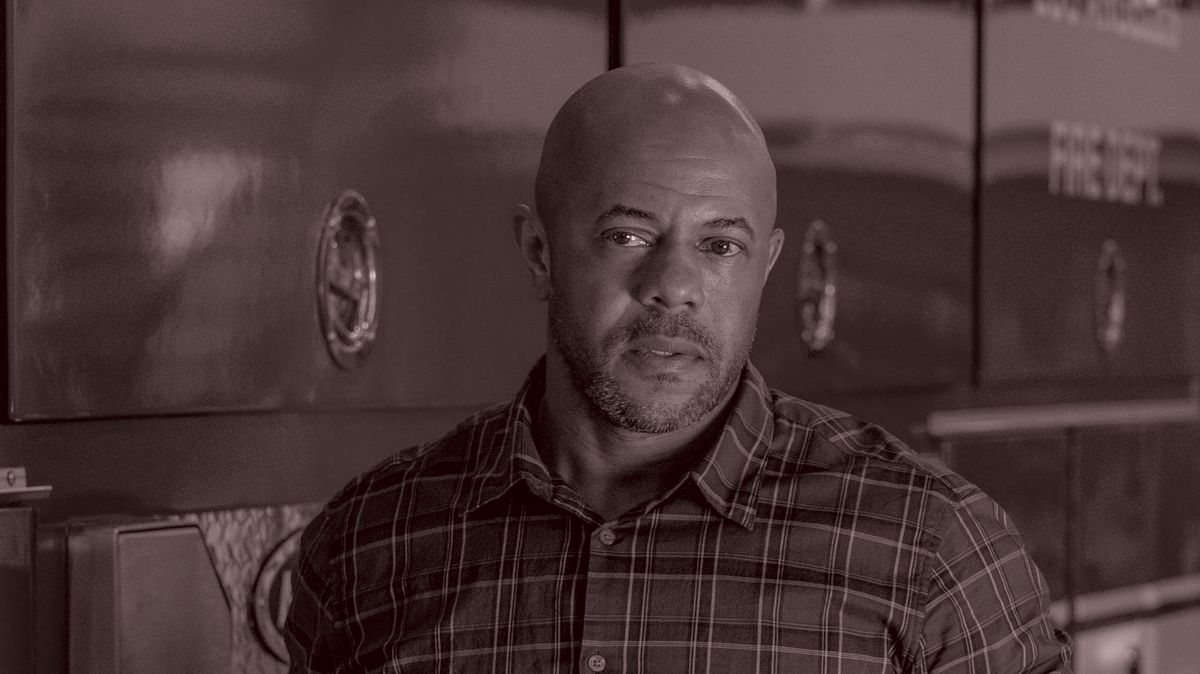
I did get a tour of Manuela a couple of months ago, and I think it’s really great. I’m a big fan of Mika Rottenberg—that bar is fantastic, and so is the Rashid Johnson private dining room. I think hospitality, especially the restaurant, is a prime third space for exploring art and ideas. What is better than having a conversation about something meaningful over a meal?
How are the 21c hotels meant to function as both exhibition spaces and hotels, and what’s the role of the curating?
The intent was for the museum program to be integral to—and integrated into—every aspect of the hotel. So it’s really, truly a hybrid, and meant to function as a museum does, with changing exhibitions. We have some permanent site-specific installations in each building, which are commissioned during the design process. All of the public space—including event spaces that double as meeting rooms, as well as in the restaurants, the hallways, and in more public spaces—you have exhibitions on view, 24 hours a day, seven days a week, free and open to the public. In that way, 21c is very much a museum, a cultural institution, that is focused on serving the public.
|
|
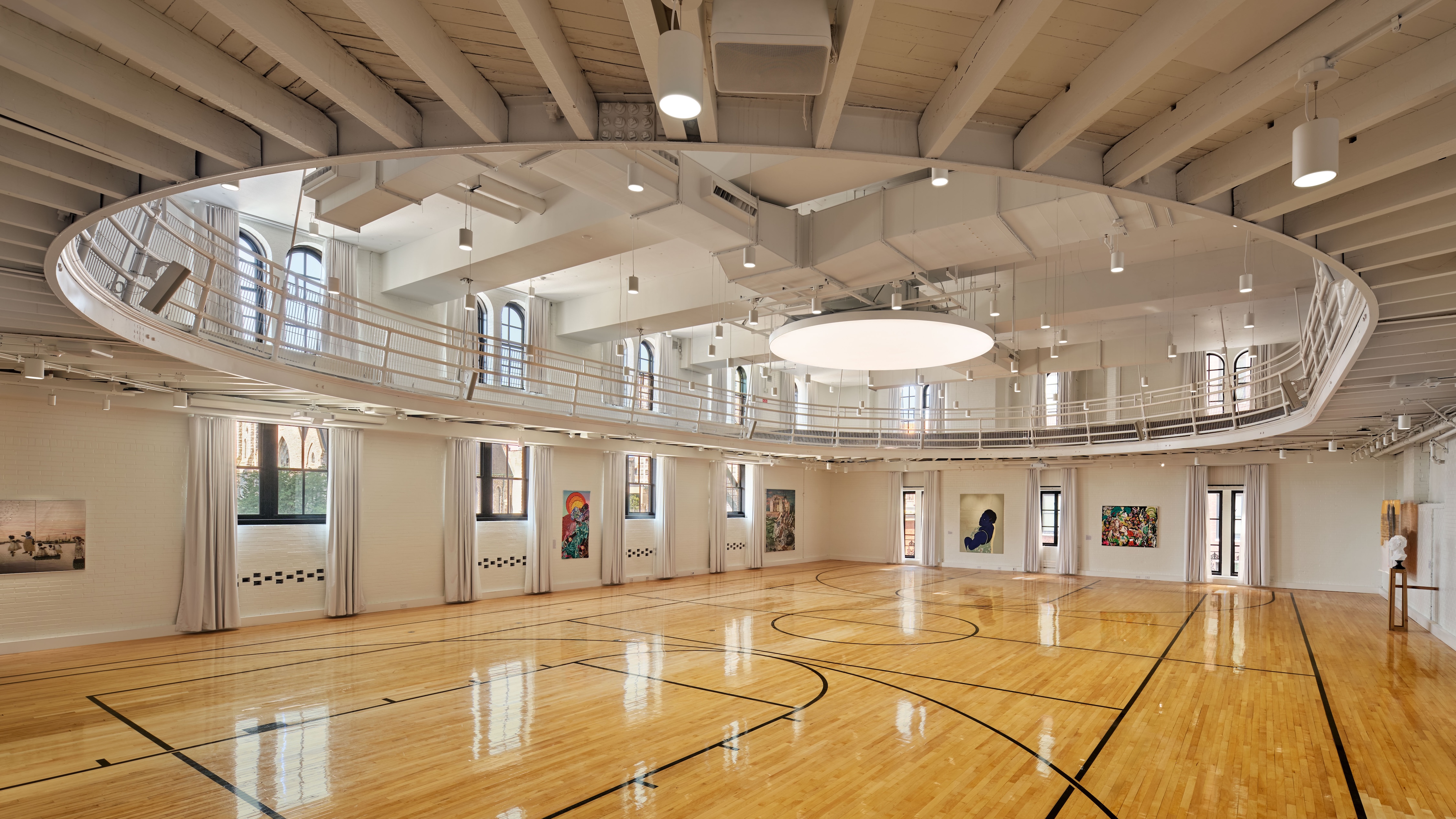
21c Museum Hotel St. Louis. Photo: Courtesy of 21c Museum Hotels.
|
|
Where does the art come from?
The exhibitions are curated mostly from the permanent collection, which is still growing. It’s more than 5,000 works of art in every medium, from painting, sculpture, and photography to film, video installation, V.R., and A.R. But we do augment with loans from artists and other institutions. 21c also loans to other museums when we get those requests. So in that way, we’re also a kind of regular museum.
We do solo and group exhibitions, and have done a couple of solo exhibitions in collaboration with other museums. For example, with the Contemporary Arts Center in Cincinnati, I co-curated the first U.S. show for an artist named Albano Afonso that was in both locations at once. We did the same thing with the North Carolina Museum of Art for an artist named Wim Botha from South Africa. That exhibition was both at 21c Durham and at the North Carolina Museum of Art in Raleigh. And then we traveled that show to 21c Louisville and 21c Bentonville.
Most of those works were on loan from the artist studio and gallery. The group exhibitions are thematic, and most of them address relevant, timely topics: everything from identity, race, and gender to labor, technology, and the climate. The show that’s just opened in Louisville is called The SuperNatural 2.0, and looks at our understanding, experience, and definition of the natural world. Our sense of nature is being strongly impacted by two forces that are the topic of this show: technology and the climate crisis. At 21c Kansas City, we have a show called The Future is Female that will be in St. Louis this summer. And the exhibition opening at 21c Bentonville is called Dress Up, Speak Up: Regalia and Resistance. This is about the use of costuming, clothing, and props to examine the construction of identity and cultural visibility. So you have artists like Jeffrey Gibson and Ebony Patterson, who use adornment to address cultural visibility.
|
|
Tell me more about the exhibitions.
We do a lot of programming in addition to the exhibition. Like any other museum, when we open a show, we have an artist from the exhibition come and make a presentation and speak. Then, throughout the course of the exhibition, we’ll have other cultural events—everything from film screenings and music performances to artist lectures, often in collaboration with other organizations in each of the cities, including universities and colleges.
We’ve done programs with the ACLU in many, many locations, and with refugee organizations, using the lens of art and culture to address what’s going on in the world today, and specifically in those communities, in a way that brings people together. So the programming is quite diverse and very broad, as are the exhibitions.
You also work with local and regional artists.
There are smaller exhibitions that we’ll install in one or two galleries, as well as on guest room floors. That’s a program we’ve developed called “Elevate.” Originally, we were using spaces designed on the guest room floors—in the elevator lobbies—for works on loan from local and regional artists in each community. That was a way to expose our guests who are coming in from other locations to the work of artists in each of these communities. And that’s been very successful.
Quite often, a guest may get interested in learning more, or in acquiring a work by a local artist. 21c does not get involved in the commercial transaction, but we put people together with those galleries or artists. It’s been such a successful part of what we do as far as driving real community connections and helping local artists that I’ve expanded those opportunities. We have Elevate exhibitions in smaller galleries, as well as on exterior spaces, like the exterior of the buildings and alleyways.
|
|
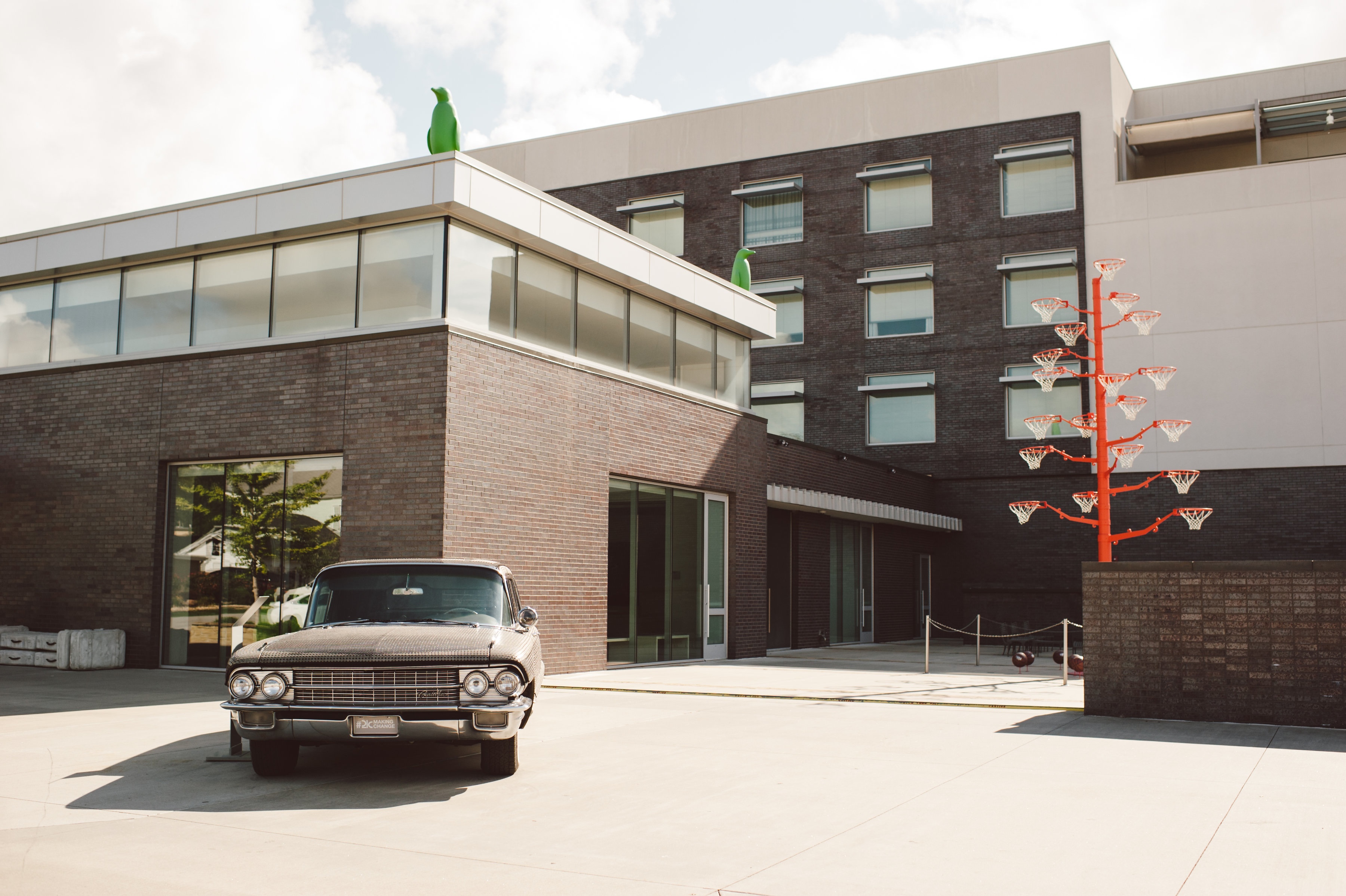
21c Museum Hotel Bentonville. Photo: Courtesy of 21c Museum Hotels.
|
|
You’re in seven different cities—and not small ones. That’s a lot of local artists. Do you have a team of dozens of people in each city?
No, I have one person in each city. So I have seven museum managers who all come from professional arts backgrounds. Some have been curators; some have been practicing artists; others were in arts education. They’re charged with being the eyes and ears of the 21c Museum in that community. They go to M.F.A. shows and artist studios and local galleries; they also develop these collaborative cultural programs. That’s how they meet other people in the community who want to get together and make things happen—that’s often artists. They’ll make a proposal, and we’ll have conversations about it. It’s actually one of the things I enjoy most about my job: I get to go to these cities and meet these artists whom the museum managers have brought in to participate. We’ve acquired probably about a dozen artworks for the permanent collection through that program.
Those are not the primary exhibitions, though.
The primary exhibitions, which I curate, are on view for nine to 12 months because we have seven locations. The biggest challenge in melding the museum and the hotel world is really the logistics. In a conventional
museum, you have the liberty of shutting down the galleries where you’re changing things out. We change out exhibitions in full view of the public—of the guests. I and other members of my team will go to these change-outs. We don’t want to schedule a change-out when the hotels are full. We can’t be in seven places at once in January, when typically travel is slow. We would never change out the show in Louisville the first week of May, because it’s the Kentucky Derby.
We also have to take into account the guest experience. No one wants to listen to drills going off. We think about those things a lot. Our team has developed a special design for our crates. They open by latches instead of using drills, which also preserves their longevity.
When you’re moving art around as frequently as we are, there needs to be a lot of thought that goes into what happens behind the scenes, right? We put a lot of thought and care into how the works are stored, how they’re maintained, and how they travel. But in every other way, we function like a normal museum.
|
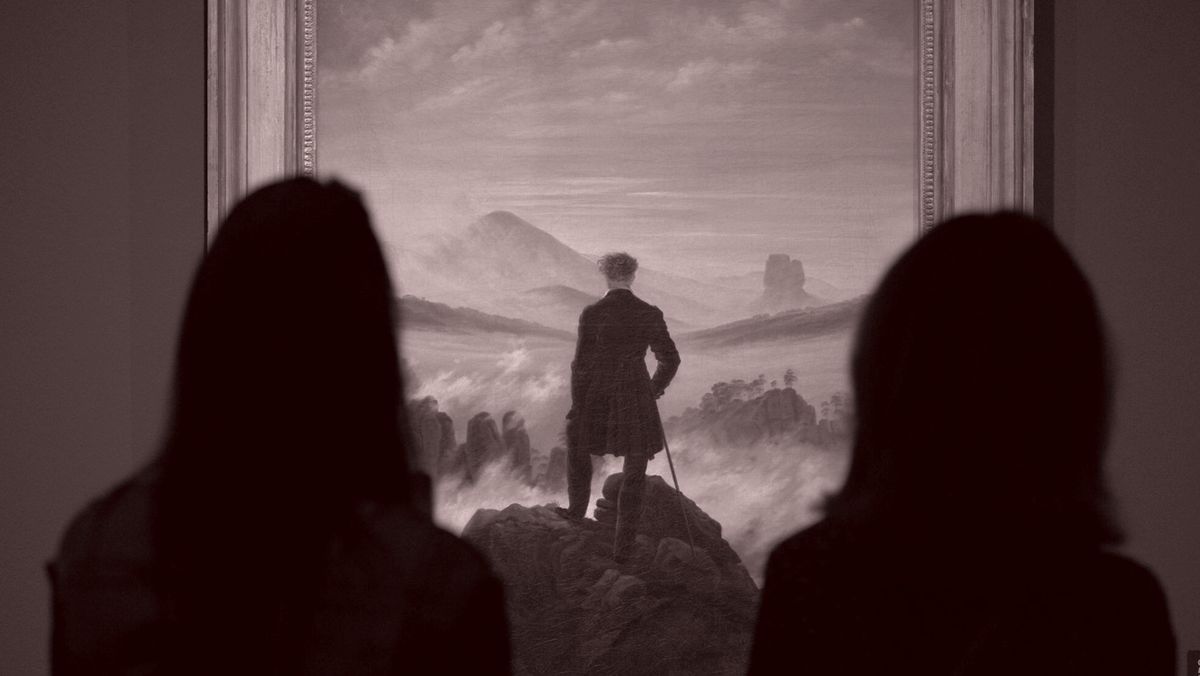
Before you go, I need to clean up a few mistakes on my part. In yesterday’s comments on the Caspar David Friedrich show, I introduced an error about the Wanderer. There is only one version of that painting. What I meant to write was that U.S. museums have only five works by Caspar David Friedrich in their collections. All of those five works have been gathered for the Met show, not five versions of Wanderer above the Sea of Fog, as ended up being written. We’ve corrected the web version of the story, but I wanted to flag it here as well.
Let me add that I got something else wrong in my wrap-up of the Old Master sales in New York. I suggested that the Old Master auctions remain the last bastion of dealer-to-dealer trading. That’s not correct. As was pointed out to me, the auction houses would love to see dealers bidding, in the hopes that it would raise sell-through rates. Alas, the visibility of auction prices works against dealers who cannot charge a sufficient margin in a resale. In this case, auction transparency has worked against collectors, even though they believe they’re empowered by knowing what a dealer paid for the work.
While we’re on the subject of Old Master works, I was heartened by the number of responses I received to that newsletter, especially from contemporary art advisors and long-standing contemporary collectors
who seem to be kicking the tires on the Old Master market.
On another note, I did want to link to a story in the Financial Times about Sotheby’s closing its “Buy Now” e-commerce business in mainland China. This is both a reflection of the continuing challenges in the People’s Republic—Bloomberg had a big story yesterday about the country’s evolving property crisis—and one of the first moves by Sotheby’s new managing director in Asia, Masumi Shinohara, perhaps the only Sotheby’s executive with fashion and retail experience.
Julie and I will check in again on Friday,
M
|
|
|
|
Puck founding partner Matt Belloni takes you inside the business of Hollywood, using exclusive reporting and insight to explain the backstories on everything from Marvel movies to the streaming wars.
|
|
|
|
The ultimate fashion industry bible, offering incisive reportage on all aspects of the business and its biggest players. Anchored by preeminent fashion journalist Lauren Sherman, Line Sheet also features veteran reporter Rachel Strugatz, who delivers unparalleled intel on what’s happening in the beauty industry, and Sarah Shapiro, a longtime retail strategist who writes about e-commerce, brick-and-mortar, D.T.C., and more.
|
|
|
Need help? Review our FAQ page or contact us for assistance. For brand partnerships, email ads@puck.news.
You received this email because you signed up to receive emails from Puck, or as part of your Puck account associated with . To stop receiving this newsletter and/or manage all your email preferences, click here.
|
|
Puck is published by Heat Media LLC. 107 Greenwich St, New York, NY 10006
|
|
|
|


_01JKXSYVM84AEQTRNG47A6KHCR.jpg)