 |
|
Happy Wednesday, and welcome back to Dry Powder.
|
|
What to make of the long-rumored “post-Covid” financial comeuppance in the real estate sector? After getting on the horn with some banker friends and investors, I received a definitive, if alarming, download on the “perfect storm” that could be punishing the sector for years to come.
Bill
|
 |
| Fade to Blackstone |
| Insights into a REIT headache, and some of the craftiest investors who are seeing around the corner. |
|
|
|
| “My clients are scared shitless,” one longtime Wall Street real-estate investment banker told me the other day. I had called to check in on the prospects for commercial real estate in big cities, such as New York, San Francisco and Chicago, and to see if the long-rumored financial comeuppance in the sector was real, imagined or apocryphal. It turns out, it’s very real and it’s happening. But, like any serious financial disturbance, it’s not monolithic, or uniform.
It’s often been anecdotal and sui generis, with most of the pain being suffered in the so-called “Class B” office space in the big cities while the newer buildings in Manhattan are doing just fine, chock full with well-heeled tenants such as KKR and Dan Loeb’s Third Point Partners, at Hudson Yards, or TD Bank and The Carlyle Group, at One Vanderbilt, most of which signed long-term leases a few years back. Parts of what is also considered “commercial real estate,”—high-end resorts and logistics plays, including warehouses and data centers—are also doing just fine.
The real problem, my banking friend shared, is confined largely to the office sector of the market, with some ongoing concern also among retail tenants in big malls, strip centers, and along Broadway, in Manhattan. Concern, of course, began during the pandemic, when offices in big urban centers emptied out and people worked from home. Even after the pandemic has concluded “officially,” all sorts of businesses are still trying to figure out if people can still work from home, how often, and what that will mean for their office needs. That calculus may well go on for years to come.
Then there’s the rather large, ongoing retrenchment in the technology sector, which previously had been a big driver of hiring and of the need for more office space. Not so much anymore. (In March, Amazon paused construction of its second headquarters near Washington, D.C., which had been the winner of the company’s nationwide tax abatement bakeoff.) While some businesses—such as finance and Big Law—want their employees back in the office, that’s not enough to stanch the bleeding across the wider sector.
Returning workers are also finding that their employers used the pandemic to shrink their physical footprint, squeezing hybrid workforces into smaller office spaces. While the likes of West Palm Beach and Miami are expanding, the old fashioned urban centers of New York, Boston, Philadelphia, Chicago, Los Angeles and San Francisco are “under huge pressure,” as my friend put it. “It’s a paradigm shift for offices in the big urban areas.” One fresh data point: The office tower at 350 California Street, in San Francisco, once valued as high as $300 million, in 2019, has just been sold by the Japanese bank that owns it to SKS Real Estate, for around $65 million.
The worry is that the problems will “metastasize,” the banker continued, because higher interest rates, especially when they rise so fast, affect pretty much all aspects of the real-estate market. Higher interest rates make the value of real-estate go down while the cost of debt capital goes up. Mortgage rates—the cost of real-estate related borrowings—have also spiraled upward in the last year, from around 3.5 percent per year to closer to 7 percent per year today. Many properties are worth some 25 percent less today than they were two years ago and there is something like $1.5 trillion of mortgage maturities coming due over the next three years. “That’s going to require troubled debt restructurings in many cases,” the banker continued. “It’s very worrisome.”
There’s record amounts of vacant office space—both direct and sub-leased—on the market. By most estimates, close to 20 percent of office space in the big urban areas is vacant. “Private landlords in particular but some public landlords, too, are under huge stress,” the banker said. Vacancies, of course, beget vacancies, which can lead to real-estate death spirals and to decisions, even by the most sophisticated real-estate investors, to toss the keys to a building back to the mortgage lenders and to walk away. |
|
|
| Publicly traded real-estate investment trusts, or REITs, are already taking it on the chin. The stock of Vornado Realty Trust, the big REIT founded by Steve Roth that invests mostly in Manhattan real estate—everything from 220 Central Park South to the buildings in and around Penn Station—is down 63 percent in the past year, with a valuation now of around $2 billion. Roth said recently his firm was “in the eye of the economic storm.” At the end of April, Vornado announced that it was suspending its dividend for the rest of 2023, which is a big deal because quarterly dividends are what most REIT investors count on when investing in a REIT.
In a May 1 research report, Goldman Sachs suggested that Vornado was dangerously close to breaching debt coverage covenants on some $2.6 billion of debt because of tenant departures at its various buildings, rising interest costs, and the $500 million of expenses related to Vornado’s ongoing re-development of the buildings in and around Madison Square Garden. “Coverage has declined significantly over the past year,” the Goldman analysts wrote.
Vornado, for its part, said it disagreed with the Goldman report but did not elaborate. And Goldman is not alone in being negative on the REIT; some six research analysts, out of the 13 who cover Vornado, have a sell rating on the stock. According to a recent study by Amit Seru, a professor of finance at Stanford Graduate School of Business, the equity value of office-focused REITs has declined by nearly 55 percent since the beginning of the pandemic, reducing the value of the office buildings owned by these REITs by 33 percent.
Brookfield Asset Management, a large and powerful diversified asset manager, is also a big investor in Manhattan real-estate, including owning the World Financial Center and the newly refurbished 650 Fifth Avenue, which had once been 666 Fifth Avenue when it was owned by the Kushners, who famously overpaid for the asset. Brookfield, with a market value of $50 billion is still potent, but the stock is down 36 percent in the past year, and its real estate troubles are likely a big reason why. Brookfield has also started handing the keys back to the lenders on various of its real-estate properties, a sure sign of concern since the value of the properties has declined to such an extent that the equity is gone and the mortgage on the property is worth more than the property itself.
In February, Brookfield defaulted on $784 million of loans on two prominent Los Angeles office towers—777 Tower and Gas Company Tower—where the lenders included Morgan Stanley, Barclays, Wells Fargo, Citigroup and the Principal Financial Group. Brookfield is one of the largest owners of office buildings in downtown Los Angeles. In April, Brookfield also defaulted on a $161 million mortgage for a group of about a dozen Class B office buildings in and around Washington, D.C.
And it’s not just Brookfield. Lots of developers are scurrying around looking for relief. Aby Rosen, for instance, who owns the landmark Seagram’s Building, on Park Avenue, recently won a stay—reportedly of several years—on the $1 billion mortgage coming due on the building this month. It was one of the largest mortgages to a single building testing the current refinancing market.
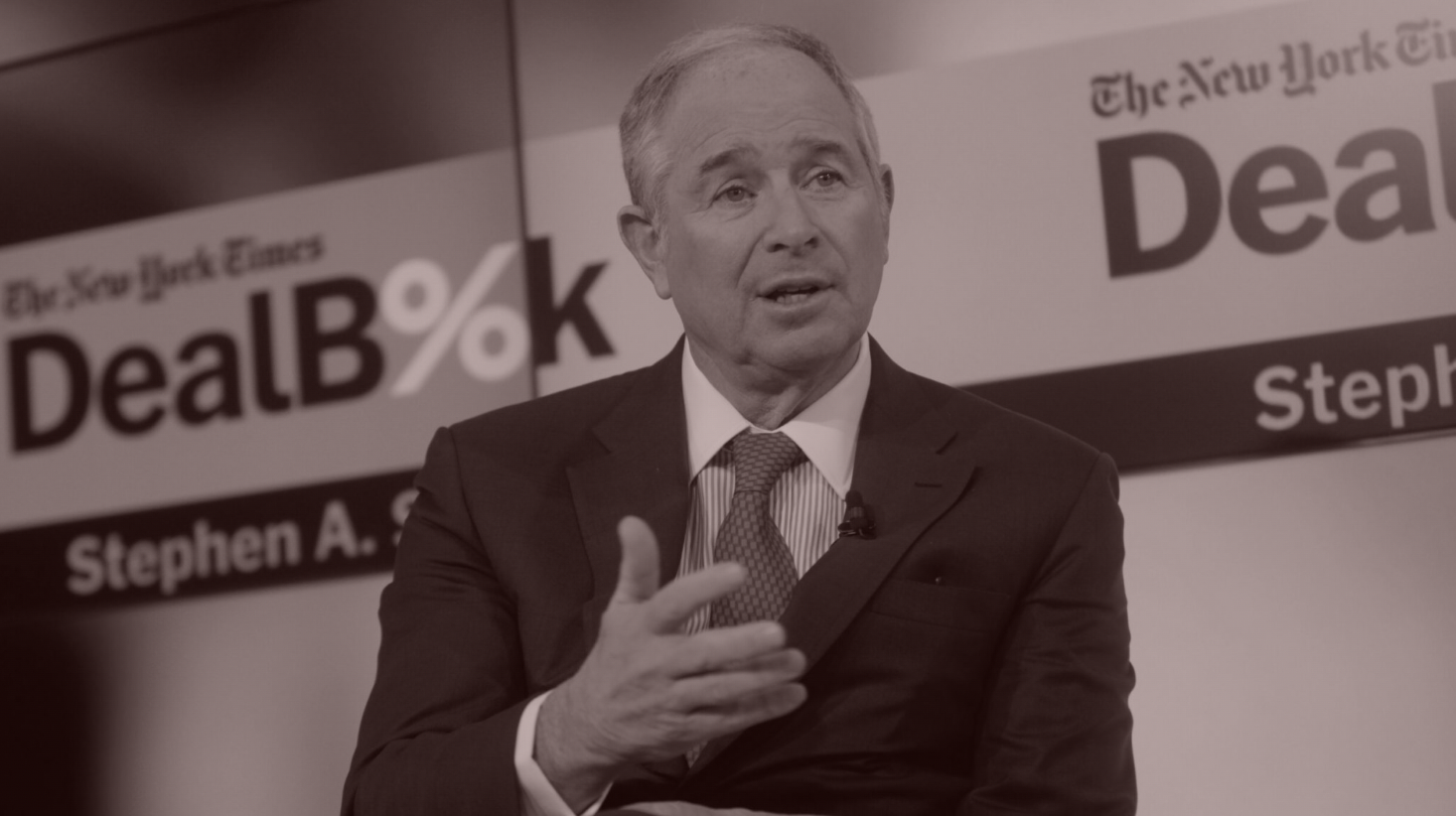
Rosen won a reprieve, but likely only because the refinancing was running into trouble. A division of Steve Schwarzman’s Blackstone Group also more or less pulled the plug recently on 1740 Broadway, a 26-story building between 55th and 56th streets that it bought in 2014 from Vornado for $605 million, a top price for a building that needed updating and was filled with tenants paying below market rents. “The building’s worth less than the mortgage,” the banker told me. “Or the cash flow has dropped to the point where they can’t service the debt. It means putting more equity in when your equity is already underwater. Now, eventually, things always recover. But I doubt we’re going to see a recovery back to valuation levels that existed three years ago.” |
|
|
| The 1740 Broadway debacle, in particular, is indicative of the sort of topsy-turvy decision-making that occurred during the previous 13-year, easy-money regime. Blackstone refurbished the building in 2020, and its website shows off its updated features, including a redesigned 15,000 square-foot lobby with a private club on the mezzanine. But they were in trouble from the beginning with inflexible loan terms and tenants paying below-market rents. Earlier this spring, the loan was turned over to a commercial mortgage-backed securities special servicer while a possible solution for the building is worked out. “How could one of the world’s biggest landlords quit on a relatively modest $308 million loan, after they spent a fortune on modernizing the building with a new lobby and restaurant?” a source mused to the New York Post about Blackstone and the building.
A different, longtime real-estate investor told me he was not surprised that Blackstone walked away from 1740 Broadway. “1740 is totally representative of what’s happening in a commercial office business,” he said. “You know, vacancies are up significantly since the pandemic, rents are under pressure. It’s been a tough industry for a number of years.” Blackstone has also walked away from the Hughes Center, an office complex in and around Las Vegas, when it stopped making the payments on a $325 million loan on the building. (Blackstone declined to comment.)
It’s not all bad news on the commercial real-estate front, however. According to the longtime real-estate investor, Blackstone is close to completing a $950-million refinancing of the grand 757-room Coronado Hotel, in San Diego, that values the property at about $1.6 billion. In September. Blackstone completed a $400 million renovation of the hotel, including adding another 75 rooms to the vast complex. Blackstone paid about $600 million for the Coronado Hotel in 2015 as part of its $6 billion acquisition of Strategic Hotels and Resorts. The Coronado had $68 million in operating income in 2022, up nearly 50 percent from 2019, according to the Real Deal; Blackstone has increased the average revenue per room to $507, more than double what it was in 2014. If the investor is right, and Blackstone has some $600 million into a hotel that is now worth $1.6 billion, then Blackstone is sitting on a pretty penny of profit, suggesting that all is not lost in the increasingly choppy world of commercial real-estate.
In fact, Blackstone has for some 15 years been reducing its exposure to the traditional commercial office market. On its first quarter earnings call, the company said its exposure to U.S. office buildings was only 2 percent of its portfolio. At the same time that it has been divesting—abandoning—office space, Blackstone has been ramping up its ownership of properties, such as warehouses, that are part of the logistics chain. That’s a slice of the real-estate market that has been performing relatively well, as compared to the office tower market. For instance, Prologis, a REIT focused on the logistics market, has a market value of $114 billion and its stock is up 10 percent so far this year and nearly 100 percent during the past five years.
“There is no question that commercial office buildings face a perfect storm,” the real-estate investor told me. “Vacancy, huge capital needs, obsolescence, remote work, people leaving places like San Francisco and Chicago, like all these things coming together at once, and the value destruction is pretty massive. But I just think the mistake folks have made is to extrapolate that to the overall real-estate market.” As usual, when it comes to real-estate, it’s all about location, location, location.
And also just being plain smarter than everyone else, like Sam Zell, the crafty Chicago billionaire. Since he bought Equity Commonwealth, a publicly traded commercial-real estate REIT in 2014, he has sold all but four of the office buildings that were in the large portfolio—he still owns two buildings in Austin, one in Denver and one in Washington. “Over the past nine years, we disposed of 164 properties and three land parcels totaling 44.3 million square feet for an aggregate gross sales price of $6.9 billion, as well as $704.8 million of common shares of Select Income REIT,” the company wrote in its latest 10K, filed with the S.E.C.
As of the end of 2022, Zell’s four buildings were 82.8 percent leased. Since 2014, Zell used the proceeds of the building sales to retire $3.3 billion of debt and preferred shares, repurchased $595.4 million of Equity Commonwealth’s common shares and paid $1.3 billion in distributions to its common shareholders. It had $2.6 billion of cash and cash equivalents and no debt outstanding as of the end of 2022. “I can’t remember a time in my life [when] I sold every single asset and was thrilled at every single sale,” he said on a recent podcast. “Frankly we are not sympathetic to the people that bought them. They were drinking the Kool Aid and now they will pay the price for being overly optimistic and not doing their homework.” |
|
|
|
| FOUR STORIES WE’RE TALKING ABOUT |
 |
| Iger’s Huluology |
| How will the forthcoming mega-platform affect Iger’s legacy? |
| JULIA ALEXANDER |
|
 |
| One Shaheen Moment |
| Unpacking the upper chamber’s secret foreign policy scandal. |
| JULIA IOFFE |
|
 |
|
 |
|
|
|
|
|
 |
|
|
|
Need help? Review our FAQs
page or contact
us for assistance. For brand partnerships, email ads@puck.news.
|
|
|
|
Puck is published by Heat Media LLC. 227 W 17th St New York, NY 10011.
|
|
|
|