Welcome back to The Varsity. I’m John Ourand, back in
D.C. after a great NASCAR race weekend in Sonoma. But my attention tonight will be in Atlanta, where MLB is hosting its All-Star Game.
While attendance, revenue, and viewership around baseball are all strong right now, Pete Alonso gave voice to the greatest looming threat facing the sport: the owners’ desire for a salary cap
after next season when the collective bargaining agreement expires. Of course, the NFL, NBA, and NHL all have caps, but this is a third rail for Major League players. “No one’s talking about it,” he told the AP, “but we all know that they’re going to lock us out for it, and then we’re going to miss time.” He continued: “We’re definitely going to fight to not have a salary cap.” Of course, a lot can change during the next year, but both sides are dug in right now.
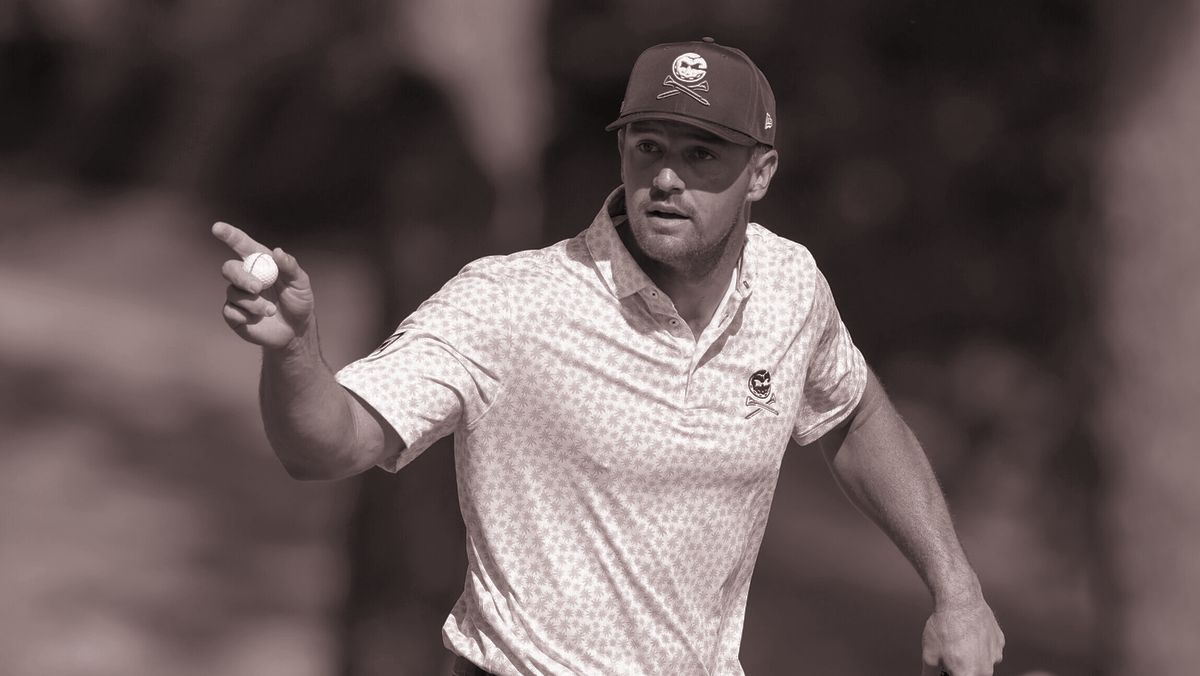
Elsewhere, have you seen Bryson DeChambeau’s social videos? I’m addicted to clips where he tries to break course records at local municipal courses. It’s that kind of YouTube-style content that has resonated with younger fans, most of whom have never tuned in to a full golf match. In tonight’s private email, Julia Alexander suggests that traditional media companies like Versant, which owns Golf Channel, should take a page from Bryson’s
playbook when it’s not carrying live events. Remember, Julia’s stories are available only to Inner Circle members, so click here to upgrade.
Now, here’s Julia…
|
Stat of the Week: 9th Place
|
That’s where the second season of Quarterback, Netflix’s documentary series about three
NFL QBs, landed on the top 10 U.S. charts in its first week. So far, Netflix’s sports documentary business has been hit-or-miss. Drive to Survive is still one of the streamer’s most-watched sports docuseries, with strong viewership even as the show headed into its seventh season this past March. Other shows, like Full Swing, which saw significant drop off in viewership between its first and second season, were more of a disappointment.
Of course, sports documentaries are
in a weird moment: There’s far more supply than demand. Sports docuseries represented 12 percent of all commissioned docs in Q1, per Ampere Analysis. But Quarterback is one of the few genre franchises that cracked Nielsen’s top 10 back in 2023 and managed to keep up the momentum. We’ll see whether this season, which
follows Joe Burrow, Kirk Cousins, and Jared Goff, can continue that trajectory. |
Three Things You Should Know
|
- An interesting F1 argument: Given F1’s presumed $150 million partnership with Apple (which you’ve already read about in Puck), analysts everywhere are sharing their thoughts on the advantages (money) and disadvantages (reach) of the deal. But,
as one high-profile sports executive theorized to me the other day, there’s another key reason linear networks like ESPN and Fox Sports are reconsidering their appetite for bidding on certain sports rights: advertising.
Unlike other sports in the U.S., F1 doesn’t include many ad breaks. As this executive put it to me in a text: “Formula One’s strict broadcasting requirements create a challenging equation for networks looking to balance costs and revenue. The continuous live coverage
mandate and rigid sponsorship visibility requirements (product signage placement) fundamentally conflict with the ad-driven model that sustains most U.S. television networks. Without the ability to insert commercial breaks during races, networks lose their most valuable inventory precisely when viewership peaks.” On Apple, where there is hardly any advertising outside of MLS games, this is less of a concern. If anything, it adds to the sleek and premium feel F1 brings to the
streamer. - Major broadcast troubles: There are now fewer than 50 million U.S. households that are estimated to still pay for traditional television, and those numbers are only declining. Each quarter, companies like Disney and Warner Bros. Discovery consistently post double-digit declines in
their cable TV revenue. Broadcast, however, has remained relatively stable… at least until now. For the first time ever, broadcast has fallen below a 20 percent share of total TV viewing in the U.S., per Nielsen’s latest Gauge report. In fact, broadcast accounted for just 18.5 percent of all viewing in June—a decrease of 1.6 percentage points from the previous month, despite ABC carrying
the NBA Finals, which accounted for the top seven telecasts in the month.
In May, Nielsen reported that streaming viewership had finally eclipsed broadcast and cable’s combined viewership share in the U.S. And that trend is only going to continue: From May to June, as broadcast lost ground, streaming’s share grew by 1.2 percentage points, driven mostly by a strong Netflix month and kids getting out of school. At least there’s a bright spot on the horizon for broadcast executives: Those
numbers will rebound come late August and September, when Arch Manning and college football return ahead of Patrick Mahomes and the NFL’s season kickoff. - UFC’s “global” platform: We have a new clue about Dana White’s upcoming UFC rights deal: On a recent episode of the Full Send podcast, White said that UFC rights will likely go to a platform that’s “way more global than we are now.” That
narrows things down to Amazon Prime Video, Netflix, or YouTube. While ESPN is a global network, its streaming service is rolling out much more slowly, and probably doesn’t fit the bill. Meanwhile, HBO Max and Paramount+ are still relatively new to the international market, which is why my guess would be Netflix, which is celebrating the 6 million viewers who tuned into its Katie Taylor vs. Amanda Serrano fight last week.
If this hypothetical deal
is consummated, that would make the streamer a true fighting hub: WWE has been performing well, and boxing seems to be a focus area for Ted Sarandos, Bela Bajaria, and Greg Peters. It would also capitalize on UFC’s global appeal, now that the league is broadcast in more than 170 countries. The big question is whether they want to be associated with White, his public image problems, and his various relationships, including with President
Trump.
|
|
|
From viewership to participation, golf is having one of its best
seasons in recent memory. And as it becomes cool(er) again among young people, YouTube is at the center of how it’s connecting with top players. |
|
|
Golf is having an incredible year. The PGA Tour is
averaging about 3.1 million viewers on CBS and NBC; Justin Thomas’s win at the RBC Heritage averaged 4.4 million viewers (the most-watched final round in 23
years); and viewership at the Masters was up 33 percent year-over-year, making Rory McIlroy’s win the most-watched Augusta Sunday since 2018. Indeed, despite the sport’s well-chronicled interfamily feud—the Saudis’ LIV Golf, for what it’s worth, continues to be dwarfed by the Tour—there’s no denying that people, and especially
young people, are once again interested.
These viewership numbers also dovetail with rising participation across the country. Nearly 3.5 million people golfed for the first time in 2023, per the National Golf Foundation, millions more than in recent years. Understandably, everyone in sports media is obsessed with the
underpinnings of the sport’s resurgence. And the answer, as with most sports media questions these days, starts with YouTube. Jonny Keogh, who heads up YouTube’s U.K. sports division, has cited his platform’s ability to transform younger fans’ impressions of an ostensibly old and fusty sport. After all, teenagers and twentysomethings have come to know McIlroy and Bryson DeChambeau not through Sunday afternoon PGA Tour coverage, which still
caters to retirees in Kiawah, but through Dude Perfect. |
On YouTube, golf isn’t the filler between insurance ads and Nantz-gasms.
It’s cool, like dunk contests and Home Run Derbies. Ryder Cup winner Ian Poulter, who launched a YouTube channel two weeks ago, has collected hundreds of thousands of views while competing against F1 driver Esteban Ocon in a go-kart race. He has also released a video in which he plays against former tennis star Andy Murray, and tests his swing against a Ferrari. (The latter has amassed close to 400,000 views.) DeChambeau’s channel has
more than 2.1 million subscribers, and he’s helped fellow pro Phil Mickelson launch his own channel, which is now collecting millions of views.
It’s exactly the type of content that Alex Piper, who oversees creator sports content at YouTube, describes as “credibility.” One of his toughest challenges in this new sports ecosystem, where more leagues and athletes are coming to YouTube, is ensuring credibility for the platform’s audience, even if the videos
in question come from some of the most valuable sporting organizations on the planet. The typical theatrics associated with a league like the NFL might work on television, but on YouTube, genuineness and authenticity go a long way. “In a world where choice is endless and patience is thin, it feels like credibility is the ultimate currency,” Piper said.
Players like Mickelson and DeChambeau are interested in YouTube as a way of expanding their fan base and exploring different monetization
options than those awarded to top players like McIlroy. But they also understand that YouTube is the new gateway for sports fans. YouTube sports viewing on television increased by 30 percent year-over-year in 2024, per the company. Sports also ranks as the fourth-most-popular style of content on YouTube, with 10 percent of all videos related to
sports and professional athletes, per a 2024 study.
All of which is why golfers like DeChambeau are nearly as invested in the business of their YouTube channels as they are in professional golf itself. Now, finally, so are the leagues. The PGA Tour kicked off its inaugural Creator Classic in 2024 to expand the relationship between YouTube and traditional golf viewership. As money
flows into YouTube’s golf creators, like Garrett Clark and Matt Kendrick—whose Good Good Golf brand operates a YouTube channel with more than a million subscribers and 10 million views a month—traditional golf circles will have to incorporate creators into their telecasts. Indeed, Good Good recently received a $45 million
investment from more than 50 investors, including Peyton Manning’s Omaha Productions. |
And yet, witnessing golf’s success on YouTube makes me wonder whether there’s an untapped audience
for traditional media players still producing old-school golf telecasts. Back when Mark Lazarus first spoke about his ambitions for Versant, Comcast’s spinco, golf was at the top of the list of sports to emphasize. Versant will oversee Golf Channel, but also GolfPass and GolfNow, both of which build on the flywheel for golf fans. GolfPass offers exclusive content from Golf Channel and ancillary videos, similar to those on YouTube, while GolfNow allows players to set their own
tee times.
Lazarus and his team know that the key to Versant’s future isn’t in hoping that cord-cutting finally levels out. (Cable is now in less than 50 million homes, and may have yet to find its bottom.) Instead, it’s in developing niche audiences based in its owned-and-operated hodgepodge of cable properties. In a time when every streaming service, TV channel, music platform, and video game is competing for tinier shares of attention, obsession and exclusivity reign supreme. Close to
50 percent of Gen Z claims to consume content on topics that no one in their real life knows about or is interested in, per a YouTube Insights report conducted in 2024. Last year, more than 30 percent of all streamers were specialty platforms, according to Antenna.
Traditional media is often paralyzed when it comes to thinking about YouTube as anything but a competitor. But
Lazarus can lean into Golf Channel, GolfPass, and GolfNow’s differentiating factors, and harness YouTube’s unbeatable distribution and discovery platform. Could, say, DeChambeau simulcast a tournament he’s not in, on his own channel, to encourage his 2 million subscribers to follow him on GolfPass and GolfNow? I’m just spitballing, but you get the idea.
With YouTube and Netflix as the dominant winners of the streaming wars, finding ways to lean into a small, but obsessive, fan base can be
a more aggressive path forward. The spincos that Lazarus and WBD’s Gunnar Wiedenfels will oversee aren’t growth engines; they’re wind-down machines, designed to create the most value for brands that can be sold to private equity firms or larger conglomerates. If Lazarus can use golf’s new moment, and find a way to harness YouTube rather than run from it, he may set himself up for a stronger post-NBCU life than originally thought. |
Thanks, Julia. See you all on Thursday.
John |
|
|
Puck sports correspondent John Ourand and a rotating cast of industry insiders take you inside the executive suites
and owners boxes where the decisions that shape the entire sports business are made. You’ll hear interviews with players, network execs, and everyone in between. The Varsity is an extension of John’s private email for Puck by the same name. New episodes publish every Wednesday and Sunday. |
|
|
The industry's go-to source for unflinching reporting on the trillion-dollar business of artificial intelligence -
perhaps the single most important technology of our time. Ian Krietzberg, the powerhouse journalist behind The Deep View, delivers twice-weekly insights into the latest dealmaking and breakthroughs in A.I., and how the intersecting worlds of finance, entertainment, media, and politics are being transformed in its wake. |
|
|
Need help? Review our FAQ page or contact us for assistance. For brand partnerships, email ads@puck.news. You received this email because you signed up to receive emails from Puck, or as part of your Puck account associated with {{customer.email}}. To stop receiving this newsletter and/or manage all your email preferences, click here. |
Puck is published by Heat Media LLC. 107 Greenwich St, New York, NY 10006 |
|
|
|