 |
|
Welcome back to Dry Powder. I’m Bill Cohan.
|
|
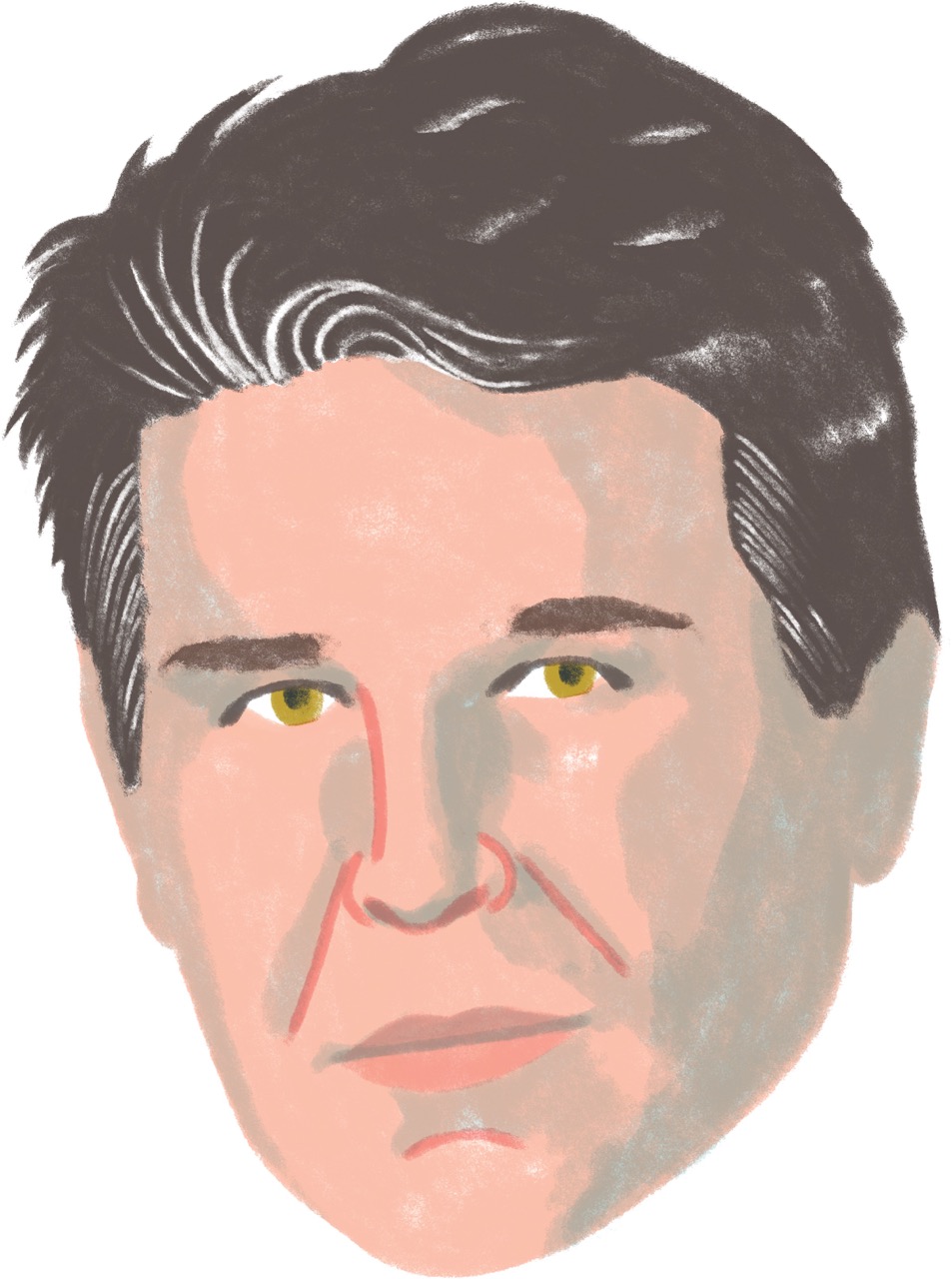
The media keeps gunning for David Solomon, the embattled Goldman C.E.O., with profiles in The New York Times and New York mag providing the latest ammo to his critics. In today’s issue, a closer look at how precarious Solomon’s position really is, and whether the drumbeat of reporting is taking a toll.
|
 |
| The Judgment of Solomon |
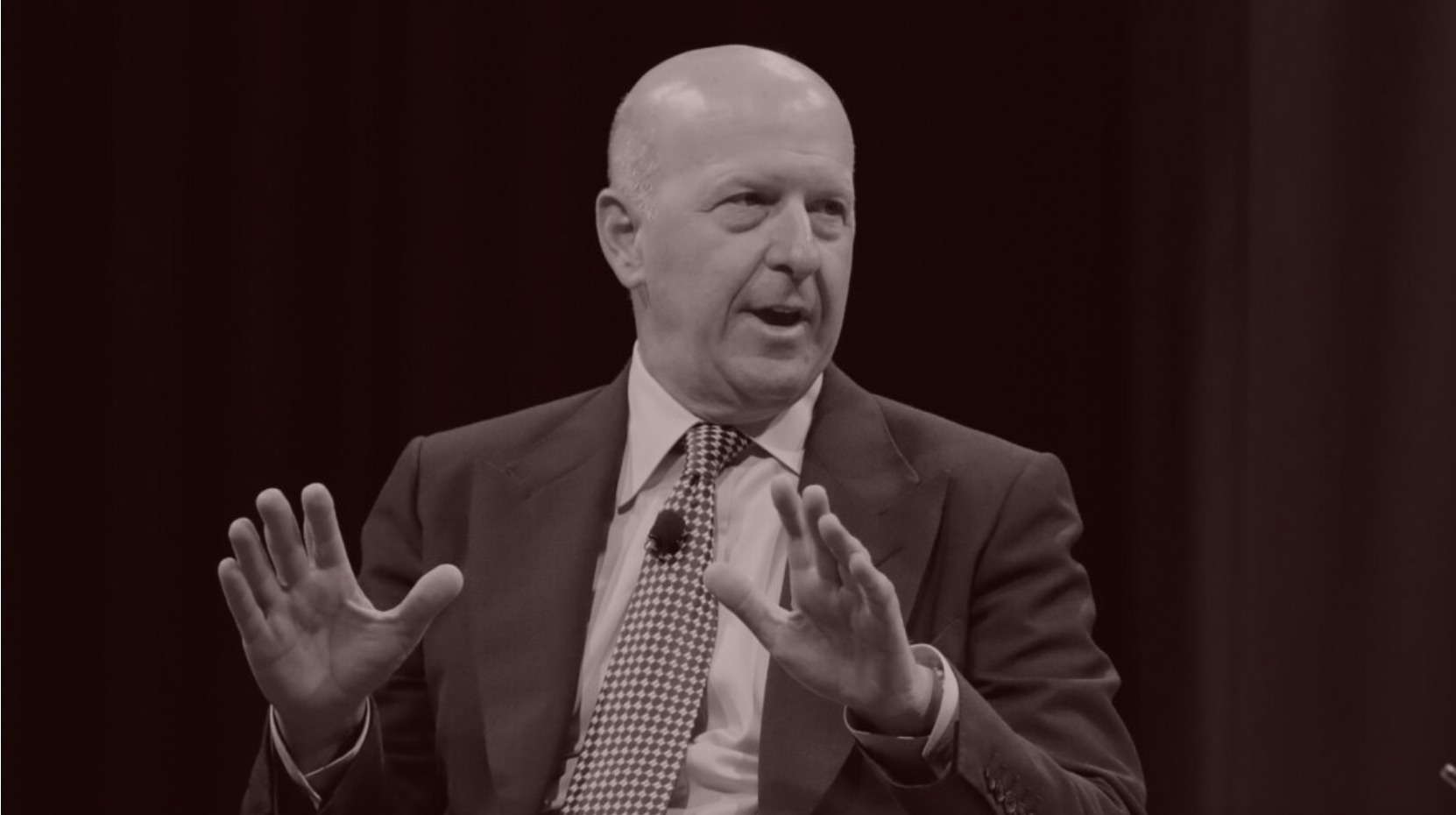
| Just when it seemed as though David Solomon was in the middle of an August reprieve, the embattled Goldman C.E.O. has found himself once again in the crosshairs, via back-to-back fusillades in the media last week. “Still standing,” quipped Tony Fratto, Goldman head of communications, to me in a weekend text. |
|
|
|
| By now, of course, most of you are likely well aware of the latest media headache to hit Goldman Sachs, in the form of twin articles last Friday in the Times and New York magazine—the latest entrants in the oeuvre about David Solomon’s precarious position atop the firm. The Times article was mostly a rehash of the slings and arrows that Solomon has faced for months now—sniping about his abrasive personality, the DJ-ing, the private jet trips, the stumbles in consumer banking, the rough second quarter, etcetera. Except for the story’s lede: that was new and revelatory.
According to the Times’ Rob Copeland, Solomon’s predecessor, Lloyd Blankfein, was so upset by his tenure that he called the Goldman C.E.O., in June, to complain—pissed off that his Goldman stock had allegedly lost $50 million in value and offering to return to Goldman to help, in an almost Igerian twist. Blankfein’s call to Solomon appeared to be an escalation from the Journal’s report, in June, that Blankfein had “groused” about Solomon in February at a Goldman confab in Miami.
The problem is that Copeland’s anecdote may have been apocryphal. During a subsequent CNBC appearance, Blankfein said the Times “misquoted” him and that he never used the word “return” with Solomon and that he only called to be “helpful” to his successor. “I can’t imagine returning to the firm,” Blankfein said. “I think my days working 100-hour weeks are over.” Blankfein’s version was squared by Tony Fratto, the former D.C. insider who became Goldman’s head of comms earlier this year, who was in a meeting with Solomon and John F. W. Rogers, the longtime Goldman consigliere, when the call from Blankfein came in. After the conversation ended, Solomon returned to the meeting and recounted his conversation to them. According to Fratto, Solomon told his colleagues that Blankfein told him he felt “bad” that the comments at the hotel bar had been “reported” and offered to be “helpful” to David.
Fratto then called Lloyd back, some 30 minutes later, and discussed how Lloyd might be helpful to David, either by having a “town meeting” together or a “roundtable” together. There was no talk of Lloyd returning to the firm or about having lost $50 million on his Goldman stock (probably because under David’s leadership the Goldman stock has doubled to around $350 a share on the day of the phone call, from around $165 a share). Fratto said he told Copeland his anecdote about Lloyd and David was not true. “I told him that,” Fratto said. “That’s all I could do. He claimed he had three sources to confirm it. All I know is that those sources are not Lloyd, David, me or John Rogers. And we were the ones who were the witness to the phone call. That’s all I know.”
The Times story was a nothingburger compared to the hit piece that Jen Wieczner, at New York, dropped later that same day about Solomon. In it, Wieczner wondered if Solomon was “too big a jerk” to run Goldman? The piece, which I was told she had been working on since February, was long and filled with one dagger after another aimed at Solomon. The gloves seemed finally to be coming off. “This is beyond drip, drip, drip,” said one former Goldman executive, “to more like a large sluice gate being opened.” Explained Fratto, “At the end of the day, you have to remember what David, John [Waldron], and the management team are focused on and that’s the performance of the business.” |
|
|
| I’ve known David for around fifteen years and, I must admit, have often found him capable of being quite charming, like many a career investment banker. As a former senior investment banker at Bear Stearns, he was very helpful to me in my writing of House of Cards. He was helpful again in the writing of my book about Goldman, Money & Power. He participated happily, and helpfully, in the profile I wrote about him in Vanity Fair, shortly after he became C.E.O. of Goldman, including tackling my prickly questions about his divorce. And he and I used to talk regularly, including during the early months of the pandemic, and he would share with me what it was like to run Goldman during that challenging time.
Then I wrote a piece he didn’t like about a small, aggressive divorce law firm that many Goldman executives hire (including him), and that was that. Into the penalty box I went. I haven’t spoken to David once since October 2021. I am not alone. He’s put many financial journalists into the penalty box, although to his considerable credit, Fratto is trying to change the relationship between Goldman and the media. But since David rarely if ever engages with the press these days, Tony has a tough job. I think much of David’s bad press would largely disappear if he changed his tack with the media. (Fratto tells me that David has started to reach out to reporters individually and that the idea of having a social gathering between David and the press is being considered, as he did once upon a time, pre-pandemic. We’ll see.)
The New York piece was a reflection of how bad things have gotten between David and the press. Solomon is a “bully,” Wieczner reported, who “talks in a yelling voice” and has the temerity to “MAKE NOTES ON DOCUMENTS IN ALL CAPS.” Said the former Goldman executive, “No one, not even his dog, likes this guy.” Her piece repeated what I wrote weeks ago that one doesn’t need to be liked to be the C.E.O. of Goldman Sachs. “You can even be an asshole,” Wieczner noted.
She made it clear that Solomon is deeply disliked inside 200 West Street, in sharp contrast to both Blankfein and Hank Paulson, his two predecessors who, while not necessarily beloved, were seriously respected and admired. “Everyone thinks and says he’s a dick,” Wieczner quoted one senior Goldmanite. And, as I noted earlier this summer, people were voting with their feet. “Some 200 partners have left the firm since Solomon took over,” the magazine reported, an annual rate of departures among the most senior ranks of the firm equivalent to the 44 or so partners who left Goldman in 1994, when it looked like the firm might go down the tubes as a result of large trading losses that year.
The usual tropes against Solomon and his tenure at Goldman were trotted out again. And then Wieczner started adding some new information to the case that is already being prosecuted against Solomon. “There isn’t much to say about a completely one-sided article where they started with the headline and then wrote the story,” Fratto shared.
But what really took my breath away was the anecdote that Wieczner conveyed from back in March, when Solomon returned to his alma mater, Hamilton College, for a “networking event.” Solomon is chairman of the Hamilton board of trustees so what he says and does on campus has a big impact. According to Wieczner, at the end of the event, a group of Hamilton seniors approached Solomon to ask him about the school’s energy investments, which of course remains a hot-button topic on many college campuses, given climate change and other concerns about the ongoing prevalence of fossil fuels.
In a letter to the college’s student newspaper, three of the seniors shared Solomon’s reaction to the conversation. “Solomon’s attitude and behavior toward us and our questions carried extremely racist and sexist undertones,” the seniors wrote. “His blatant ignorance and disrespect is one we feel obligated to share with the campus community.” They said he told them he did “more in a week to help climate change than we will ever do in our entire lives,” while adding for good measure that his home in Vail runs on geothermal energy.
It got worse, at least according to the students’ letter. “Solomon then said probably the most clearly racially charged sentiment,” they continued. “He pointed at each one of us, claiming that all of us must be on financial aid; he implied that we should show immense gratitude because we are in debt to the college’s endowment and that we should not complain about its investment portfolio. Once we all looked shocked at the claim, he quickly backtracked, citing the statistic that something like 80 percent of Hamilton students are on some kind of financial aid. It is important to note that the group of six or so people talking to him were all non-male and at least half were people of color. We believe that he never would have assumed we were all on financial aid if we were the group of white male students in suits talking to him 20 minutes prior.”
On Wall Street, this kind of tone-deaf banter is usually referred to as evidence of the speaker’s “lack of judgment,” one of the worst things you can say about someone in finance. According to Wieczner, a Goldman spokesman said the students’ claims were “false,” but she added that the students took notes on the conversation and shared them with her. “At least one of the students left the encounter in tears,” Wieczner reported. About the alleged Hamilton contretemps, Fratto, texted, “Anyone who has spent any time with David knows he loves Hamilton and its students. He did not and would not say things to offend them.” |
|
|
| It seems to me, it’s getting to the point where very soon the Goldman board of directors, which has been conspicuously and absurdly silent throughout the months-long psychodrama, is either going to have to come out with a full-throated endorsement of Solomon and his nearly five-year tenure atop the firm… or else.
Alas, the focus on Solomon and his many foibles is becoming painfully reminiscent of what was happening during Bob Chapek’s 30-month tenure as Disney’s C.E.O., full of anonymous sniping and the endless questioning of his judgment. The moment has come for Adebayo Ogunlesi, the lead independent director of the Goldman Sachs board of directors and a former senior executive at Credit Suisse, to break his silence. Enough already, Adebayo.
And if all that weren’t enough last week, more earth-shattering news came out of Goldman: John F. W. Rogers was relinquishing some of his responsibilities at the firm. John’s longevity at the firm is both astounding and impressive, as has been his ability to avoid the limelight while also being extremely powerful within Goldman. He’s sui generis in that regard.
I tried to capture some of the phenomenon in a 2011 profile I wrote about him in BusinessWeek. I love what Robert Zoellick, the former Goldman partner who became president of the World Bank, told me about Rogers: “John, in addition to being a student of organizations, is a student of power,” Zoellick told me back then. “But he’s learned one of the most important lessons that many students of power don’t learn, which is that part of being a master of power is using power with discretion.”
That’s why I am not exactly sure what to make of his latest announcement. Normally, I would imagine that it was not voluntary and that some sort of Machiavellian impulse was behind the decision for Rogers to give up his role managing Goldman’s P.R. function—Fratto and his team—as well as the firm’s powerful government relations apparatus. Those responsibilities will now be handled by Russell Horwitz, a former Goldman partner who had left Goldman in 2020 for a position at Citadel.
The firm was careful to say that Rogers isn’t going anywhere. He will retain his important job as “secretary” to the board of directors. Needless to say this is an important interstitial position, especially at this particular moment when the Goldman C.E.O. is under so much fire and the board has been so disturbingly quiet. Rogers will remain on the firm’s powerful management committee and will continue to head up the firm’s sizable philanthropic initiatives as well as its regulatory oversight.
But, given the occasional reports that Rogers and Solomon were increasingly at odds—reports that I found hard to believe and wrote about here—I have no choice but to wonder if Solomon might be sending a shot, or two, across Rogers’ bow. I consulted with my Goldman brain trust to find out if there was anything to be read into these tea leaves. The consensus seems to be that while it’s tempting to see more in Rogers’ partial defenestration, this actually may be something that has been in the works for a while. “He did not want to be the Sumner Redstone of Goldman Sachs,” one member of the Goldman brain trust told me.
Rogers is 67, relatively old by the standards of still-active Goldman partners. Plus he’s been at the firm since 1994, nearly 30 years. He also intentionally, or not, dropped a hint to me when we spoke, in June, that he regretted the fact that Horwitz, who had worked for Rogers, had left Goldman for Citadel and wished that he would return to the firm. Et voila, two months later Horwitz is back.
I’m pretty sure Rogers must have known Horwitz would be back when he dropped that little Easter egg. “It’s impressive that they were able to bring Russell back and engineer a transition to that space,” said one old Goldman hand. “John has talked about this for years and he sort of foreshadowed it in his interview with you… I actually think that in a weird way that interview kind of gave Russell comfort that John was actually serious about it this time.” He said he thought Horwitz would bring “a fresh perspective” to Goldman in these roles. “He’ll speak truth to power.”
In a more recent interview with me, Rogers confirmed that, when we last spoke, the idea of Horwitz returning to Goldman was in the works. “I feel very good about it and feel very good about being reunited with him,” Rogers told me. “He’s a person of exceptional skill and he's like my brother.” He said he was pleased Horwitz had more experience from outside Goldman, and could bring that to bear. “I can’t tell you how happy I am about it,” he said. He said he was glad he could lure Horwitz back to the firm. “I feel this was done correctly,” he said. “I started particularly just seeing where my own life was, and the additional things that I've been asked to take on, particularly across our governance process and it just became very apparent really that it was time to take the next step. And also, I think, it is important for Goldman Sachs because Goldman Sachs is on a journey that is never finished.” |
| More David vs. The Goldman Goliaths |
|
| Whether David Solomon continues on that journey remains to be seen. A longtime Goldman executive told me recently that he thought Solomon’s chances of lasting at Goldman through to the end of the year were 55-45, in his favor. Not great, of course. But even after the twin shots across Solomon’s bow on Friday, I think the odds are better than 55-45 that he stays. In talking to people close to the Goldman board, my sense is that he retains its support even if they are not willing to say so publicly. Of course, if that’s the case, this would be a good moment for the board to issue a statement about that support. I doubt it’ll happen because I’m sure the Masters of the Goldman Universe would think such a statement would be perceived as a sign of weakness, or as a sign of giving into the naysayers and the gossipers.
But I suspect David would appreciate the vote of confidence. He did get an unexpected boost from an unlikely source, Rupak Ghose, a former research analyst at Credit Suisse. Writing Monday in the Financial Times, Ghose argued, “It’s time to do the unthinkable—defend a Goldman Sachs C.E.O.” He had read Wieczner’s article and concluded that it was time to balance “the bad dressing room vibes with the hard data.”
As I have, Ghose reminded readers about how relatively well the Goldman stock price has performed under Solomon’s reign and how Goldman continues to lead the investment banking league table rankings, year after year. And how well Goldman’s trading businesses have performed lately. Yes, Ghose wrote, Solomon stumbled with the consumer thrust, which started under Blankfein and is now being unwound.
The truth is, as Ghose wrote (as have I), Goldman has always been a rough and tumble place, composed of thousands of ambitious, aggressive, and highly commercial people who keep score by how much money they make year in and year out, and who are not above occasional avariciousness to get what they want. From that perspective, if you think about it, David Solomon may be the best person for the job after all. |
|
|
|
| FOUR STORIES WE’RE TALKING ABOUT
|
|
|
|
|
|
 |
|
|
|
Need help? Review our FAQs
page or contact
us for assistance. For brand partnerships, email ads@puck.news.
|
|
You received this email because you signed up to receive emails from Puck, or as part of your Puck account associated with . To stop receiving this newsletter and/or manage all your email preferences, click here.
|
|
Puck is published by Heat Media LLC. 227 W 17th St New York, NY 10011.
|
|
|
|