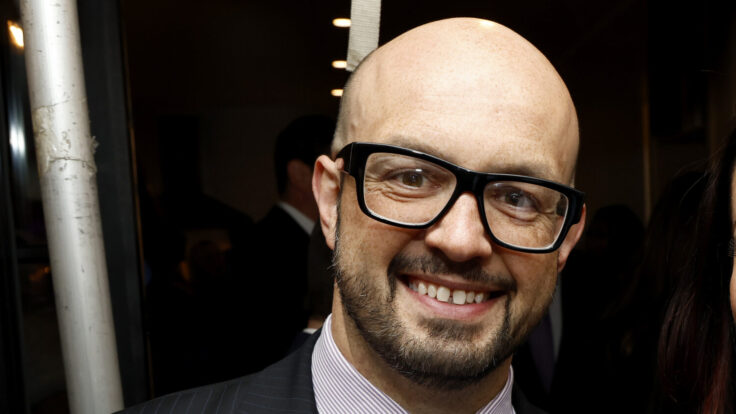
Welcome back to The Best & The Brightest. I’m Peter Hamby, here on a Thursday
because I needed a few more days to chew over election results. (Did I fall asleep last night squinting at precinct returns in Henrico County? I may have…)
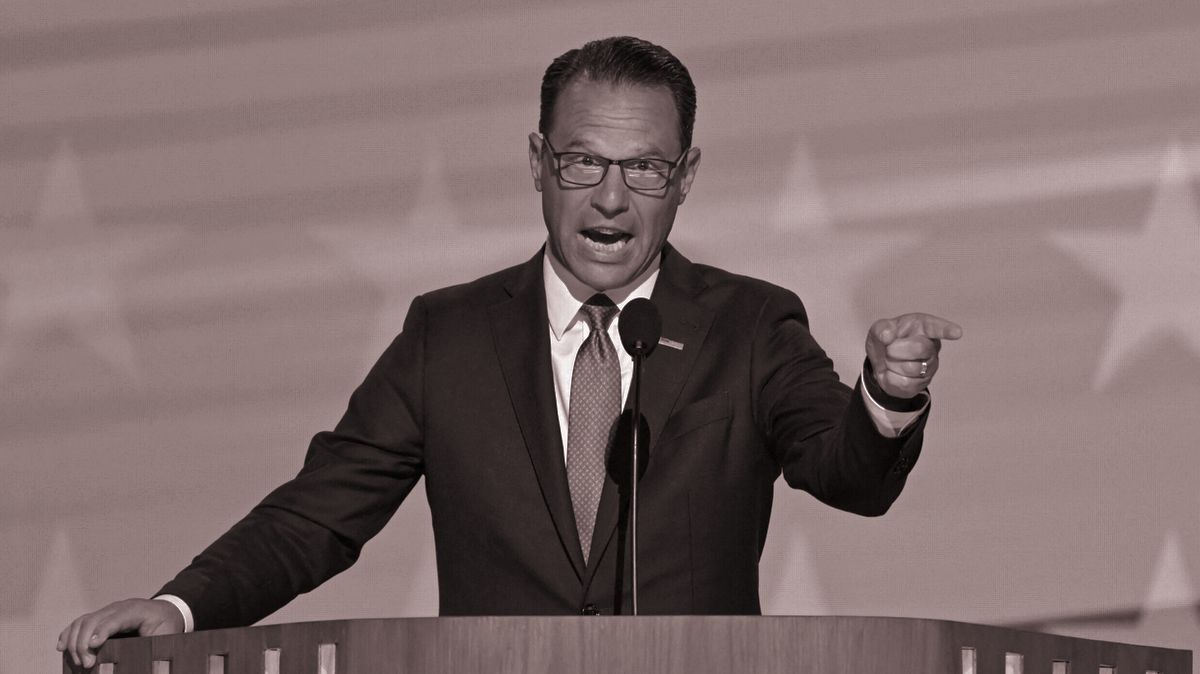
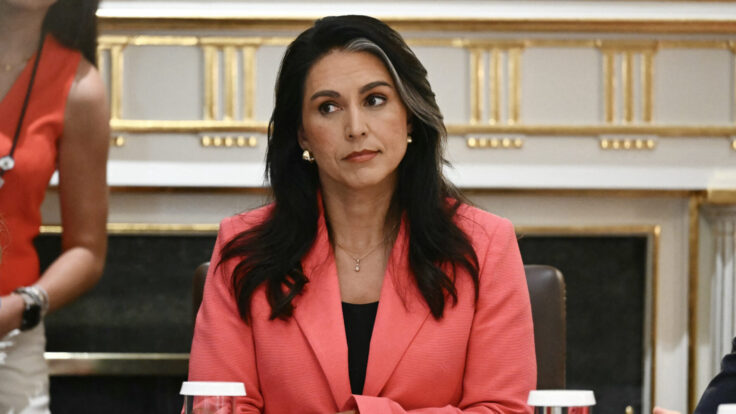
Tonight, I’ve got an election postmortem from Gov. Josh Shapiro, a Democratic star who is tiptoeing into the national spotlight as he prepares for his reelection campaign in Pennsylvania—and what seems like a likely 2028 presidential bid. I asked Shapiro about Zohran Mamdani, Gavin
Newsom, how Democrats should campaign against Trump, why he still stands with Israel, and of course, whether the NFL should ban the “tush push” that his beloved Eagles (over-)rely on. |
|
|
Instagram Teen Accounts default teens into automatic protections for who can contact them and the content they can
see.
Nearly 95% of parents say Teen Accounts help them safeguard their teens online. And we’ll continue adding new protections, giving parents more peace of mind. Explore our ongoing work to keep teens safe online. |
|
|
But first, here’s Abby from the Hill… |
|
|

| Abby Livingston
|
|
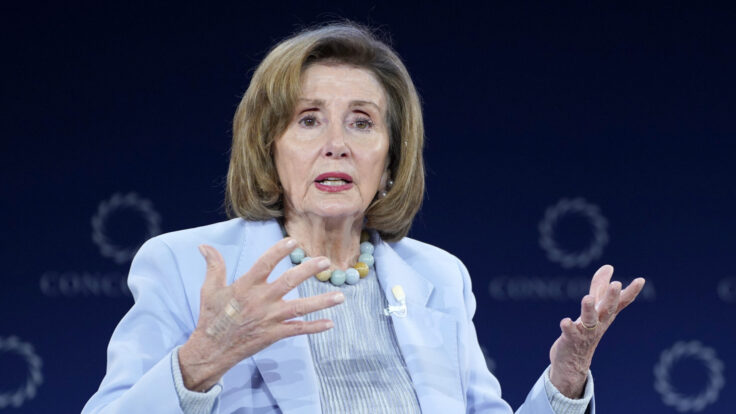
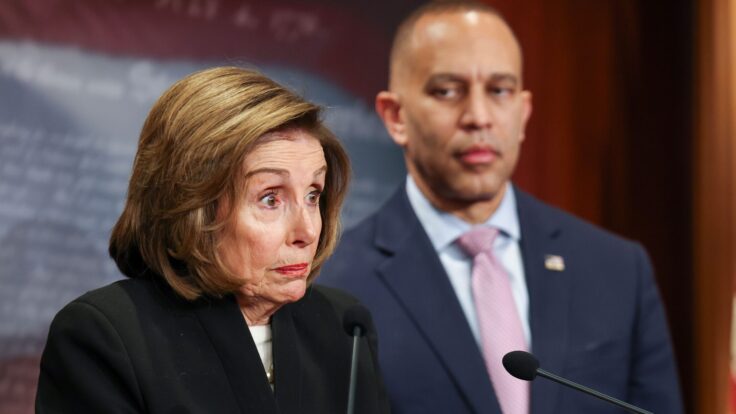
- Republicans have Pelosi
envy: Following the news that Speaker Emeritus Nancy Pelosi would retire at the end of this term, it was none other than Marjorie Taylor Greene who showered the first female speaker with the highest praise. “She had an incredible career for her party,” Greene said on CNN. “I served under her speakership in my first term of Congress, and I’m very impressed at her ability to get things done. I wish we could get things done for our party like Nancy Pelosi was
able to deliver for her party.”
A strange compliment, at first blush. But it’s one I’ve privately heard for years—almost word for word—from Republican operatives and members, who envied her political skills, even while the party vilified her in public as an out-of-touch, rich, San Francisco liberal. Even in a polarized Capitol, there was little dispute about her operational intelligence in fundraising, organization, or the voluminous correspondence—almost everyone in Washington
has a typewritten note hand-signed by “Nancy”—produced in her role as the Democrats’ enforcer-in-chief. Joe Biden experienced this first hand when Pelosi took the lead in pressuring him to withdraw from the presidential election after his debate debacle. It’s also a lesson that Anthony Weiner learned in 2011, as did John
Conyers in 2017.
Now a new generation of Democrats will have to find its own enforcers. Hakeem Jeffries is starting to get into a groove, as seen in his response to the Republican redistricting offensive and the current shutdown. But it’s well-known he largely leads through
consensus-building and hasn’t quite achieved Pelosi’s stature as in-house (in-House?) defenestrator—undoubtedly the most unpleasant part of party leadership. (As then-Speaker Paul Ryan reportedly said in 2017, “I didn’t realize slitting throats was part of my job.”)
Still, Jeffries has shown flashes
of ruthlessness. In 2023, he marched the Democratic caucus to the House floor in a cold-blooded operation to oust Kevin McCarthy from the speakership. Last year, he confronted Biden after his disastrous debate performance, conveying the concerns within the House Democratic caucus about the president’s determination to stay in
the race. And within his own caucus, Jeffries deployed benign neglect in allowing his colleagues to push out a handful of aging sitting or wannabe ranking members. Even so, he’s got big stilettos (or, post-hip surgery, tennis shoes) to fill.
|
|
|
A candid conversation with Pennsylvania’s governor as he ramps up for reelection and beyond,
including what he really thinks of Gavin Newsom, his stance on Israel, and how Democrats can win back white men. |
|
|
Unlike the other famous Democratic governors eyeing the White House—Gavin Newsom in
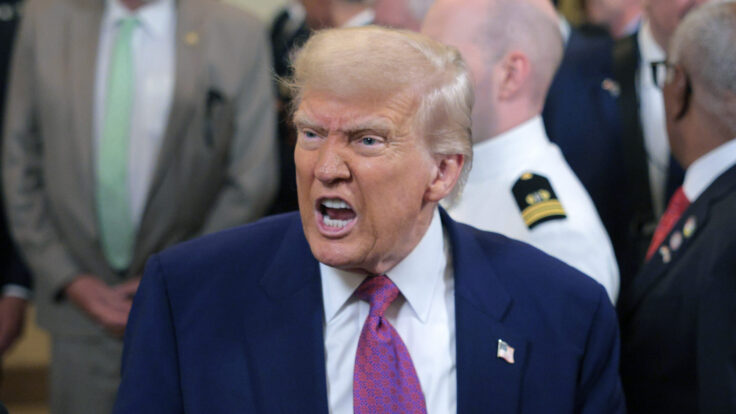
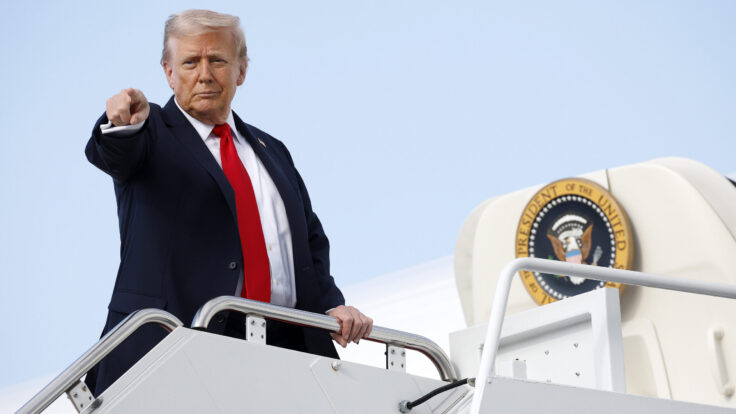
California, JB Pritzker in Illinois, Andy Beshear in Kentucky—Pennsylvania Gov. Josh Shapiro has spent most of the last year dodging the national spotlight. One reason is logistical: Shapiro is up for a second term next year, and he can’t run for president if he fumbles his reelection bid in the country’s premier battleground state. Waging a daily war against Donald Trump—as the pugilistic Newsom is with each passing news
cycle—probably wouldn’t help Shapiro’s cause in a state that the president won last year.
Shapiro is obviously a proud Democrat, who campaigned (reportedly a little too hard) to be Kamala Harris’s running mate. But looking at Shapiro’s record and rhetoric, it seems clear that he would campaign in ’28 as a get-shit-done consensus builder and purple state all-star rather than a partisan crusader against MAGA. Yes, he’s quarterbacked Pennsylvania’s many lawsuits against the
Trump administration. But he’s also carefully tended to his backyard. Shapiro’s résumé so far includes adding over 16,000 new jobs, securing millions for private-sector development, creating a universal free breakfast program for public school students, and hiring more than 1,500 new state troopers and police officers.
He also boasts, according to a recent Quinnipiac poll, an enviable 60 percent job approval rating with his constituents—a rare thing in these partisan times. For a
Democrat, his support is remarkably strong across voting groups that have grown skeptical of the party in recent years. The same poll found that Shapiro has majority support among independents (66 percent), Black voters (86 percent), young voters (61 percent), men (54 percent)—even white men without a college degree (50 percent). Few Democrats can claim numbers like those. |
|
|
Last year, Instagram launched Teen Accounts, which default teens into automatic protections. Now, a stricter “Limited
Content” setting is available for parents who prefer extra controls. Instagram will continue adding new safeguards, giving parents more peace of mind. Learn more. |
|
|
Despite keeping a strategically low profile since last November, Shapiro is quickly ramping up for that
reelection bid—and beyond. He recently campaigned for Democrats in the Virginia and New Jersey governor’s races, collecting chits across the party. Since those blowout wins on Tuesday, Shapiro has been popping up in the national press to talk about common-sense governance and how Democrats can start winning again. I caught up with Shapiro on Thursday morning by phone, after he paid a visit to a food bank in Pittston, where he talked about his efforts to help the state’s 2 million SNAP recipients
impacted by the government shutdown.
I asked him about Tuesday’s elections, including Zohran Mamdani’s win in New York City, and how Democrats should run on cost of living but also the threat of Trump. “You have to be able to address both,” Shapiro told me. Given the antisemitic arson attack on his own residence earlier this year, I also wanted his reaction to a pair of stories—the retirement of Rep. Jared Golden, who cited political violence as
one of the reasons he’s leaving Congress; and Israel’s collapsing support among Democratic voters after the brutal war in Gaza, a shift in public opinion that has put the staunchly pro-Israel Shapiro outside the mainstream in his own party. As always, this conversation has been lightly edited for length and clarity. |
The Democracy vs. Affordability False
Choice
|
Peter Hamby: I wanted to start by asking about Congressman Jared Golden in
Maine, a moderate Democrat, announcing his retirement at age 43 on Wednesday. Part of his reasoning was that he fears political violence and threats to his family, and it’s just not worth being in public life. Having gone through the arson attack on your residence, I’m curious what your reaction is. Does it make you sad that politics is so toxic that it’s forcing good people to step away?
Josh Shapiro: I actually read [his
op-ed announcing that he was stepping down] and I’m planning to reach out to him today. I don’t know him well, but I’ve admired his work ethic and the approach he takes to the job. He’s clearly grappling with, frankly, a lot of what I grapple with, which is the notion that you’re doing service and something you love,
but it’s putting your children at risk. And that’s a hard thing to manage as a dad.
I would never stand in judgment of his decision. That’s his decision. It’s his family’s decision to make. I’ve obviously made a different decision, but I think it’s a sad state we find ourselves in—when people who are good and decent and trying to do the right thing are leaving the system because they’re either fearful for their safety, or their family’s safety, or they feel like it’s not worth it. And
this is a time where we need more good people to step up, not fewer.
You revealed this week that you spoke to Zohran Mamdani over the summer and had a conversation about antisemitism, around the time he was refusing to distance himself from the “Globalize the Intifada” slogan. It sounded cordial. Have you talked to Mamdani since he won his race?
No.
What do you make of his
win?
I mean, look, I think there’s a similar throughline from New York City to Virginia, New Jersey, and even Erie County, Pennsylvania, where we flipped the county executive seat. Two things were true about all those elections. Number one, people ran focused like a laser beam on the cost issues, and the everyday issues that people in their communities are talking about. And number two, it was a clear message being sent to Donald Trump that we
don’t like the chaos that you’re inflicting on this country. And all the candidates are different—they have different ideologies, different approaches.
On the subject of those themes, you’re up for reelection next year. I’m interested in how you’re going to approach costs and affordability. But get specific beyond the sloganeering. When it comes to costs, what are people in the swing state of Pennsylvania worried about? What frustrates them? Is it housing? Healthcare?
Groceries?
I’d put it in two buckets. The first bucket is things that are sort of top of mind to the community you represent—in my case, obviously, the Commonwealth of Pennsylvania. And for us it’s childcare costs, seniors on fixed incomes needing a break, small businesses that are struggling. On each of those, we’ve cut taxes and put money back in people’s pockets. We tripled our childcare tax credit, we cut taxes for seniors twice who were on
fixed incomes trying to stay in their homes. We cut taxes twice for small businesses. So I think we’ve effectively addressed some of those more localized issues. The second bucket is the rising costs directly attributable to Donald Trump’s policies.
I assume you mean tariffs.
I was literally about to say that the chief driver of added costs is through tariffs. When we sit down with our farmers, they are getting screwed. First,
markets are being closed to them, so they can’t sell their produce, their meats, their cheeses, you name it. And second—just an example—the purchasing they do to operate their farm, those goods cost more. The feed for the livestock, which is soybean based—in many cases for Pennsylvania farms, those soybeans cost way more because of the impact the tariffs have had. So farmers are getting screwed in a multitude of ways, and that’s an example in that second bucket of rising costs that Donald Trump
is directly responsible for, that they need to have a plan to fix. |
|
|
Despite all the election narratives around the cost of living, we also need to point out that voters
can hold multiple thoughts in their head at once. The judicial races in your state, for example: I looked at the advertising—the messaging was about freedom, democracy, abortion rights. Those races weren’t about costs, and the Democratic side won in a blowout. Out here in California, Gavin Newsom won big with Prop 50, which was essentially a vote about democracy and anxieties about Trump. So, how much do Democrats need to talk about the fate of our country versus the cost of
groceries? Because it feels like you can do both!
We need to be able to walk and chew gum at the same time. I think most people can do that. Folks can be worried about the fate of our democracy and the evisceration of their fundamental rights and freedoms, and also be pissed at Donald Trump that stuff costs more when they go to the grocery store. You have to be able to address both. |
Newsom,
Israel, and White Men
|
What do you make of Newsom’s approach to politics right now—that we are living in a
five-alarm fire, a state of emergency, that Trump is the enemy, and Democrats need to fight, fight, fight? Tonally, that sounds a little different from the Josh Shapiro approach to politics.
I think we all recognize that there are serious threats to our democracy, and it is critically important that we address them. I complimented Gavin on TV this morning about negating the efforts by Trump and Greg Abbott to rig the U.S. House
elections. That was a service to America, and a service to our party. It allows us, in a state like Pennsylvania, where we have more toss-up seats than any other state in the country, to go duke it out the old-fashioned way in elections, where hopefully we can win those seats, help a Democratic majority in the U.S. House come to be, and stop Donald Trump’s legislative agenda.
Other than Bernie, you might be the country’s most famous Jewish politician. On Israel, Democratic voters
have really moved away from reflexively supporting Israel during the last two years over the war in Gaza. It’s not just young progressives, it’s Democrats of all ages. You’ve always been a stalwart supporter of Israel, while also being very critical of Netanyahu. How do you navigate your party moving forward, now that opinions about Israel have pretty drastically changed?
I don’t pay attention to shifting political winds. I try and do what I
think is right, and say what I believe. What I believe is long held. It doesn’t mean that my views don’t evolve, or I don’t change my mind on something, but as a result of listening to people and learning. You’ve got to stay true to who you are and your values. And my values are very clear. I believe in Israel, but I don’t like the direction that it’s going under Benjamin Netanyahu’s leadership.
A recent Quinnipiac poll had your approval rating in Pennsylvania at
60 percent, which is impressive on its own. But it also had your approval among men at 54 percent, among white men at 52 percent, and even among non-college men you were at 50 percent. That’s a rarity among Democrats these days. Even if young men voted Dem on Tuesday, men overall continued to vote Republican. What’s your secret? I assume it’s not just that you go on Philly sports radio all the time.
Look, I just focus every single day
relentlessly on getting stuff done, putting points on the board, showing your work, and delivering for people. I also show up in communities that I think a lot of Democrats tend to ignore and treat people with respect, whether you have a college degree or not, meet people where they are, hear their concerns, and deliver for them. That’s what I try to do.
And I don’t distinguish between a Republican community or Democratic community. I don’t distinguish between people with college degrees
or not, or people who look a certain way or not. I am trying to deliver for everybody. What most people really want are elected leaders at all levels who know how to get stuff done for them.
I asked my colleague John Ourand to help me brainstorm a sports question for you. So here it is: Eagles superfan Josh Shapiro, should the NFL ban the tush push?
Hell no! And by the way, it’s absolute bullshit that these other teams who can’t
guard Jalen Hurts—who do not have an offensive line like the Eagles have built under Howie Roseman’s incredible leadership—that now they want to ban it. I mean, it’s ridiculous. If they want to be successful, maybe they should go out and draft a great quarterback like Jalen Hurts? Frankly, I’m also sick and tired of Jalen Hurts not getting the respect that he is due. I think he deserves respect. The Birds deserve respect, and moving to ban the tush push is
merely an excuse for not having a good enough team to do it.
Thanks, JB Pritzker dodged my Caleb Williams question a while back. I appreciate your candor here. |
|
|
Puck sports correspondent John Ourand and a rotating cast of industry insiders take you inside the executive suites and owners
boxes where the decisions that shape the entire sports business are made. You’ll hear interviews with players, network execs, and everyone in between. The Varsity is an extension of John’s private email for Puck by the same name. New episodes publish every Wednesday and Sunday. |
|
|
Unique and privileged insight into the private conversations taking place inside boardrooms and corner offices up and down Wall
Street, relayed by best-selling author, journalist, and former M&A senior banker William D. Cohan. |
|
|
Need help? Review our
FAQ page or contact us for assistance. For brand partnerships, email ads@puck.news.
You received this email because you signed up to receive emails from Puck, or as part of your Puck account associated with {{customer.email}}. To stop receiving this newsletter and/or manage all your email preferences, click here.
|
Puck is published by Heat Media LLC. 107 Greenwich St., New York, NY 10006 |
|
|
|