 |
|
Welcome back to Dry Powder.
|
|
Today, my candid thoughts on the challenges facing the reported Disney-Amazon partnership to launch ESPN’s future streaming service. Plus, notes on a conservative legal paper picking up steam on Wall Street arguing for Trump’s ineligibility for the Oval, and a conversation surrounding a potential breakthrough on the A.I.-energy front.
P.S. In celebration of our second anniversary, Puck members can offer their network 30% off a subscription (our biggest discount ever). Share the link below with someone you think will love Puck or have them use code INSIDEACCESS at checkout.
|
 |
| ESPN-Amazon, a Wall Street Fantasy & an A.I. Hack |
| News and notes on the hottest topics among the Meadow Club crowd as the dealmaking begins to heat up: ESPN’s potential dance partner, the hottest document making its way around town, and an around-the-corner A.I. idea. |
|
|
|
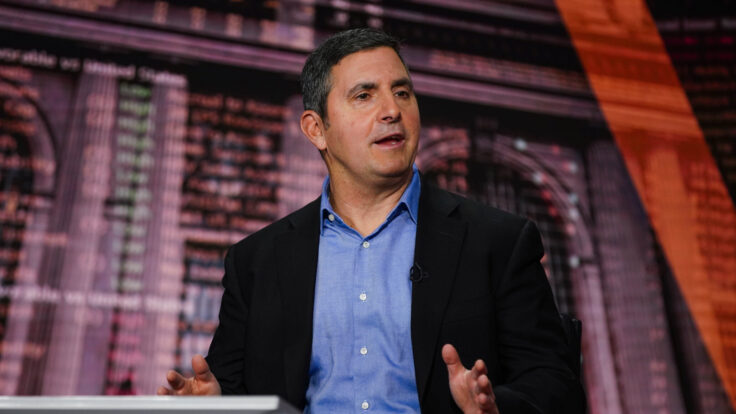
| I have two reactions to the news, first reported by The Information, that Amazon might partner with ESPN as it re-imagines itself as a streaming service. First, the lights are on in Bristol and Jimmy Pitaro is putting his Cornell education to good use. Second, that situation in Bristol—increased cord-cutting and decreasing profitability—must be pretty acute for ESPN to want to team up with Amazon.
On the one hand, Amazon makes good sense as a partner for ESPN’s future streaming business. There are something like 200 million Amazon Prime members and something like 75 million Prime Video subscribers. That’s an awful lot of incremental eyeballs that might like to watch an ESPN streaming service, although it’s likely many Prime Video subscribers already get ESPN via a cable connection. Who knows how many of the remaining cohort might pay to stream ESPN for as much as $35 per month, as The Information has also reported? That seems like a long putt to me.
Amazon has plenty of cash to invest—some $50 billion—for a minority stake in ESPN as a way for Amazon to capture some of the financial upside from a streaming deal with ESPN. It will be fascinating to see if Bezos’s giant incorporates its Thursday Night Football package into the putative offering, or whether the company potentially fits ESPN into its sports video app ambitions, which my Puck partner Julia Alexander dissected months ago. Perhaps most compelling, however, will be how two sides agree to a valuation for ESPN.
As I reported last month, ESPN itself is expecting that its subscriber base, as part of the basic cable bundle, will tumble to about 45 million households from around 74 million households in 2022. (ESPN had 100 million subscribers in 2011.) How that decline in subscribers will affect ESPN’s EBITDA remains to be seen until Disney breaks out its financial performance, likely in 2024, but it can’t be good. The rumored $35 a month price for ESPN-streaming sounds exorbitant to me, except for the fact that is probably the price that it needs it to be for ESPN to make money. Lord knows, but for Netflix, the other streaming offerings are struggling mightily to stem their financial losses. So I agree with the $35 a month price tag from an economic and income statement perspective. I just don’t believe there are enough people out there who will be willing to pay another $420 a year for ESPN to justify charging that much. I could see people voting with their feet at that price.
That’s what makes this business conundrum so challenging. Is it possible for ESPN to make enough EBITDA from streaming, quickly enough, to replace the EBITDA that will be lost as more and more people cut the ESPN cord? That’s the brutal reality of the situation, and I’m not sure Jimmy Pitaro—or anyone else for that matter—has the answer for how to price ESPN-streaming, what to include in it, and when to release it into the world.
Is it possible that a cash infusion from Amazon and access to its Prime customers plus its sports content might help stanch the bleeding, at least in the short term? Yes. But the fundamental question facing Pitaro & Co. is whether consumers are willing to really pay up for ESPN’s content over the long term. If I’m wrong and they can’t do without ESPN’s content, pretty much regardless of the price, Pitaro might find himself one day soon in the corner office, in Burbank. But if I’m right, and the limits are being reached for how much people are willing to pay for streaming services of all stripes on a monthly basis, it’s going to be a long, cold winter in Bristol. |
 |
|
|
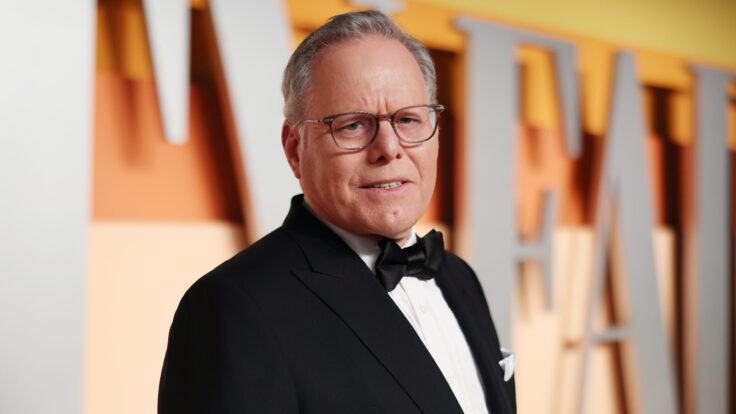
| My phone has been lighting up for the past week or so with a bunch of Wall Street folks buzzing about an obscure 126-page legal paper with the innocuous title, The Sweep and Force of Section Three. Section Three, for the uninitiated, refers to Section 3 of the 14th Amendment to the U.S. Constitution. The paper, written by William Baude, a University of Chicago professor of law, and Michael Stokes Paulsen, a professor of law at the University of St. Thomas Law School, essentially argues that the Constitution “disqualifies” Donald Trump from running for President of the United States in 2024 because of his participation in the January 6 insurrection and his ongoing efforts to overturn the 2020 election.
My Wall Street sources are hoping that Baude and Paulsen are on to something and that somehow the 14th Amendment will be invoked to keep Trump off the 2024 ballot and prevent him from ever participating again in an election for public office. The thesis picked up more steam after Laurence Tribe, the Harvard Law School emeritus professor, and J. Michael Luttig, a former U.S. Court of Appeals judge, wrote an article in The Atlantic a week ago endorsing the same idea as Baude and Paulsen, under the provocative headline, The Constitution Prohibits Trump From Ever Being President Again.
For those readers who don’t have their Constitution handy, as Doug Burgum did the other night during the Republican debate, here is what Section 3 says: “No person shall be a Senator or Representative in Congress, or elector of President and Vice President, or hold any office, civil or military, under the United States, or under any State, who, having previously taken an oath, as a member of Congress, or as an officer of the United States, or as a member of any State legislature, or as an executive or judicial officer of any State, to support the Constitution of the United States, shall have engaged in insurrection or rebellion against the same, or given aid or comfort to the enemies thereof. But Congress may, by a vote of two-thirds of each House, remove such disability.”
Baude and Paulsen argue, quite thoroughly I might add, that the “demise” of Section 3 of the 14th Amendment has been “greatly exaggerated” and that, in fact, it “remains of direct and dramatic relevance today—a vital, fully operative rule of constitutional law with potentially far-reaching contemporary real world consequences. Section Three remains in legal force, and has a broad substantive sweep.”
In brief, the two law professors make four salient points in their paper. First, that Section 3 remains an “enforceable part of the Constitution” that was not just limited to the aftermath of the Civil War, and that was not repealed by 19th century “amnesty legislation.” Second, they argue, the provision is “self-executing, operating as an immediate disqualification from office,” without the need for Congress to take “additional action,” adding that “it can and should be enforced by every official, state or federal, who judges qualifications.” Third, Section 3 “supersedes” any conflict with other, prior “constitutional rules” and, fourth, that it covers “a broad range of conduct against the authority of the constitutional order, including many instances of indirect participation or support as ‘aid or comfort.’” Their conclusion is that the section “disqualifies former President Donald Trump” from holding public office again because of his “participation in the attempted overthrow of the 2020 presidential election.” State election officials would be smart to pick the two professors’ brains.
Will this academic paper spread beyond circles of liberal elites? Well, first, it’s worth noting that The New York Times described both Baude and Paulsen as “prominent conservative law professors.” Then, there is a report in The Boston Globe that New Hampshire is thinking of keeping Trump off the ballot there because of the provision. (The Democrats won New Hampshire in both 2016 and 2020, albeit in close votes.) There is also a new report that a Florida lawyer has filed a federal lawsuit to disqualify Trump from the 2024 presidential race due to Section 3.
Asa Hutchinson, the former governor of Arkansas and erstwhile Republican candidate for president, also jumped on the 14th Amendment bandwagon. “Over a year ago, I said that Donald Trump was morally disqualified from being president again as a result of what happened on Jan. 6,” he said during the first Republican debate in Milwaukee. “More people are understanding the importance of that, including conservative legal scholars who say he may be disqualified under the 14th Amendment from being president again as a result of the insurrection.” But is this all just a legal fever dream?
What about the political ramifications of invoking this provision to keep Trump off the ballots? Aye, there’s the real rub. I can only imagine the uproar among a sizable swath of the electorate if that were to happen. That could get really, really ugly, really quickly. But the idea also got me thinking some more about David Rubenstein’s suggestion—you know, the one where Biden offers to pardon Trump only if Trump agrees not to run for office ever again and in return Biden also agrees not to run again in 2024. I am beginning to see a viable idea here that combines the best of Rubenstein with the best of Baude, Paulsen, Tribe and Luttig. I’m not sure what it will take to go from idea and theory to reality. But I sure would like to hear what my readers think of these concepts. As they like to say on Wall Street, hope is not a strategy. |
|
|
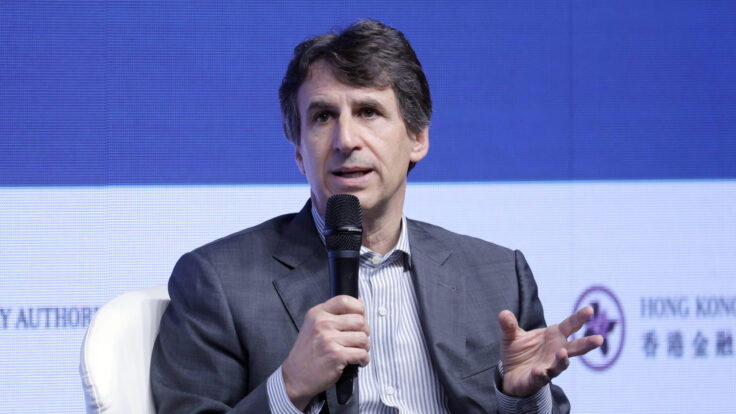
| In a conversation I had the other day with Steve Schwarzman, the billionaire co-founder of the Blackstone Group, he got to talking about how some pockets of the commercial real-estate market remain blazingly hot, despite the problems faced by other sectors of the commercial real-estate market, particularly class B and class C office buildings in major cities, such as New York, Chicago, and San Francisco. In particular, Steve was waxing poetic about the ongoing wonder that is big data warehouses and the financial opportunity they offer to firms such as Blackstone. To “run giant A.I.” systems, he noted, you need “giant data centers” and “you can make very good returns developing and leasing” the data centers to what he called “hyper-scalers,” like Microsoft, Google and Facebook/Meta. “There’s wonderful returns for things like that,” Steve said.
I was thinking about Blackstone and its investment in these gargantuan data centers again recently after I had a conversation with Jeff Glickman, a computer scientist and A.I. pioneer. I wrote a profile of Glickman in Fast Company, in May 2020, because Glickman claimed to create an A.I. that picked stocks and could outperform the stock market. No small claim, especially since Glickman told me he knew nothing about finance, the stock market or Wall Street, and of course had never worked on Wall Street.
Instead, he was a technologist, based in Seattle, who held multiple patents in image processing, pattern recognition, and networking technology. A computer prodigy, Glickman told me about the supercomputer he built that teaches itself how to invest. When we spoke at that time, he told me his tiny hedge fund, J4 Capital, was up nearly 5 percent for the year, when the market as a whole was down nearly 27 percent, a heroic beat.
Glickman is an impressive fellow and a real-deal entrepreneur. He called me again recently to share a new development that he claims to have made that might give Steve Schwarzman pause: Glickman has developed A.I. computer algorithms that, he told me, use much less energy and water (to cool the supercomputers in the data centers) than have been required by the “hyper-scalers” to date. He has applied for a patent for his new discovery—available to me only after signing a NDA—and he has published a “white paper” about it that purports to be easy to understand.
In the paper, Glickman writes that J4’s “artificial superintelligence” and “stochastic learning” system is extremely fast—some 6,000 times faster than the Hyperparameter Optimizable Neural Network system and 160 times faster than the Tri-layered Neural Network system. As a result, Glickman believes, his system uses far less electricity—in fact, he claims that his system uses 3,200 times less electricity than the Hyperparameter network and 80 times less electricity than the Tri-layered network. “Moreover,” Glickman writes, “production artificial neural network systems consume large amounts of fresh water for cooling whereas J4’s [stochastic learning] is air cooled, consuming no fresh water. All these factors mean that the J4 stochastic learning will produce higher profits attributable to better product performance, and lower capital, cloud, and operating expenses.”
Glickman shared with me a concern similar to something Schwarzman had said: the demand for electricity will soon exceed the supply of electricity, in part because of the demand for A.I., electric vehicles, and our quotidian lives. “In three to five years,” Schwarzman told me during our recent chat, “in many parts of the country, we’re going to be stocked out of electricity. This is what you should be hearing on your nightly news instead of some kind of entertaining fluff… This is a real issue.” He wondered how some states, such as California, where politicians have proclaimed that pretty much only electric cars will be sold by 2030, would provide enough electricity to pull it off. “They barely have enough electricity out there anyhow,” Schwarzman said.
In a separate conversation, Glickman agreed. “The electricity consumption is unsustainable,” he told me. “Not only is there not enough of it to go around, which is going to necessitate additional sources of electricity such as fusion reactors, but more importantly, we don’t even have the infrastructure to transmit the electricity, even if it was available.” He also warned about the use of water to cool the data centers. He said Google alone, in 2022, used 5.2 billion gallons of water in its data centers. (It used 5.6 billion gallons of water, in total.) He said there is always talk of the next generation of supercomputers and G.P.U.s to drive the A.I. revolution but “there just isn’t enough fresh water around” to cool all of these computer systems. Concludes Glickman, “A.I. as it is currently situated is unsustainable and something has to give.”
That’s where, Glickman claims, his discovery comes in. According to him, it’s thousands of times faster, uses much less electricity and no water (his A.I. is air-cooled). He said it’s a “new discovery in A.I.” and adds, somewhat elliptically, “It parallels things like neural networks and deep learning but it’s just more efficient because it’s a direct representation of essentially the mathematics that is just part of the thought process.” Essentially, he said, the mathematics he discovered just makes the process “very efficient.” He said that his discovery—patent pending—creates a “pathway” for ChatGPT, Google and Microsoft “to run A.I. in a more sustainable way.”
He said both Sam Altman, at OpenAI, and Microsoft are investing in fusion reactor technology with the hope of being able to generate the electricity that A.I. will need in the future. He said what he’s developed puts a “very, very strong dent” in that need. “Obviously, you’re going to still need power,” he said, “but you’re going to need 1000-fold less power than is currently consumed.”
Who knows where what Glickman claims to have discovered ends up, or how useful it will be. But I thought the confluence of events—Glickman’s call and Schwarzman’s observation about how much money he has been able to make from owning and leasing data centers—was somewhat remarkable. And it left me thinking that perhaps these two smart guys should be talking. Steve, Jeff, I’ll let you two take it from here… |
|
|
|
| FOUR STORIES WE’RE TALKING ABOUT |
|
|
|
|
|
 |
 |
|
|
|
Need help? Review our FAQs
page or contact
us for assistance. For brand partnerships, email ads@puck.news.
|
|
You received this email because you signed up to receive emails from Puck, or as part of your Puck account associated with . To stop receiving this newsletter and/or manage all your email preferences, click here.
|
|
Puck is published by Heat Media LLC. 227 W 17th St New York, NY 10011.
|
|
|
|