{{ 'now' | timezone: 'America/New_York' | date: '%b %d, %Y' }} |
|
|
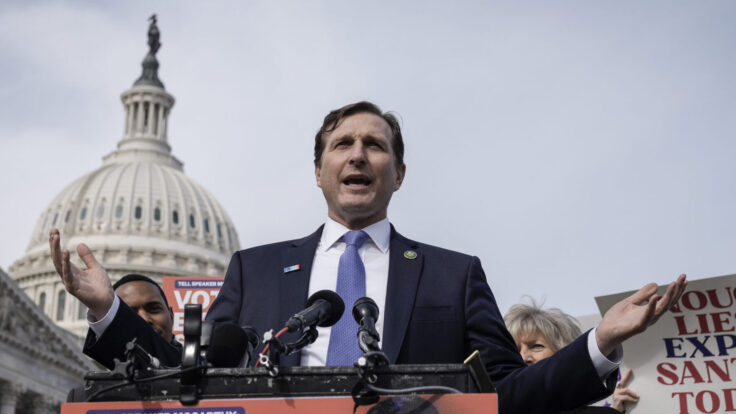
Welcome back to The Best & The Brightest. I’m Leigh Ann Caldwell, in South
Carolina visiting my parents, safe from the alleged crime problem in Washington, D.C. (Violent crime is actually down 26 percent so far this year, and homicides are at their lowest level in about five years. 2023 was a very bad crime year, but this year is far from that.)
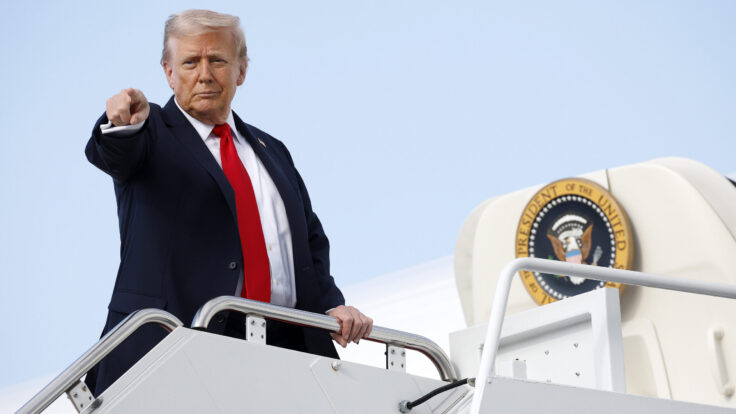
Of course, Trump’s deployment of the National Guard and the federal takeover of the city’s police department are just further instances of the president ignoring
statistics to create his own reality for immediate political benefit. He did the same in Los Angeles earlier this year, when he activated the National Guard to help handle protests over his administration’s heavy-handed immigration enforcement, and more recently, when he fired the head of the Bureau of Labor Statistics because he didn’t like the job numbers.
As
one Republican strategist told me, Trump creates solutions for problems that don’t exist. The strategist was talking about the trade imbalance and the attacks on Iran’s nuclear sites, but it applies here, too: Once crime goes down—or stays at its current level—Trump will declare victory.
In tonight’s issue, Abby Livingston has a summer recess report on how the Epstein question has followed Republicans back home to their districts—and why the scandal is
likely to relapse when Congress returns in September.
But first… |
|
|

| William D. Cohan
|
|
- A retro private equity
play?: Not many people are aware of Section 1202 of the Internal Revenue Code, which gives investors in small businesses a potential 100 percent capital gains tax exclusion under certain conditions. (It’s been around since 1993 and amended many times since, but was further “enhanced” by the Big Beautiful Bill.) The federal capital gains avoidance applies to the greater of $10 million of gain or 10x the taxpayer’s basis in the stock. To qualify for the exclusion, the company must be a C
corporation and have had assets of less than $50 million at the time of the investment and immediately after stock is issued to investors. The stock also must be primary shares of the company—not secondary offerings acquired from existing shareholders—and be held for five years.
Service-oriented businesses, such as law, financial services, or consulting firms, do not qualify for this benefit. But tech, retail, and even manufacturing businesses would qualify for the exemption.
It’s probably no surprise that I keep hearing about some smaller LBO shops actively seeking out smaller manufacturing businesses to buy, and to hold for at least five years, before selling in order to qualify for the exemption. Who knew?
|
|
|

| John Ourand
|
|
- The Big Four’s federal
issues: You’d be forgiven if you yawned when you read that the House Judiciary Committee sent letters this morning to Big Four commissioners Roger Goodell, Adam Silver, Rob Manfred, and Gary Bettman requesting briefings on broadcasting
market policies and blackout exemptions—i.e., the secular reality that sports media rights are moving to streaming. It seemed like more of the usual political theater, after all. (Committee chairman Jim Jordan, a former collegiate wrestling champ and coach, is adroit at optics full nelsons.) But a number of heavyweight lobbyists told me this afternoon that the commissioners should take the request seriously. After all, this marks the second time in three
months that Congress has looked into the migration of sports from linear TV to streaming. Back in May, Sen. Ted Cruz’s Commerce Committee held a hearing on the matter.
Anyway, we all know that major sports are continuing their largely one-way emigration from linear—yes, today’s Paramount-UFC deal is a notable exception—but this is an exploitable issue for populists within both parties. Everyone I know complains about having to subscribe to half a dozen streaming
services to watch games that used to be available in only one cable bundle. But the TL;DR from the lobbying world is that this issue isn’t going away anytime soon… even if the NFL, MLB, NHL, and NBA won’t be renewing their rights deals during this Congress, or even the duration of the Trump administration.
|
|
|

| Dylan Byers
|
|
- Cleanup at CBS News…: On
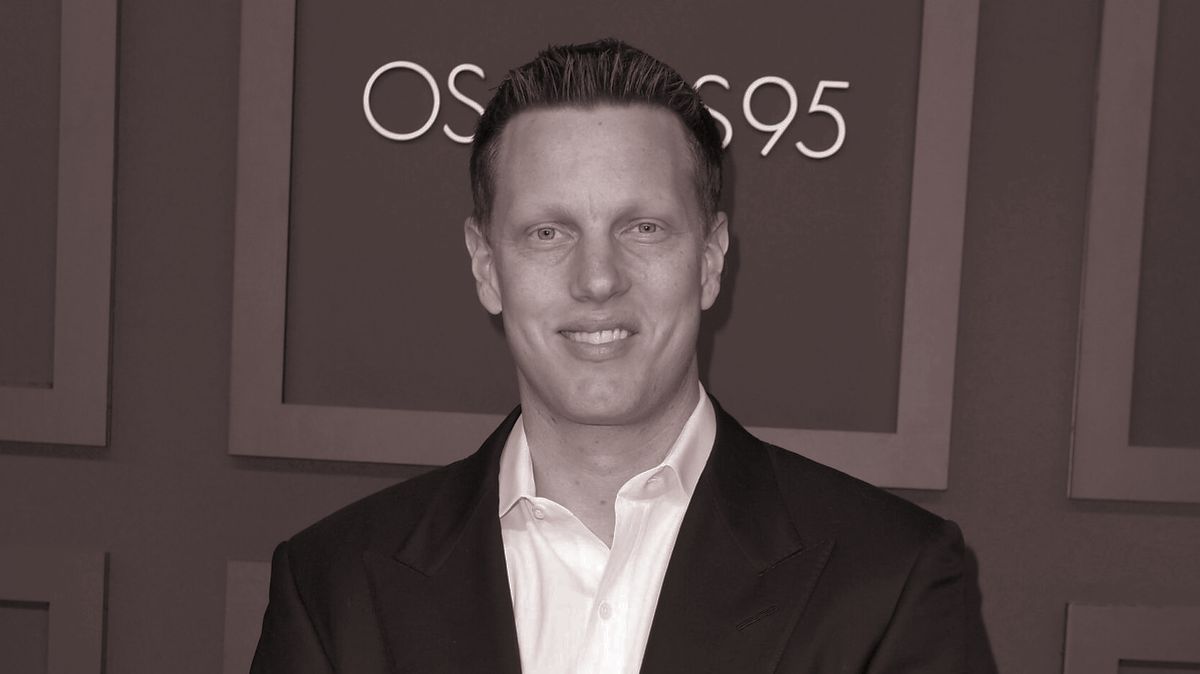
Thursday morning, less than an hour after closing his acquisition of Paramount, Skydance C.E.O. David Ellison and his new TV chief, George Cheeks, stopped by the CBS broadcast center in Midtown to join the CBS News 9 a.m. editorial call. It was a savvy performative gesture, given all the recent tumult at the news division and the lingering uncertainty around Ellison’s ambitions for it. “I believe in the legacy of CBS News and being in the trust
business and in the truth business,” Ellison told the journalists, according to a source present. “We are committed to investing in this company into the long-term future.” Ellison then met with top execs, producers, and talent. As my partner Matt Belloni has reported, Gayle King gifted him
a mug.
As you know, clearing the Skydance-Paramount deal required a fair amount of capitulatory diplomacy toward Trump—not just from Shari
Redstone, who paid the president $16 million to settle a meritless lawsuit against 60 Minutes, but also from Ellison, who put in ringside time with the president and, according to Trump, committed to $20 million worth of free advertising time for conservatives causes. (In a Q&A with reporters on Thursday, Ellison deflected when asked if Skydance had made such a commitment.) And yet, most of my CBS News sources after the meeting seemed genuinely reassured by his overture. “The
vibe in the room was relief,” one said, “kind of shocked gratitude that he’d stop by the newsroom first.”
Alas, a quirk of American journalism is that the same people who make a profession of skepticism tend to be credulous toward their own bosses’ pablum and corporate choreography, especially on day one. Recall that, before putting CNN out to pasture, David Zaslav joined its 9 a.m. editorial call to tout the network’s “rendezvous with destiny” as “a purveyor of facts and
truth in journalism.” In 2023, Jeff Bezos spent a day or two assuaging anxious Washington Post staffers, then promptly returned to the life of a centibillionaire megatitan while the paper burned and the aforementioned staff raced for the exits. Last week, Vox Media C.E.O. Jim Bankoff told me he wasn’t planning on implementing
layoffs—and then laid off about 20 employees in two tranches shortly thereafter. Remember how much Jonah Peretti loved BuzzFeed News before realizing it was a terrible and unsustainable business? C.E.O.s may be intoxicated with the news business, but mere infatuation can’t resolve the flaws in the underlying business models.
In any event, Ellison may indeed have big ambitions for CBS News, but he can’t just wave his hands to reset the eroding business models of the
monocultural era. As the denizens of CBS News well know, news has become a commodity even as newsgathering has remained expensive. And yet, amid all the political drama engulfing the network, staffers there have been myopically preoccupied with archaic concerns like sagging ratings, personnel changes, and office
vibes.
Read more here…
|
|
|
And now, on to the main event… |
|
|
Republicans fled D.C. early for August recess to avoid votes on releasing the Epstein files.
But the issue has been waiting for at least some of them in their home districts—and will be unavoidable when they return to town in September. |
|
|
“Epstein is alive and well. Pardon the pun,” a Republican consultant who works on House
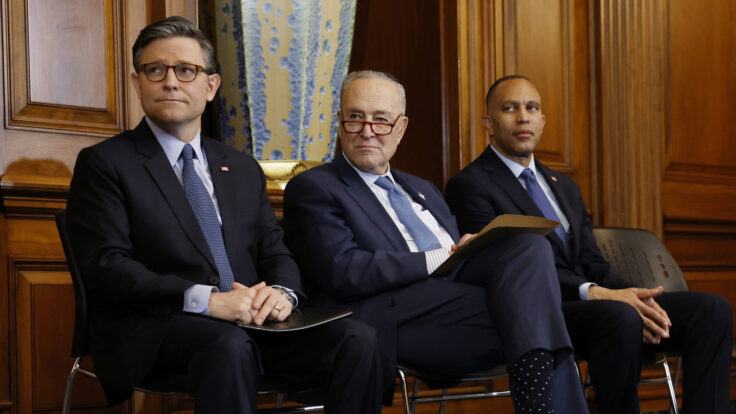
races told me recently—refuting, in part, Speaker Mike Johnson’s facile strategy late last month of grinding House business to a halt so that his conference could get the hell out of Dodge and avoid questions about Trump’s connection to the infamous sex trafficker. At first blush, after all, the indications from the field are less than ideal for Republicans. Recess kicked off with influential podcasters Joe Rogan and Theo Von
demanding more disclosure. And then there were the scenes from town halls in Republican districts.
Now, about halfway through the August recess, constituents have peppered Republican members across the country with Epstein questions. Nebraska Republican Rep. Mike Flood became an instant political celebrity when he went straight into the lion’s
den of a Lincoln town hall and faced heated interrogation from attendees; his call to release the files blanketed cable news and social media for days. Epstein-related questions also surfaced on tele-town halls hosted by Oklahoma Sen. Markwayne Mullin and Reps. Stephanie Bice of Oklahoma and Ryan Mackenzie of Pennsylvania.
The Republican consultant conceded that he’s unnerved by how much the Epstein issue has seeped into the political
conversation beyond the Beltway—not just on Reddit and X, but even in the heavily screened virtual town halls that Republican members tend to prefer these days. “It’s an issue the fringes care about. The same fringes, by the way, who voted for Donald Trump last cycle and did not vote for the Republicans downballot, and whose votes we need,” the consultant said. Most notably, perhaps, it takes an unnerving level of determination to overcome the call-screening barrier. “I wish you didn’t ask me
that question,” Mullin said on his own tele-town hall, per NOTUS.
And yet, many Republicans have more or less shrugged it off, and are not getting Epstein questions while back in their districts. That’s partly by design: Long ago, many G.O.P. members swore off in-person town halls, considering them the province of organized political activity and paid
agitators. Plus, Republicans are coming off a banner first six months in fundraising, with some arguing that town hall drama isn’t inhibiting the real work of recess—namely, raising money. Internal polling shows that G.O.P. incumbents have held steady all year, these party members told me. The only truly unsettling moment for them wasn’t Epstein, but rather the reaction to Trump’s tariff convulsions in April, which has long since dissipated. “It’s ours to lose,” a Republican operative
told me about control of the House in 2026. |
Mounting public and private evidence suggests that the country is moving on from the Epstein story.
Operatives from both parties say it rarely registers as a top issue with voters—who tend to list inflation, jobs, and healthcare among their chief concerns—and there simply haven’t been any bombshells turbocharging the scandal into a brand-new news
cycle. Sure, earlier today, a federal judge denied the government’s request to unseal transcripts from the grand jury investigating Epstein and his incarcerated associate, Ghislaine Maxwell—which might agitate some people. But nobody anticipates that Epstein’s face will be in general election ads a year from now, and the scandal may well fade into the background for the rest of summer vacation and during the back-to-school crush. Both sides are candid that they’d rather spend
their time defining, and litigating, the One Big Beautiful Bill, which folds into the economic issues that are expected to be of consequence next year. (Indeed, much of Flood’s infamously rowdy town hall focused on OBBB-related issues.)
Yet even if the Epstein files don’t matter all that much to voters, the issue will sure as hell continue to grate in town; everyone knows it’ll be waiting for lawmakers when they return in September. It’s hard to see how Republican leadership can
avoid a discharge petition vote, which will put the screws to every House Republican to take a side. And there’s the fact that the scandal has had a way of spontaneously combusting into the public sphere for almost two decades.
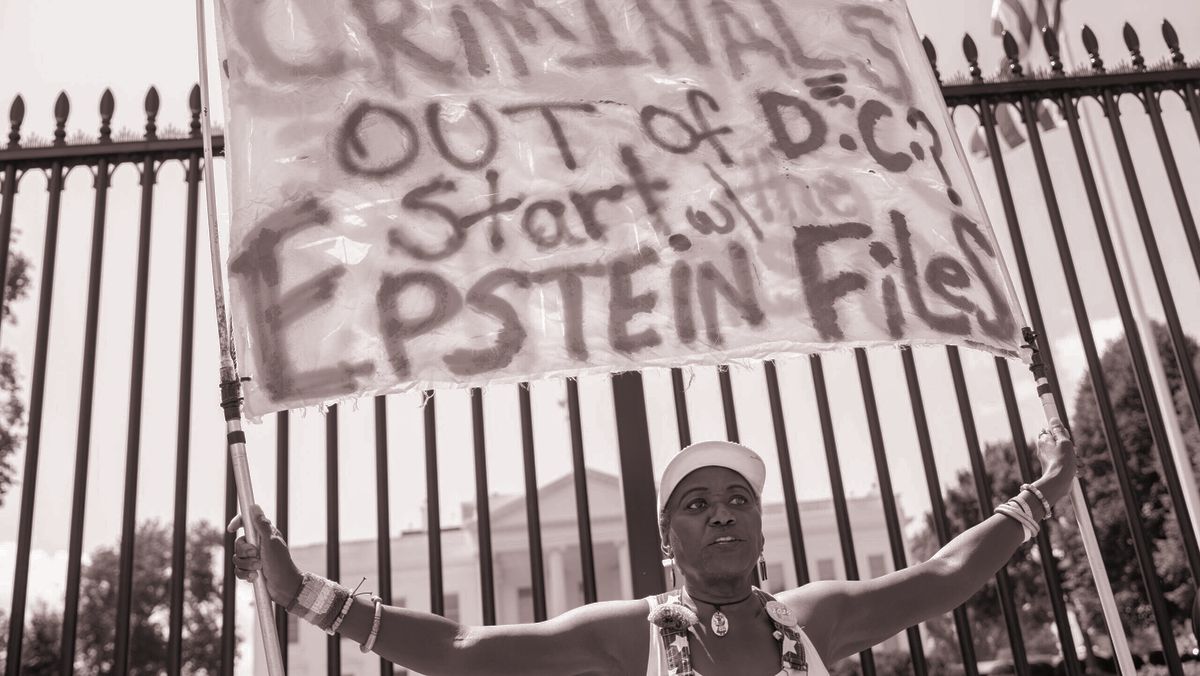
So while Trump and Republicans’ handling of the Epstein files might not swing the midterms, it will continue to be a pain in the neck. And if there remains any further doubt, a source texted me this afternoon while making the rounds on the Hill: “There’s
someone walking around the Capitol exterior with a sign saying, ‘Release the Epstein files!’” |
|
|
A professional-grade rundown on the business of sports from John Ourand, the industry’s preeminent journalist, covering the
leagues, players, agencies, media deals, and the egos fueling it all. |
|
|
Puck fashion correspondent Lauren Sherman and a rotating cast of industry insiders take you deep behind the scenes of this
multitrillion-dollar biz, from creative director switcheroos to M&A drama, D.T.C. downfalls, and magazine mishaps. Fashion People is an extension of Line Sheet, Lauren’s private email for Puck, where she tracks what’s happening beyond the press releases in fashion, beauty, and media. New episodes publish every Tuesday and Friday. |
|
|
Need help? Review our FAQ page or contact us for assistance. For brand partnerships, email ads@puck.news. You received this email because you signed up to receive emails from Puck, or as part of your Puck account associated with {{customer.email}}. To stop receiving this newsletter and/or manage all your email preferences,
click here. |
Puck is published by Heat Media LLC. 107 Greenwich St, New York, NY 10006 |
|
|
|