 |
|
Happy Sunday, and welcome back to Dry Powder.
|
|
In today’s issue, a close look at three Wall Street plotlines: Ari Emanuel’s gambit to take Endeavor private, Ted Pick taking the reins from James Gorman at Morgan Stanley, and what to make of Jamie Dimon’s plan to sell shares of JPMorgan Chase for the first time in his 20-year tenure atop the bank.
|
|
|
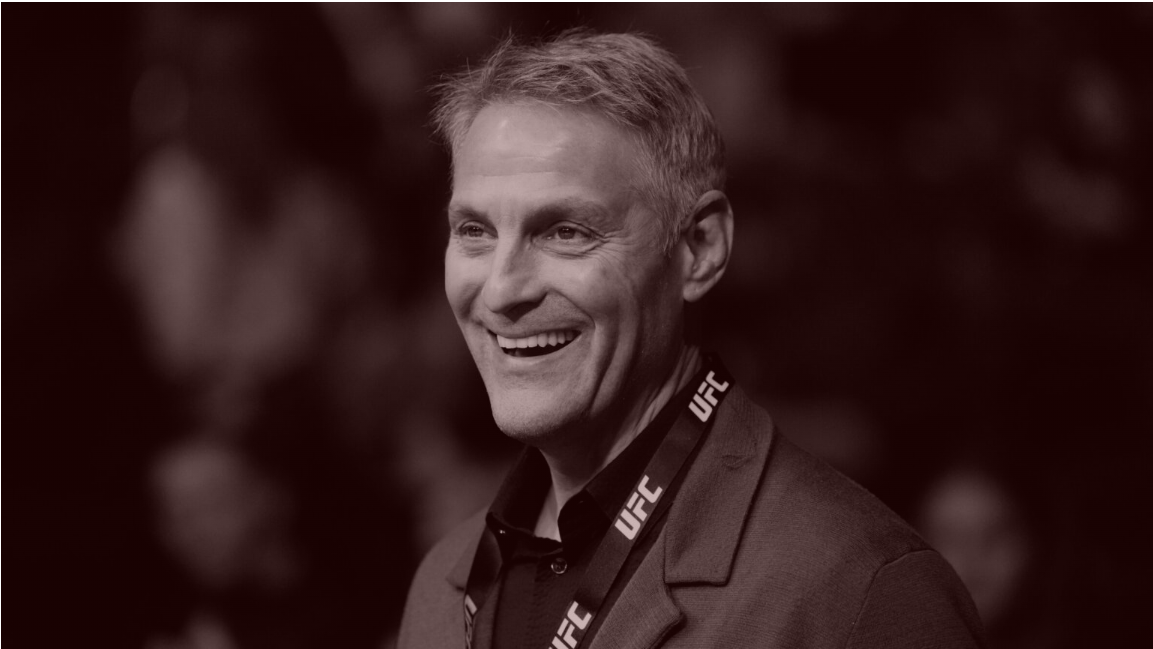
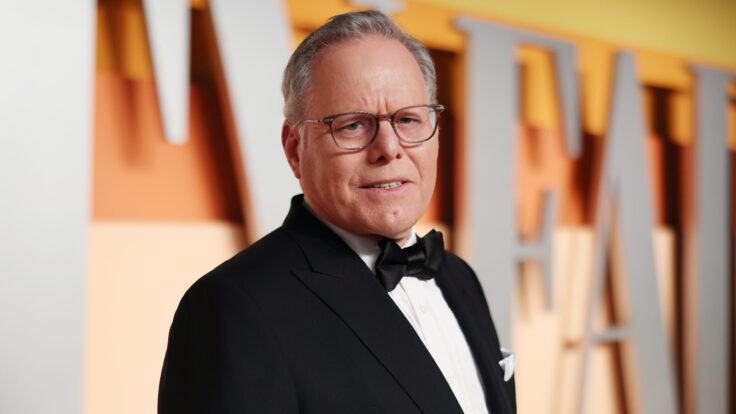
| Ari Emanuel’s gambit to take Endeavor private, a notion reported by Bloomberg and then elaborated upon brilliantly by my partner Matt Belloni, reeks to me of opportunism. Of course, longtime loyal readers know that the whims and vicissitudes of Ari and Endeavor have long been of interest to me. Ari first attempted to take Endeavor public, in 2019, after amassing a series of live-events businesses adjacent to his core talent agencies. But, alas, the market didn’t understand the synergy of assets, or Ari’s idea for them, and the listing got pulled at the last minute due to weak investor demand. Eventually, though, Ari being Ari, in April 2021, Endeavor raised $511 million in an I.P.O. priced at $24 a share that valued Endeavor at $10.3 billion. (Puck is a client of WME, Endeavor’s talent agency.)
Endeavor has always been either hard to understand or misunderstood. On the first day of trading, Endeavor’s stock opened at $27 a share, up 12.5 percent. The stock reached an all-time high of $35 a share in December 2021. It has floated down ever since. Then, back in April, Ari announced that Endeavor’s UFC, a leader in mixed-martial arts, would merge with World Wrestling Entertainment, in a $21 billion deal, to create the publicly traded TKO Group Holdings. (Under the terms of the deal, Endeavor would own 51 percent of TKO and WWE’s shareholders would own the balance of 49 percent.) Ari was named the C.E.O. of TKO in addition to being the C.E.O. of Endeavor. That deal closed on September 12. Since then, however, the TKO stock price is down nearly 20 percent and the company’s market value has slipped to $14 billion.
Endeavor always seemed like an ill-conceived public company. It never traded well after the initial I.P.O. burst, except for a few months during the pandemic when everything went up in price. Endeavor’s stock reached its low point of just less than $18 a share in the week or so before Wednesday’s announcement that Emanuel was considering Endeavor’s “strategic alternatives,” which is code on Wall Street for exploring a sale of the company without putting an actual “for sale” sign on the business. Indeed, one presumes that Ari had some legitimate concerns. After all, rival talent agency CAA had just undergone a change in control at a valuation of $7 billion, or just slightly more than Endeavor’s entire market capitalization. He’s probably been wondering what gives. “Given the continued dislocation between Endeavor’s public market value and the intrinsic value of Endeavor’s underlying assets, we believe an evaluation of strategic alternatives is a prudent approach to ensure we are maximizing value for our shareholders,” he said.
About an hour after Ari announced he was willing to consider a sale of Endeavor, Silver Lake Partners, the buyout behemoth that owns a 71 percent stake in the voting shares of the company, announced that it was exploring whether to buy the rest of it. “Silver Lake is currently working toward making a proposal to take Endeavor private,” the firm announced. “Silver Lake firmly believes in Endeavor’s business and is not interested in selling its shares in Endeavor to a third-party nor in entertaining bids for assets that are a part of Endeavor.” Talk about a Hollywood script! And it worked! The stock exploded upwards 25 percent in one day.
This deal, if it ever actually materializes, will be an investment banker’s dream. Everyone will need a banker, if for no other reason than to make it look like everyone’s innumerable conflicts of interest are handled properly. There will likely need to be a special committee of the board of directors, composed of non-Silver Lake directors, too. The special committee will need its own banker. And Silver Lake will need a banker. The protection of the non-Silver Lake, non-Emanuel/Whitesell shareholders will require some careful lawyering. In the end, though, the big winner here will be Ari—no surprise—who will get a second liquidity event via the right to sell his shares to Silver Lake, or some of them anyway, for a price higher than he would likely get anytime soon, and probably get a whole new option package and employment contract to remain as C.E.O.
Yes, he will have to report to Egon Durban, the managing partner of Silver Lake, but Durban has already been his biggest shareholder so that won’t change. And it’s not like Egon is going to run this hodgepodge of businesses on his own without Ari and Patrick. On some level, Ari has never been more valuable, and all without the scrutiny of Wall Street analysts inspecting his books and strategy. Who’s better than Ari at getting his way? No one that I know. |
|
|
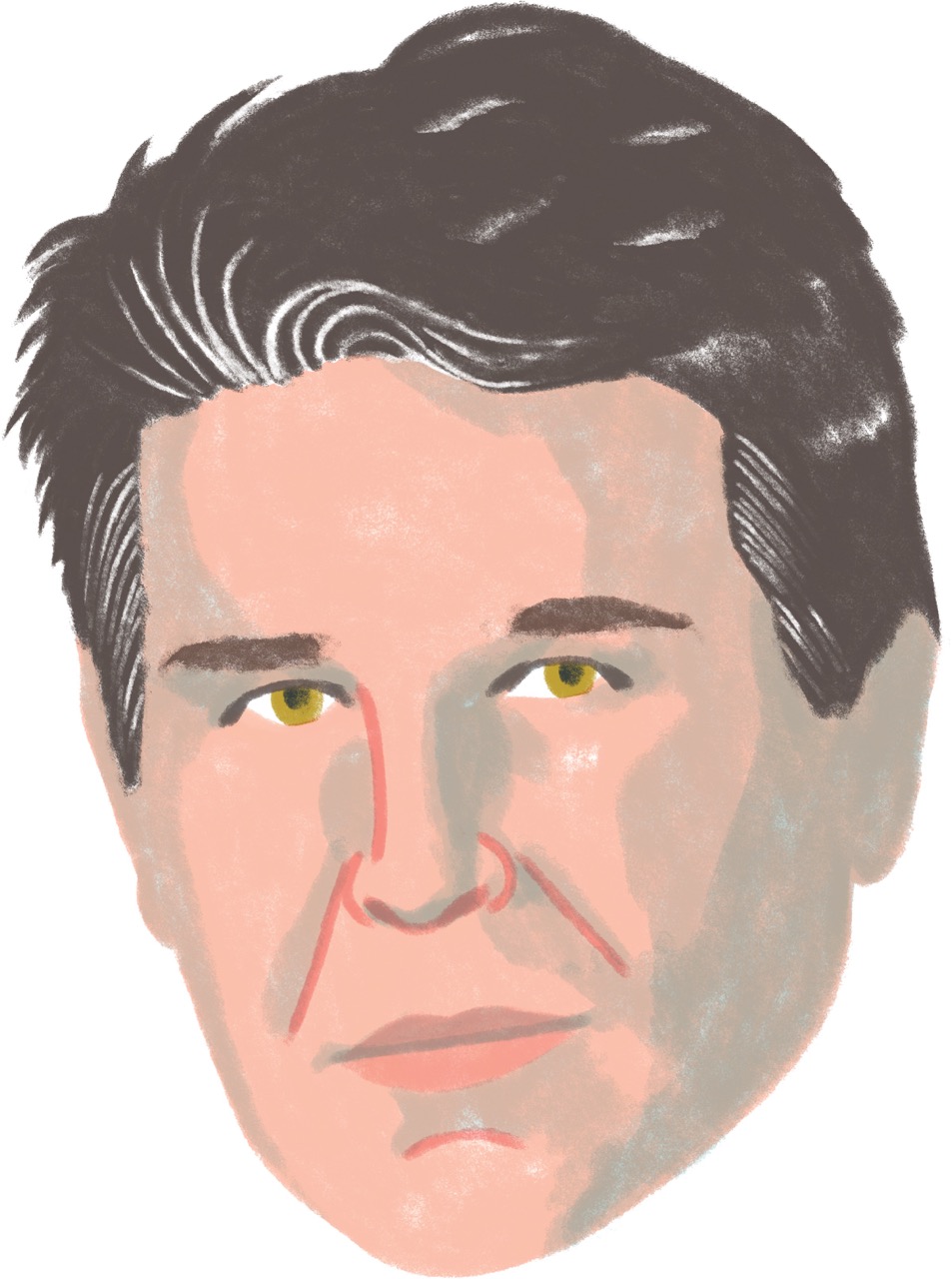
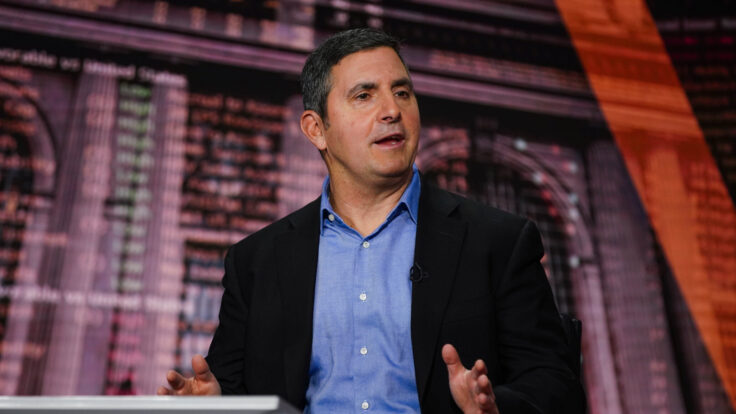
| Back in May, I predicted that Ted Pick would succeed James Gorman as the C.E.O. of Morgan Stanley, and wouldn’t you know it, I was right. It wasn’t a hard choice, to be honest. Pick has restored Morgan Stanley to the top ranks of investment banks after the near-debacle of the 2008 financial crisis, when Morgan Stanley almost went down the tubes. Pick, 54, takes over from Gorman in January. Pick has been at Morgan Stanley for 33 years and joined the firm after graduating from Harvard Business School and Middlebury College. Gorman, meanwhile, takes on the role as executive chairman of the “It will be interesting to see how [Pick] implements his vision while his predecessor remains as executive chairman,” my friend Mike Mayo, the Wall Street research analyst at Wells Fargo, wrote in a research note on October 25.
Pick will also have to contend with the two men who lost the job to him, Andy Saperstein and Dan Simkowitz. Having the leaders of wealth management and asset management helping out the new C.E.O., who used to be in charge of the institutional side of Morgan Stanley’s business, could be considered an asset but potentially also a longer-term threat, should he stumble. And we don’t yet know how long Saperstein and Simkowitz will be sticking around, so there’s that, too. On Friday, the three men were each awarded option packages potentially worth $20 million to each of them at some point, if things go well. At the moment, there is harmony at the top of Morgan Stanley, at least on the surface.
Some have questions, though. Mayo credits Pick for turning around Morgan Stanley’s bond business in the wake of the 2008 financial crisis. “I don’t really know how he turned that around,” he told me. “That was like magic. They were two days away from drowning.” Mayo also credits Pick for fixing the equity side of the business, too. “As the balance sheet got stronger, business came back,” he said. Then there is the money management side of the business that Pick has little or no experience in. “He did a phenomenal job on half the company, but what does he bring to the other half of the company that's now having some issues?” Mayo wondered. So it’s a little early for succession victory laps. “I’m like, ‘Come back in three years and let’s decide,” Mayo said.
That doesn’t mean Pick hasn’t had his occasional stumbles. Pick was around the investment banking hoop for the Archegos debacle that cost the firm nearly $1 billion; there also remains an ongoing U.S. Attorney and Securities and Exchange Commission investigation into the firm’s block trading activity. Morgan Stanley still has to take its licks for its decision to underwrite more than $1 billion of Twitter/X debt. (Pick is human after all.) When the final chapter is written on the Twitter debt, Morgan Stanley will probably have lost $500 million of the $1 billion or so it underwrote.
Meanwhile, Pick doesn’t seem keen on changing the winning strategy that Gorman employed to get Morgan Stanley back onto the Wall Street fast track: bulk up in wealth and asset management—to get more recurring fees—and some digital trading, too. Since Gorman took over as C.E.O. in January 2010, the Morgan Stanley stock is up 167 percent and that includes some stumbles in the last six months or so when the stock was down 20 percent. Still, Morgan Stanley, at $120 billion in market value, is worth more than its rival Goldman Sachs, which is valued at around $100 billion these days. Nobody would have thought that would be possible when Gorman took over during the dark aftermath of the 2008 financial crisis and when Morgan Stanley would have followed all of Bear Stearns, Lehman Brothers and Merrill Lynch down the tubes but for its $9 billion rescue from Mitsubishi UFJ bank, in Japan (to say nothing of the $20 billion in equity Morgan Stanley received from the TARP, the Troubled Asset Relief Plan.)
Gorman, my old business school classmate, will be remembered for refocusing Morgan Stanley on managing other people’s money, rather than relying so much on investment banking and trading, which can prove notoriously unpredictable. Gorman bought Smith Barney, E-Trade and Eaton Vance, among others. Smart moves all around, James. Pick is smart to continue operating this playbook. If it ain’t broke, don’t fix it. |
| More Succession Plotlines… |
|
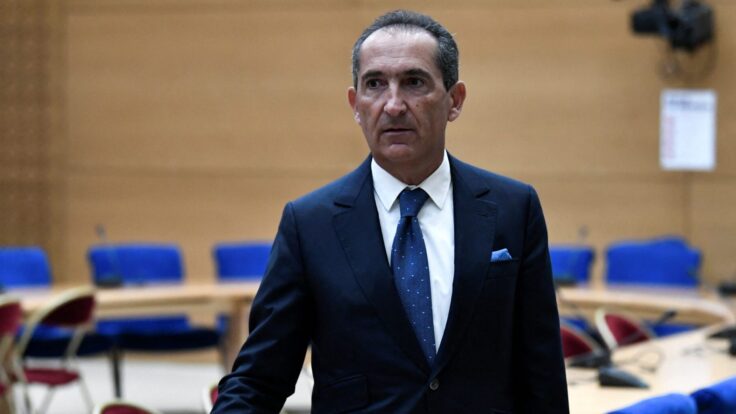
| I don’t think any right-minded person could begrudge Jamie Dimon for selling, sometime in the next year, 1 million of his 8.6 million JPMorgan Chase shares, as the bank recently announced in a regulatory filing. That’s around 12 percent of his holdings in the bank, worth about $140 million at today’s prices. After selling those shares, Jamie would still own JPMorgan Chase stock worth more than $1 billion. In the regulatory filing, the bank said Dimon was selling the shares for “financial diversification and tax-planning purposes,” and that “Dimon continues to believe the company’s prospects are very strong and his stake in the company will remain very significant.”
Yes, it may be the first time in his nearly 20-year tenure atop the bank that he has sold stock, and it could be interpreted in many different ways, including that he has lost some faith in the company’s prospects (despite what was said in the regulatory filing) or that he is planning, finally, to name a successor and to exit this stage (Treasury Secretary, anyone?). And yet I don’t see either of these possibilities, at least in the near term. I take Jamie at his word. The bank’s prospects are still robust—when you make more than $40 billion of net income a year, things can seem pretty damn good. I also don’t see him heading off to Washington anytime soon, as much as Bill Ackman would like him to. (Bill, call me and I’ll offer some other ideas.) Jamie’s obvious incentive is to stick around until 2026, when his “special award” of 1.5 million shares granted in 2021 becomes exercisable, and I suspect that’s exactly what he’ll do. Or maybe he’ll stay even longer. He’s had a couple of health scares, yes, but he’s never seemed more engaged by the job. So, in the meantime, he is smart to take some “chips off the table,” as the Wall Street cliché goes.
Jamie deserves the credit for turning around this mongrel of a bank. During the seven years I was there, from 1997 to 2004, the bank did any number of mergers and acquisitions: Hambrecht & Quist, The Beacon Group, several international deals and then, of course, JPMorgan & Co. Then C.E.O., Bill Harrison, Jamie’s predecessor, a courtly UNC grad, didn’t have a clue about how to get the various firms rowing in the same direction. It wasn’t until Harrison bought BankOne, which Jamie led, that JPMC’s fate changed, and dramatically.
In the early Jamie years, Jamie used to promise that the stock would trade above $100 a share, and soon. It was stuck at $40 a share at the time and going nowhere. I used to give him grief, in writing, about this promise. Well, of course, he was right, and more. During the height of the pandemic bubble, in 2021, when money was still free, especially for big banks like JPMorgan Chase, the stock hit more than $170 a share. It’s settled back to more like $140 a share these days. Who knows where it will be next year when Jamie decides to sell. But he’d be kind of crazy not to diversify his holdings at this point.
I remember well how Jimmy Cayne, the C.E.O. of Bear Stearns, insisted that everyone at the bank never sell any stock as long as they worked at the firm. I doubt everyone adhered to that exhortation. But Jimmy did. As a result, when Bear Stearns stock hit its all-time high of around $200 a share, in January 2007, Jimmy became the first Wall Street C.E.O. to be worth more than $1 billion. He never sold, until the bitter end when the Bear Stearns stock was trading at around $10 a share, thanks to the takeover engineered by Jamie Dimon.
I once asked Jimmy what it was like losing a billion dollars. That’s the kind of thing that didn’t happen that often back in those days. “The only people [who] are going to suffer are my heirs, not me,” he told me. “Because when you have a billion six and you lose a billion, you’re not exactly crippled, right?” Sell your shares, Jamie, and be happy. |
|
|
|
| FOUR STORIES WE’RE TALKING ABOUT |
|
|
|
|
|
 |
|
|
|
Need help? Review our FAQs
page or contact
us for assistance. For brand partnerships, email ads@puck.news.
|
|
You received this email because you signed up to receive emails from Puck, or as part of your Puck account associated with . To stop receiving this newsletter and/or manage all your email preferences, click here.
|
|
Puck is published by Heat Media LLC. 227 W 17th St New York, NY 10011.
|
|
|
|