Hello, and welcome back to The Best & The Brightest, your Thursday foreign policy edition. I’m your host, Julia Ioffe. This week, I’ve also been guest-hosting our daily podcast, The Powers That Be, while Peter Hamby is out on paternity leave, enjoying new baby Hamby. Check me out!
Today, we delve into what happened to all that Biden-era dissent at State over U.S. policy in Gaza. Not long ago, Washington was regularly rocked by intragovernmental disputes over our stance on the war: another day, another State Department employee resigning in protest; another week, another dissent cable leaked to the press. Yet now that things in Gaza are grimmer than they’ve ever been, Foggy Bottom is silent. Why?
|
|
|
|
A MESSAGE FROM OUR SPONSOR
|
In America, farming isn't just a profession; it's a purpose. With 880 million acres of farmland and more than 2 million people dedicated to producing our food in America, farmers are the backbone of our economy. In communities nationwide, Bayer employees work alongside farmers to bring cutting-edge innovations in breeding, crop protection, and technology to their fields. American farmers trust our tools because we have a purpose, too: helping farmers thrive.
Learn more at Go.Bayer.com/Purpose.
|
|
|
|
But first, here’s Abby on the Trump-Elon BBB custody battle…
|
|
|
 |
Abby Livingston |
|
Intraparty fights are all the rage right now. Biden loyalists are unleashing on Karine Jean-Pierre after she announced a tell-all about the “broken” White House; Tucker Carlson is beefing with Mark Levin. But nothing compares to the spectacle of the world’s richest man going nuclear on the world’s most powerful man.
The long-predicted Trump- Musk rupture is finally upon us—a bit later than expected, but now advancing at breakneck speed. On Tuesday, Elon started attacking Trump’s signature Big Beautiful Bill, calling it a “disgusting abomination”; on Wednesday he rechristened it the “Debt Slavery Bill” and applauded Kentucky Rep. Thomas Massie for his lonely opposition to it—a slight that Speaker Mike Johnson tried to shrug off. But by Thursday, new Musk criticisms were arriving every few minutes on X, ratcheting up Republican nervousness each time. Musk even started digging up old social media posts from Johnson and Trump calling for deficit reduction, which the BBB pointedly does not achieve.
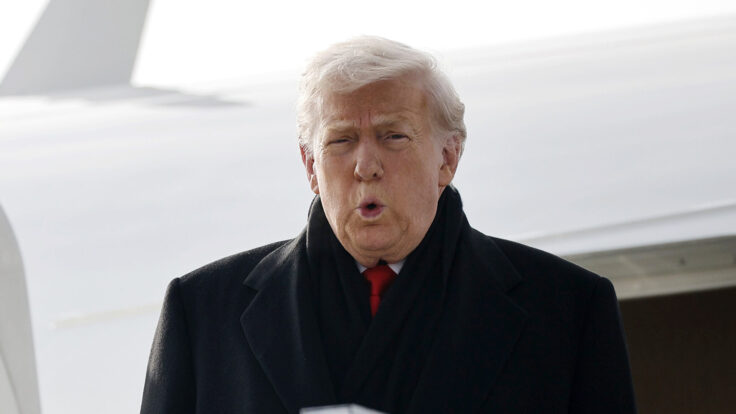
Eventually—as was inevitable—Trump responded, posting that Musk was “wearing thin,” threatening to cancel all his government contracts, and alleging that the megabillionaire was “going CRAZY” because the BBB eliminates electric vehicle mandates, to the detriment of Musk’s Tesla. Musk shot back that the allegations were “ an obvious lie” and then went for the jugular: “Time to drop the really big bomb: @realDonaldTrump is in the Epstein files. That is the real reason they have not been made public. Have a nice day, DJT!” Over the course of the day, the market capitalization of Tesla dropped by more than $150 billion.
Capitol Hill Republicans have been watching the game of insult ping-pong with increasing alarm, fearing that they or their colleagues might get caught in the middle of a primary proxy war next year. A G.O.P. consultant said it would be foolish to extrapolate much beyond the BBB, then texted simply “Oh, my” after the Epstein post. The immediate question is whether Musk can give cover to any Hill Republicans to cross Trump and flip on the BBB. Hill Democrats, meanwhile, are naturally enjoying a bit of a schadenfreude after several news cycles dominated by the Biden cover-up debacle.
|
|
|
|
And now, back to Foggy Bottom…
|
|
|
|
Once upon a time, State Department officials would register dissent by writing a memo, or even resigning in protest. But what good would that do under Trump, where debate is squashed, and 20 percent of the agency is about to be laid off?
|
|
|
Around this time last year, Stacy Gilbert, a 20-year veteran of the State Department, resigned in protest over a report concluding that Israel was not blocking aid from reaching Gaza. A few weeks later, Andrew Miller, the deputy assistant secretary for Israeli-Palestinian affairs, also quit over what colleagues said was frustration regarding how little sway he had over policy in his job. The following month, another State Department officer, Michael Casey, walked out, saying he was “tired of writing about dead kids” in Gaza. Between October 7, 2023, and January 20, 2025, some half-dozen State Department staffers resigned in protest over Joe Biden’s “bear hug” policy toward Israel, while others leaked multiple dissent cables, capturing the internal frustration over Benjamin Netanyahu’s conduct of the war.
But since January 20—crickets. It’s certainly not for lack of material. Donald Trump proposed moving the Palestinians somewhere, and then shared an A.I.-generated video featuring an opulent “Trump Gaza” resort built atop their prime Mediterranean seaside “property.” He appointed Mike Huckabee, an evangelical Zionist, ambassador to Israel, and removed every Biden-era sanction on the settlers terrorizing Palestinians in the West Bank. Bibi, cognizant that he’ll get zero pushback from the Trump administration on anything, is now openly planning to seize the entirety of Gaza and has blockaded the strip for nearly three months. Earlier this week, dozens of Palestinians were killed by Israeli forces as crowds rushed to get emergency food rations.
|
|
|
|
A MESSAGE FROM OUR SPONSOR
|
The heartbeat of American agriculture can be heard at every farmer's market and dinner table, spanning 880 million acres, supported by over 2 million people, and contributing $1.5 trillion to our economy.
Thousands of Bayer employees work alongside American farmers, providing access to innovations and support to implement them effectively. Bayer's advanced breeding, crop protection, and digital technology tools are reshaping the future of farming, and we're invested in every field, acre, and harvest. We share the same purpose as American farmers: helping agriculture thrive so we can bring high-quality, abundant, and diverse food to millions. Learn more at Go.Bayer.com/Purpose.
|
|
|
|
Things are, arguably, worse than ever, and yet there have been no public resignations, no leaked dissent cables, no long reads about a Foggy Bottom being roiled by disagreements on Israel-Palestine—or really any number of other issues Staties of yesteryear might have resigned over. Why not?
In part, it’s because the country’s diplomats feel paralyzed. “There was a visiting delegation here the other day, and when they brought up Gaza, I wanted to cry,” one State Department official told me. “There’s nothing we can do.” If the official felt powerless to change anything, I noted, they could always resign in protest. But they demurred. “Before, if you resigned, you’d be on CNN later that night,” they explained. “Now there’s so much going on, what kind of change would that even bring? The media is overwhelmed, Republicans don’t care, and Democrats are helpless.”
In prior administrations, there was a sense that dissent was tolerated and even accepted as a mark of healthy policy debate. Antony Blinken was said to have read and marked up every dissent cable he received. “He went out of his way to say that, rather than stifle dissent, he wanted to hear it,” Blinken’s former advisor Ned Price recalled. “He made clear that people should go to the seventh floor if their viewpoints weren’t getting through to their management.” (Whether Blinken was able to get Biden to budge on policy was another matter.)
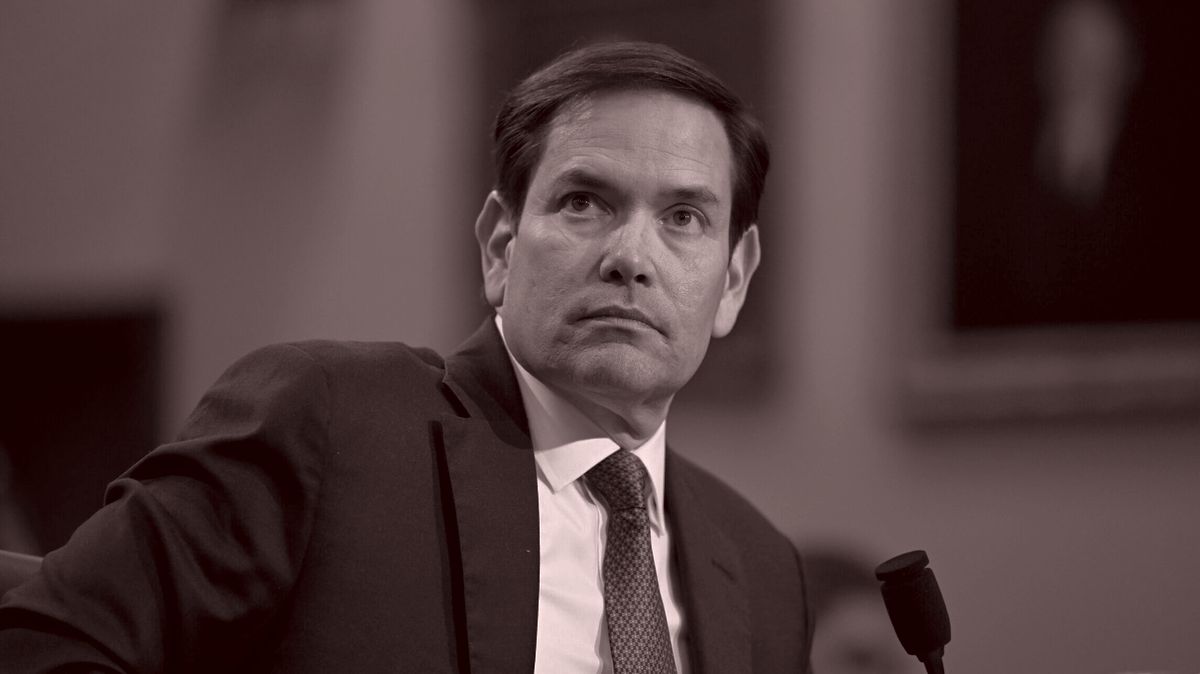
Needless to say, Marco Rubio has not taken the same approach. Not only is the Trump administration uninterested in opposing viewpoints, it largely views the State Department as an enemy stronghold that needs to be broken and purged. This is also not an administration that prioritizes human rights—especially those of Palestinians—so diplomats feel that raising the issue is futile. A second State Department official told me that some of their colleagues have tried to reframe the humanitarian catastrophe in Gaza in terms of America First policy, arguing that it makes America more prosperous and secure when Arab countries and Israel are talking. But it was always a stretch, and it hasn’t worked. Arab countries seem perfectly willing to make deals with Trump regardless.
“They just don’t care,” the first official said regarding their higher-ups. “If you wrote a dissent cable today, they would find a way to fire you. If you resign and go on CNN, they might fire the spouse who still works in the U.S. government. The threat of retaliation is serious.”
|
Russ Vought’s dictum that the federal workforce should be “traumatically affected” to the point that they “not want to go to work” has particularly impacted the State Department, a place long derided in Washington as a den of deeply risk-averse, paralysis-by-analysis policy wonks. When Trump returned to the White House, he immediately fired career diplomats, minorities, and women who held leadership positions at State, all while throwing Ukraine under the bus, proposing to empty out Gaza, and attacking European allies. America’s diplomatic corps was shocked, especially by the scale and vigor of the purge, incapacitated like Trump’s stunned prey. Forget resigning over Gaza. They were just trying to survive in Foggy Bottom.
In Trump’s first term, Staties became a rich font of resistance and media leaks, but the people who are still “inside” have clammed up this time around—too scared to speak to reporters, or terrified when they do. One person I spoke to disappeared, then reappeared after a month of lying low, because they feared an internal hunt for leakers. “It’s not the same,” this official said when I asked where people’s courage of conviction had gone. The staff felt “demoralized, deflated,” this person added. “There is so much fear at State,” another department official told me. A third spoke to me in whispers from their office.
|
|
|
|
What are people so scared of? First and foremost, losing their jobs. On the one hand, they don’t know what their jobs mean anymore, or whether they even want to do them, which would entail having to carry out policies they find deeply odious. On the other hand, they are regular people with bills and mortgages and children. In an economy frozen by tariff uncertainty, and a local job market flooded with thousands of axed USAID workers with similar skill sets (many of whom still haven’t found jobs and will probably have to leave D.C.), a steady paycheck is nothing to sneeze at.
“People are assessing, Can I afford to leave?” the first State Department official confessed. “It’s really testing the financial side versus the moral side.” It was one thing to quit during the Biden years, when there were plenty of government-adjacent policy jobs to be had. That’s all gone now, especially for anyone associated with the Biden administration. Fearing the wrath of Trump, no one wants to hire them. “If you want to work in international affairs, it’s really difficult to find somewhere else to go,” the official added.
Even diplomats who’ve resigned or taken early retirement tell me they are looking over their shoulders, watching what they say. “It’s another era,” a recently retired senior State Department official told me. “People are afraid of the Musk army. People are afraid of doxxing. They’re concerned: I worked my entire life in public service. Will my retirement benefits and healthcare be taken away from me? That is really affecting people. My family is telling me, Be careful.”
|
During Trump’s first administration, Washington elders soothed themselves with the mantra that the institutions would save us. But Trump heard that message, too. Which is why he is now going after the very institutions that previously got in his way. He knows, as I’ve said before, that institutions are just buildings with people in them. And people, no matter how fancy their degrees and how lofty their ideals, need roofs over their heads and food and stability for their kids.
And all this is before you even get to the reorg. Last week, Rubio sent Congress a 136-page proposal for how he planned to restructure and slim down the State Department. Between early retirements and reduction in force (R.I.F.), some 3,400 jobs will be cut—a full fifth of the department’s workforce, not the 15 percent originally advertised. Staties are hunkered down, waiting for the pink slips. The Bureau of Democracy, Human Rights, and Labor alone will be cut by 80 percent. The Bureau of Population, Refugees, and Migration will now be focused on “remigration,” a euphemism for mass deportations taken from the far right. According to the proposal, State’s focus will be redirected from human rights to “Western civilization” and going after Europe’s “backsliding” on free speech. New recruits will have to prove their political loyalty. Retirement classes are full. Everyone else is hoping they won’t get R.I.F.’d.
In this context, what would be the point of resigning in protest? “They’re happy to have as many people leave as possible,” another State Department official told me. “They only want people who agree with them. If someone wants to resign in protest who doesn’t agree with them, perfect.”
This, of course, rankles Biden-era political appointees who are sympathetic to their former colleagues’ plight, but also furious that their convictions evaporated when Trump came to town again. One of them griped that the Biden-era resignations and leaks represented a “weird compulsion to take it out on your own,” given that Democratic presidents tend to be more
sympathetic to State, and vice versa. The result was a disarray that only hurt Democrats, whereas State’s current reticence only helps Trump. “I suspect no one is resigning now for the same reason reporters don’t ask hard questions in the briefing room anymore,” this former State Department official complained. “The soft bigotry of low expectations.”
|
|
That’s all from me, friends. I’ll see you back here next week. Until then, good night. Tomorrow will be worse.
Julia
|
|
|
|
Join Emmy Award-winning journalist Peter Hamby, along with the team of expert journalists at Puck, as they let you in on the conversations insiders are having across the four corners of power in America: Wall Street, Washington, Silicon Valley, and Hollywood. Presented in partnership with Audacy, new episodes publish daily, Monday through Friday.
|
|
|
|
Unique and privileged insight into the private conversations taking place inside boardrooms and corner offices up and down Wall Street, relayed by best-selling author, journalist, and former M&A senior banker William D. Cohan.
|
|
|
Need help? Review our FAQ page or contact us for assistance. For brand partnerships, email ads@puck.news.
You received this email because you signed up to receive emails from Puck, or as part of your Puck account associated with . To stop receiving this newsletter and/or manage all your email preferences,
click here.
|
|
Puck is published by Heat Media LLC. 107 Greenwich St, New York, NY 10006
|
|
|
|