• Washington
  • Wall Street
  • A.I.
  • Hollywood
  • Media
  • Fashion
  • Sports
  • Art
  • Join Puck Newsletters What is puck? Authors Podcasts Gift Puck Careers Events
  • Join Puck

    Directly Supporting Authors

    A new economic model in which writers are also partners in the business.

    Personalized Subscriptions

    Customize your settings to receive the newsletters you want from the authors you follow.

    Stay in the Know

    Connect directly with Puck talent through email and exclusive events.

  • What is puck? Newsletters Authors Podcasts Events Gift Puck Careers
Happy Sunday, and welcome back to Dry Powder. This past week, a hasty defenestration at Lazard sent a powerful message about the ground rules of the new Orszag regime. In today’s issue, my reflections on how the tolerance for certain types of behavior has changed at my old firm over the years, plus notes on Elon’s startling public letter to Mark Zuckerberg.
 ‌ ‌ ‌ ‌ ‌ ‌ ‌ ‌ ‌ ‌ ‌ ‌ ‌ ‌ ‌ ‌ ‌ ‌ ‌  ‌ ‌ ‌ ‌ ‌ ‌ ‌ ‌ ‌ ‌ ‌ ‌ ‌ ‌ ‌ ‌ ‌ ‌ ‌  ‌ ‌ ‌ ‌ ‌ ‌ ‌ ‌ ‌ ‌ ‌ ‌ ‌ ‌ ‌ ‌ ‌ ‌ ‌  ‌ ‌ ‌ ‌ ‌ ‌ ‌ ‌ ‌ ‌ ‌ ‌ ‌ ‌ ‌ ‌ ‌ ‌ ‌  ‌ ‌ ‌ ‌ ‌ ‌ ‌ ‌ ‌ ‌ ‌ ‌ ‌ ‌ ‌ ‌ ‌ ‌ ‌  ‌ ‌ ‌ ‌ ‌ ‌ ‌ ‌ ‌ ‌ ‌ ‌ ‌ ‌ ‌ ‌ ‌ ‌ ‌  ‌ ‌ ‌ ‌ ‌ ‌ ‌ ‌ ‌ ‌ ‌ ‌ ‌ ‌ ‌ ‌ ‌ ‌ ‌  ‌ ‌ ‌ ‌ ‌ ‌ ‌ ‌ ‌ ‌ ‌ ‌ ‌ ‌ ‌ ‌ ‌ ‌ ‌  ‌ ‌ ‌ ‌ ‌ ‌ ‌ ‌ ‌ ‌ ‌ ‌ ‌ ‌ ‌ ‌ ‌ ‌ ‌  ‌ ‌ ‌ ‌ ‌ ‌ ‌ ‌ ‌ ‌ ‌ ‌ ‌ ‌ ‌ ‌ ‌ ‌ ‌ 
Dry Powder

Happy Sunday, and welcome back to Dry Powder.

This past week, a hasty defenestration at Lazard sent a powerful message about the ground rules of the new Orszag regime. In today’s issue, my reflections on how the tolerance for certain types of behavior has changed at my old firm over the years, plus notes on Elon’s startling public letter to Mark Zuckerberg.

Elon’s Options & a Lazard Micro-Scandal
News and notes on the anxieties of the Wall Street crowd out East: the unfortunate Lazard scandal, Elon’s lawsuits, his M&A options and more.
WILLIAM D. COHAN WILLIAM D. COHAN
There’s a long tradition of sending a message to the troops at Lazard. Back in the 1970s, when the bank’s patriarch Michel David-Weill took over the running of the firm, he made a number of moves to show that there was a new sheriff in town. Michel, of course, was the heir to the firm’s founding family and he quickly cemented his authority by replacing the great André Meyer, the Lazard senior partner who had come to New York from Paris to run the bank during World War II.

In short order, Michel demoted seven partners and forced another seven to become limited partners. It sent a powerful message. “It was a Napoleonic first act, if you will,” one partner once told me for my 2007 book about Lazard, The Last Tycoons. “I am sure it was all calculated to instill fear and trembling in the troops.” Many said Michel took a page from Candide in which Voltaire explained how the British had executed one of their own admirals who lost an important battle pour encourager les autres (to encourage the others).

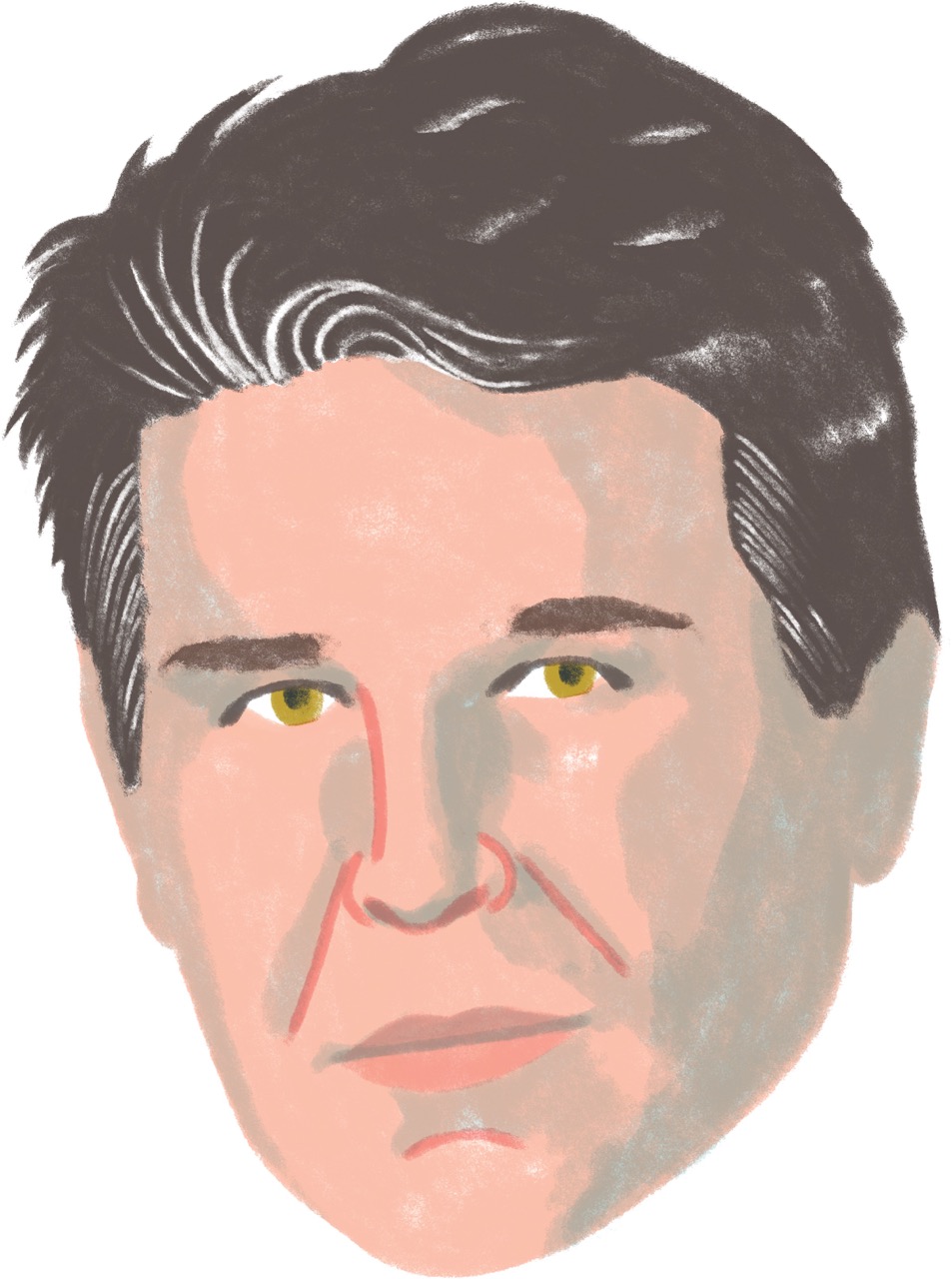
I was reminded of this reverie after the Journal broke the news, which quickly traveled around Wall Street, that the firm had hastily parted ways with a newly hired Managing Director, Reid Snellenbarger, following a July 4 party at his home attended by junior Lazard employees. I don’t know what happened, and Lazard isn’t saying, though down-and-dirty Wall Street blogs appear to be surfacing their own allegations. “Out of respect to our colleagues who may have been affected by this person’s behavior, we are not providing or confirming any further detail on the incident,” emailed Judi Mackey, Lazard’s head of communications. But his immediate defenestration, within hours, sent a powerful message that the new Orszag regime will not tolerate such behavior.

I’m not saying that outgoing C.E.O. Ken Jacobs would have tolerated whatever Snellenbarger allegedly did either—in fact, Jacobs is still Lazard’s C.E.O. until October, and so I’m sure the decision was made jointly by Jacobs and Orszag—but the firing of a newly hired managing director still sends a message that Orszag will be making sure that no one at Lazard embarrasses the firm or its reputation, even on the weekend, even when they are off-duty, even at a party at their own home.

Needless to say, this represents a sea change from the Lazard of old. Back when I was there, between 1989 and 1995, there were countless interactions that occurred between the men and women at the firm (and the men at the firm and women outside the firm) that would definitely no longer be considered even remotely acceptable today. (I captured some of them in Chapter 14 of my book on Lazard, entitled, “It’s a White Man’s World.”) So it’s safe to say that the Lazard of old, where bad behavior between the men and women was largely ignored and was considered how shall we say, very French, will not be allowed at the Lazard of today, or, frankly, at any other Wall Street firm. And let’s call that progress. Why it was considered acceptable, ever, at any time, is the real mystery. It’s about time that times have changed.

Lazard is now a public company, with a market value of $3.6 billion, up 12 percent in the six weeks since the firm announced that Orszag would be replacing Jacobs, after Jacobs held the job for nearly 14 years. Lazard has things nowadays it never used to have: shareholders who are not Michel and his family; an H.R. department; an Investor Relations department; a full-time press office; flashy offices just below the Rainbow Room in 30 Rockefeller Plaza; air conditioning; windows that don’t open. So even a 175-year-old organization can change, or at least change with the times, as required. It’s hardly a reason for celebration, or for hosannas. But, hey, it’s a start, if a modest one at that.

The bigger question for Orszag to solve will be how to return Lazard back to its glory days in the 1980s and 1990s when it consistently punched above its weight, consistently found itself in the middle of the biggest and most important deals, and when Michel used to refer to Lazard as the “haute banque d’affaires vis-à-vis the world,” which he once described as meaning: “To me it is a state of mind, not an activity. It is a firm which puts itself at a level parallel with the level at which decisions are made in enterprises. It means that you remain at the decision-making level, that you give advice at that level, that you think at that level and that you remain exclusively at that level.”

I have a few thoughts about how Orszag, Obama’s former director of the Office of Management and Budget, can return Lazard to being an haute banque d’affaires and to a semblance of its past glory. (Lazard isn’t even among the top 10 M&A advisors for the first half of 2023.) Orszag and I have lunch scheduled for October, shortly after he takes the reins of the firm from Jacobs. I’ll share them with him then. Stay tuned for my report on how that lunch goes.

What Will Elon Do Next?
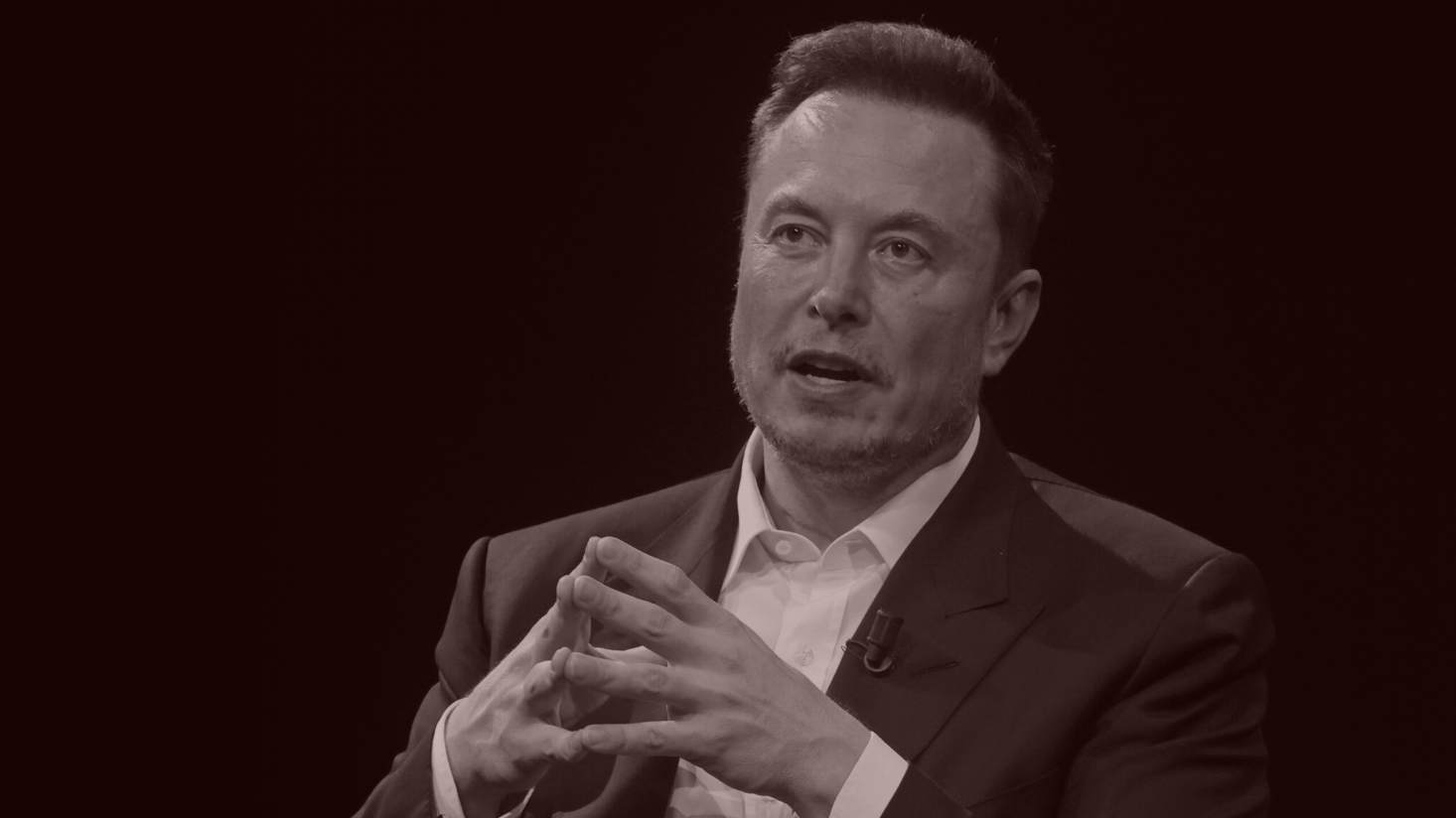
Let me get this right: Elon Musk buys Twitter for $44 billion last October and over the course of the next eight months flushes down the tubes all but around $6 billion of that purchase price, including all $24 billion of what he personally invested, plus the entire $7 billion of equity that his friends invested in the deal. He is stiffing Twitter’s creditors left and right, including landlords, employees, professionals. He even failed to pay Oracle what Twitter owes it, despite the fact that the multi-billionaire Larry Ellison invested $1 billion of his own money in Elon’s Twitter deal. He is also trying to claw back, through a lawsuit, the $90 million that Twitter paid one of its law firms, Wachtell Lipton, to represent Twitter in its legal battle with Elon after Elon tried to wiggle out of his contract to buy Twitter.

This is a man who obviously knows no boundaries. He also fired something like 75 percent of the Twitter workforce, and then deprived many of them of their rightful severance payments, including by stiffing JAMS, the arbitration professionals hired to adjudicate these claims. Now, most recently, in the letter written by his Quinn Emmanuel lawyer, Alex Spiro, to Mark Zuckerberg, Musk claims that the employees he fired, and failed to pay severance too, walked across the street to Meta and then set up Threads using Twitter’s trade secrets and expertise. In the letter, which was widely disseminated last week, Spiro accused Zuck of hiring “dozens of former Twitter employees,” an assertion that Andy Stone, Meta’s communications chief, disputed. “No one on the Threads engineering team is a former Twitter employee —that’s just not a thing,” he wrote.

Spiro also asserted “that these employees owe ongoing obligations to Twitter” and “and that many of these employees have improperly retained Twitter documents and electronic devices.” I think there is only one person in the world who could make Zuckerberg appear sympathetic and we have found him in Elon Musk. Suing the company that may or may not have hired the employees he fired, many of whom he stiffed of their severance from Twitter? That takes an extraordinary level of hubris and a belief that the rules just do not apply to him.

As for his suit against Wachtell, one of America’s premier law firms, I understand why Elon thinks $90 million for a few months worth of legal advice given to a plaintiff where he was the defendant is offensive, but a contract is a contract. And in this case, there was a contract that the old Twitter entered into with Wachtell, which has long structured its fees based on success, more like an investment bank, than a typical law firm that bills by the hour. Services were rendered. There was success. Elon, as he well knows, was forced to close the deal for Twitter, which he had previously signed a contract to buy. When he bought the equity of Twitter, he also assumed the liability for all those contracts in the process, and that’s the end of that, even though the case that Elon’s attorney lay out in the complaint against Wachtell makes some fascinating claims about what went on in the last few hours before the Twitter sale closed.

I recently laid out the Machiavellian case for why Elon might be driving down the value of Twitter, in order to buy back its debt for pennies on the dollar from the Wall Street banks that will soon be forced by the Federal Reserve to sell it and move it off their balance sheets. It’s one of the few explanations I can think of why Elon continues to stiff Twitter’s creditors, any three of whom could join together to put the company into an involuntary bankruptcy if they are willing to stomach the headlines.

Of course, it would also make sense for Elon to try to unload this headache called Twitter. After all, he’s made a total hash of it. He’s got new competitors all around now, including the aforementioned Threads—where nearly 100 million people flocked this past week—and he has a new C.E.O. in place, Linda Yaccarino. Why not ask Morgan Stanley to put together a private selling memorandum, filled with all sorts of exciting projections about what Twitter could be and circulate it, via a non-disclosure agreement, to potential buyers? Nothing really to lose by testing the waters.

Who would buy it? I could easily imagine someone like Apollo coming in at the $6 billion price—an 86 percent discount to Elon’s initial purchase price—and perhaps marrying it with Yahoo, which Apollo bought for $5 billion from Verizon a few years ago, and then bringing the two companies public under some sort of social media holding company structure with all the pomp and circumstance a Wall Street underwritten IPO can muster. But, other than a distressed buyer, buying at a severe discount—perfecting Elon’s loss and that of his banks in the process—I don’t see that anyone else is going to step up and pay anything like a remotely full price for the company.

The other reason Elon might want to sell Twitter? If he continues to own the company, he will probably have to sell more Tesla stock to make the interest payments to the bank group. The next interest payment of around $300 million is due in September—unless he wants to strategically skip the payment and risk an involuntary bankruptcy filing or a restructuring that would turn the company over to his creditors. Why not just get rid of the whole damn thing and move on? Especially since, incredibly, his net worth has increased around $100 billion since he sunk $24 billion of his own money into buying Twitter. After all, at this moment, incredibly, he’s ahead.

FOUR STORIES WE’RE TALKING ABOUT
ESPN Anxieties
ESPN Anxieties
Notes on the network’s uncertain trajectory.
DYLAN BYERS
Putin’s Cleanup
Putin’s Cleanup
Is a post-Prigozhin “purge” coming?
JULIA IOFFE
Fashion’s Midsummer Finale
A roundup of fashion ephemera.
LAUREN SHERMAN
Netflix’s Next Dance
The premium sports doc market is a-boomin’.
MATTHEW BELLONI
Puck
Facebook Twitter Instagram LinkedIn

Need help? Review our FAQs
page
or contact
us
for assistance. For brand partnerships, email ads@puck.news.

You received this email because you signed up to receive emails from Puck, or as part of your Puck account associated with . To stop receiving this newsletter and/or manage all your email preferences, click here.

Puck is published by Heat Media LLC. 227 W 17th St New York, NY 10011.

SEE THE ARCHIVES

SHARE
Try Puck for free

Sign up today to join the inside conversation at the nexus of Wall Street, Washington, A.I., Hollywood, and more.

Already a member? Log In


  • Daily articles and breaking news
  • Personal emails directly from our authors
  • Gift subscriber-only stories to friends & family
  • Unlimited access to archives

  • Exclusive bonus days of select newsletters
  • Exclusive access to Puck merch
  • Early bird access to new editorial and product features
  • Invitations to private conference calls with Puck authors

Exclusive to Inner Circle only


Latest Articles from Wall Street

Geoffroy van Raemdonck
William D. Cohan • July 9, 2023
The Saks Financial Colonoscopy
Amid a torrent of bankruptcy filings, a blunt declaration by Saks Global’s newly appointed chief restructuring officer lays out precisely what went wrong and when, and who got screwed hardest—plus which risk-hungry investors are likely to call the shots moving forward. As it turns out, the company’s capital structure became “unsustainable” almost immediately after its $2.7 billion acquisition of Neiman Marcus Group in December 2024.
David Ellison
William D. Cohan • July 9, 2023
The Ellison Way of Parenting
David Ellison’s latest schemes to wrest Warner Bros. from Netflix have proved insufficient after his previous negotiating tactics ran up the price. Meanwhile, he’s losing the respect of the WBD guys across the table. But will his dad come to the rescue with another, say, $10 billion to bail him out?
Patrick Drahi
William D. Cohan • July 9, 2023
A History of Creditor-on-Creditor Violence
Wall Street invented the coercive liability management exercise, which allows companies to play their creditors against one another as they extract beneficial terms for themselves—a now-routinized tradition referred to as “creditor-on-creditor violence.” But now Apollo, Oaktree, BlackRock, and JPMorgan Chase are teaming up to put an end to this mess.


Larry Ellison, David Ellison
William D. Cohan • July 9, 2023
The Zaz–Ellison Dagger Contest
Warner Bros. Discovery’s most recent S.E.C. filing reveals the latest battle lines between the company and its hostile suitor. In particular, the document evinces a deep distrust of Paramount Skydance’s proposed deal financing, recasting the $108 billion all-cash offer as an $87 billion L.B.O. that could fall apart before closing.
David Zaslav
William D. Cohan • July 9, 2023
What Is Zaz TV Really Worth?
The battle for Warner Bros. Discovery is increasingly coming down to how Netflix and Paramount Skydance value the declining TV assets (and CNN) that David Zaslav is determined to separate from the Warners mothership. Versant, which just started trading on Nasdaq this week, may provide the answer.
greg abel
William D. Cohan • July 9, 2023
Make Berkshire Hathaway Great Again?
Greg Abel, the handpicked successor to Warren Buffett, faces one of the most exalted and daunting jobs in finance: determining what to do with the staggering $358 billion bequeathed to him by the most legendary investor of his generation. Herewith, three proposals for what Abel should buy with all that cash.


David Ellison, Larry Ellison
William D. Cohan • July 9, 2023
Zaz Is From Mars, the Ellisons Are From Venus
Murmurs from sources close to the Warner Bros. Discovery deal illuminate the latest machinations surrounding the Paramount-Netflix showdown—and where this thing is headed.


Get access to this story

Enter your email for a free preview of Puck’s full offering, including exclusive articles, private emails from authors, and more.

Verify your email and sign in by clicking the link we just sent.

Already a member? Log In


Start 14 Day Free Trial for Unlimited Access Instead →


Latest Articles from Wall Street

Larry Ellison
William D. Cohan • July 9, 2023
“Larry Didn’t Show Up, and David Got Ahead of His Skis”
Everything you wanted to know about the Warner Bros. Discovery board’s doubts with the Ellisons’ bid (but were afraid to ask) is revealed in its 14D-9 filing—a mother lode of alleged Paramount missteps, from squabbles over consent provisions and breakup fee reimbursements to junior lien debt and the financial capacity of the world’s fifth-richest man.
larry ellison david ellison
William D. Cohan • July 9, 2023
Ellison Irrevocable Trust Issues
Despite their numerous bids for all of WBD, a rift has opened between the principals at Paramount Skydance and the board and advisors of their target company—at least for now. Can money heal all wounds?
larry ellison david ellison
William D. Cohan • July 9, 2023
The Ellisons at the Gates
Paramount has raised the stakes in its hostile bid for Warner Bros. Discovery, and may yet go higher. Now Netflix must decide how much it wants to venture into junk credit-rating territory, or play games with its stock, to secure the prize.


Larry Ellison, David Ellison
William D. Cohan • July 9, 2023
Netflix’s $83B Math & The Ellison Hostile Meter
A talmudic reading of the mishegas following the $83 billion Netflix-WBD deal: Zaz’s personal economics; the likelihood that this turns hostile; the unusual consortium of banks underwriting the deal; the value of the Gunnar stub; regulatory open questions; the $5.8 billion breakup fee; and more.
Leon Black
William D. Cohan • July 9, 2023
The Epstein Monologues
The recently released, one-sided correspondence between Jeffrey Epstein and Leon Black illustrates a discourse between a hustler and a billionaire with too much money and too little time on his hands. So why couldn’t Black get rid of him sooner?
Mike Mayo
William D. Cohan • July 9, 2023
Wall Street Enters the “Cockroach” Wars
The multitrillion-dollar growth of private credit is fueling an acrimonious debate on Wall Street over whether this surging shadow market is the future of finance or the seed corn of the next crisis. Is Rowan right? Or Dimon? Or Gundlach? As Mike Mayo put it, someone is wrong.


david zaslav
William D. Cohan • July 9, 2023
Zaz the World Turns
News, notes, and palace intrigues from all sides of what might become the largest M&A deal of the year: the three-way tussle for David Zaslav’s Warner Bros. Discovery.
Get access to this story

Enter your email to get access to one article and free previews of our private emails from Puck authors and editors.

OR

Already a Member? Sign in


Latest Articles from Wall Street

wall street 1929
William D. Cohan • July 9, 2023
The Spirit of ’29
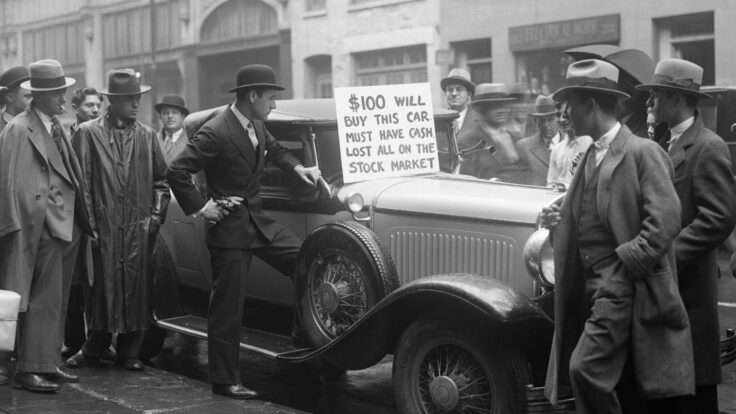
Financial history doesn’t repeat itself, but it does often rhyme. Amid a speculative frenzy, deregulation, trade wars, and a handful of megacaps propping up the markets, some of Wall Street’s brightest minds wonder whether 2026 might resemble 1929.
Marc Rowan
William D. Cohan • July 9, 2023
Street Credit
A recent string of bankruptcies and defaults suggests some challenges in the seemingly indomitable private credit market. And yet, according to some O.G.s, things have never been better. Apollo’s Marc Rowan lays bare the risks and rewards.
David Ellison
William D. Cohan • July 9, 2023
Ellisonology 101
In his first earnings call as C.E.O. of Paramount Skydance, David Ellison offered a masterclass in corporate optimism, promising “synergies” and artfully dodging questions about a possible Warner Bros. Discovery takeover. Alas, the time to act is here.


Michael Bloomberg
William D. Cohan • July 9, 2023
What Does Bloomberg Want for Bloomberg L.P.?
A modest proposal for how New York’s $100 billion man could bequeath his namesake, and its monumental profits in perpetuity.
Jim Chanos
William D. Cohan • July 9, 2023
The Mag Seven Itch
The market is notching record highs for the so-called Magnificent Seven—or should that be Mag 10?—but a subterranean counternarrative is forming as once-secure food and consumer staples crater, and cracks emerge in the $3 trillion private-credit boom.
Brian Roberts
William D. Cohan • July 9, 2023
The Brian Roberts–WBD Bull Case
A new analyst note highlights a heightened sense around Wall Street that Comcast co-C.E.O. Brian Roberts doesn’t merely want WBD, but also truly needs the company—and has a real shot at the asset.


Jamie Dimon
William D. Cohan • July 9, 2023
Jamie’s Castle in the Sky
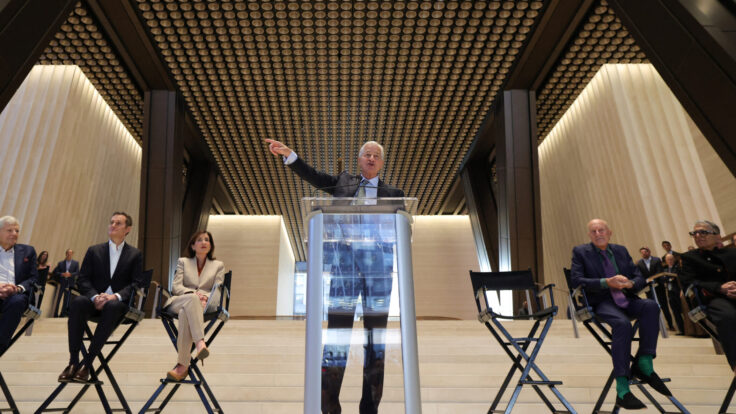
Dimon’s $3 billion (or maybe as much as $5 billion, really) new headquarters is the physical embodiment of his fortress balance sheet and a metaphor for our fractional banking system. But the seeming permanence of its bronze facade shouldn’t fool old Wall Street hands, who know nothing is forever.


  • Terms
  • Privacy
  • Contact
  • FAQ
  • Careers
© 2026 Heat Media All rights reserved.
Create an account

Already a member? Log In

CREATE AN ACCOUNT with Google
OR YOUR EMAIL

OR

Use Email & Password Instead

USE EMAIL & PASSWORD
Password strength:

OR

Use Another Sign-Up Method

Become a member

All of the insider knowledge from our top tier authors, in your inbox.

Create an account

Already a member? Log In

Verify your email!

You should receive a link to log in at .

I DID NOT RECEIVE A LINK

Didn't get an email? Check your spam folder and confirm the spelling of your email, and try again. If you continue to have trouble, reach out to fritz@puck.news.

CREATE AN ACCOUNT with Google
CREATE AN ACCOUNT with Apple
OR USE EMAIL & PASSWORD
Password strength:

OR
Log In

Not a member yet? Sign up today

Log in with Google
Log in with Google
Log in with Apple
Log in with Apple
OR USE EMAIL & PASSWORD
Don't have a password or need to reset it?

OR
Verify Account

Verify your email!

You should receive a link to log in at .

I DID NOT RECEIVE A LINK

Didn't get an email? Check your spam folder and confirm the spelling of your email, and try again. If you continue to have trouble, reach out to fritz@puck.news.

YOUR EMAIL

Use a different sign in option instead

Member Exclusive

Get access to this story

Create a free account to preview Puck’s full offering, including exclusive articles, private emails from authors, and more.

Already a member? Sign in

Free article unlocked!

You are logged into a free account as unknown@example.com

ENJOY 1 FREE ARTICLE EACH MONTH

Subscribe today to join the inside conversation at the nexus of Wall Street, Washington, A.I., Hollywood, and more.

START 14-DAY FREE TRIAL

  • Daily articles and breaking news
  • Personal emails directly from our authors
  • Gift subscriber-only stories to friends & family
  • Unlimited access to archives
  • Bookmark articles to create a Reading List
  • Quarterly calls with industry experts from the power corners we cover