 |
|
Happy Sunday.
|
|
Welcome back to Dry Powder, my private email about the real inside conversation on Wall Street: How the smart money is digesting David Zaslav’s decisive move to cull CNN+, Bill Ackman’s surprising decision to pull the ripcord on Netflix, and, of course, what’s next for Elon Musk’s hostile courtship of the Twitter board.
|
| SPONSORED BY |
 |
|
|
 |
| Elon Sharpens His Vampire Teeth |
| Elon’s consummation, Zaz’s looming target, Ackman’s about-face, and other pressing questions sliding into Wall Street’s DMs. |
|
|
|
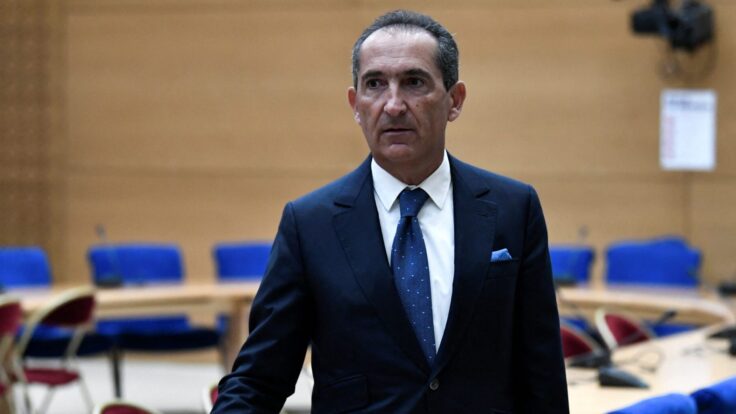
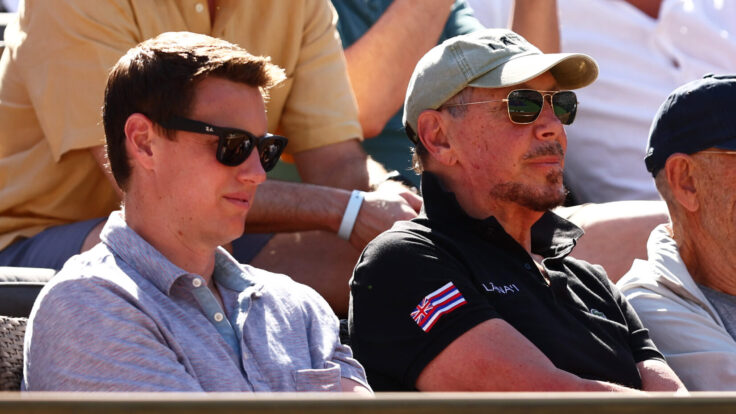
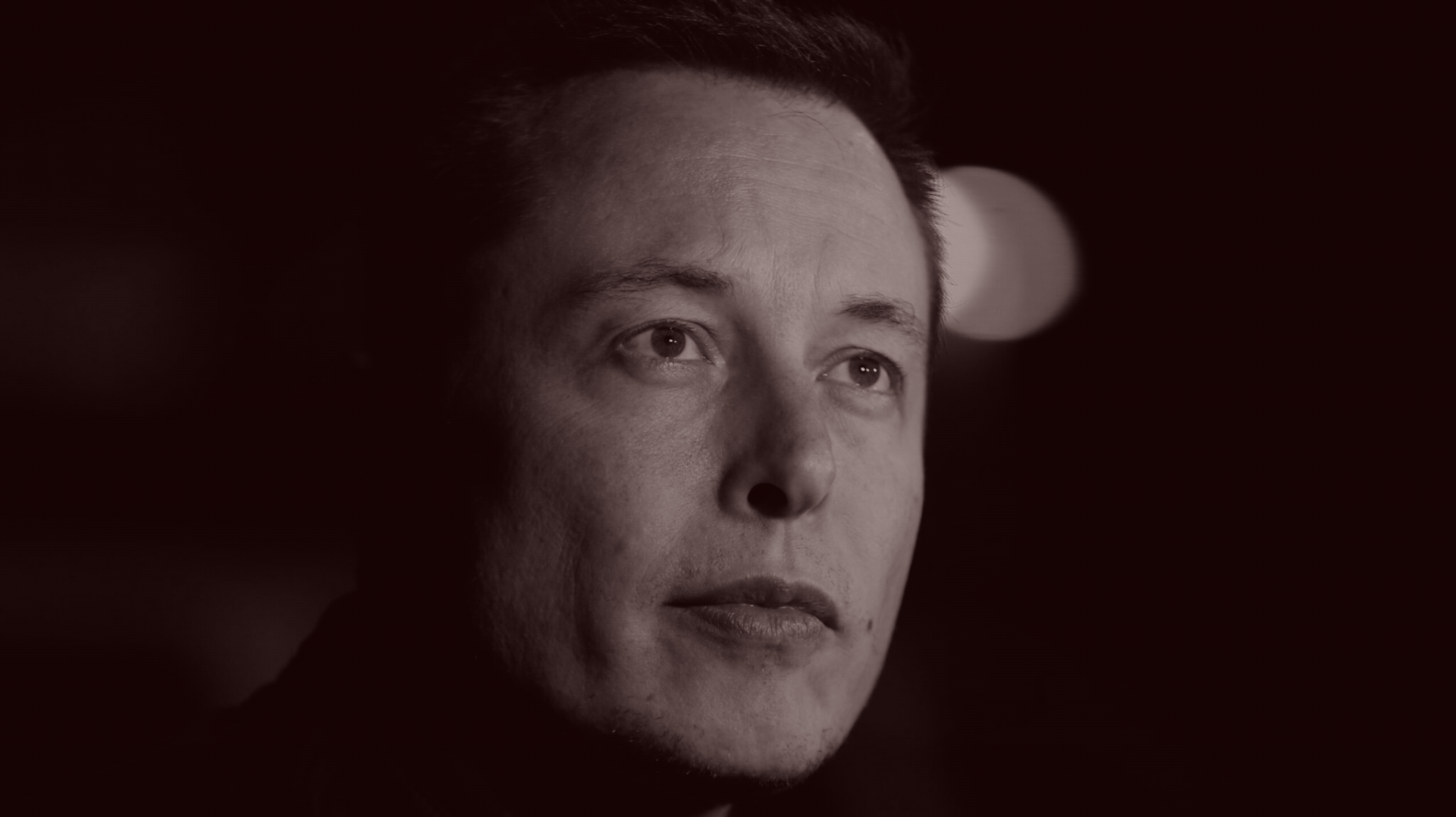
Now that Elon Musk has told the world, in a filing with the Securities and Exchange Commission, that he has obtained up to $46.5 billion of financing commitments for his $54.20-a-share offer for Twitter, the next step for the Twitter board will be to formally reject his offer. The two sides are reportedly meeting today to re-examine Musk’s bid, the prelude, perhaps to a more aggressive negotiation. The offer is inadequate, the board will lament. Expect that response soon, probably early this coming week.
It won’t be true, of course. His $43 billion offer for Twitter is more than adequate, and more importantly, it is more than fair from a financial point of view to the Twitter shareholders. Sure, there are plenty of stick-in-the-muds who continue to complain that, once upon a time last summer, in a very different market for tech stocks and with very different interest rates, Twitter’s stock traded in the mid-$70s per share. But that is no longer the right measure of Twitter’s value. Just as it is no longer particularly relevant that Netflix stock traded as high as $700 a share last November. Is there anyone out there thinking, “Oh, well, there is no plausible takeover offer for Netflix unless it’s for more than $300 billion” now that it’s valued at around $100 billion? Of course not. The consensus seems to be that Netflix was wildly overvalued then, as my partner Matt Belloni wrote last week, and that streaming is in trouble. (I’ll return to this correction momentarily.) Twitter ain’t getting any offers in the $70s per share, trust me.
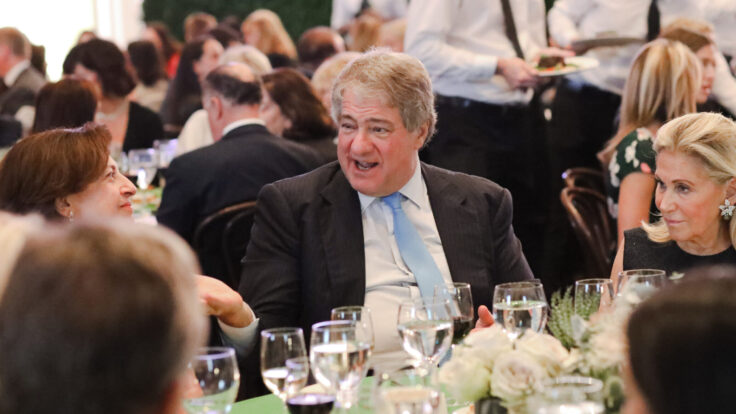
So what is Elon’s next move after the Twitter board, which owns 0.2 percent of the Twitter stock (excluding the two percent stake held by co-founder and Elon-buddy Jack Dorsey, who is leaving the board next month), likely rejects his offer? This is where things potentially get very interesting.
Option One: Elon could try to backchannel to the board—using Morgan Stanley to communicate to Goldman Sachs or to JPMorgan Chase—and try to get a sense of how determined the board is to fight him and whether there might be any openness to a deal if, say, Elon, were willing to raise his offer beyond $54.20 a share. I know he’s told the S.E.C. that $54.20 is his final and best offer, but it’s obviously not, especially if by raising his offer a smidge or two—is there some other wacky number that starts with a “5” that Elon likes?—he’ll get a merger agreement with the Twitter board.
Option Two: If, however, Goldman gives Morgan Stanley the Heisman, and effectively tells him to talk to the hand, Musk could slap a tender with the S.E.C., leak it to The Wall Street Journal, and offer $54.20 a share in cash directly to the Twitter shareholders. The Times recently wondered, with some apparent degree of seriousness, how “it is not clear who, if anyone, will be on Mr. Musk’s side.” But that is naive skepticism. Many individual and institutional investors will be thrilled to take $54.20 in cash in this very choppy market and be done. You can be sure that the 25 percent of Twitter owned by Vanguard, BlackRock and Morgan Stanley Investment Management would do so.
Musk will get more than enough stock tendered to him to get control of the company, although he’ll still need to get the Twitter board to rescind the “poison pill” it put in last week. If a majority of Twitter shareholders tendered their shares to him, the board might finally be willing to see the light. Let’s not forget that, as recently as February, the Twitter research analyst at Goldman Sachs, Twitter’s advisor, had a “sell” rating on the Twitter stock and a price target of $30 a share.
The fact that Elon has offered an 80 percent premium to that price target should be pretty comforting to most Twitter shareholders. With his financing in place, I’d say we’re a lot closer to the end of this saga than we are to the beginning. And, finally, it looks like Twitter shareholders are coming around to the reality that Elon’s deal will succeed. On Friday, the Dow Jones Industrial Average fell nearly 1,000 points, or nearly 3 percent. Twitter’s stock, on the other hand, was up nearly $2 per share, or almost 4 percent. The end is near.
|
| ADVERTISEMENT |
 |
Facebook has invested $16 billion to keep you safe on our platform.
Facebook invested $16B in safety and security over 6 years. The impact?
- Quadrupled safety and security teams
- Developed industry-leading AI that detects harmful content and reacts as it evolves
- Addressed millions of harmful posts and removed 1.7B fake accounts in the last few months
Learn what's next. |
|
|
| Zaz’s Wall Street Promise |
|
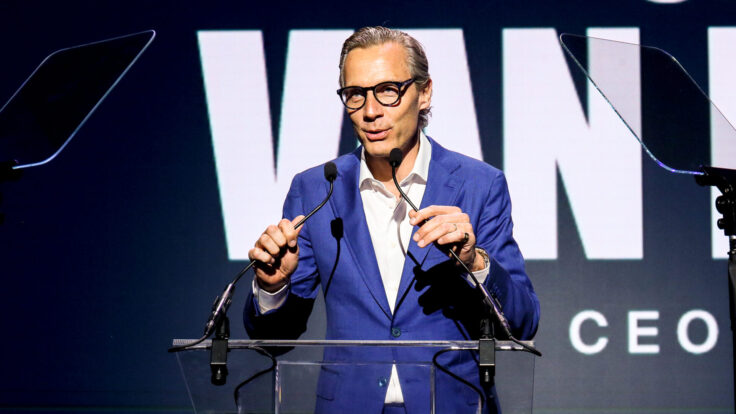
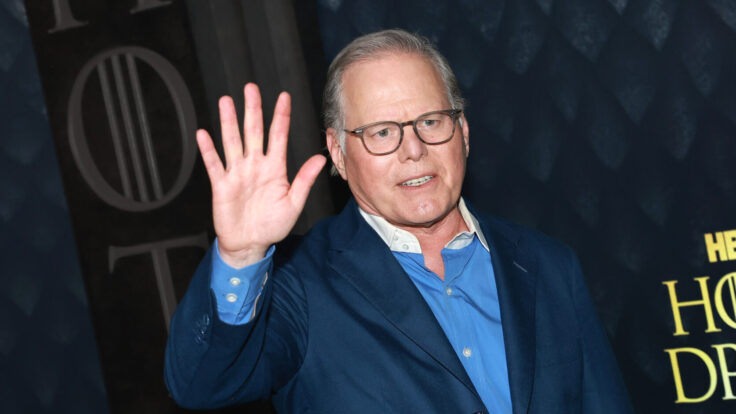
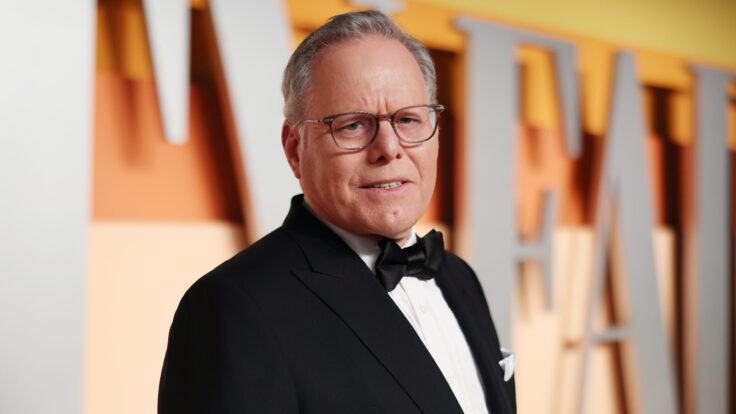
Look, Zaz, or Zas, has his hands full with Warner Bros. Discovery. The newly merged company has $55 billion of debt—that’s serious business—and he’s promised Wall Street $3 billion of cost savings that he must and will deliver. Zaz learned his craft literally at the knee of Jack Welch, the legendary C.E.O. of GE. And one thing he learned from Jack, in particular, is that when you promise Wall Street that you will deliver $3 billion of cost savings from a big merger, you deliver those cost savings.
Zaz will deliver them, make no mistake. You can call him ruthless, you can call him decisive, you can call him heartless (for pulling the plug on hundreds of CNN+ jobs). But this is serious business, he’s not fucking around. He’s dealing with extraordinary financial liabilities and a stock price that is floundering—down nearly 16 percent since the deal closed on April 8.
I’m sorry to say that for all the talk around CNN of creating long-term value through CNN+, pulling the plug on it was low-hanging fruit. The bigger question now facing Zaz and the rest of Warner Bros. Discovery is where the remainder of the $2 billion+ of cost savings is going to come from? The pain at CNN, Warner Bros., HBO and other parts of what remains of the old TimeWarner is just beginning. Until the stock price gets a move on and Zaz can show he’s paying down that $55 billion of debt, the days are going to get darker for the folks at Hudson Yards, not brighter.
As I’ve written before, a big part of the problem for the WBD stock at the moment is the serious “overhang” of the old AT&T shareholders—71 percent of WBD was owned on April 8 by AT&T shareholders—who are probably looking to dump the stock, applying noticeable downward pressure. This will take time to sort out, and I would expect the WBD stock to continue to trade lower—this is not investment advice—having little to do with the fallout of the streaming wars, in my opinion, and having much more to do with the need for Zaz to turn over his shareholder base and get his stock in the hands of the people who want it and out of the hands of the people who don’t.
In the meantime, Zaz has to do everything in his power to deliver the $14 billion of EBITDA at WBD he has promised The Street. Anything less, and suddenly that $55 billion in debt is no longer investment grade. If that should happen, and some of that $55 billion gets reduced to “junk” status, all hell will break loose. What happened at CNN+ last week will seem like childs’ play.
|
|
|
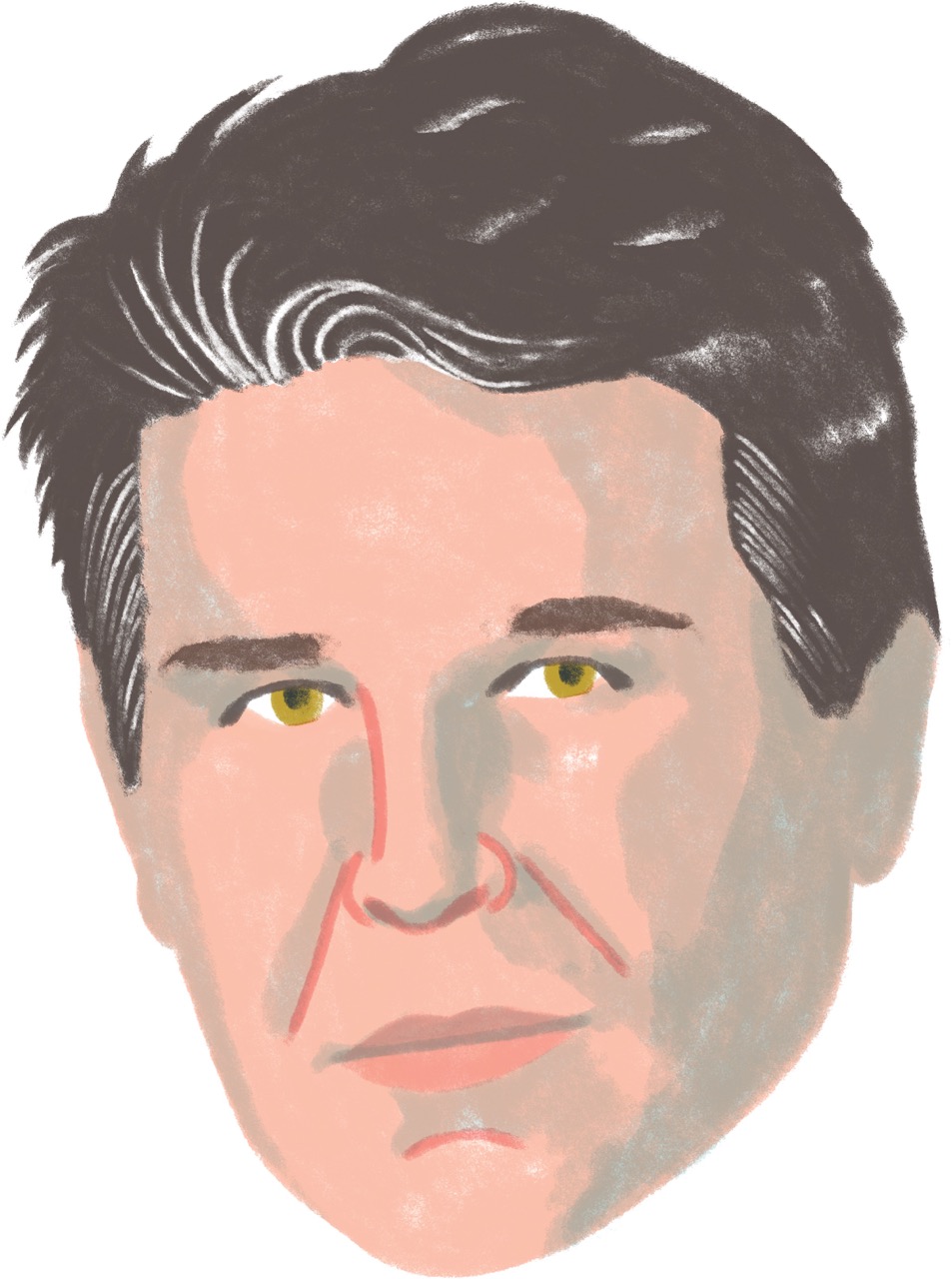
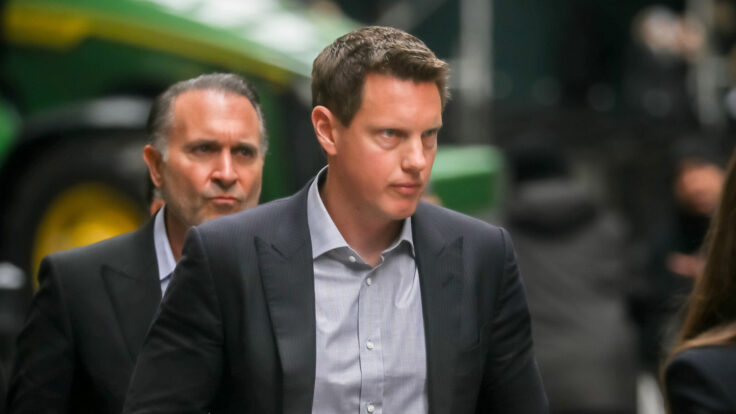
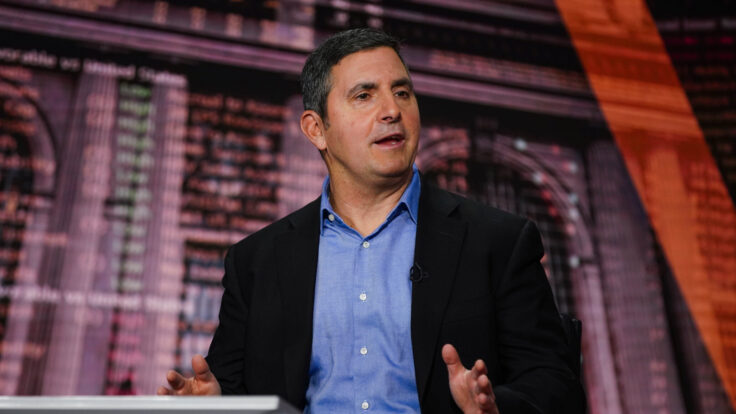
The “old” Bill Ackman—the one that still believed in activist investing—would never have pulled the plug on his three-month old $1.1 billion investment in Netflix just because he suddenly found himself losing $400 million in a few days. He pursued Herbalife for something like five years before folding his tent and perfecting a loss of some $1 billion. At Valeant, he lost $4 billion in a couple of years before pulling the plug. That’s not a typo.
But the “new” Bill Ackman—the one with a new wife, who is an artist, and the one with a new toddler and the one hoping to build a Norman Foster-designed addition atop a conglomeration of apartments on the Upper West Side for his family to live in—decided he had had enough of Netflix after the stock collapsed 40 percent in the wake of the announcement that the company had lost subscribers for the first time in years. The “old” Ackman had “conviction” about an investment. No messing around. He only made investments after months, if not years, of studying everything he could get his hands on about a company; he produced bigtime PowerPoint presentations to outline his investment thesis; and then he would take to the airwaves, either on CNBC, Bloomberg, or at the Sohn hedge fund conference, to peddle his wares.
But the “new” Ackman? At the end of March, Ackman more or less announced that he was abandoning activism, or at least the kind of activism that Pershing Square, his hedge fund, engaged in when it aggressively shorted the stock of Herbalife and proclaimed wherever and whenever he could that the company was a fraudulent pyramid scheme. He might have been right but it didn’t matter. Other hedge fund bigwigs, like Carl Icahn and Dan Loeb, put the squeeze on Ackman and, despite his years-long noisy campaign, he put his tail between his legs and walked away from the experience $1 billion poorer. “Fortunately for all of us,” he wrote in the Pershing Square annual report, in March “and as importantly for our reputation as a supportive constructive owner, we have permanently retired from this line of work.”
Whether this March announcement was the harbinger for what he did when he walked away from Netflix after three months or so last week is hard to know. (He declined my request to be interviewed, something he does rarely.) He perfected a $400 million loss on Netflix, bringing Pershing Square’s 2022 performance to date to negative 2 percent, from a gain prior to the Netflix plunge. “While we have a high regard for Netflix’s management and the remarkable company they have built, in light of the enormous operating leverage inherent in the company’s business model, changes in the company’s future subscriber growth can have an outsized impact on our estimate of intrinsic value,” he wrote the other day. “In our original analysis, we viewed this operating leverage favorably due to our long-term growth expectations for the company.” But, he concluded, his investing philosophy has changed. “One of our learnings from past mistakes is to act promptly when we discover new information about an investment that is inconsistent with our original thesis,” he continued. “That is why we did so here.”
The “new” Ackman told Scott Wapner, at CNBC, on April 21, while flying up to Boston on his private jet, that “I’m 100 percent ready to admit when I’m wrong and 100 percent ready to admit when I’m wrong, quickly.” My, my, how times have changed. Had Ackman taken this approach with Herbalife and with Valeant, he might have saved himself and his limited partners $5 billion. This is a guy, after all, who made $3.6 billion in three weeks in February and March 2020 when he realized the pandemic would crush the economy and then that the Federal Reserve would have no choice but to bail out the financial markets. Maybe Ackman has become more like Loeb, who makes his bets and then takes his gains or losses relatively quickly. Maybe after his near-death experience with Herbalife and Valeant and then his resurrection in both 2020 and 2021, he’s less interested in risk-taking than he used to be. It’s hard to say.
As for his decision about Netflix, I, for one, am not yet willing to write off the world’s leading streaming service. Last time I checked, Netflix had nearly $19 billion of EBITDA and was trading for around $100 billion, or 5 times trailing EBITDA. Again, this is not investment advice, but Netflix seems like a buy to me, not because a takeover is looming, but merely because the market’s reaction (crushing the stock 40 percent in the last five days) seems like a rather sizable overreaction. Add to that the fact that those people who have bet against Reed Hastings and Ted Sarandos in the past have gotten their heads handed to them.
I’d say “new” Ackman also overreacted here. If he loved the stock in January, he should love it even more in April, when it is trading at 5 times EBITDA. I’m reminded of how when Hastings had another snafu—back in 2011, when he decided to split Netflix into a streaming service and a “red envelope” —and the market puked and pushed the stock down to around $60 a share, Ackman’s old nemesis, Carl Icahn, backed up the dump truck and loaded up on Netflix stock. When he sold his Netflix stock a few years later, for something around $300 a share, he had made five times his money, without leverage, without anything fancy, just by seeing an opportunity when others didn’t.
|
| ADVERTISEMENT |
 |
|
|
|
|
|
| FOUR STORIES WE'RE TALKING ABOUT |
 |
| Mothers for Putin |
| Putin's misbegoten war is being waged by the very young men, and supported by the families, that his government has oppressed. |
| JULIA IOFFE |
|
 |
| The Trump-McCarthy Breakup |
| Notes on McCarthy’s imperiled path to House speakership, DeSantis’ latest attack on Disney, and Eric Trump’s unlikely ambassadorship. |
| TINA NGUYEN |
|
 |
| Twitter's Genealogy |
| Twitter is now 1/15th Facebook's size, and its most fastidious user is trying to take it private. Herewith, an anatomy of a social media tragedy. |
| BARATUNDE THURSTON |
|
 |
| Netflix's Existential Crisis |
| To recover from this week's remarkable flop, Netflix may have to become more like the traditional rivals it set out to disrupt. |
| MATTHEW BELLONI |
|
|
|

|
|
|
You received this message because you signed up to receive emails from Puck.
Was this email forwarded to you?
Sign up for Puck here
Sent to
{{customer.email}}
Unsubscribe
Interested in exploring our newsletter offerings?
Manage your preferences
.
Puck is published by Heat Media LLC.
64 Bank Street
New York, NY 10014
For support, just reply to this e-mail.
For brand partnerships, email ads@puck.news |
|
|