 |
|
Happy Sunday.
|
|
I’m William D. Cohan and you’re reading Dry Powder, my biweekly email about what’s really happening on Wall Street. Welcome to all of the new subscribers who have joined Puck over the past few weeks. It’s so exciting to watch this community continue to grow.
In today’s column, I explain why the histrionics surrounding the Tesla and Twitter stocks are premature. Plus my thoughts on Apollo’s cash injection and why bankers love Comcast C.E.O. Brian Roberts. But first, what Warren Buffett’s new Hollywood play reveals about the worst kept secret on Wall Street…
|
| SPONSORED BY |
 |
|
|
 |
| What Warren Sees in Shari |
| News and notes on Buffett’s mediaco M&A play, Elon’s latest machinations, and why Wall Street bankers love Brian Roberts. |
|
|
|
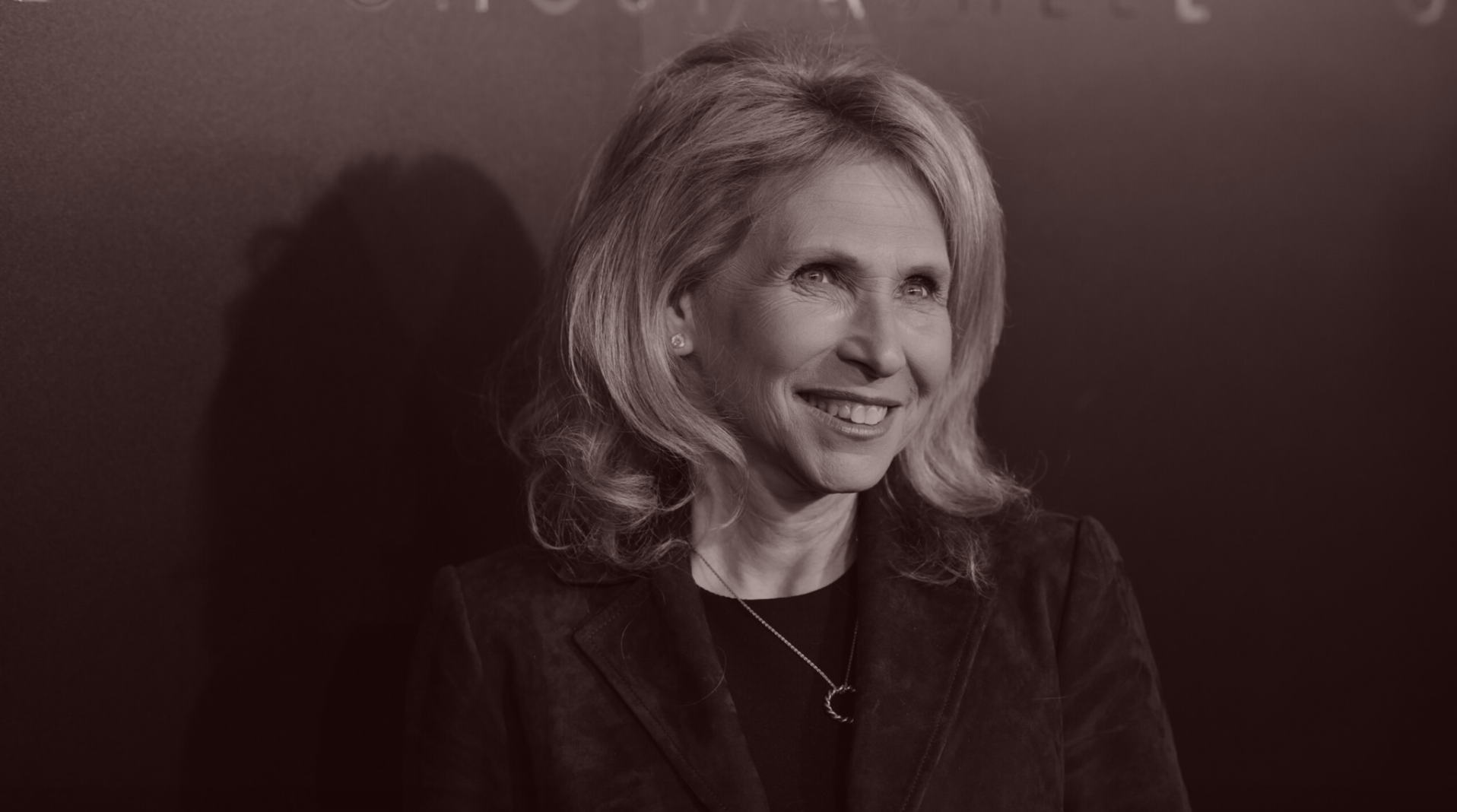
My former M&A banker instincts were triggered this week after Warren Buffett, the most gifted investor of our lifetime, disclosed a $2.6 billion stake in Paramount Global, formerly ViacomCBS, a company whose leadership I have occasionally criticized. Paramount, after all, holds an awkward position on the streaming leaderboard, not only too small to compete with the likes of Netflix and Disney but also too bulky—following Shari Redstone’s recombination of the Viacom and CBS assets—to be easily acquirable by a rival, especially as long as the once-beloved CBS linear television network remains in the picture.
If there is one thing I know about Buffett, it is that he tries pretty damn hard not to overpay for companies. So let’s stipulate that he thinks Paramount Global is undervalued. Since Warren revealed Berkshire Hathaway’s stake on Monday, in a S.E.C. filing, the Paramount Global stock is up around 16.5 percent in a very rocky market. That doesn’t yet prove Warren is right that the company is undervalued, but it does prove that the Buffett halo is still for real. It’ll take longer to prove whether C.E.O. Bob Bakish and his team at Paramount Global can live up to whatever Buffett is expecting from it. (Buffett did not respond to my request for comment.)
Personally, I suspect the underpinning of Buffett’s logic is the M&A play that has been lingering over what Shari is now calling Paramount Global ever since its inception as ViacomCBS in 2019. One of the biggest open secrets on Wall Street is that Shari would happily sell the company to the right suitor offering the right price. I can assure you that Aryeh Bourkoff, Shari’s banker, has thought of every permutation and combination out there that would make it happen. The other open secret on Wall Street is that there probably isn’t a buyer for Paramount Global at the moment, especially as long as it owns CBS. Not that CBS isn’t wonderful and all. Who doesn’t love watching 60 Minutes or its NFL broadcast or the latest NCIS? It’s just that it’s a complicated asset for some of the most logical acquirers, such as Comcast, to own. (I note with interest that CBS is no longer in the name of the company; that was not by accident.)
That dynamic will probably change at some point. My bet is that Warren is probably thinking he’ll cash in when that day comes and in the meantime that Bakish has done enough to steady the rocky ship that the company’s earnings will continue to improve and the stock price will continue to rise slowly and steadily. It’s clear Bakish and Company have a winner with Top Gun: Maverick so maybe Warren was betting a little on that happening too. And if Warren decided to sell now, he’d chalk up a 16 percent gain in a year when the markets have moved into bear territory. There’s a reason he’s considered one of the greatest investors of all time.
|
|
|
Apollo Global Management, the storied investment firm, is in talks to provide a 500 million euro capital injection into a subsidiary of Air France, which has some people on Wall Street wondering what Apollo co-founder and C.E.O. Marc Rowan sees in the turbulent airline industry.
I am fairly certain Marc likes his airplanes as much as the next private-equity mogul, although this is not likely about private jets. I can’t say precisely why Apollo might be interested in making a $530 million investment in the spare parts division of Air France-KLM. But with Apollo the most important consideration has always been whether Apollo can make money from doing the deal. If it can, then that is often reason enough.
I know Apollo was hoping to get its mitts on GE Capital’s Aviation Services business, known as GECAS, back in 2019. But that business went instead to AerCap, an Ireland-based global leader in aircraft leasing with more than 300 customers worldwide. As part of that $30 billion deal, which closed in November, GE ended up with a roughly 46 percent stake in AerCap. (I wouldn’t be surprised if somehow Apollo ended up with a stake in AerCap, especially since GE has signaled its intention to sell down its equity position in the company.) In 2019, Apollo also bought PK AirFinance, a leading aircraft lending business from GE Capital. In sum, Marc and Apollo have been all over the aviation space for a while now, so I’m not particularly surprised that the firm is looking to do this spare parts deal with Air France.
|
| ADVERTISEMENT |
 |
Real connection can only happen on safe platforms. So we build tools to protect our communities.- Privacy Checkup, where you can manage your privacy settings and control who sees what you share
- Industry-leading AI that detects and reacts to harmful content faster than ever
Learn about our efforts |
|
|
|
|
Tesla stock keeps falling, alongside the rest of the market, prompting urgent and excitable questions from the sidelines as to the possibility that Elon Musk will face a margin call on the Tesla shares he has collateralized in order to provide financing to complete his acquisition of Twitter. Does Musk have any room to renegotiate with his bankers? What might be the ripple effects, for Twitter shareholders, for the S.E.C., and for Musk himself?
Everyone needs to take a deep breath here. It’s essential to remember that Elon does not own Twitter yet. He has made an offer for the company and it has been accepted (and possibly is in the process of being revised downward, as Kara Swisher is positing). Part of the reason the Twitter board accepted Elon’s offer of $54.20 per share is that he provided it with financing commitments (since revised) for where and how he was going to come up with the $44 billion in cash that he will need to pay shareholders in order to buy the company at that price. Part of those commitments were in the form of equity—he said he would provide $27.5 billion of it. We now know that of that $27.5 billion, $7.1 billion will come from the Eclectic 18, some $2 billion will come from Saudi Prince Alwaleed rolling over his stake in Twitter (at $54.20 a share) and another $4.4 billion will come from Elon rolling over his stake (at $54.20). That leaves him a $14 billion equity hole to fill, a pretty significant challenge. (Will Elon’s friend Jack Dorsey roll over his stake?) Maybe he will reduce the purchase price by that $14 billion, or roughly $18 a share, which is close to whereTwitter’s stock is trading these days. Hmmm.
Then there is the $6.5 billion margin loan he has pledged to obtain by using his Tesla stock as collateral. That loan likely does not exist yet, since the deal won’t be closing until October at the earliest. Elon is his own man, I know, but it would still be pretty cuckoo for him to actually create the margin loan six months before he actually needs it. So while the Tesla stock is down 34 percent in the last month, since Elon announced the deal, and since the Twitter margin loan tied to his Tesla stock does not yet exist, there is no reason to worry that the banks are going to seize his Tesla collateral to pay down the Twitter margin loan. The banks may at some point seize his Tesla stock for the other, non-Twitter margin loans he has outstanding but they won’t do that with regard to the Twitter margin loan because there isn’t one yet.
Here’s an even easier way to think about this. The roughly $13 billion of senior debt that Elon has pledged to raise secured by the Twitter assets also doesn’t exist yet. Why? Because it will be secured by assets that Elon can’t legally pledge to those banks until he owns Twitter… and that won’t happen, if ever, until October at the earliest. He can’t pledge Twitter’s assets until he owns them.
There are a lot of histrionics around the stocks of both Tesla and Twitter, but let's try to keep them separate because even though at some point the two companies may be tied at the hip through the Twitter margin loan, that hasn’t happened yet and won’t until the deal closes, if it closes. Twitter’s stock has traded down—now nearly 30 percent below the offer price of $54.20—because the market is expecting Elon to reduce his offer for the company, even though that’s an amateur move. (He doesn’t care, natch.) How do we know this? He’s said so himself in one of his recent tweetstorms. He can do whatever he wants of course (as long as it’s legal). But if he cuts the offer too much, he risks Goldman and JPMorgan Chase pulling their fairness opinions, which would scuttle the deal and cause real chaos for Twitter. (Again I don’t think Elon cares.) My bet is a bush-league price cut is coming, the bankers will reluctantly agree that it’s fair, and the deal will be reset, until the next Elon prank.
As for Tesla’s stock mini-implosion, there are many explanations for that: it’s been wildly overpriced for years; the tech stocks have crashed, so Tesla isn’t going to be immune from that disruption. And, yes, part of it might be from investor concern about the Twitter margin loan. But, to me, since it doesn’t exist, that is the least meaningful part of the explanation for what’s going on right now.
|
| Will Brian Roberts Make Another Run at EA? |
|
A tip of the hat to my partner Dylan Byers for ferreting out the news that Brian Roberts and the Comcast crew contemplated a merger between NBCUniversal and EA. That would have been an audacious and once-inconceivable combination. But it shows, at least intellectually, that what’s important these days for media companies is to make sure they are providing the content where people are spending their time. And if that’s in gaming, not watching Third Rock from the Sun, then that’s where the content, the revenue, and the eyeballs will migrate.
Wall Street bankers love Comcast, and Brian Roberts, in particular. He has long been willing to make bold strategic moves that other founder/C.E.O.s only dream about doing. Of course, Wall Street bankers also love Brian because his transformative dealmaking generates equally large fees, both for providing M&A advice and for financing the acquisitions. Once upon a time, I worked on Comcast’s $72 billion acquisition of AT&T broadband (cable) business. It was a year or so before 9/11, and the deal continued through the tragedy and closed a few months later. At the time, it was the largest M&A deal in history. And there were lots of bankers involved, not just me. It was a hall of fame list, in fact, including Paul Taubman, Steve Rattner (one of Brian’s longtime bankers and a former boss of mine), and my boss at the time, the oft-mentioned in these pages Rob Kindler. What made the deal so exquisite was that AT&T’s large cable business was not for sale, and especially not apart from the rest of AT&T, which of course Comcast didn’t want. In effect, Comcast made a hostile offer for an AT&T subsidiary. I don’t think this had ever been done before, and it worked. Brian had made an offer that was very difficult for AT&T to refuse.
It’s possible that the origins of the Comcast/EA deal go back to the time when GE, which then owned NBC, bought many, but not all, of the Universal assets, including the movie studio, the television production and the theme parks, from Vivendi, to create NBCUniversal. At that time, 2003, Universal also owned what became ActivisionBlizzard, the gaming company that Microsoft is in the process of buying for $69 billion, in cash. GE could have bought the Universal gaming business as part of its deal with Vivendi, and for peanuts. But, at that time, it would have taken a real magician to see around the corner sufficiently far to realize what gaming could become. So GE left the Universal gaming assets behind with Vivendi, which eventually spun them out in 2013 into its own separate company, with a valuation of around $8 billion.
A few years later, in 2009, GE approached Comcast and Brian about buying NBCU, which of course Brian had been pining after for years. (Comcast was a losing bidder in the effort to buy the assets from Vivendi.) Many think Brian got the steal of the century from GE in that deal, taking effective control of NBCU—but without the gaming assets—for around $30 billion. NBCU is probably worth around $100 billion these days, despite the past two years being somewhat depressed EBITDA-wise (around $5.5 billion each year, when it had been around $8 billion).
Dylan reported that the combination of NBCU and EA looks dead at the moment. But you can never count Brian out. He bided his time on AT&T Broadband and he bided his time on NBCU, and he got both of them. Sure, he’s lost others, including Disney, and the Fox assets that Disney bought. But if he really wants this deal with EA, I suspect it will happen, especially since he can’t buy the aforementioned Paramount Global as long as it owns CBS.
|
| ADVERTISEMENT |
 |
|
|
|
|
|
| FOUR STORIES WE'RE TALKING ABOUT |
 |
| Roberts' EA Flirtation |
| The Comcast-NBCUniversal chief was close to a deal that would have changed the content wars. |
| DYLAN BYERS |
|
 |
| Jeff Roe '24 |
| Insiders are obsessing over the political canoodling between Trump and Jeff Roe, the G.O.P. political operative. |
| TARA PALMERI |
|
 |
| Upfront Overkill |
| It’s all about “the portfolio” now, or “our unified approach,” or “company-wide capabilities.” |
| MATTHEW BELLONI |
|
 |
| $12 Million Candidate |
| Crypto billionaire Sam Bankman-Fried lost big on Tuesday despite airdropping a historic sum into a congressional race. What was he thinking? |
| THEODORE SCHLEIFER |
|
|
|

|
|
|
You received this message because you signed up to receive emails from Puck
Was this email forwarded to you?
Sign up for Puck here
Sent to
{{customer.email}}
Unsubscribe
Interested in exploring our newsletter offerings?
Manage your preferences
Puck is published by Heat Media LLC
64 Bank Street
New York, NY 10014
For support, just reply to this e-mail
For brand partnerships, email ads@puck.news |
|
|