 |
 |
|
Good evening, and welcome back to Dry Powder, my biweekly private email about what’s really happening on Wall Street. In tonight’s email, fresh observations and reporting on whether Ari Emanuel can save Elon Musk, the ongoing, abject charlatanism of Cathie Wood’s new venture fund, and how First Boston can get back to its roots if only Credit Suisse will let it go.
But first, a quick note on the debt markets. As I predicted back in August, the struggle of the big banks to move some $15 billion of Citrix debt off their books has created a cascading effect on Wall Street. So far, this group of banks—led by Bank of America, Credit Suisse, Barclays and Goldman Sachs—has perfected as much as a $700 million loss, and counting, on the Citrix debt, potentially suffocating investor interest in similar deals still in the pipeline, such as those for the buyouts of Nielsen and Tenneco. Last week, another group of banks (including Bank of America and Barclays) canceled a $3.9 billion debt sale tied to Apollo Global Management’s $7.5 billion deal for some of Lumen Technologies’s telecom assets.
The failure of the debt sale, which would have included the syndication of a $2 billion leveraged loan and the underwriting of a $1.9 billion junk bond, is not expected to hinder Apollo’s purchase of the Lumen’s assets, which is expected to close shortly. But it will likely mean more losses for the banks in this rapidly rising interest-rate environment, should the debt eventually be remarketed. If the banks have to keep the debt on their balance sheets, they will likely have mark-to-market losses on it, and it will eat up capacity for new financings. It’s yet another example of the continuing dysfunction in the Wall Street financing markets—and we haven’t even started talking about Nielsen and Tenneco (a subject for another time).
As always, feel free to reply to these notes with feedback, tips, or commentary. Responses to this email go directly to my inbox.
Best,
Bill
|
 |
| Elon’s Hollywood Ending |
| Musk’s texts, which include a startling dismissive exchange about Sam Bankman-Fried, reveal why he needs Ari Emanuel to save him from himself. Plus updates on Cathie Wood’s latest investment scheme and the potential resurrection of Credit Suisse’s investment bank. |
|
|
|
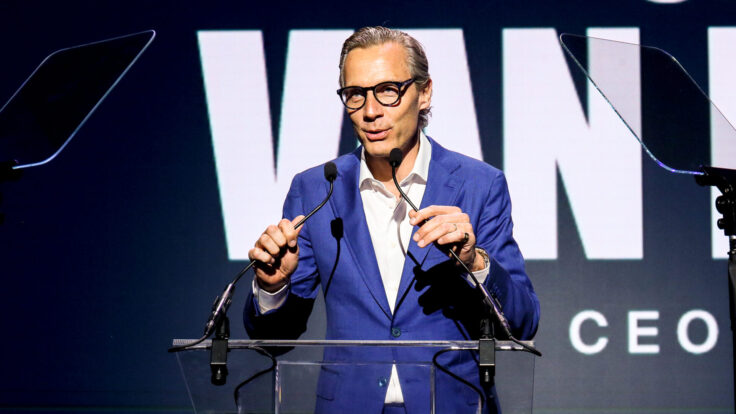
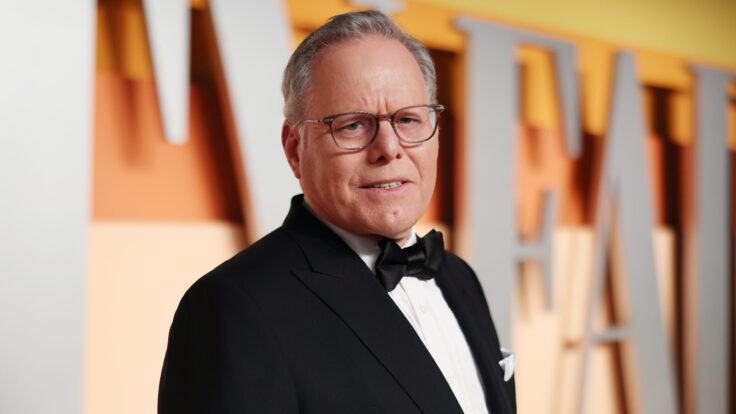
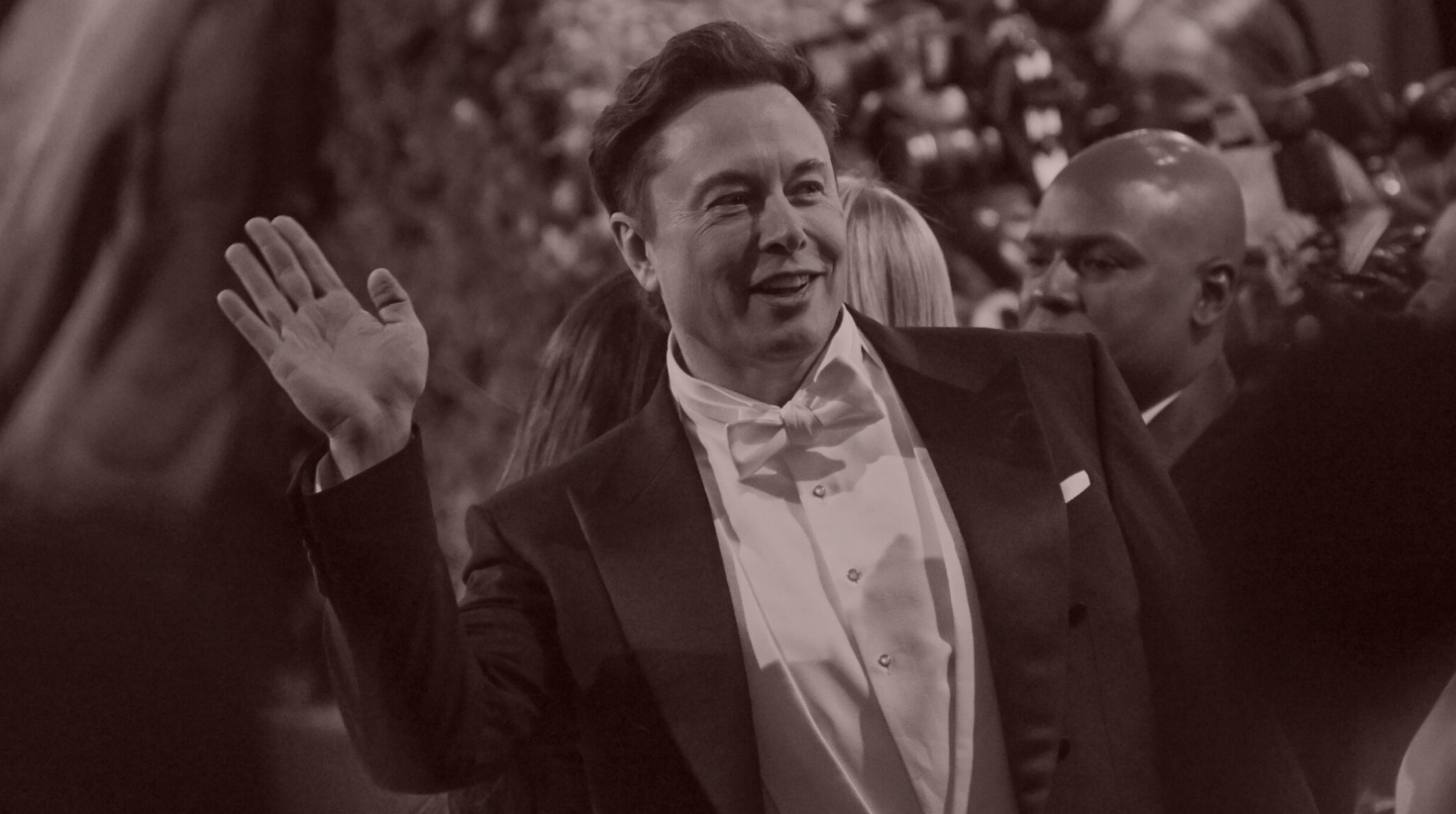
| Sometime over the past few weeks, Bloomberg reports, Hollywood mogul and Endeavor founder and C.E.O. Ari Emanuel tried to broker a deal between Elon Musk, a former Endeavor board member, and the Twitter board of directors, via Silver Lake C.E.O. Egon Durban, who sits on the boards of both companies. The idea was, presumably, to find a solution to the legal battle between Elon and Twitter before the conflagration hits the Delaware courtroom in a few weeks.
A compromise would certainly be a Hollywood ending befitting Ari, the ultimate “interstitial man,” to borrow a phrase from the incomparable Ralph Nader. There’s few middlemen better suited to negotiating a settlement, or pulling a rabbit from a hat, than the financial magician who managed to roll two talent agencies, Ultimate Fighting, Miss Universe, and professional bull riding into a single public company, packaged as a pandemic reopening play, and was crowned the highest-paid Hollywood executive in 2021 for his troubles. He and Elon are two peas in a pod. Egon, the biggest investor in Endeavor, easily makes the third pea in the pod.
And Elon ought to listen to Ari, if he knows what’s good for him. Elon, after all, will almost certainly lose in the Chancery Court, as is painfully clear from the hundreds of his texts that were revealed Thursday as part of the pre-trial discovery process. The messages, which include exchanges with everyone from Jack Dorsey and Joe Rogan to Mathias Döpfner and Gayle King, show plainly that one of Elon’s central arguments for getting out of the deal—those fake Twitter accounts—is a loser. In an April 9 text to Bret Taylor, the chairman of the Twitter board of directors, more than two weeks before he signed the merger agreement, Elon wrote, “Purging fake users will make the numbers look terrible, so restructuring should be done as a private company.” Ah, so Elon knew all about the bots and the fake users and signed the merger agreement anyway. Ouch.
What’s also clear from Elon’s texts, of course, is that he has pretty much zero time or respect for anyone but himself. Consider the exchange between Elon and Michael Grimes, a senior banker at Morgan Stanley and Elon’s adviser on the Twitter deal, about Sam Bankman-Fried, the founder of cryptocurrency exchange FTX. Bankman-Fried is probably the world’s richest 30-year-old, even though he’s no longer worth the $25 billion, or so, that he was a year ago. In any event, S.B.F. is very rich but only about one-tenth as rich as Elon. So of course Elon was dismissive, both about S.B.F.’s interest in joining the Twitter equity investment and his fixation with the blockchain. “Backlogged with a mountain of critical work matters,” Elon responded to Grimes’s text introducing S.B.F. to Elon. “Is this urgent?” Grimes wrote back that S.B.F. wanted to invest between $1 billion and $5 billion into Elon’s Twitter deal. He continued that it wasn’t “urgent” unless Elon wanted S.B.F. to fly on his private jet and see him “tomorrow,” otherwise S.B.F. was going to be busy for a few days. Grimes wrote further that S.B.F. would be willing to invest $5 billion into the Twitter deal “if everything vision lock[ed]” and that he would be willing to do “the engineering for social media blockchain integration,” whatever that meant. Bankman-Fried “believes in your mission,” Grimes said, adding that S.B.F. “said he could shake hands on [$]5 [billion] if you like him and I think you will.”
Elon seemed to be disdainful of the idea of partnering with S.B.F. He wasn’t seeing the vision lock with S.B.F., even with $5 billion at stake. “Blockchain twitter isn’t possible,” Elon wrote Grimes. He seemed to imply that he’d be willing to talk with S.B.F. “so long as I don’t have to have a laborious blockchain debate.” He then asked Grimes if S.B.F. actually had $3 billion “liquid.” Grimes assured him that S.B.F. told him he at one point had up to $10 billion but “in writing” said he had $5 billion. “He’s into you,” Grimes wrote. “...We can push Sam to next week but I do believe you will like him.”
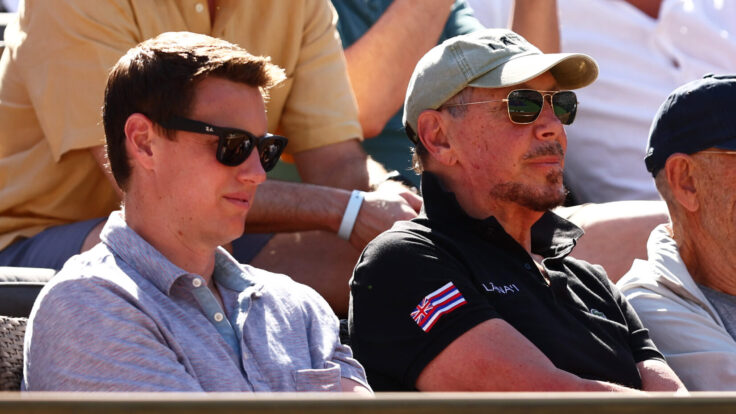
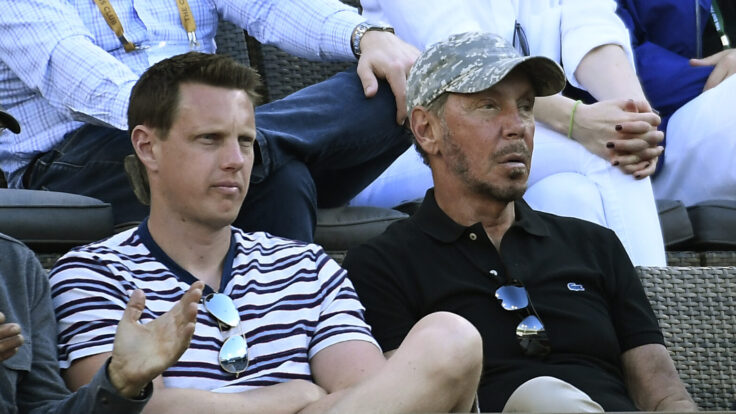
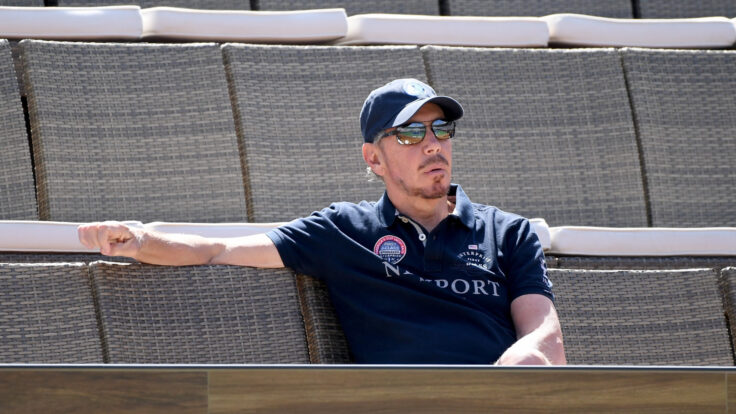
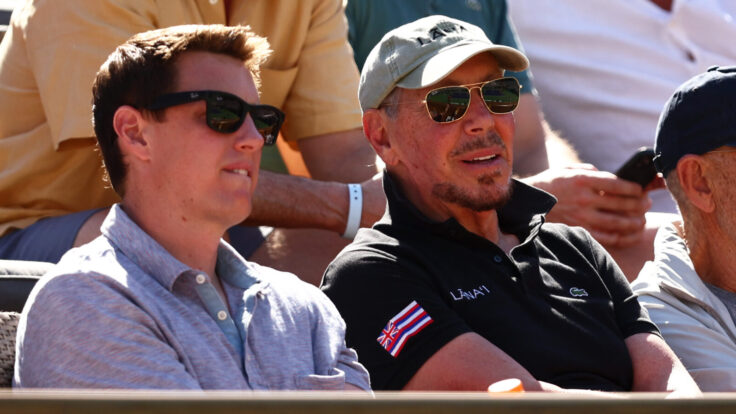
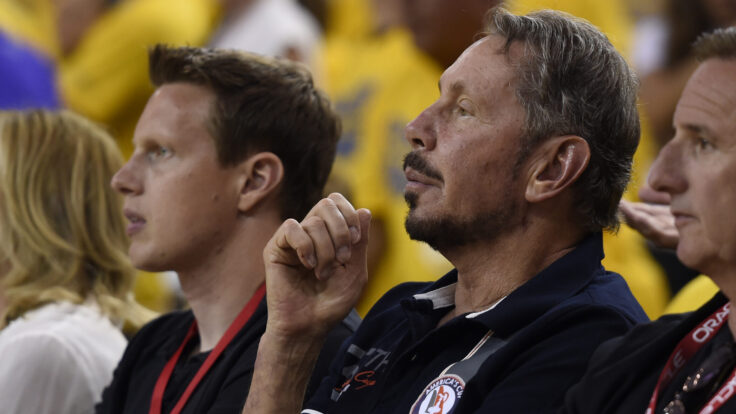
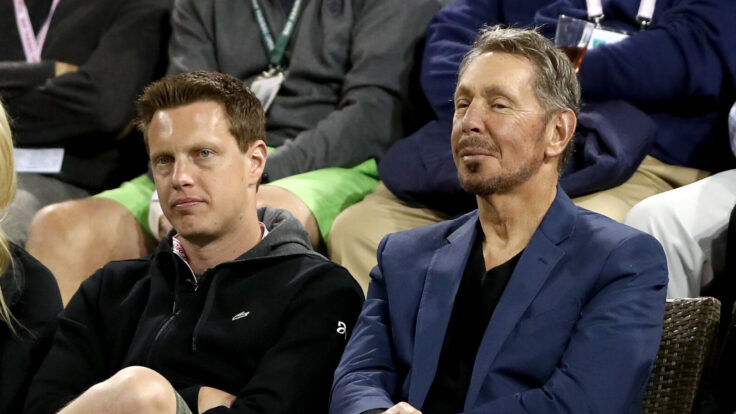
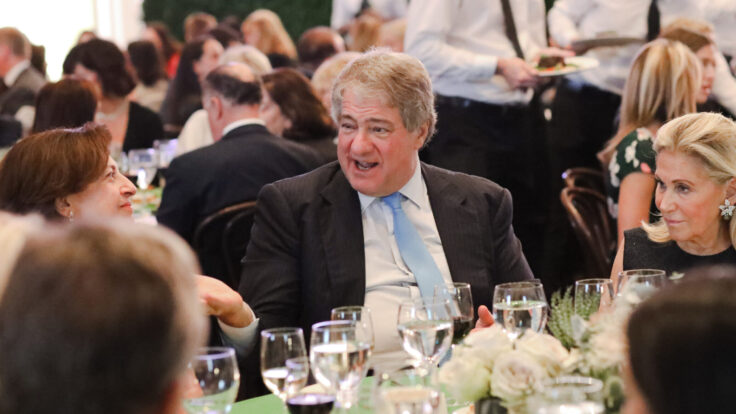
And then he laid it on thick, as only a primo investment banker can do. “Ultra Genius and doer builder like your formula,” Grimes continued about S.B.F. “Built FTX from scratch after MIT physics. Second to Bloomberg in donations to Biden campaign.” In the end, of course, Elon and S.B.F. never met, nor was S.B.F. among Elon’s group of 18 or so investors in his equity deal for Twitter. Elon’s biggest outside investor was Larry Ellison, the billionaire founder of Oracle, who ponied up $1 billion. (The text message stash also contains examples of the shoe being on the other foot, such as when Elon expressed his frustration that Ellison wouldn’t immediately meet with him, or that Orlando Bravo, the big technology investor, had passed on the Twitter investment.)
But, unlike S.B.F., it’s clear that Elon likes and respects Ari, who on a good day may be worth around $750 million or so. (Endeavor’s stock is down 42 percent in 2022 and the company’s market value is $9.5 billion these days.) As the world knows by now, Elon visited with Ari on his boat off Mykonos in August and also made the social-media faux pas of being photographed with his shirt off. It was a good look for the buff Ari but not so good for the pasty Elon. Regardless, it’s clear that Elon might actually listen to Ari when he doesn’t really listen to very many people at all, as the text message documents make clear. And in truth, there needs to be a non-lawyer intermediary in this situation, someone who both sides can at least listen to and with whom they can try to bridge their differences.
There’s no question anymore that Elon will lose and that the Chancery Court will throw the book at him because there’s no other choice. It has to treat him harshly, not only because he deserves to be held seriously accountable but also because we’ll be in another downward spiral if a (fairly) willing seller and a willing buyer can sign a legally binding, heavily negotiated merger agreement and then the buyer can just walk away. That just won’t fly in America, even as so many other pillars of our society have been torn asunder in recent years. Elon needs a way out, preferably before the trial starts, because once it does, the Twitter board will be unable to settle. It will be beholden to Twitter’s shareholders who are going to want that $54.20 in cash, or something that compensates them for the roughly $11 billion difference between where the stock is today and the $44 billion that Elon promised to pay.
A longtime Wall Street banker friend wrote to me the other day about Elon’s predicament, “All the tea leaves are pointing to the judge coming down on him like a ton of bricks. He’ll lose the bot argument. The only wild card is whether something really bad comes out through this whistleblower. I doubt that will happen, but it’s about the only thing I see that could make a difference. If I'm right, the real question before the judge will be if/how she forces him to close or assesses some massive damages.” If Elon ever needed Ari, his interstitial man, the time is now. |
| ADVERTISEMENT |
 |
| Future surgeons will get hands-on practice in the metaverse.
Surgeons will engage in countless hours of additional low-risk practice in the metaverse.
The impact: patients undergoing complex care will know their doctors are as prepared as possible.
The metaverse may be virtual, but the impact will be real.
See how Meta is helping build the metaverse. |
|
|
|
|
| The spectacular rise and fall of ARK Invest has apparently done nothing to dampen the enthusiasm of the firm’s founder and key meme-stock-picker, Cathie Wood, who has just launched a new investment vehicle, ARK Venture Fund, allowing people with a few extra bucks in their pockets to join her bets on private technology companies, too. ARKK, after all, her flagship publicly-traded fund targeting “paradigm shifting” stocks like Teladoc Health (down 91 percent from its peak), Zoom (down 87 percent), Roku (down 88 percent), and so on, has been one of the biggest losers of the post-Covid, post-stimulus, post-easy money era. So of course, now that “disruptive” tech is “in deep value territory,” as Cathie puts it, why not get in on the ground floor of fledgling private tech companies? This has “big mistake” written all over it. (This is not investing advice.)
Honestly, I just don’t understand why anyone still listens to, let alone invests with Cathie Wood. And now she has the chutzpah to launch a venture-capital fund for individual investors? Between Chamath Palihapitiya (see last week’s column) and Cathie, I am probably starting to repeat myself, but why any sane person would still invest with either of these charlatans at this point is absolutely beyond me. Wood’s new venture-capital fund is—shockingly—open to any American willing to put up a minimum of $500. Again, this is not investment advice, but I can’t reiterate emphatically enough how irresponsible this is for Wood for a whole host of reasons.
First, venture capital for retail investors is a horrifically bad idea. This is almost as bad, or on a par with, the trend of Fidelity, and other investment advisers, allowing individuals to put Bitcoin in their retirement accounts. And it’s not just because of the myth that only rich people should be allowed such investments. I believe that small investors should have the chance, of course, to invest in risky ventures. But a retail venture-capital fund, especially one that is run by an out-of-touch, clueless evangelist, strikes me as just another version of a SPAC. And we all have seen, as I predicted over and over again, how that folly turned out.
What’s even worse is that Wood has got her people touting how wonderful this new fund is likely to be. “We think retail investors should have the right to participate in the value creation of the most exciting and successful technology companies on the planet, even if they’re private,” Maximilian Friedrich, a member of the ARK Venture Investment Committee and an analyst at the firm, told the Wall Street Journal. “That is a value add that sets us apart from traditional venture capitalists, which often do not have a broad reach and audience with retail investors.” This is precisely bone-headed logic. I can not for the life of me figure out why the Securities and Exchange Commission, which is supposed to protect individual investors from schemes such as this, has allowed this to happen. It just blows my mind.
Most risky investment funds, such as those offered to investors by hedge fund managers or private-equity moguls, require that only so-called “accredited investors” may invest. These are investors that acknowledge in writing that they have money they are willing to lose and a net worth of at least $1 million and an annual income of at least $200,000. These restrictions serve a valid purpose: investing in venture capital, or private-equity or hedge funds is risky, and should only be done by people with enough money saved up so they are not worrying about rent, food, or car payments.
Sure, allowing individuals to invest a minimum of $500 in a venture capital fund has the ring of “small D, democracy” to it, right? I mean, as this logic goes, why shouldn’t small investors have the same opportunities to invest in venture-capital deals as does the Sand Hill Road crowd? But what Cathie Wood’s latest marketing campaign omits to say is that for every Google or Apple, there are a zillion more companies that have taken money from venture capitalists and are never heard from again. There’s justice when the smart-money crowd takes a big swing and whiffs. (A16z’s nutty $350 million into Flow, Adam Neumann’s cockamamie new venture, is but one recent example of one that could result in big losses for the firm.) These guys and their limited partners can afford to lose the money they are investing. Small investors don’t have that same luxury. But moreover, the biggest Sand Hill Road firms operate in a manner whereby a few hits erase the failures. That, itself, is a risky strategy but one that a few have perfected over the years. Wood doesn’t quite have that credibility.
And let’s be clear, this isn’t a “small D, democratic” opportunity, either; this is just another way for Wood to make money. She is charging a fee of 2.75 percent on the $250 million or so she is raising for the fund. That’s a cool nearly $7 million in fees a year for investing the money, plus another 1.47 percent in “distribution and other” fees, according to the Journal, or another $3.7 million. For those keeping score at home, Wood is going to grab $10 million in fees annually for this little gambit. And my favorite part of all this is that she will have no skin in the game once the investments are made because she’s proudly proclaiming that she won’t be taking carried interest in the fund.
Cathie is touting this as a benefit for investors but it’s really not. It means she and Friedrich can make investments with impunity, and not really care how the investments perform. She’ll get her $10 million a year no matter what. I’d rather she get the 20 percent carried interest and know that she really cared how the investments perform because her pocketbook would depend upon it. In this structure, it doesn’t. |
|
|
| Shares in Credit Suisse, for decades one of the leading Wall Street investment banks, hit an all-time low this past week, raising expectations for a major pivot when the bank presents its new “strategy update” on October 27. Its credit-default swaps—the cost of insuring that Credit Suisse will pay its debts as they become due—are also blowing out, similarly to how they did back 14 years ago. The Journal reports that the Swiss bank hopes to turn itself “into a leaner, less risky institution.” According to Bloomberg, it has considered rebranding around First Boston, the long-ago acquisition that truly put the bank on the map. When you’ve hit rock bottom, why not look to the past? It’s not a bad idea. |
| ADVERTISEMENT |
 |
|
|
| Once upon a time, back in the 1980s, First Boston was the hottest firm on Wall Street. Everyone wanted to work there. Bruce Wasserstein—“Bid Em Up Bruce”—and Joe Perella ran the M&A group, and it was the most creative firm on Wall Street, right up there, but in a different, more patrician way, with Drexel Burnham, where Mike Milken was busy creating the junk-bond market and making hundreds of millions of dollars for himself. I remember after my first year at Columbia Business School, during the summer of 1986, the best and the brightest in my class got summer jobs at First Boston. They took three first-years from Columbia as summer interns and I was disappointed to be told that I was fourth on the list (they probably told that to everyone who interviewed but did not get accepted) but that they really liked me because I was “quirky and interesting.” At that point, my Wall Street experience consisted solely of being a public education reporter for a daily newspaper in Raleigh, North Carolina. In other words, I had zero Wall Street experience and still (supposedly) had come within a hair of getting a summer job at First Boston, the most prestigious firm at the time. I was disappointed even though I had no realistic chance of getting a job there in the first place. But that’s how tony First Boston was at the time.
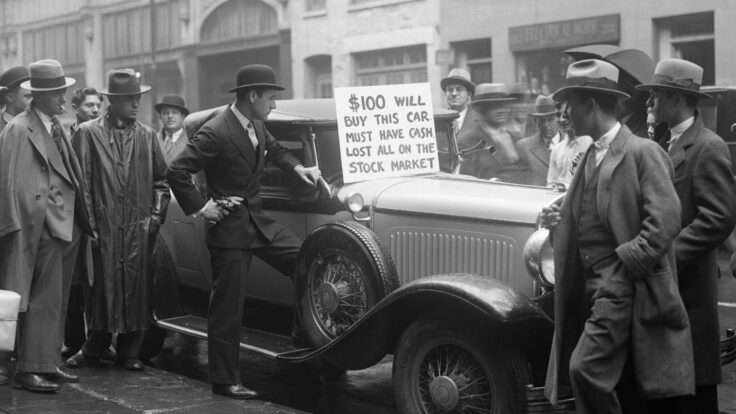
But fortunes can change quickly on Wall Street. It has always been a dangerous place, as people often forget, only to find themselves reminded in a brutal way when they least expect it. First Boston’s fortunes began to change after the October 1987 stock market crash, when the Dow Jones Industrial Average fell 22.6 percent in one day, the largest single decline ever in percentage terms. Credit Suisse swooped in with its first round of rescue financing in October 1988, buying a 44.5 percent stake in the firm. It was the same year that Wassertein and Perella left to form their own eponymous firm after they lost a power struggle, in part because of any number of the aggressive deals that Wassertsien had architected—“Burning Bed,” anyone?—had come a cropper, costing First Boston millions in losses. More losses were to come, too, including Wasserstein’s fiascos with Robert Campeau buying Allied Stores (the owners of Brooks Brothers and Ann Taylor) and Federated Department Stores (the owner of Bloomingdales) in successive, ill-advised leveraged buyouts and then merging the two companies together. (I worked as an advisor to the Allied Stores bondholders on the subsequent Allied-Federated bankruptcy.) Credit Suisse bought a controlling stake in First Boston in 1990 and dropped the name altogether in 2005.
Bringing back the First Boston name for Credit Suisse’s investment bank might be the smartest thing the Swiss bank has done in years. And while they are at it, the even smarter thing for Credit Suisse’s new management to do—Ulrich Koerner is the firm’s third C.E.O. since February 2020—would be to spin off its investment bank to its shareholders as the newly renamed First Boston and let it revive itself, free of the 34 years of weirdness that it has endured since Credit Suisse first came along in 1988.
The fit with the Swiss, after all, never made sense in the first place. First Boston was once part of the Bank of Boston, and was spun out after the passage of the Glass-Steagall Act of 1932 required investment banks and commercial banks to separate their operations. That’s how Morgan Stanley was created, too, when it was separated from J.P. Morgan & Co. In many respects, separating First Boston from Credit Suisse would bring the investment bank full circle from its origins nearly 90 years ago. And that would be a good thing for both the investment bankers at Credit Suisse and the commercial bankers and wealth managers at Credit Suisse. They never really were a good pair; it was more a marriage of convenience brought about by the bad bridge loans that Wasserstein conjured up in the 1980s. Incredibly, Since Tidjane Thiam was named Credit Suisse C.E.O. in July 2015, the bank’s stock has lost some 85 percent of its value. It is now worth just $10.5 billion, only a little bit more than the $10 billion that Credit Suisse paid for DLJ—another once-great Wall Street investment bank—in 2000 and then promptly integrated into Credit Suisse, effectively dismantling it.
Wall Street firms are notoriously difficult to eliminate. Any number of them should have been wiped out after the 2008 financial crisis. But then along came the government bailouts and “too big to fail.” Credit Suisse actually fared better than most of its European counterparts during the 2008 financial crisis, but since then it’s been nearly one crisis after another, from Spygate (which cost Thiam his job) and the $5.5 billion loss the bank suffered because of the collapse of Archegos Capital Management, to the Greensill scandal and the resignation of a former chairman because he violated Covid protocols. The bank is long overdue for a rebrand, a reorganization, and a new strategic direction. |
|
|
|
| FOUR STORIES WE'RE TALKING ABOUT |
 |
| Trevor Bows Out |
| Notes on the contracting post-Noah late night circuit. |
| DYLAN BYERS |
|
 |
| A Billionaire Bakeoff |
| Peter and Teddy discuss which billionaire might absorb the Phoenix Suns. |
| PETER HAMBY & TEDDY SCHLEIFER |
|
 |
|
 |
| Hollywood’s Horror Story |
| In a time of great anxiety in Hollywood, scary movies are the rare stress-reliever. |
| JULIA ALEXANDER |
|
|
|

|
|
|
| You received this message because you signed up to receive emails from Puck
Was this email forwarded to you?
Sign up for Puck here
Sent to
Unsubscribe
Interested in exploring our newsletter offerings?
Manage your preferences
Puck is published by Heat Media LLC
227 W 17th St
New York, NY 10011
For support, just reply to this e-mail
For brand partnerships, email ads@puck.news |
|
|