 |
|
Thanks for following our work at Puck.
|
|
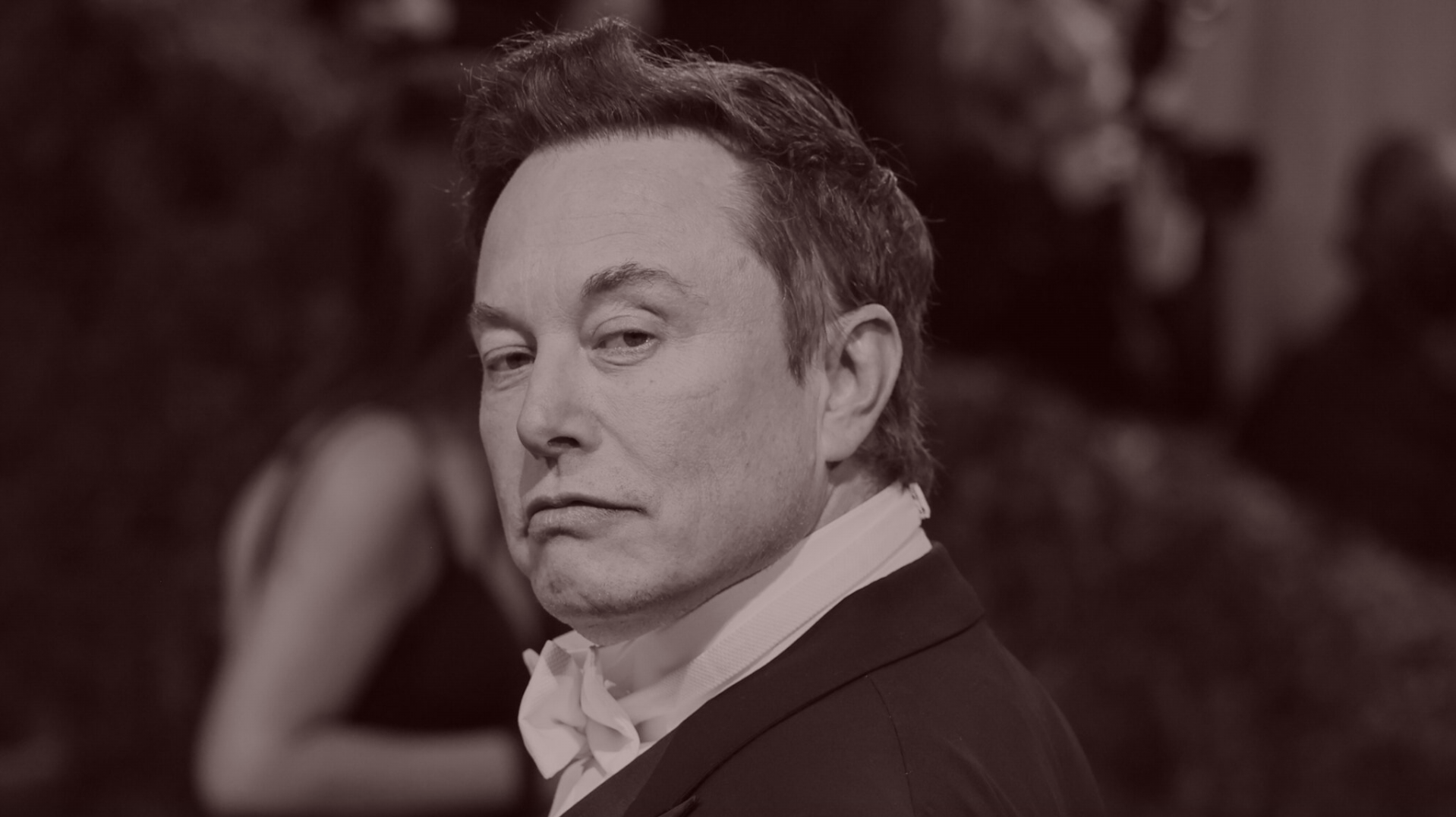
In today’s edition, my reporting on the vast, eccentric history of Elon Musk’s wealth. When placed side-by-side with his billionaire brethren, many of the (likely) soon-to-be-minted Twitter owner’s financial quirks are as idiosyncratic as the man himself. What is Elon telling friends privately about the deal? How is he so comfortable with so much debt? Is he really going to finance Twitter himself, or is he going to rope in some of his wealthy, conservative friends, too? My reporting, below the fold.
|
 |
| Elon’s Eccentric Empire |
| With ingenuity and insane leverage, Elon Musk has created one of the world’s most unconventional financial concerns. Maybe the Twitter deal, against that backdrop, actually makes perfect sense. |
|
|
|
For all of Elon Musk’s eccentricities—smoking a spliff with Joe Rogan, tweeting about a boner-killing Bill Gates—it is his financial quirks and contradictions that are most predictive of his Twitter endgame. The world’s richest man is famously illiquid, undiversified, and was largely uninterested, until last month, in operationalizing his assets in nonindustrial domains, such as Gates has done in philanthropy, orfrenemy Peter Thiel in politics, or Steve Ballmer in sports. And yet even more than those other billionaires, the definitive feature of Elon’s extraordinary wealth creation has been a preternatural tolerance for risk, honed over the years by his messianic certitude, titanic successes, and near-failures.
Musk’s $44 billion purchase of Twitter, and the mega-confident impulsiveness with which he pulled together the financing, is the latest example of this trademark chutzpah. My partner Bill Cohan has written about the extraordinary risk that Musk is taking on, leveraging his Tesla stock so close to the bone in order to finance $12.5 billion of his Twitter bid. This fits a larger biographical pattern of economic cliff-jumping, often without looking: at the age of 27, according to Ashlee Vance’s biography, Musk took $12 million of the $22 million in proceeds that he got from selling his first company, Zip2, and immediately funneled it into starting his second, what eventually became PayPal. A few years later, Musk took the $180 million he made post-tax from selling PayPal and immediately flipped $100 million into starting SpaceX. As one Musk friend told me last week, “He’s doubled and tripled down on his prior companies when it was financially imprudent to do so.” This bet-the-farm mentality has only added to his legend.
Legend doesn’t pay the bills, though. In order to finance his life and his other investments, like Neuralink or the Boring Company, Musk has always been scarily, almost callously, comfortable with debt: He had $550 million or so in loans from investment banks such as Morgan Stanley as of mid-2020. (Today’s total credit figure is unknown.) He has taken these obligations on by collateralizing more than half of his Tesla stock, 88 million shares, or about $90 billion in present value, which has created a risk for shareholders who are concerned about a margin-call from a lender that could send the stock price spiraling. “A lot of people use a lot of leverage. I certainly use a lot. But he kind of runs at the limit there,” said another Musk friend who has talked about the debt with him over the years. “He wants to be able to use his wealth to fund projects that he cares about, and this is a good way to do it.”
And yet the amount of debt that Elon is currently taking on makes his previous plays seem low-calorie by comparison. CNBC declared last week that Musk is likely to become the most indebted C.E.O. in America after the Twitter deal. One of the big unanswered questions remaining is how precisely Musk will furnish his equity end of the bargain. He must, somehow, put up $21 billion to finance the bid. On the surface, that should seem effortless for someone worth around $250 billion, a fortune driven by his 23 percent ownership of Tesla when you include options. But Musk is famously cash-poor, and therefore lacked the ability to easily purchase Twitter outright. “Some people think I have a lot of cash, but I don’t,” Musk said from the stand a few years back, when he was worth $20 billion.
Musk, after all, isn’t Larry Ellison. After selling Zip2, he did buy, and then total, an uninsured McLaren F1. But for all his spectacular, on-paper fortune, his interests don’t appear to include mega-yachts or private Hawaiian islands. “Bro does not live like a billionaire. Bro lives at times below the poverty line,” Grimes, his on-again, off-again girlfriend, toldVanity Fair last month.That asceticism may be rooted in Musk’s brush with bankruptcy around 2008, when both SpaceX and Tesla were struggling and Musk had few other assets, a crunch that led him to sell the McLaren. In late 2009, “I ran out of cash,” he would say in a divorce filing. That near-death experience has become an essential part of Musk’s mythology: Tesla would later rebound and go public, becoming the most valuable carmaker in the world. But Musk still somewhat apocryphally has a tendency to crash at the homes of wealthy friends like Larry Page, and he sold seven properties over the last two years (for about $130 million) as part of a desire, inspired by his fellow Burning Man devotees, to eliminate physical possessions that weigh him down.
So, given that, where is the cash coming from? Musk last week disclosed that he sold $8 billion worth of Tesla stock—it’s not clear how much of that will be eaten away by capital-gains tax, in part because it’s yet unknown whether he is selling shares he was granted last year at a higher share price, and in part because we don’t know what other capital losses Musk will declare, too. But even if all $8 billion were suddenly available post-tax to meet his $21 billion commitment, that obviously still leaves him $13 billion short.
Musk tweeted when those sales were disclosed that he wouldn’t be offloading any more shares, which essentially paves five paths for securing the Twitter bag: a) Finding $13 billion in dry powder from co-investors, a task probably complicated by his stated desire that he doesn’t care about the economics, but is still probably doable; b) risking the farm by leveraging even more of his existing shares in Tesla to grab another margin loan, to the extent that’s even possible; c) rolling over existing Twitter shareholders—Jack Dorsey?—which Musk said this week he will try to do; d) utilizing other, yet-to-be-seen sources of cash, be it money left over from the $16 billion in shares he sold last year, in Elon’s crypto holdings, or by selling equity in still-private SpaceX, though there’s also debt against that; or, I suppose, e) selling more Tesla stock, his tweet last week be damned. That edit button couldn’t come soon enough.
Some combination of a), c) and e)—finding equity partners, trucking investors, cashing in more TSLA shares—has always made the most sense to me. For all the reasons that Bill discussed, it is not clear why Elon wouldn’t just sell more stock and eat the looming capital gain tax, rather than leveraging his fortune even more. I know that Elon has recently christened himself an anti-tax budget hawk. And I understand that historically he has been very uncomfortable selling shares, seeing it as compromising his slavish devotion to the company, and in part because it could jeopardize his control of the firm, which doesn’t have a dual-class structure. In 2013, he promised to be the “last shares out” and three years later, he went further, saying he would never sell shares. But times change, and he’s already selling shares.
|
| “He Can Probably Generate a 2-3x Return” |
|
Finding other equity partners has always struck me as part of the play for someone in Musk’s ironically precarious position, even though it would dilute his ownership of the new company. (In fact, I’ve been surprised he’s sold as much TSLA stock as he already has.) Musk could have financed the Boring Company himself, for instance, but he consistently chooses to bring in outside parties. Reuters reported Monday that Musk is indeed talking with more partners in private equity and ultra-high-net-worth circles.
Musk’s inner orbit includes billionaires in Silicon Valley like David Sacks, Marc Andreessen and Steve Jurvetson. (It does not include Thiel, despite a recent Journal story that was wrongly interpreted as saying Thiel had “egged on” Musk.) Might those ideological brethren join? The unpredictability of Twitter’s cash flow might scare off private equity, but as a Silicon Valley veteran wrote to me this week, there are at least four compelling reasons why Elon’s friends might be enticed by the proposition. “1. He can probably generate a 2-3X return 2) If you have $1B, why not put $50M into a fun project like this (if you just dropped $175M on a house, what's $50M into Twitter?!?!) 3) You get to be part of a historic take-private, and if it works, look like a hero 4) You're bored.”
A few of Elon’s wealthy friends from TED or Burning Man might even view co-investing on the Twitter deal as a philanthropic venture. And this perspective certainly gels with a lot of the sotto voce chatter I’ve been hearing around town. Why is Elon doing this? Consider Occam’s Razor. A person who recently talked with Musk about Twitter described his conviction that the “company just is incompetently run, and also has the wrong stance about censorship and free speech.” It really is as simple as that.
The financing is more complicated, and may be the defining moment in the career of Jared Birchall, the backroom Silicon Valley player who has been quietly running Musk’s family office for the past six years. Understanding the enigmatic Birchall, as I detailed last week, is essential to understanding Elon. He has hovered over all of this, and hovers over (or behind) the Twitter deal too. In 2016, as Musk’s net worth crossed $10 billion or so, he hired full-time staff to set up a family office south of San Francisco in Burlingame, called Excession. And he recruited Birchall, then a wealth-manager from Morgan Stanley, to effectively organize his financial life. Over the next few years, Birchall would serve as a jack-of-all trades—leading work, Birchall would later testify, to help a refugee in Libya; to coordinate personal travel for Musk’s ever-growing family; even to inquire about how to buy the web address JustBalls.com. It was, to be sure, an unusual job.
The Twitter deal is also unusual in its own way, and while Birchall is not the banker on the deal, he helped to pull off the extraordinary financial achievement. Resultantly, he has seen his profile explode in just the last few weeks. Privately, high-finance types have been reaching out to Musk’s friends with various in-the-weeds critiques of Birchall’s financial engineering. Before this week, when some of his text messages were leaked to the Journal, Birchall’s entire public profile consisted of a single quote about his mom to the B.Y.U. college paper, and a brief cameo in Elon’s “pedo guy” case. “The center of everything I do is focused on confidentiality and privacy,” Birchall testified in court. Things have certainly changed.
It’s a sign of the times that a family-office chief is running point on one of the most extraordinary transactions in the history of corporate dealmaking. This is not an equity-backed public investment like Tesla, but rather a personal plaything, like Musk’s bare-bones charitable foundation or his McLaren. Twitter will become a totally-owned personal asset, subject to his passions. But it is also in keeping with Musk’s broader, Benioff-esque worldview, that corporations, like Tesla or SpaceX, are vehicles for social change. Musk has long made the argument that those two companies provide more positive value to society than do-gooder foundations or do-nothing candidates.
It may be that Musk is sincere when he says he wants to protect a vital public good whose business has suffered from years of bad leadership—and that the financial endgame will sort itself out. The influential investor Chamath Palihapitiya presented a hypothetical scenario last week, on his podcast with Sacks, in which Musk remolds Twitter in his image, steadies the business, and then donates the company to a nonprofit or a trust. That sounds crazy, but it would mimic the current structure of Signal, the massively popular consumer texting app that is now owned by an outside foundation.
Another possibility? Behind the curtain of private markets, Elon turns Twitter around, increases its EBITDA, and sells it to someone else, or even takes it public yet again, adding another chapter to the legend of risk and leverage. That, of course, would fit his pattern too.
|
|
|
|
| FOUR STORIES WE'RE TALKING ABOUT |
 |
| Peak TV's Plunge |
| Matt and Bloomberg’s Lucas Shaw break down the rapidly approaching end-times for peak TV. |
| MATTHEW BELLONI |
|
 |
| Post-Roe Nuclear Fallout |
| Puck’s Tara Palmeri joins Peter to discuss the stunning revelation that the SCOTUS is poised to overturn Roe. |
| PETER HAMBY |
|
 |
| The A.I.-I.P. Supernova |
| Will robots eventually replace us? Who knows. But either way, they're going to learn how to create superhero movies. |
| ERIQ GARDNER |
|
 |
| Elon's Eject Button |
| Musk essentially only bought a $1 billion call option to buy Twitter, but various market moves suggest things are lining up. |
| WILLIAM D. COHAN |
|
|
|

|
|
|
You received this message because you signed up to receive emails from Puck
Was this email forwarded to you?
Sign up for Puck here
Sent to
{{customer.email}}
Unsubscribe
Interested in exploring our newsletter offerings?
Manage your preferences
Puck is published by Heat Media LLC
64 Bank Street
New York, NY 10014
For support, just reply to this e-mail
For brand partnerships, email ads@puck.news |
|
|