 |
 |
|
Happy Sunday, and welcome back to Dry Powder.
|
|
What possible reason could the world’s richest man have for stiffing his creditors, putting Twitter at risk of involuntary bankruptcy proceedings? In today’s issue, a look at Elon’s latest self-induced headache, fresh reporting on the bidders lining up for Simon & Schuster, and a nod to Michael Jordan, who made a killing offloading the Charlotte Hornets.
|
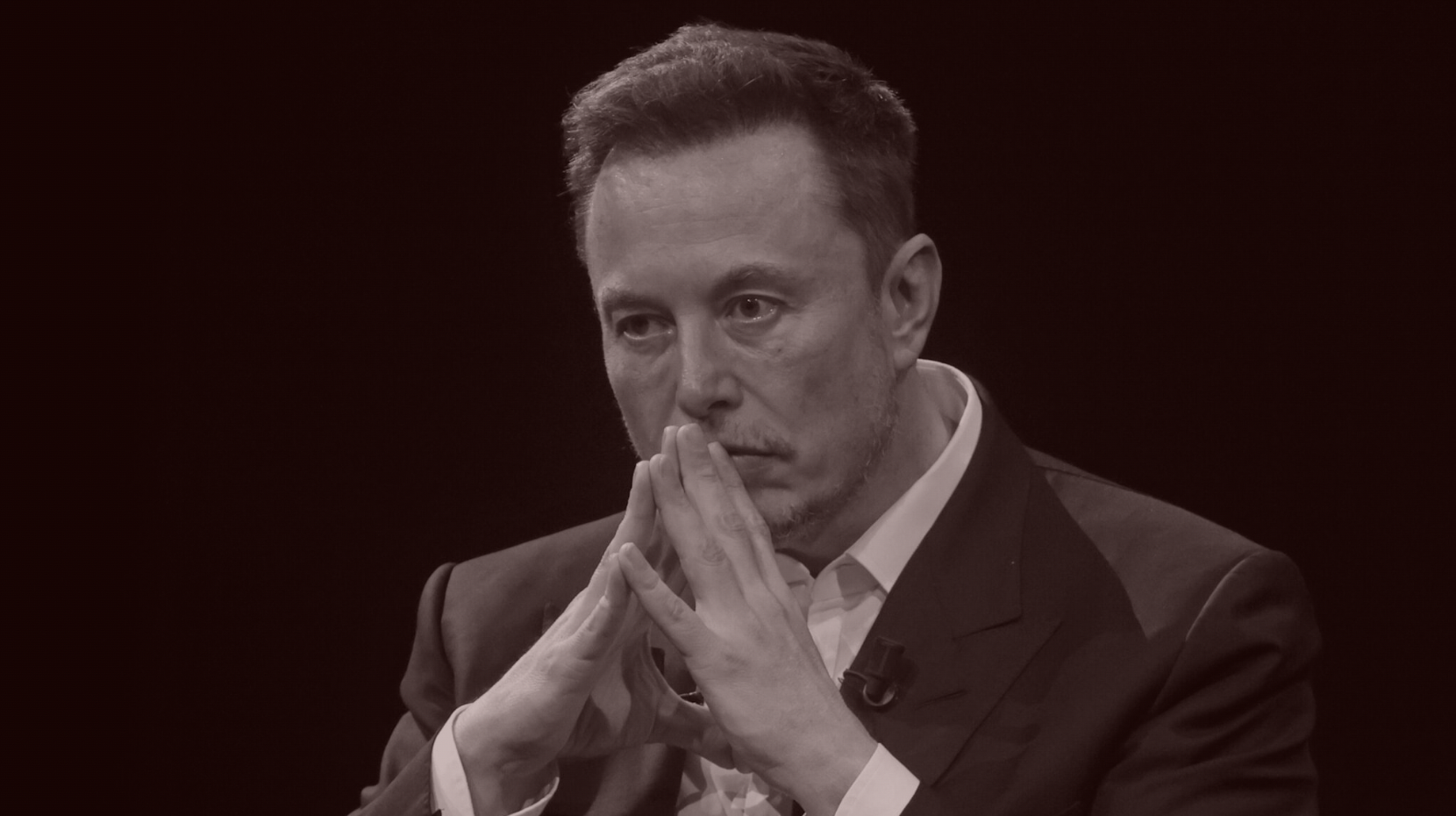 |
| Will Elon Lose Control of Twitter? |
| As a former restructuring and bankruptcy advisor at Lazard, I can recognize the signs of a company in distress. And it’s a pretty obvious tell that there’s financial trouble brewing when a company stops paying its bills. |
|
|
|
| Oh dear, what is going on these days with Elon Musk at Twitter? Let’s see: Twitter is being kicked out of its office in Boulder because—wait for it—Elon decided to stop paying the rent. He’s stopped paying the bills for Twitter’s use of Google Cloud and, according to my partner Eriq Gardner, for JAMS, the arbitration administrator that is adjudicating many of Musk’s legal disputes with his ex-employees. He’s also facing a lawsuit from the Wall Street P.R. firm, Joele Frank, which claims it’s owed more than $830,000 in fees for advice it provided during Musk’s campaign to buy Twitter last year.
As a former restructuring and bankruptcy advisor at Lazard, I can recognize the signs of a company in distress. After all, it’s a pretty obvious tell that there’s financial trouble brewing when a company stops paying its bills as they become due. That’s a recipe for financial disaster, or bankruptcy, or both. Last time I checked, if a company has more than 12 creditors—as Twitter does—then any three of them can join together to put a company into an involuntary bankruptcy proceeding. And Elon is in danger here. At some point, the creditors he is mindlessly stiffing on a regular basis are going to get sufficiently pissed to throw Twitter into bankruptcy. |
|
|
| But I don’t get it, dude. Elon is the world’s richest man, with a net worth of some $233 billion, according to Bloomberg, up an astounding $100 billion so far in 2023. Why is he not paying the people he owes money to? Why is he risking an involuntary bankruptcy filing? And then, of course, there is the upcoming interest payment of around $300 million due to the group of seven or so banks that still hold Twitter’s $13 billion of debt used to pay a portion of the $44 billion Twitter purchase price. I know Elon made the interest payments owed in January and in May. But will he make the next one, due in September? I suppose not paying those (metaphorical) nickels and dimes is one thing. But if he doesn’t pay the banks the $300 million he owes them in September, he will be asking for trouble in the form of a financial restructuring, or worse, a bankruptcy filing.
This is a real head-scratcher. Obviously Elon can afford to pay Twitter’s bills: it’s couch cushion money for him. So he must have a reason for not doing so, which of course he’s not sharing. (If I ask for a comment, I’ll just get the poop emoji in return.) Is he taking a page out of Donald Trump’s playbook? Trump, of course, was notorious for stiffing his creditors, his contractors, and his tradesmen and then mostly getting away with it. (Some five companies he owned did go through bankruptcy but none of those proceedings seemed to affect him very much.)
Generally speaking, Trump was able to not pay creditors what he owed them, in part because they must have decided that life was too short to get into a legal fight with him. (Of course, now Trump is in legal fights with governments, which have more resources and patience than he does.) Is Elon doing something similar? He can probably get away with not paying his landlord in Boulder, or JAMS, or Joele Frank, but I assume that Google, or its parent, Alphabet, with a market value of $1.5 trillion, will be more than happy to litigate with Elon to get him to pay the Google Cloud bill.
What’s as clear today as it was on October 27, when the $44 billion changed hands and Elon took control of Twitter, is that the $31 billion of equity that Elon ($24 billion) and his friends ($7 billion) put into the leveraged buyout of Twitter is gone. It’s a zero. In fact, the Twitter buyout may be one of the very worst acquisitions in the history of Wall Street, with something like $37 billion in value flushed—the $31 billion of equity and about half of the value of the $13 billion of debt, or another $6 billion—pretty much as soon as the deal closed.
Unfortunately for Elon, and his fellow equity holders and the banks still holding on to the $13 billion of debt (which should have been syndicated long ago), he has done nothing in the eight months since he’s owned Twitter to create value for his partners; in fact, just the opposite. He’s destroyed value for the equity and made it virtually impossible for the big Wall Street banks that still own the $13 billion of senior debt to sell it to other investors, unless they are willing to take a huge writedown—on the order of 50 percent—to move the debt off their balance sheets. At some point, the Federal Reserve, the banks’ prudential regulator, is going to force them to sell the debt, perfect their losses, or to take a serious impairment charge against the debt and perfect that loss.
At least one of Elon’s Twitter investors, Fidelity, is slowly but surely facing up to the reality of its investment in Twitter. In late May, for the third time since the Twitter deal closed, one Fidelity fund has publicly marked down the value of its investment in Twitter. It now carries the small Twitter investment that is housed in that fund at $6.55 million, down 67 percent from the $20 million, or so, that the one fund valued Twitter at the end of October 2022. By that same logic, Fidelity’s overall $316 million equity investment in Twitter is now worth around $104 million. Of course, it’s really worth zero, but Fidelity, at least, is willing to acknowledge that two-thirds of its investment is gone. Soon enough, all the equity investors in Twitter will acknowledge a similar reality.
So what is Elon’s game here? Perhaps, as I have written before, he is essentially cosplaying as a bankrupt entity—by not paying his bills as they become due—so that he can scare the big Wall Street banks that own Twitter’s $13 billion of debt to sell it to him at a steep discount, perhaps at a price even lower than the 50 cents on the dollar it would probably trade for now, if marketed to investors. Not that Elon necessarily wants to buy the debt, even at a big discount. But this may be the path of least resistance if he wants to prevent the company from falling into the hands of the voracious distressed debt community on Wall Street who are in the “loan-to-own” business.
Once that bank debt starts to trade, the Twitter fireworks will really begin. If Elon buys the debt, then he can keep control of Twitter for whatever perverse reasons he has for still wanting to own this pig. If the debt gets bought by the likes of DoubleLine Capital, or Apollo, or Oaktree Capital, then all bets are off for Elon and he will lose control of Twitter. |
| The Simon & Schuster Windfall |
|
| Things are heating up in Paramount Global’s second attempt to sell its book publishing arm, Simon & Schuster, after a federal judge blocked the nearly $2.2 billion sale of S&S to Penguin Random House last October. My Wall Street M&A sources tell me that there are about five bidders still involved in the process being run by Aryeh Bourkoff’s LionTree Advisors, with the second round bids due in mid July and a deal to be announced before the end of the summer, and closed by the end of the year.
As the Wall Street Journal reported earlier this week, its sister company, HarperCollins, is one of the five or so bidders in the second round, along with KKR, the large alternative asset manager. The rest of the field, I’m told, is also composed of financial buyers, some such as Veritas Capital, which bought Houghton Mifflin Harcourt, in April 2022, for around $2.8 billion, or perhaps Blackstone, which has made owning “high-quality content” one of its “highest-conviction investment themes,” according to Joe Baratta, the firm’s head of private equity. (Blackstone has backed ex-Disney executives Kevin Mayer and Tom Staggs in buying content companies—S&S would certainly fit the bill.) In any event, there is a big opportunity for a private equity firm to combine S&S with its other media and publishing assets as a way to cut costs and increase profitability.
While Paramount was misguided in thinking that a combination of S&S and Penguin Random House would ever fly from an antitrust point of view, I suspect the Paramount executives will not make the same mistake again. That rules out HarperCollins as a buyer. Sorry Rupert. But there is absolutely no way that Paramount will risk another battle with the Justice Department and try to sell S&S to a major publishing competitor, even if it is smaller than Penguin Random House, which is by far the largest of the lot. HarperCollins, the number two book publisher, can serve as a fine stalking horse for the other bidders, proving useful for Aryeh in that regard, but there’s no way in hell that Murdoch will end up with S&S. That means S&S will more than likely end up in the hands of a financial buyer.
The pole position here, I suspect, belongs to KKR, which has a long history of investing in the media and publishing businesses and owns stakes in Skydance Media, Epic Games, Axel Springer, and Ari Emanuel’s Endeavor. Once upon a time, KKR spent 22 years struggling with Primedia, the owner of a bunch of magazines, including Seventeen and New York, among other publishing assets, before selling the company to TPG, in 2011. (Disclosure: TPG is an investor in Puck, but you all know that already.)
The good news for Paramount, and Aryeh, is that S&S has two tailwinds at the moment that should lead to a successful transaction. First, the M&A market has had a moribund 2023 so far, making a legendary company, such as S&S, an attractive acquisition target, especially for a financial buyer with plenty of dry powder to put to work. These guys have got to do deals and there have been few opportunities so far this year. |
|
|
| Second, under C.E.O. Jon Karp, S&S has been hitting it out of the park financially. For the 12 months ended March 31—the last period for which financials are available publicly—S&S had revenue of $1.2 billion and operating income of $255 million, a margin of 21 percent. That’s a nice business, or at least Karp is doing a great job running it. It’s not crazy for Paramount to expect second round bids of at least $2 billion for S&S—8x operating income—and probably more, given the dearth of M&A product out there these days and the premium for such a blue chip brand.
Being owned by KKR, or its ilk, could also work out very well for Karp and his management team, at least financially. He probably doesn’t own any Paramount Global stock as C.E.O. of S&S. Under, say, KKR’s ownership, Karp will get plenty of private S&S stock in order to give him every incentive he needs to keep up the good work so that when the company is sold, or taken public, a few years later, Karp can cash in. That could prove to be very financially lucrative for Karp and his management brethren. He probably wouldn’t get anything like that deal from HarperCollins and might even be a victim of the combination. I suspect Karp is rooting for a financial buyer to take S&S, even though he probably will have little say in the end who Paramount chooses to buy the company.
When you put it all together—the consistent earnings that Karp has produced for Paramount in the last few years, plus the $200 million that Paramount got from PRH after the first deal cratered, plus the at least $2 billion that KKR, or whoever wins S&S will have to pay—Paramount’s longtime ownership of S&S clearly has paid off. Combine the S&S windfall with what Paramount hopes to receive from selling a majority stake in BET Media Group—perhaps another $2 billion or so—and Paramount is putting together a nice little cash horde that it’s going to need to continue to fight the brutal streaming wars.
After all, it’s been a tough year for Paramount. In the past year, the stock is down by one-third—the company is now worth about $11 billion—and its largest economic shareholder, Warren Buffet, has gone on the record saying he doesn’t understand the economics of the streaming business and that he doesn’t think it can be profitable unless the monthly price consumers are willing to pay for it is increased dramatically. Paramount needs all the help it can get at this point. And it sounds like Karp and S&S will be doing their part. |
|
|
| You’ve got to hand it to Michael Jordan. Along with being the greatest basketball player in history—even if he did go to UNC—he is one savvy businessman as well. His deal to sell a majority of the Charlotte Hornets to Gabe Plotkin, of the late Melvin Capital, and Rick Schnall, the co-president of Clayton Dubilier, for an overall valuation of $3 billion is nothing short of brilliant. Given that Jordan, who is already a billionaire, paid a mere $275 million for his majority stake in the team in 2010—that’s not a typo!—Jordan will get the financial windfall he deserves. (Plotkin was already a minority owner of the Hornets and Schnall was a minority owner of the Atlanta Hawks.)
The price that Plotkin and Schnall are paying for the Hornets will make it the third highest price paid for an NBA team, after the $4 billion paid by Mat Ishbia for the Phoenix Suns last year and the $3.3 billion that Joe Tsai paid for the Brooklyn Nets in 2019. While the prices for many professional sports teams continue to spiral upwards, it’s the purchase price of NFL teams that continue to lead the market higher and higher. Less than a year after Rob Walton, with a net worth of some $65 billion, agreed to pay a record $4.65 billion for the Denver Broncos, along comes financial entrepreneurs Josh Harris, David Blitzer, and Mitchell Rales, and their consortium of partners, who agreed to pay $6 billion for the Washington Commanders, setting a new record for the NFL.
It’s anyone’s guess where this all ends. Professional sports teams are like waterfront property. They aren’t making any more of them, or very few of them anyway. The teams are worth more each year because live sports are one of the few things that people will still tune into on their television sets or computer screens. That makes the teams, which auction their media rights deals, very valuable. But I think there is a point beyond which the networks and the streamers can go. And it’s fast approaching. Except for Netflix, the streamers are losing money. Linear TV is declining rapidly, making it increasingly difficult for, say, Disney’s ESPN to pay up for broadcasting and streaming rights for live sports events. Something has to give, and soon. That’s why Jordan, I suspect, is getting out while the getting is good. |
|
|
|
| FOUR STORIES WE’RE TALKING ABOUT |
|
|
|
|
|
 |
|
|
|
Need help? Review our FAQs
page or contact
us for assistance. For brand partnerships, email ads@puck.news.
|
|
You received this email because you signed up to receive emails from Puck, or as part of your Puck account associated with . To stop receiving this newsletter and/or manage all your email preferences, click here.
|
|
Puck is published by Heat Media LLC. 227 W 17th St New York, NY 10011.
|
|
|
|