 |
|
Welcome back to Dry Powder.
|
|
Happy Sunday, and happy Mother’s Day to all who celebrate. In today’s note, my thoughts on Elon’s eclectic group of Twitter co-investors, what Elizabeth Warren gets right about Bitcoin, and the long-overdue reckoning for Cathie Wood.
|
| SPONSORED BY |
 |
|
|
 |
| Elon’s Church Plate & Cathie Wood’s Downfall |
| A motley group of coinvestors could help Musk to reduce the risk he is putting on Tesla, but will require him to find even more equity to close his deal for Twitter. Plus: What Liz Warren gets right and where Cathie Wood went wrong. |
|
|
|
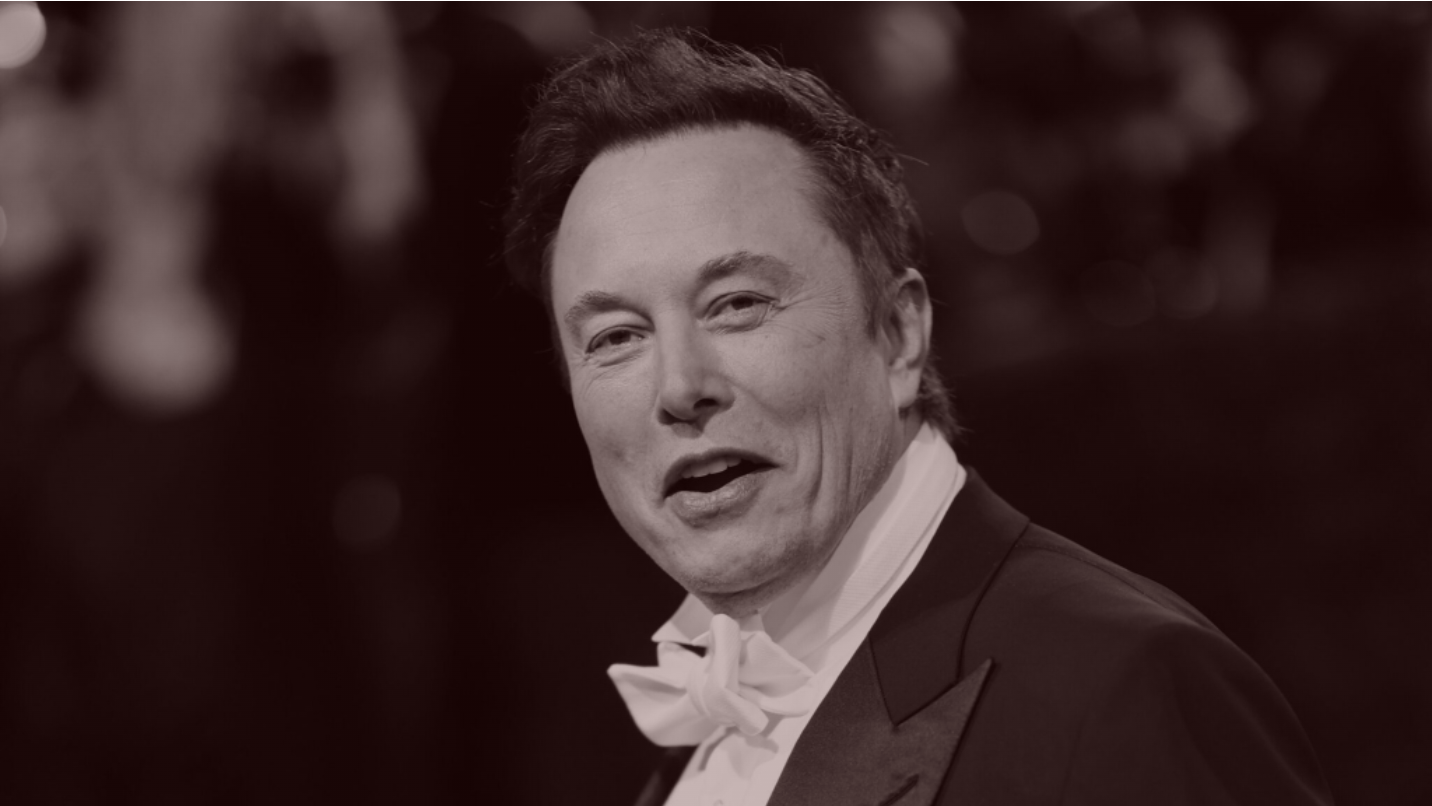
Elon Musk is slowly but surely filling his $21 billion hole. It’s actually pretty impressive, when you think about it, especially when you take into account the pie-in-the-sky projections he’s been peddling. There aren’t many among us who could personally buy a company that struggles to make money, for $44 billion, and then pay for it by mortgaging the company itself; margining some $60 billion of stock in another company; and finally going hat-in-hand to friends and investors to find a large portion of $21 billion of additional equity. But that’s exactly what Elon is in the process of methodically doing to buy Twitter.
According to a new S.E.C. filing, Elon has attracted another $7.139 billion in fresh equity from outsiders. The filing also reveals that the $12.5 billion margin loan that Morgan Stanley, Bank of America, Barclays and other banks were providing to him appears to have been reduced now to $6.25 billion. There’s no explanation why, of course, but that will take some pressure off his Tesla stock: If Elon is only getting a margin loan for $6.25 billion, instead of $12.5 billion, he only has to put up Tesla stock worth $25 billion as collateral, as opposed to $60 billion. That’s a big difference. In short, this new structure decreases the risk Elon is putting on Tesla, but increases his task of finding even more equity.
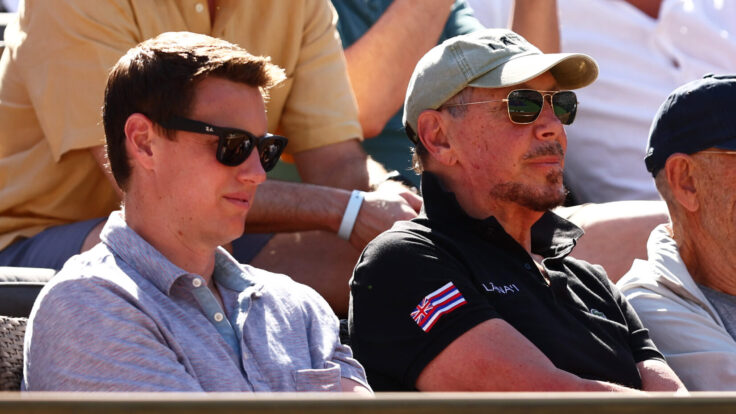
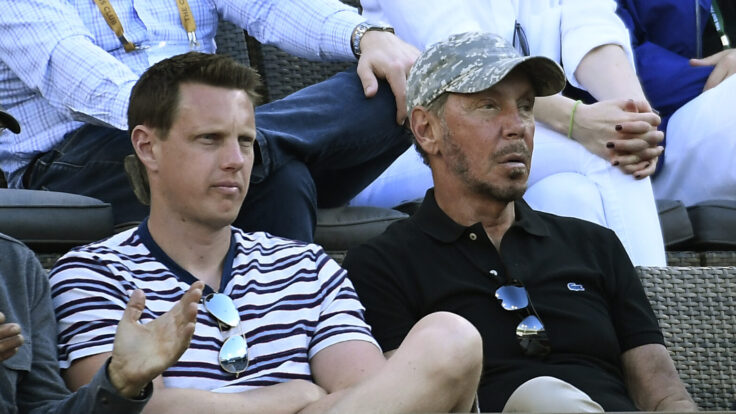
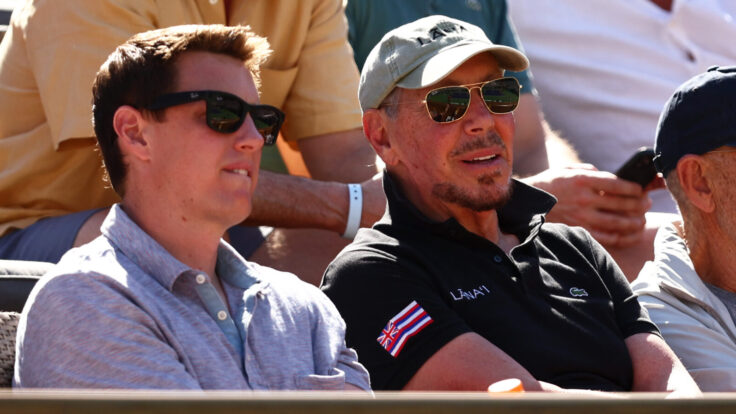
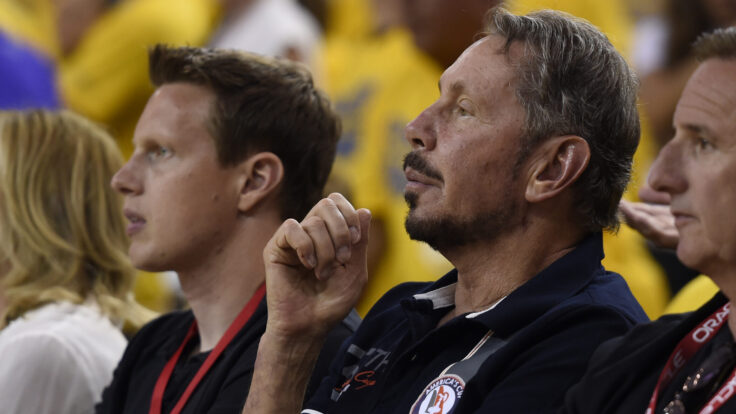
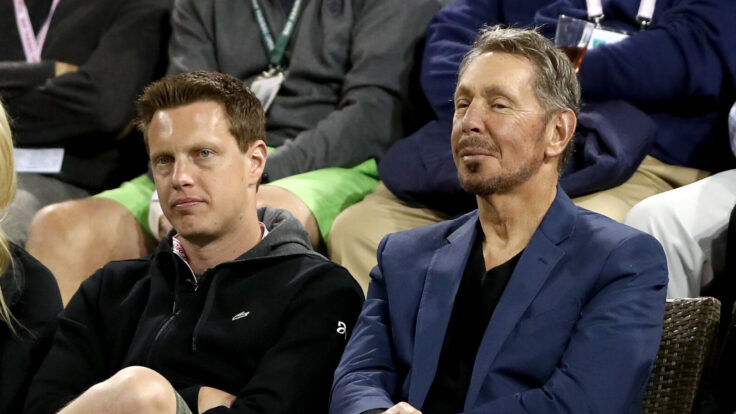
So, given the new filing, let’s recalculate. His new equity commitment is for $27.25 billion, of which he’s pledged $7 billion (the conjectured after-tax proceeds of the $8.5 billion of Tesla stock he recently sold) of his own money, plus another $7.139 billion from an eclectic group that includes $1 billion from his friend Larry Ellison, $800 million from the venture capital firm Sequoia Capital, and $700 million from a firm I’ve never heard of, VyCapital, which is based in Dubai and was started in 2013 by Alexander Tamas, a former technology M&A banker at Goldman, in London, and a former partner of DST Global, back when it was still based in Moscow. Somehow, Elon got this new group of investors to buy off on his wacky projections for Twitter. Keeping in mind that, being generous, Twitter had about $1 billion of EBITDA in 2021, he’s telling investors—according to a circulating PowerPoint presentation—that Twitter will generate $3.2 billion in “free cash flow” in 2025 and then $9.4 billion in 2028 while also reducing Twitter’s reliance on advertising and exploding Twitter’s payments business. Ya right.
Another investor buying what Elon is selling is Saudi Prince Alwaleed Bin Talal, an early Twitter investor. Prince Alwaleedhas agreed to roll over his 35 million or so shares—a 4.5 percent stake in the company—into Elon’s private Twitter for the going rate of $54.20 per share. At that price, Prince Alwaleed’s stake is worth around $1.9 billion, meaning that is $1.9 billion less Twitter stock that Elon has to buy because Prince Alwaleed is not selling his stake but actually reinvesting it into Elon’s Twitter. (Elon had suggested he was hoping some Twitter shareholders would do what Prince Alwaleed has decided to do. There may be others but it’s very doubtful the big Twitter shareholders—BlackRock, Morgan Stanley Asset Management and Vanguard—will be among them.)
So, returning to the $27.25 billion equity hole: $7 billion so far has come from Elon, $7.139 billion is coming from his eclectic co-investors, and $1.9 billion is coming from the much-diminished Prince Alwaleed. By my calculations, that leaves Elon with a still formidable task of raising another $11.2 billion of equity to succeed in taking Twitter private. I’m sure Elon will get it done one way or the other—he can always increase the size of his margin loan again, I suppose, and decrease the equity bucket, but that would put more pressure on his first love, Tesla. Still, it’s impressive that he’s gotten commitments for $16.1 billion of the $27.25 billion in a matter of days.
|
|
|
Some of Elon’s other Eclectics are pretty well known. An affiliate of A16z, the Andressen Horowitz venture capital firm, is stepping up for $400 million. “We invested, because we believe in Ev [Williams] and Jack [Dorsey]’s vision to connect the world and we believe in Elon’s brilliance to finally make it what it was meant to be,” A16z co-founder Ben Horowitz tweeted. Binance, the cryptocurrency exchange is stepping up for $500 million, but for the life of me I don’t know why. Brookfield, the savvy investment firm, is investing $250 million, and the venture capital firm Draper Fisher Jurvetson, now known as DFJ, is ponying up $100 million. After that, it’s a bunch of firms I confess I have never heard of before, in the VyCapital vein. There’s A.M. Management & Consulting ($25 million); Aliya Capital Partners ($250 million); Bamco Inc, which seems to be affiliated with Ron Baron, the hedge fund manager ($100 million); Honeycomb Asset Management ($5 million); Key Wealth Advisors ($30 million); Litani Ventures ($25 million); Qatar Holding ($375 million); Strauss Capital ($150 million); Tresser Blvd 402 LLC ($8.5 million); and, Witkoff Capital ($100 million). The Witkoff Capital gang are big Donald Trump supporters; Zach Witkoff got married at Mar-A-Lago last weekend, as my new partner Tara Palmeri reported earlier this week.
Hats off to whichever firm—I assume it’s Morgan Stanley—has been helping Elon and his team raise the capital from the four corners of the Earth. But their work is not done, not by a wide margin. There’s still another $11 billion that has to be raised, unless Elon’s plans to change things up again, which of course would not surprise me in the least.
One more curiosity on the equity list: Fidelity Management. Its participation is not the least bit unusual, really. Fidelity has a way of investing in most things. But what is blowing my mind is the amount that Fidelity is investing in Elon’s Twitter deal: $316,139,386. That’s just as peculiar a number as Warren Buffett’s $848.02 offer per share for Alleghany. (Dry Powder readers know why he did that.) Can someone out there please tell me how Fidelity arrived at this most bizarre number? (A Fidelity spokesperson wrote to me, innocuously enough, “We don’t comment on individual stocks or our investment decisions and the $316M is just simply the result of the usual internal fundamental, bottoms-up research process analyzing a number of different factors.” OK, thanks.)
|
| ADVERTISEMENT |
 |
We build tools that give you control and help keep you safe
Real connection can only happen on safe platforms. So we build tools to protect our communities.
- Privacy Checkup, where you can manage your privacy settings and control who sees what you share
- Industry-leading AI that detects and reacts to harmful content faster than ever
Learn about our efforts |
|
|
|
|
I first noticed the advertising during the recent N.C.A.A. men’s basketball tournament: All sorts of small money management companies pushing the idea that Bitcoin—the premier cryptocurrency—could be part of a well-balanced 401k retirement savings plan. That surprised me, considering that Bitcoin is highly volatile and has few current use cases beyond its value as a speculative asset.
Then, on April 26, the thinking graduated from the fringes to the mainstream when Fidelity, the behemoth money management firm (and Twitter investor), announced that it will soon allow the 23,000 companies that use its retirement platform the option to include Bitcoin as an investment choice. Apparently, Fidelity will permit the employees at these companies to allocate as much as 20 percent of their savings portfolios to Bitcoin, although the individual companies may limit the investment amount to below 20 percent.
This is not investment advice, but this is a terrible idea. My main beef with people investing their retirement savings in Bitcoin is that, in my humble opinion, it is way too risky an investment for a retirement account, which is designed to provide a way to save, in a tax-efficient manner, for the days when you or your spouse are no longer working. A 401k savings plan, or an IRA savings plan, is no place for something as unproven and volatile as Bitcoin. I agree with Peter Schiff, the investment guru and prognosticator, who told me on Friday from Puerto Rico, “Bitcoin is a risk asset of the highest risk.”
Bitcoin has taken the world by storm since it was first introduced back after the 2008 financial crisis by someone or several someones going by the name or pseudonym, Satoshi Nakomoto. In short, Satoshi came up with the plan for a decentralized digital currency, in which the number of digital tokens would be limited to 21 million, period. Each token, and transaction, is cryptographically validated on a public ledger called a blockchain. Satoshi’s genius was to limit the supply of Bitcoins and then make people solve complicated mathematical equations to get them, a process not unlike mining. The scheme has resulted in Bitcoin zealots, skeptics, true believers and deniers; the value of Bitcoin, for a period last year, was worth in the aggregate around $1 trillion. On November 10, Bitcoin peaked at $68,789 per coin. These days, despite being touted as a hedge against everything from inflation and deficit spending to central banking and volatile financial markets, Bitcoin is trading around $34,000, down about 50 percent.
Again, in my view, Bitcoin is simply too volatile to be part of a working Joe’s retirement plan. It may be all the things that its advocates say it is, but it also may be nothing more than a clever way to speculate, one that relies on a greater fool to come along and buy it from you at a higher price. (Again, this is not investment advice!). That is one of the underlying theories of all investing. But unlike investing in a stock or a bond, which are issued by companies that usually have genuine cash flows and business prospects associated with them, Bitcoin represents little more than the enthusiasm of the people who believe in it.
There are plenty of whip smart believers, such as Michael Saylor, the C.E.O. of Microstrategy, who has invested nearly $4 billion of his company’s cash in Bitcoin, and my friend Anthony Scaramucci, the hedge fund impresario at Skybridge Capital who is also very hyped about Bitcoin. And for sophisticated investors, Bitcoin may be just the thing. Saylor is so articulate about Bitcoin that if you spend an hour or so listening to him—I actually recommend a conversation he had late last year with Tucker Carlson, of all people—you’ll be thinking long and hard about investing in Bitcoin (notwithstanding the fact that if Bitcoin falls below $21,000, Saylor and Microstrategy could face a punishing margin call). And it’s perfectly reasonable for retail investors to speculate alongside him. I just don’t think it’s the right investment for a savings and retirement account, unless you’re willing to have no savings when it’s time to retire.
I don’t agree with Sen. Elizabeth Warren on many things related to Wall Street or investing. But I do agree with the letter that she and Tina Smith, the Senator from Minnesota, wrote recently to Abigail Johnson, the C.E.O. of Fidelity, about the dangers of allowing savers to put Bitcoin in their retirement accounts. “Investing in cryptocurrencies is a risky and speculative gamble, and we are concerned that Fidelity would take these risks with millions of Americans’ retirement savings,” they wrote to Johnson. “Last year, Bitcoin’s value swung more than two standard deviations from its average—a measure of volatility—19 times.” They also wrote that Bitcoin’s price was susceptible to outside influence from the likes of our friend Elon Musk, who’s tweets alone have led to price fluctuation of Bitcoin of as much as 8 percent.
The two senators pressed Johnson on why Fidelity had taken this step and about whether it represented a financial conflict, given that in 2017 Fidelity set up its own small mining operation. In a statement, Fidelity responded to Warren and Smith with its usual aplomb. “As a Massachusetts-based company with a proven 75-plus-year history of doing what’s in the best interest of our customers, we look forward to continuing our respectful dialogue with policy makers to responsibly provide access with all appropriate consumer protections and educational guidance for plan sponsors as they consider offering this innovative product,” the company wrote. “Consistent with our ongoing dialogue with regulators and policy makers, we will respond directly.”
Plenty of smart people think Bitcoin is a rocketship to the moon, or maybe even to Mars, and that regular people—as well as millionaires and billionaires—deserve the chance to sock it away in their retirement plans as a way to participate tax efficiently in the bonanza. I just happen to be one of those people who believes it's not a proper investment opportunity for a 401k, unless you don’t care whether you lose everything you worked your whole life to save so you would have something for the golden years.
|
| Cathie’s Come-to-Jesus Moment |
|
Everything about Cathie Wood is a real head-scratcher, as I have been writing now for more than a year. On Thursday, her ARKK fund was down another 8 percent, or so, pretty much erasing all the gains of the past two years. It dropped again on Friday. She’s also got serious mishegas related to her friend Bill Hwang, the fund manager who was indicted this past week. Hwang was one of the earliest investors in Wood’s management company when she went out on her own in 2014 and they have studied the Bible together over the years. It’s unclear whether she’ll find herself caught up in Hwang’s legal troubles but that will be something to watch for in the months ahead.
At the moment, Wood has all she can handle in the choppy financial markets, where the Fed is busy fighting inflation by raising both short-term and long-term interest rates. It’s the kind of market that’s not particularly kind to the high-flying stock stocks that Cathie Wood loves to tout. So far in 2022, Wood’s flagship ARK Innovation ETF fund is down more than 50 percent. If we take a look at Wood’s 10 largest holdings, it’s clear why she’s in misery right now. Tesla, her largest holding, is down 26 percent in 2022. Roku, her second largest holding, is down 56 percent in 2022. Zoom, her third largest holding, is down 45 percent. Coinbase, number four, is down 54 percent year-to-date, and Square, her fifth largest holding, is down 41 percent in 2022. One of her other favorites, now her seventh largest holding, is Teledoc Health, which is down 62 percent year-to-date.
This is a near wipeout, and one that is long overdue and well-deserved. Wood has been nearly evangelical about these stocks, all but ignoring how absurd their valuations had become and how untethered their financial performance had become to reality. It’s a very healthy sign for the markets that a considerable amount of air has been removed from these dirigibles. And there probably will be more to come, and deservedly so.
I have no explanation for why investors continue to hop aboard the Cathie Wood train as it is careening out of control. There might be some people who think that a 50 percent year-to-date bloodletting is a sufficient fall and that an uptick is imminent, or inevitable. There could be some truth to that. But it’s equally plausible that the Cathie Wood ETFs can continue to spiral downward. It would all be terribly amusing, but for the fact that real people have put billions of their hard-earned money into funds run by a manager who truly seems to have lost touch with reality, and has been distanced from it for some time now. Of course, that is the long tale of the financial markets. For every buyer, there is a seller. For every seller, there is a buyer. For every skeptic, there is a believer. The markets are fascinating that way. As my friend Warren Buffett likes to attribute to his mentor Benjamin Graham, “Stock markets are a voting machine in the short-term and a weighing machine in the long-term.” And along the way, real people can lose, or make, real money.
Normally, I wouldn’t give over my precious space here to another writer, but when it comes to Cathie Wood’s ongoing shenanigans, I think Chris Irons, the short-seller behind the Quoth the Raven blog, has it exactly right. “It is clear to me that Wood has become a victim of her own confirmation bias,” he wrote on Friday. “She is obviously a believer in both the nonsense that she spouts on television and the praise she is constantly showered with by the lobotomized financial media. Against the backdrop of a Federal Reserve that was doing literally everything it could to encourage speculation and risk-taking over the last 10 years, Wood became a star.”
Of course, it’s hard for an evangelist not to feel prophetic when every bet on the distant future appears to pay off instantly, fundamentals be damned. But that was a crock, and always was. Indeed, Irons continues, “As the very first shred of financial reason creeps its way into the picture in the form of rates that are still far under the neutral rate, Wood has immediately given back all of the gains that made her a phenom. From here, if the Fed holds course, there’s only one way Wood’s fund will continue to head—and it’s not up.”
|
| ADVERTISEMENT |
 |
|
|
|
|
|
| FOUR STORIES WE'RE TALKING ABOUT |
 |
| The Zucker Ghost |
| One week into his new job, CNN’s new boss is already having his manage-from-above strategy questioned and second-guessed. |
| DYLAN BYERS |
|
 |
| Cruise's Reality Check |
| The new Top Gun is not competing against theatrical releases so much as shorter windows and new streaming drops. |
| MATTHEW BELLONI |
|
 |
| The Washington Mall |
| Notes on White House succession planning, knives out for Ron Klain, and Trump’s VP shortlist. |
| TARA PALMERI |
|
 |
| McCormick's Last Stand |
| Finger-pointing in Dave-vs.-Oz, the House’s Lindsay Lohan, and Geoff Morrell’s own Disney crisis comms. |
| TINA NGUYEN |
|
|
|

|
|
|
You received this message because you signed up to receive emails from Puck
Was this email forwarded to you?
Sign up for Puck here
Sent to
{{customer.email}}
Unsubscribe
Interested in exploring our newsletter offerings?
Manage your preferences
Puck is published by Heat Media LLC
64 Bank Street
New York, NY 10014
For support, just reply to this e-mail
For brand partnerships, email ads@puck.news |
|
|