 |
|
Happy Sunday from Dry Powder.
|
|
And thanks as always for following our work here at Puck, a new media company covering the intersection of Wall Street, Washington, Silicon Valley, and Hollywood.
It’s been a fascinating couple of weeks for those of us who have been following and reporting on Elon Musk’s efforts to purchase Twitter. Earlier this month, I explained how Elon was likely to structure the financing he would need to take the company private. I was also among the first to argue that his bid was deadly serious, and that the Twitter board and its advisors, including Goldman Sachs, would be unlikely to find a better offer. Still, Musk’s decision to leverage his Tesla stock has introduced a new category of risk, and a $1 billion question: Will Elon walk away?
|
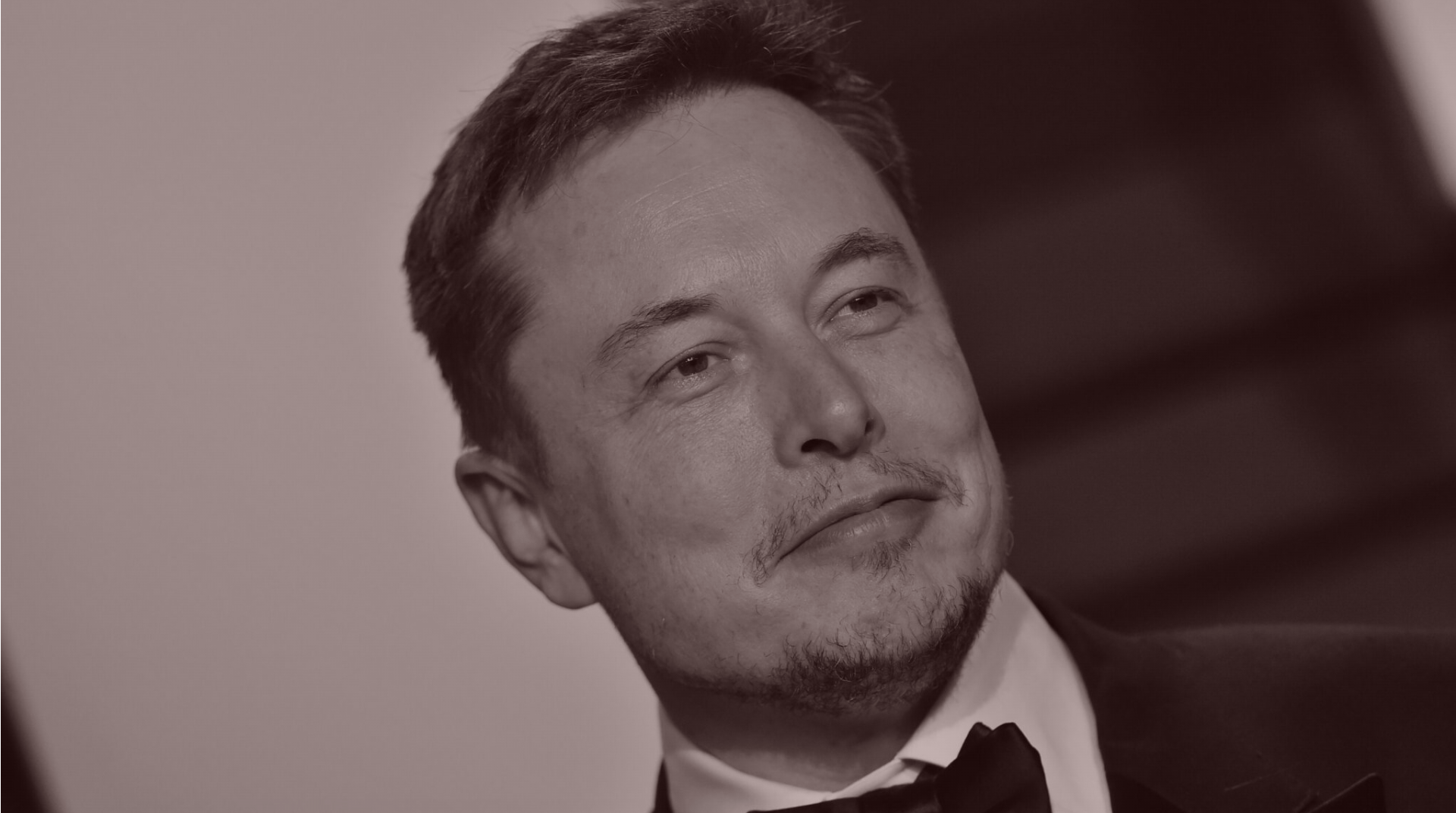 |
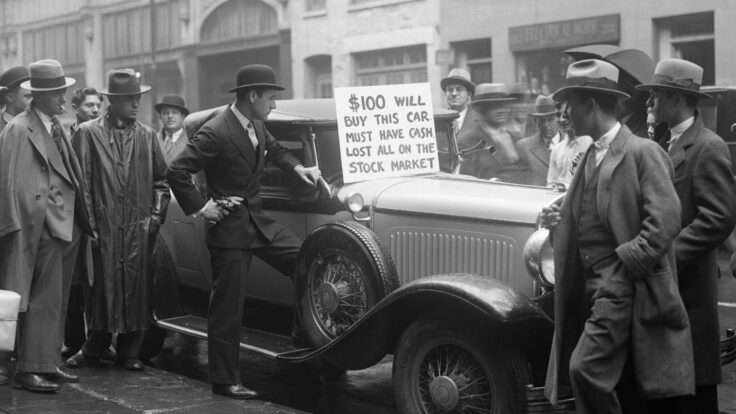
| Will Elon Walk Away? |
| As of now, he’s essentially only bought a $1 billion call option to buy Twitter. But various stock market moves suggest that everything is lining up. |
|
|
|
It appears that Elon Musk is serious, or serious enough, about buying Twitter that he has begun unloading a substantial portion of his stake in Tesla—and collateralizing billions of dollars more—to furnish the $44 billion in cash he has promised the Twitter shareholders. Of course, as I wrote earlier this week, the fate of this deal over the next several months will likely come down to whether Tesla stock holds up. If it does, I think Elon will end up buying Twitter. (I still can’t figure out for the life of me why he wants to own it, but that’s a discussion for another day.) If it doesn’t hold up, I think he pays the $1 billion break-up fee, walks away from the deal and moves ahead with his famous Plan B.
But let’s not get ahead of ourselves quite yet. In the last month or so, since the histrionics started, the Tesla stock is down 20 percent, reducing the value of the electric carmaker to $900 billion. If we slice the pie a little finer and look at the performance of the stock since April 25—the day Elon and the Twitter board of directors signed a merger agreement, making the deal a lot firmer—it is down 13 percent. Remarkably, however, the stock dropped less than 1 percent on Friday, after Musk announced that he had sold $8.5 billion of his Tesla stock, or 5.6 percent of his holdings, over the previous several days. That’s a negligible reaction considering that the rest of the market fell out of bed. The Nasdaq, where Tesla trades, was down 4.2 percent on the day. So that’s relatively good news for Elon, assuming he really wants to go through with this thing.
Still, this is essentially a kind of leveraged buyout, with all the attendant risks. If the deal actually happens, there’s going to be $13 billion of debt that is recourse to Twitter, supported by roughly $1 billion of EBITDA. That’s a top-heavy structure: Watch out below! (I’m told Wall Street is buying off on an 8.25x EBITDA leverage ratio, meaning Wall Street somehow got comfortable that Twitter will make $1.5 billion in EBITDA in 2022. We’ll see about that.) That $13 billion of senior debt, secured by Twitter assets, will probably be packaged up and sold to investors. I’m told by a knowledgeable source that the Wall Street banks that will arrange the senior debt financing, and who will sell it off if they can, have been given leeway to offer investors as much as a 12 percent interest rate on the debt in order to blow it out the door.
If there are no takers at a 12 percent rate of interest, then the banks will keep it for themselves. Either way, that would be a very attractive piece of paper, I would think. Along with that $13 billion of debt, there will also be the $12.5 billion margin loan to Elon, secured by $25 billion of Elon’s Tesla stock, followed by the $21 billion of equity that he promised to invest without saying precisely where he was going to get that money. (Mind you, he is still among the world’s richest men, if not the richest, with a net worth of around $260 billion.) These two pieces of the capital structure—the $12.5 billion margin loan and the $21 billion equity check—are for Elon’s account, not Twitter’s, meaning that this $33.5 billion is either secured by Elon’s assets (his stock in Tesla) or is money that he otherwise has lying around and will invest in the Twitter buyout.
I also am told some new information about the $12.5 billion margin loan. The banks, led by Morgan Stanley and Bank of America, that made the margin loan did not allow Elon to push the margin to the 50 percent limit. In fact, the margin is said to be between 25 percent and 33 percent. What this means—say if the margin is 25 percent—is that Elon had to put up Tesla shares worth $50 billion, not $25 billion (4:1 rather than 2:1), to get the $12.5 billion. That’s more of his Tesla stock pledged to support the margin loan than originally thought.
That turns out to be both good and bad for Elon. The bad part is that more of his Tesla stock is now pledged to the banks. The good part is that the loan to value ratio is lower, meaning that Elon now has a lot more leeway in the trading of the Tesla stock before the banks get nervous about a falling Tesla stock and force a sale of the collateral. That might explain why Tesla stock held up okay on Friday when the rest of the Nasdaq hit the wall. In any event, I’m told, Wall Street was clamoring for the margin loan as well.
His sale this past week of $8.5 billion of Tesla stock is a little curious, though. It’s not exactly clear what he’s up to, especially since the Twitter deal is easily five months away from closing, at best. Why is he raising some money, but not enough money, now? There will also be a big tax bill on the sale of that stock, say roughly 25 percent (unless he’s been getting some serious tax avoidance advice).
That will be a tax bill of around $2 billion, leaving him with some $6.5 billion in cash. But $6.5 billion, as nice as it is, is not the $21 billion he has promised to invest at the bottom of the Twitter capital structure. The source of the remaining $14.5 billion in cash he needs to fund his $21 billion equity hole remains unclear. I’m betting he will raise that money through another margin loan on his unencumbered Tesla stock, if there is any, especially since he’s now said there will be no more sales of Tesla stock. (That new margin loan might encumber another $29 billion of his Tesla stock.)
The sale of the $8.5 billion of stock was an important move forward, but still leaves him with a big hole to fill. He could also have raised this cash to implement Plan B if he needs to: pay the $1 billion break-up fee, walk away, and then buy more Twitter stock, up to the 15 percent that board’s Poison Pill allows. He could even negotiate again for a board seat, although it’s hard to imagine that would satisfy him now.
It’s been said—I believe aptly by Scott Galloway—that if you cut through all the sturm und drang of Elon’s Twitter gambit, all he’s really done so far is to pay $1 billion for a call option to buy Twitter for $44 billion. That’s really quite clever if you think about it. In fact, it’s better than your typical call option, most of which have relatively short expiration dates, weeks or a few months at best. According to the merger agreement, Elon’s option on Twitter expires on October 24 and can be extended for another six months—and probably could be extended further if the two sides agree. He can pretty much walk away for any reason—the due diligence doesn’t pan out or his financing falls through, or the Tesla stock tanks.
Some of my Wall Street brethren have also complained that the price of Elon’s option—$1 billion—was too low. Break-up fees on M&A deals run between 1 percent and 3 percent of the purchase price. Elon’s is 2.2 percent of the purchase price, which seems fair to me, given the size of the deal. It could have been a bit larger, I suppose, but the fact that it wasn’t tells me that Elon had all the leverage in his negotiation with the Twitter board, as should now be obvious to everyone.
I don’t know whether or not this deal will actually close. There are too many outs for Elon still, and there will be for another year. That doubt is reflected in the trading of the Twitter stock. It closed at around $49 a share on Friday, some 10 percent below Elon’s $54.20 offer. On the other hand, the fact that the Tesla stock held up okay on another down day for the equity market suggests that come this fall, Elon Musk will own Twitter—and for reasons that remain beyond what I can fathom.
Then, of course, the hard work would begin for Elon to figure out how $1 billion of EBITDA can be used to pay down $13 billion of Twitter debt. That might end up being a more impressive trick than the one Elon engineers regularly when he gets the SpaceX rockets to land safely on a small platform in the Atlantic Ocean.
|
| Wall Street’s Trump Head-Scratcher |
|
I was disappointed, but not surprised, given my previous reporting, to read that indeed there will be no charges forthcoming from the Manhattan grand jury that had been tasked with reviewing the investigation into Donald Trump. I can’t for the life of me figure out why District Attorney Alvin Bragg, the man elected last November to replace Cyrus Vance, who had kicked off the investigation into Trump a year ago, abandoned the case.
Sure, Bragg insists he hasn’t dropped the case and that he still has prosecutors investigating, but without a grand jury convened, it sure doesn’t look like much of an ongoing prosecution to me. I suppose a new grand jury could be convened, but if that were Bragg’s intention, why dismiss this grand jury, which has been evaluating the evidence against Trump for the past six months? All roads lead to the fact that Bragg is not serious about criminally prosecuting Trump and is simply afraid to say so officially and definitively, for fear of the political fallout. Especially when Vance’s former special prosecutor on the case claimed, in his resignation letter, that he had demonstrable evidence that Trump had committed felonies. (Trump has denied all accusations against him.) This one is a real head-scratcher.
There was only upside for Bragg here: A Manhattan grand jury could have indicted Trump based on the truckloads of evidence presented to it and I have little doubt that the two special prosecutors that Vance hired—Mark Pomerantz and Casey Dunne—would have tried the case credibly. Even if somehow Trump were to win the case, Bragg could not be faulted for trying. And think about millions of pages of internal Trump Organization documents that would have unspooled and fascinated journalists for eons, itself likely inoculating Bragg from any serious criticism. And now, not only does Trump skate by yet again, but those binders full of documents, many of which the now-departed grand jury has seen and evaluated, sit somewhere, languishing, in Hogan Place. Here’s an idea for Bragg: if he is done with the documents, why not make them available to the public in an online archive? (This is a serious suggestion but I know it can’t, or won’t, happen. Sigh.)
In truth, I don’t understand Bragg’s decision, and no one I’ve spoken to about his decision understands it either. As for the New York Attorney General Letitia James’ civil case against Trump, I hope that she brings it, but only for its journalistic purience. There would be plenty of interesting documents to chew over in this matter, too, but the stakes are a lot lower. If James were to win, there might be a big fine and the possibility that the Trump Organization would be altered in some material way. That’s essentially what happened when then-A.G. Eric Schneiderman, one of James’ predecessors, went to war with Trump over his so-called real estate training program.
That was a fun case to cover at Vanity Fair, especially since both Trump and Schneiderman were on the record with me and slinging the hash. In the end, they settled the dispute, with Trump paying a $25 million fine and agreeing to close the sham that was once known as Trump University. So something like that could happen here, but that won’t be nearly as satisfying as what Alvin Bragg could be doing.
|
|
|
|
| FOUR STORIES WE'RE TALKING ABOUT |
 |
| The Semafor Rollout |
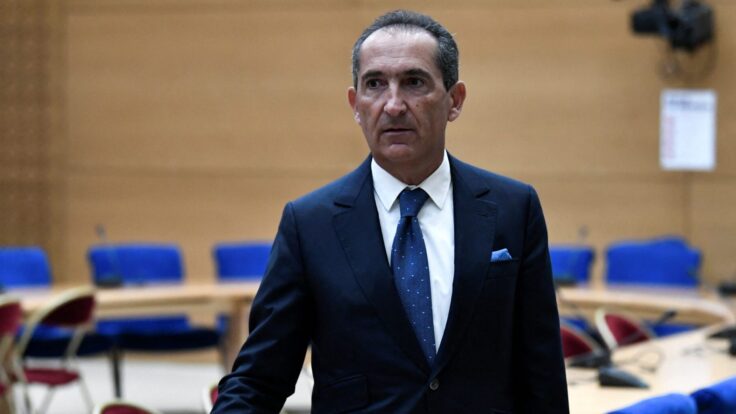
| Media’s most anticipated start-up is gunning for a launch in Q4, and the money bag is in sight. |
| DYLAN BYERS |
|
 |
| Zaslav's Hatchet Man |
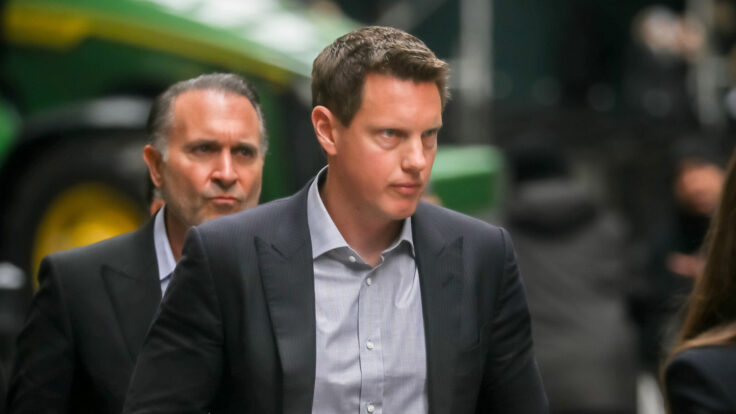
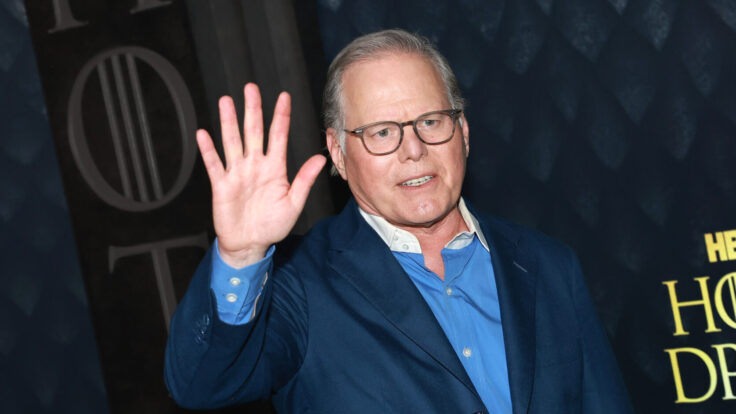
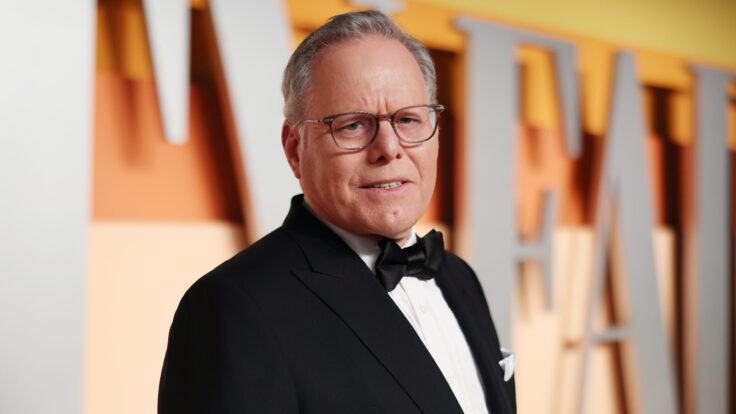
| Warner Bros. Discovery’s $3 billion fiscal problem gives rise to an anxiety-inducing question: Who gets the chop? C.F.O. Gunnar Wiedenfels is dropping hints. |
| MATTHEW BELLONI |
|
 |
| Elon's Revisionist History |
| Puck's Schleifer joins Peter to recap Musk’s crazy past few years—from running an underperforming public company (Tesla) to becoming the putative owner of Twitter. |
| PETER HAMBY |
|
 |
| A MAGA Casualty? |
| Notes on Dr. Oz’s battle against former beloved hedge fund titan David McCormick for the hearts and minds of the Rust Belt. |
| TINA NGUYEN |
|
|
|

|
|
|
You received this message because you signed up to receive emails from Puck
Was this email forwarded to you?
Sign up for Puck here
Sent to
{{customer.email}}
Unsubscribe
Interested in exploring our newsletter offerings?
Manage your preferences
Puck is published by Heat Media LLC
64 Bank Street
New York, NY 10014
For support, just reply to this e-mail
For brand partnerships, email ads@puck.news |
|
|