 |
|
Happy Sunday, and Happy Father’s Day to those who celebrate. Welcome back to Dry Powder.
|
|
In today’s column, I look at what Elon’s company-wide Twitter town hall might suggest for the likelihood that he will eventually close this fraught deal (the Times seems bullish; the markets… less so). Then, why the fixation on crypto’s price, which has collapsed over the last few weeks, gets mistaken for its value.
Finally, I talk to my colleague Matt Belloni about what’s next for Disney and Paramount, Elon, Buffett, and ByteDance ahead of the annual Allen & Co. conference next month. That conversation, and more, below the fold.
|
| CONTENT FROM OUR SPONSOR: META |
 |
|
|
|
|
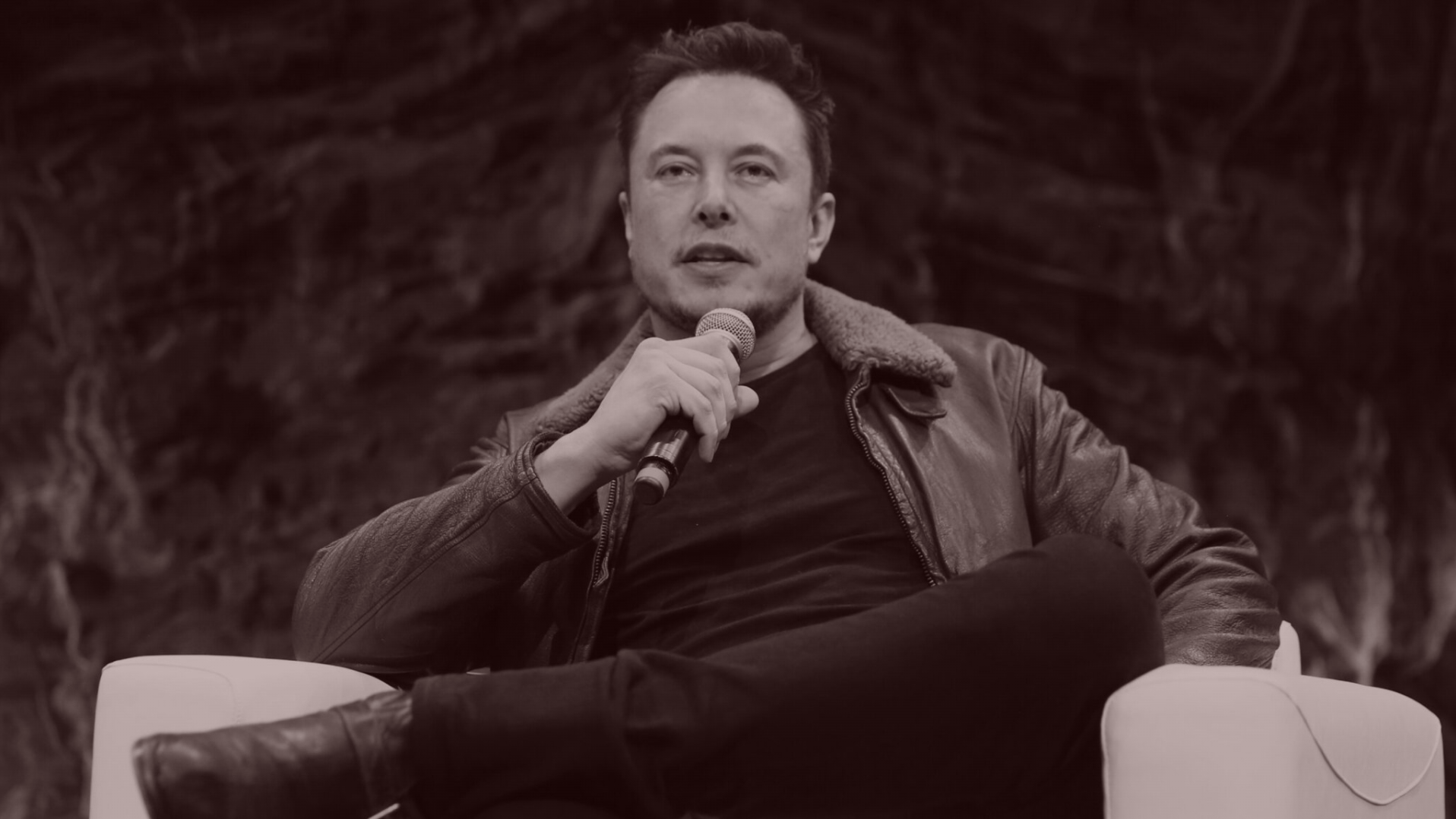
| On Thursday, Elon Musk convened Twitter employees for a virtual town hall to discuss his pending takeover of the company, which he agreed to purchase for $44 billion in April. Since then, of course, he has careened publicly through extreme optimism about Twitter’s financial future, promising to triple ad revenue; extraordinary contempt for its employees and culture; and buyer’s remorse at having offered a sizable premium to take Twitter private amid a tech stock meltdown that has likely cut Twitter’s fair market value in half but for his offer. He has threatened to walk away from the deal (which he cannot do, at least not without a lawsuit, or five, and a $1 billion breakup fee) over the existence of bots and other fake accounts on the platform.
The mere existence of the all-hands meeting caused Twitter’s stock to rise ever so slightly, indicating to some optimists a marginal improvement in the likelihood that Elon will close the deal. But this remains wishful thinking. Elon has made no new filings with the Securities and Exchange Commission since June 6. It’s been a quiet stretch, especially since it’s still not clear whether he still wants Twitter under the current market conditions, despite having signed a merger agreement on April 25 that commits him to close it. In its description of the meeting, The New York Times reported that it was the first time Elon acted like he was the owner of Twitter and that the town hall, in which he appeared 10 minutes late, by cell phone video, “suggested he was set on closing the blockbuster acquisition.”
I’m not sure either assertion is true. Far from demonstrating how he would operate Twitter if he closes the deal, Elon only reiterated his vague assertions that Twitter should be a haven for free speech, that he wants to make the algorithm open source, and that China’s WeChat app could be a model for future product growth. Nor am I convinced that the town hall provided any further insight into whether he intends to actually close the deal, or not. The Twitter stock price has been pretty much locked in for the past month or so, at around $37 per share, some 32 percent below the $54.20 in cash he has agreed to pay Twitter shareholders. That difference presents a meaty upside opportunity for arbitrageurs with a high tolerance for risk. (This is not investment advice.) I’m glad the Times is more confident that Elon will be closing the Twitter deal, but on the whole, Twitter shareholders don’t seem to think it will happen.
The biggest positive step Elon could take toward closing the deal at this point would be to address the $33.5 billion equity bucket he has promised to fill as part of the financing for the $44 billion deal. As far as I can tell, he’s accounted for $13 billion of that $33.5 billion, including his own contribution of his existing Twitter stake and the rollover of the $2 billion stake owned by Prince Alwaleed of Saudi Arabia. While that’s a mighty accomplishment for a single individual, it still leaves Elon $20 billion short. That’s why it’s so disquieting that he’s had no S.E.C. filings since June 6. If he made additional steps towards raising the $20 billion, or even said how he was going to do it, I think a greater degree of confidence that he actually intends to close the deal would be warranted. Until then, based on his flaky behavior since the merger agreement was signed, I’m still pretty skeptical this deal will happen in its current form. |
| ADVERTISEMENT |
 |
| Doctors can practice high-risk situations risk-free in the metaverse
In the metaverse, future surgeons will be able to practice advanced procedures hundreds of times before seeing real patients – helping them gain experience and master their skills.
The metaverse may be virtual, but the impact will be real.
Learn how Meta is helping build the metaverse. |
|
|
|
|
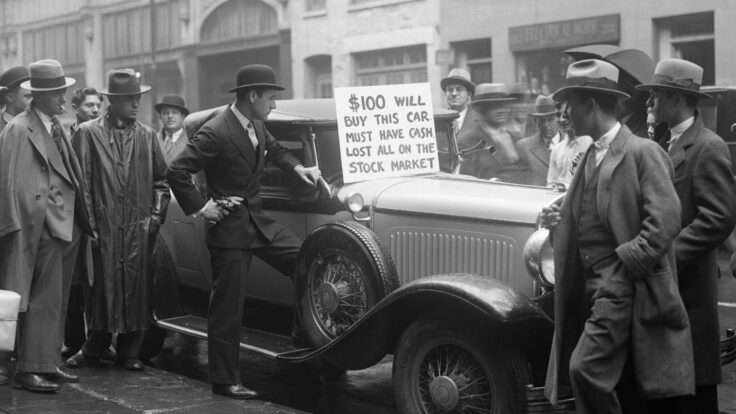
| I like to think of myself as relatively open minded when it comes to new ideas in finance, and about crypto currencies, in particular. I’ve interviewed many crypto bulls (Michael Saylor, Anthony Scaramucci) and a variety of crypto skeptics (Jamie Dimon, Peter Schiff, Stephen Diehl) in the course of my reporting at Puck. I’m also working on a documentary, with director Matthew Miele and producer Tucker Tooley, about Bitcoin's mysterious founder and the future of the crypto market, which has introduced me to dozens of curious and impressive technologists building new companies on the blockchain. I spent a fascinating afternoon in Bushwick interviewing Joe Lubin, one of the founders of Ethereum, and another morning in Los Angeles interviewing Fred Ehrsam, the co-founder of Coinbase. At the moment, some of these entrepreneurs are probably feeling the pain of lost wealth as the market for Bitcoin, Ethereum and cryptocurrencies more generally continues its meltdown. (These fellows are still likely plenty wealthy, just a little less so.) What happens now is an interesting question.
The swift fall of the crypto market, beginning in November and accelerating in the past few weeks with mass liquidations and the implosion of so-called “stable coins” underpinning the broader crypto ecosystem, is both a moment of reckoning and Rorschach test for the industry. The true believers in crypto and in Bitcoin, in particular, are hard to dissuade. You are not seeing The Mooch or Michael Saylor, at Microstrategy, capitulating, or expressing doubt about the asset class. In fact, they are probably loading up the dump truck with more (and cheaper) Bitcoin. For those on Wall Street with more objectivity, the ongoing Bitcoin meltdown is being perceived as vindication for an asset bubble that was based, in their opinion, on pure speculation and finding a greater fool to buy digital tokens at an ever increasing price. Which is not to say that many people who knew better didn’t also get greedy when the $3 trillion opportunity became too big to ignore.
Wall Street, generally speaking, likes to see cash flows, and positive cash flows at that, or real EBITDA, as the way to value a company or an asset. Bitcoin doesn’t generate any cash flow. Nor do most crypto projects, except through levered bets that prices will continue to increase as more people buy into their networks. It’s just something to buy and possibly hold on to until someone else comes along willing to buy it from you at a higher price. It’s hard to be excited about crypto if you paid $69,000 for a Bitcoin last November and it’s now trading below $20,000, a greater than 70 percent drawdown. You know what I mean?
The clichéd historical parallel is, of course, the Dutch tulip bulb insanity of the 1630s. Like Bitcoin today, tulip bulbs back then were just a way for people to speculate, hoping for a greater fool to come along and buy the bulbs for a higher price than what they paid. It works until it doesn’t, sort of like repeatedly doubling down on bets at the casino, hoping you’ll make back what was lost and instead finding that your losses have exploded exponentially. Planting a tulip bulb, rather than speculating on it, does have a nice payoff in the form of an annual flower that is quite beautiful. Same with Bitcoin to be honest. If everyone just took a deep breath, stopped the mindless speculation and simply appreciated Bitcoin for what it is—a new form of decentralized digital currency with a twist of clever and useful blockchain technology—then its long term prospects would brighten considerably. We’re not there yet but we’re close. The same goes for smart contracts and DAOs and the myriad other fascinating concepts that will surely make their mark on the world of finance, even if they never topple the world order. Let’s give our friend Andrew Ross Sorkin the last word today, on Father’s Day. “If it is any consolation,” he tweeted the day before, “tulips still are around. And as the flowers go, they are still pricey.” |
| Bob & Shari’s Sun Valley Winter |
|
| Bob Chapek and Shari Redstone, among other usual suspects, are headed to Sun Valley next month for the annual Allen & Co. conference, typically fertile ground for media and technology dealmaking. In this conversation with Matthew Belloni, the longtime Hollywood editor, we discuss what’s next for Disney and Paramount, Elon, Buffett, ByteDance and more as the stock market cools.
Matthew Belloni: So Bill, we gotta start with Disney. The board is set to meet before the end of the month, and I’m told they will discuss the fate of C.E.O. Bob Chapek, whose contract is set to expire in February. Susan Arnold, the board chair, put out an odd statement last week backing Chapek when he abruptly fired Peter Rice, his top TV executive. You know board politics better than I do: Does this mean Chapek likely gets renewed?
William D. Cohan: Hard to imagine Chapek doesn’t get renewed, despite the recent turmoil at Disney and the fact that its stock is down 40 percent in 2022. Wall Street still seems to be supporting him, at least the research community is. According to the Journal, of the 30 research analysts that cover Disney, 20, or two-thirds, have a “buy” rating on the stock. There don’t appear to be any analysts who have a “sell” rating. Disney is trading around $95 a share, and while that’s down from nearly $200 in March 2021, the consensus price target appears to be around $145 a share, or upside of around 50 percent. So the Street is hanging in there for Chapek, at least at the moment.
Belloni: At the moment. A source close to the board told me this week that it is acutely aware of the bad optics around Chapek, and Florida is a disaster. Plus, as we know, even if he’s renewed, the board can always sack him at any time if a better option comes along.
Cohan: Look, he’s only been in the seat for a little over two years, and it’s been a rough two years for lots of companies across a variety of industries. I would be shocked if the Disney board pulled the plug now, as tempting as it may be. That would immediately call into question the judgment of both the board and of his revered predecessor, Bob Iger, since both endorsed Chapek. Iger was C.E.O. for 15 years, and there were one or two rough patches along the way for him. But no one pulled the plug. Jeff Immelt, Jack Welch’s successor at GE, was in the seat for 17 years before the board decided enough was enough. Boards of august companies like Disney rarely act capriciously unless fraud or serious errors in judgment are involved. A falling stock price amid a market meltdown is not enough to get the board to remove him. So Chapek is safe for now. Don’t you agree?
Belloni: Yes, I think he will be renewed, mostly because there doesn’t seem to be a great alternative besides Iger coming back. But given where the Disney stock is, and some of the blowups of Chapek’s tenure, why haven’t we seen an activist investor emerge demanding changes?
Cohan: For all we know, there could be an activist targeting Disney right now and accumulating a meaningful stake. The days are over when some companies are deemed “too big” for that. We saw a few years ago how Elliott Management went after AT&T and probably was at least partly responsible for the spin-off of WarnerMedia into what is now Warner Bros. Discovery, although AT&T executives denied it. And there certainly would be a lot to focus on at Disney, which could use some more pruning and focus.
Belloni: Like what, in your view? Spin-off ESPN? We know from our colleague Dylan Byers’ reporting that Chapek has discussed it.
Cohan: What is ESPN doing for Disney? What is ABC doing for Disney? I am sure there are plenty of other value-unlocking opportunities that are ripe for the picking, or at least for discussion. If I were, say, Dan Loeb, at Third Point, or Paul Singer, at Elliott, I might be taking a serious look at Disney right now. It could be a fun and profitable investment. It could also be the catalyst that gets the Disney board to remove Chapek, although I note that somehow John Stankey survived the Elliott onslaught at AT&T, even though his removal was part of the hedge fund’s original recommendation.
Belloni: Chapek is headed to Sun Valley next month, along with the usual suspects. Elon Musk, your favorite, is on the guest list. I imagine one topic will be on everyone’s mind: recession. The thinking in entertainment has always been that Hollywood is somewhat insulated from economic downturns because people need to be entertained, and movies and TV are relatively cheap. But the sector has been transformed by the stock run-up of Netflix over the past decade, which everyone chased, and these streaming services are much easier to cancel than cable. I think inflation and a recession will really hurt entertainment companies, and we’re looking at an environment where the aggressive growth in streaming that many have predicted is going to be really difficult. Agree or disagree?
Cohan: I think the “Netflix is toast” talk is way overblown. The company’s rapid growth may have stalled, so it was probably no longer deserving of a ridiculous multiple of earnings. But its stock is down 70 percent year-to-date; that is sufficient air to come out of that balloon. And look at what you get with Netflix, along with the 70 percent off sale: You get 220 million subscribers paying on average around $11.50 per month for the service, every month. In 2021 that translated into real EBITDA—no accounting gimmicks here—of $18.5 billion. At a current market value of $78 billion, Netflix is trading at a multiple of 4.2x trailing EBITDA. Seems to me this would be a good time for Bill Ackman, at Pershing Square Capital, to go back into Netflix, assuming he’s not feeling too burned by his mistimed foray and $400 million loss earlier in the year. So, in sum Matt, I think these entertainment companies are going to be just fine, especially with the ongoing stock market revaluation. One caveat: as much as I like and admire the Zaz, I do worry about Warner Bros. Discovery’s $55 billion in debt. That is a huge amount of debt to be lugging around in a more challenging economic environment.
Belloni: You talk to a lot of bankers, they must be freaking about inflation and the likely recession. What’s the thinking on how to ride this out?
Cohan: Not to be too overly cynical, but Wall Street bankers care about one thing: the size of their end-of-year bonus. And the 2022 bonuses are going to be a small fraction of what they were in 2021. The investment banking business is down across the board. We’re in a historic inflection point, where the Fed is changing its posture from 13 years of nearly free capital to a rapid tightening of the money supply and a rapid increase in the price of cash. We’ve gone seemingly overnight from a risk free-for-all to an abject fear of risk. The new-issuance equity markets are virtually shut, as are the high-yield markets and the markets for leveraged finance. The private-equity/L.B.O. [leveraged buy-out] party is over, at least temporarily, as buyers and sellers adjust to the new reality of higher interest rates, which means a lower price for sellers who don’t cotton to that kind of thing easily.
Belloni: You’ve been predicting this for years. How scary will it get out there?
Cohan: SPACs? N.F.T.s? Crypto? Forgettaboutit. While this is not investment advice, I would just say that I started my Wall Street career in September 1987, a month before the Dow fell 22.6 percent in one day. There followed a credit crunch from 1989 to 1994, the explosion of the Internet Bubble, the implosion of the markets after 9/11, the financial crisis of 2008. The message, I think, is these kinds of market corrections are healthy in the long run and painful in the short run. As I’ve written many times, small investors have limited options at times like these to protect themselves against the market downdrafts. They can’t buy credit default swaps, like Bill Ackman did (and made a fortune) in February and March 2020, and they can’t get access to a hedge fund like Universa Investments that provides insurance at times like these. You can sell out of your stock portfolio but then it’ll cost you 30 percent in capital gain tax payments. It’s a conundrum for sure. I usually just stay the course. And that’s worked every time since 1987.
Belloni: One company not on the Sun Valley invite list is ByteDance, which owns TikTok, probably the most important media company today. As much attention as TikTok gets, I still think its impact on the entire media and entertainment landscape is underappreciated. So that’s a pretty big omission!
Cohan: I agree. But maybe the politics of inviting a Chinese company are too dicey for Allen & Co, which relishes its discretion and rarely likes to be the focus of attention, even at its own annual shindig. As I reported a few weeks ago, Allen & Co. is one of three financial firms advising the Twitter board on the Elon deal/fiasco. But whereas Goldman Sachs and JPMorgan Chase are mentioned throughout the Twitter proxy statement, Allen & Co. is mentioned only once, and in passing. What is it doing for Twitter? I’d love to know. And if the firm will answer that question, maybe it would also answer your question about ByteDance, but I wouldn’t count on it.
Belloni: We’ve never talked about Warren Buffett buying a $2.6 billion stake in Paramount Global last month. That’s a big stake! You’re an official Paramount bear, and you posited that he probably sees an opportunity in M&A, but the more I talk to people in Shari Redstone’s world, the more I hear that she’s not a seller right now. At least not at the prices she’s been offered. Has your thinking on Buffett’s stake changed at all? Especially with streaming subscribers now being less important to investors? Maybe Warren is just a big Top Gun fan?
Cohan: I’m less a Paramount bear and more of a severe skeptic of what Shari did to get control of Viacom and CBS and then to merge them into Paramount Global. It was a total failure of good corporate governance and a raw power move to take control of the companies from her ailing father and then to install allies on the board who would ratify her desires. Don’t forget, while Redstone controls nearly 80 percent of the voting power of Paramount, she and her family only own about 10 percent of the economics of the company. So she can do whatever she wants—and has—while most of the economic pain that results is experienced by others.
Belloni: And now Warren Buffet and Berkshire.
Cohan: Whatever. That’s water under the bridge. I continue to believe, without having discussed this with Warren, that he bought around 10 percent for the same reason he buys stakes in all of the companies he invests in: He thinks it’s undervalued. And it probably is. But that value won’t be realized fully until the company is sold, in my humble opinion. Shari has to sell to deliver the generational wealth that her children and grandchildren are expecting. And she will sell at some point. What better place for her to go fishing for the right deal than in Sun Valley! |
| ADVERTISEMENT |
 |
|
|
|
|
|
| FOUR STORIES WE'RE TALKING ABOUT |
 |
| Zaz & His Ax Man |
| WBD's rank-and-file are, perhaps, rightfully anxious about where Zaz will identify fresh "synergies." |
| DYLAN BYERS |
|
 |
| The Biden Bubble |
| What Biden's faith in Ron Klain tells us about the president's motivations. |
| TARA PALMERI |
|
 |
| Walden's Muted Coronation |
| Dana's Disney ascendency has been overshadowed by headlines about her male predecessor. |
| MATTHEW BELLONI |
|
 |
| David Boies’ Gamble |
| On a class-action lawsuit set out to prove Google Chrome's "Icognito" mode is a misnomer. |
| ERIQ GARDNER |
|
|
|

|
|
|
| You received this message because you signed up to receive emails from Puck
Was this email forwarded to you?
Sign up for Puck here
Sent to
Unsubscribe
Interested in exploring our newsletter offerings?
Manage your preferences
Puck is published by Heat Media LLC
64 Bank Street
New York, NY 10014
For support, just reply to this e-mail
For brand partnerships, email ads@puck.news |
|
|