{{ 'now' | timezone: 'America/New_York' | date: '%b %d, %Y' }} |
|
|
Welcome back to Dry Powder. I’m William D. Cohan.
Over the past
week, my partners at Puck have produced an embarrassment of journalistic riches, with a number of stories particularly relevant to the Dry Powder community. So in today’s issue, I’m turning over the reins to Eriq Gardner (sign up for What I’m Hearing here), Leigh Ann Caldwell (register for The Best & The Brightest
here), and Dylan Byers (get In the Room here), who have fresh reporting on Trump’s meddling with the private sector, a financial mystery at CBS News, a linear TV coup attempt, and more.
Programming note: Dry Powder will go dark over
the long weekend, but I’ll return to your inboxes next Wednesday, September 3. Enjoy the break.
Take it away guys… |
|
|

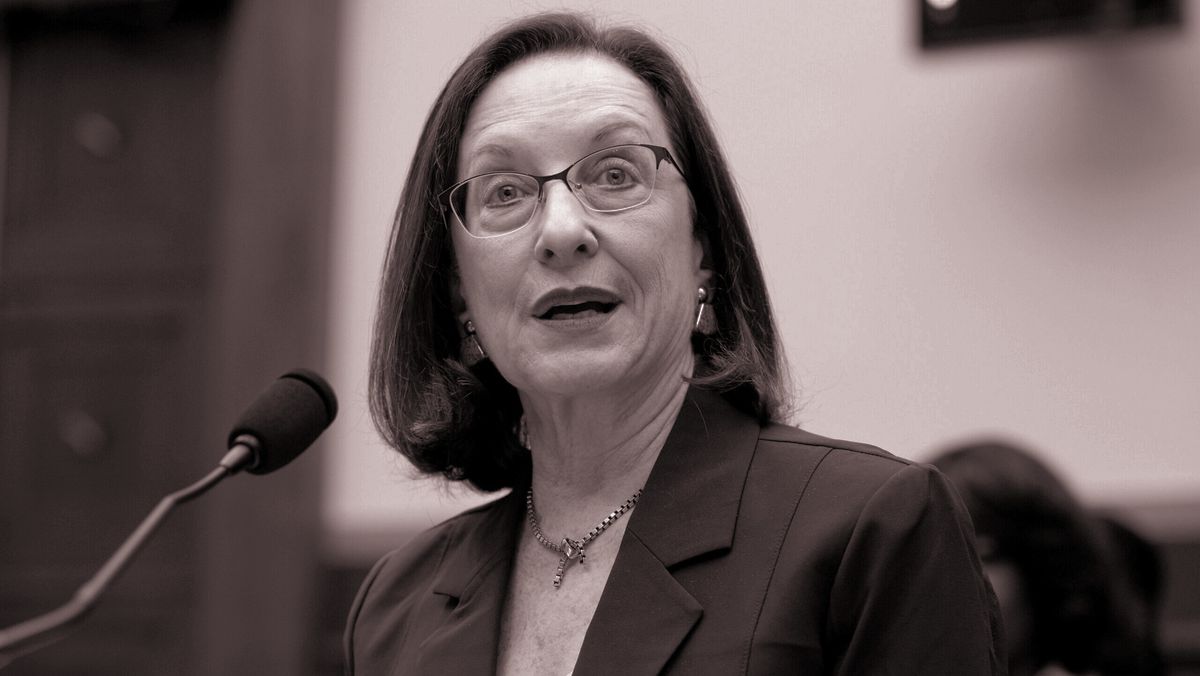
| Leigh Ann Caldwell
|
|
- Intel &
High Water: Trump’s decision to take a 10 percent ownership stake in Intel, the vaunted, $100-ish billion computer and semiconductor company, will be another Republican loyalty test for the fall semester. Back in 2022, when the bipartisan CHIPS and Science Act was being negotiated in the upper chamber, Democratic Sens. Bernie Sanders, Elizabeth Warren, and even Majority Leader Chuck Schumer pushed
Republicans to allow the government to take an equity stake in U.S. chip manufacturers. The unorthodox (some would say socialist) idea was seen as a way to get some return on the $280 billion that the government was pouring into the U.S. semiconductor market over a 10-year period. Of course, Republicans were adamantly against it then, and the idea didn’t make it into the final legislation that Biden signed into law.
So when Trump announced the government would take a 10 percent
stake in Intel after he met with C.E.O. Lip-Bu Tan earlier this month, the silence from many Republicans was awkward—and significant. Sen. Todd Young, the Indiana Republican who negotiated the CHIPS Act, was pressed by reporters this week for his thoughts. “There are clear concerns about precedent and what is allowed under the law,” he told me and others, an answer that seemed meticulously crafted to avoid criticizing the president. “It was not
the intent of the law to allow an equity stake to be taken, but it was the intent to ensure that we enhance our economic security and national security, which is the objective that the administration is trying to advance.”
Republicans, I’m told, are expected to justify the deal as a national security issue—an effort to ensure that chips are made in the U.S., and to bolster Intel financially, given its not-inconsiderable
economic challenges and waning share of the GPU market. But Republicans, as recently as a few weeks ago, had expressed concern about Intel’s C.E.O. Sen. Tom Cotton, for instance, wrote a
letter to Intel’s board of directors on August 5, six days before Tan’s meeting with Trump, asking that they respond to questions about Tan’s investments. Per the letter, Tan “reportedly controls dozens of Chinese companies and has a stake in hundreds of Chinese advanced-manufacturing and chip firms.” Cotton’s office did not respond to
my questions about what he thinks about Trump’s Intel stake.
There are some outliers, however. “I don’t care if it’s a dollar or a billion-dollar stake in an American [company], that starts feeling like a semi-state-owned enterprise, à la [the U.S.S.R.],” Sen. Thom Tillis told Major Garrett. Sen. Rand
Paul posted on social media, “Wouldn’t the government owning part of Intel be a step toward socialism?” But a Republican aide told me that party members are likely to stick with the president, regardless of how uncomfortable they are and how much they fought Democrats who wanted the same thing. (Attacking New York City mayoral candidate Zohran Mamdani for being a socialist is going to be a bit laughable now.)
And it’s not going to stop
there, as Trump and his top aides have made blatantly clear. When Trump was asked in the Oval Office on Monday whether the Intel deal would be a model for other industries, he said, “There will be other cases. If I had that opportunity again, I would do that.” Meanwhile, Treasury Secretary Scott Bessent said, “Could there be other industries where we’re reshaping, something like ship-building? Sure, there could be things like that.” On Monday, White House
economic Advisor Kevin Hassett told CNBC that the Intel stake was a “down payment” toward the creation of a sovereign wealth fund. (After all, Trump has long been impressed with the Saudis’.)
It all fits within a larger pattern of blending the government and economy in a way that makes the Carrier air conditioning imbroglio
from Trump 1.0 seem quaint. The U.S. now owns a stake in U.S. Steel. Trump has trotted major tech leaders in front of the cameras, thanking them for their promise to invest billions in the U.S. He stopped a wind project in Idaho and another one off the coast of Rhode Island that was 80 percent complete. He even got Cracker Barrel to reverse its rebranding.
When President Obama took an ownership stake in General Motors and Chrysler, at a time when both American car
companies were on the brink of collapse after the 2008 financial crisis, Republican outrage gave rise to the small-government Tea Party movement, which then led to the election of Tea Party supporters in Congress and eventually, the creation of the House Freedom Caucus. But not a single member of the Freedom Caucus has said a word about Trump’s stake in Intel. Their social media feeds are busy championing Trump’s federal takeover of Washington, D.C.—an issue Trump and Republicans want to keep
front and center because they think it’s good politics. But the federal takeover is another issue Republicans will likely have to address in September if Trump wants to extend his control of the city beyond the allowable 30 days.
|
|
|

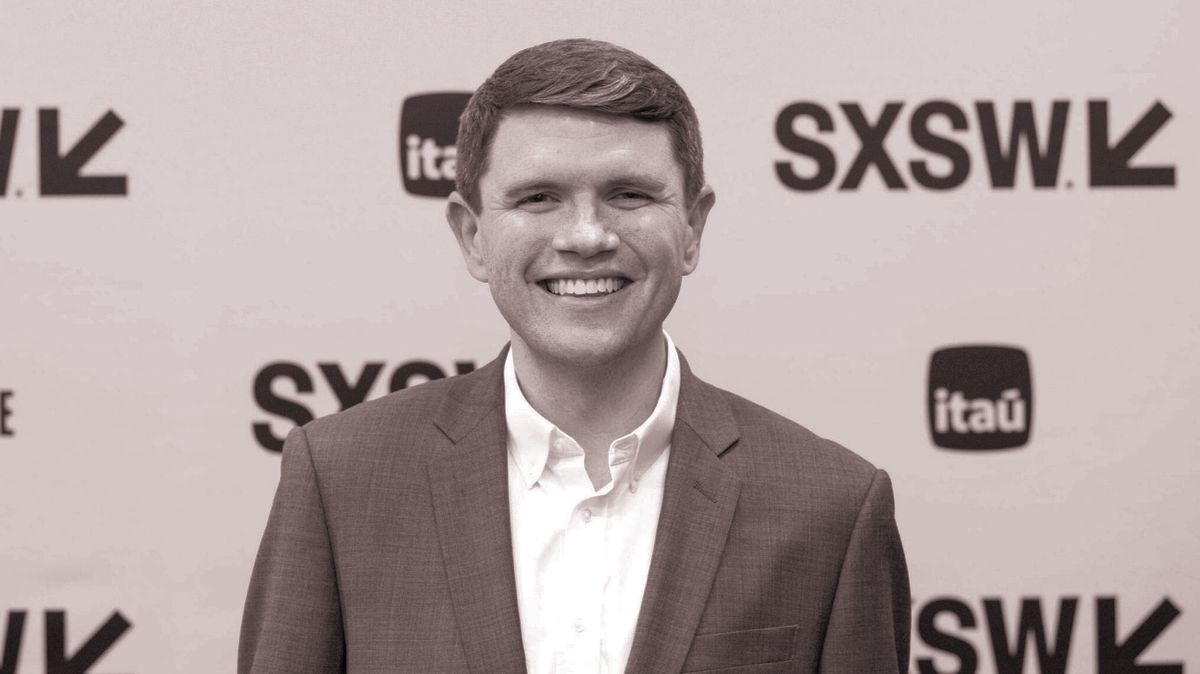
| Eriq Gardner
|
|
- Newsmax
vs. Nexstar?: It’s still a safe bet that Brendan Carr’s F.C.C. will greenlight Nexstar’s $6.2 billion acquisition of its rival Tegna, even if he has to grant a waiver to bypass the 39 percent cap on ownership of TV stations. (If the merger goes through, Nexstar’s station ownership would cover 80 percent of the country, blowing right past the cap.) Which is why we might see a last-minute spoiler campaign from Newsmax, Chris Ruddy’s conservative network,
which has a history of defending ownership limits in the name of “localism” and “viewpoint diversity.”
It was Ruddy, after all, who helped kill the Sinclair-Tribune merger during Trump’s first term, another deal that would have created a local broadcasting behemoth. Lately, Ruddy has been fighting industry lobbyists who want the 39 percent cap erased altogether, and he just submitted comments to the F.C.C. directly referencing the Nexstar-Tegna deal. Ruddy argues that the F.C.C. lacks the
legal authority to change the cap. As I foreshadowed a couple of months ago, that argument will likely end up in court.
|
|
|

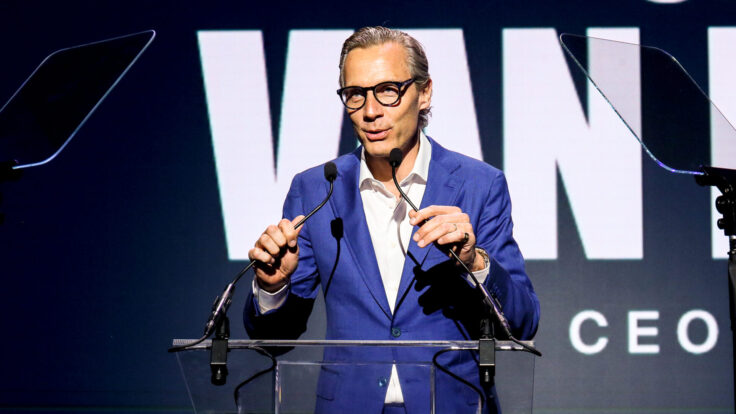
| Dylan Byers
|
|
- All the
CBS News fit to print: Over the past week, as Skydance C.E.O. David Ellison and his consigliere Jeff Shell assumed control of Paramount and embarked on their bicoastal press tour, I’ve devoted considerable attention to the new management team’s plans for CBS News—an inarguably marginal piece of their $17.5 billion
business, but one that also inarguably punches above its weight in terms of the mishegas it creates for its ownership and management. As many media executives are fond of saying to one another, and occasionally to me, the news business is an alluring but sticky wicket—5 percent of my business and 95 percent of my problems, as the saying goes. Shari Redstone, for her part, recently
attested as much in the pages of The New York Times.
As I have noted, Ellison didn’t buy Paramount for CBS News. He and Shell view it as a significant cost burden, and would probably offload it if they could. Alas, it came with the package, and there was no way to get Paramount Pictures, the Taylor
Sheridan-verse, and Sunday AFC games without it. So now, while paying customary lip service to the news division’s legacy—a day-one visit to the newsroom, paeans to Cronkite, etcetera—Ellison and Shell will embark on a plan to rightsize the business by reducing talent salaries, cutting operational costs, and, yes, laying off some staff, all in the interest of reducing that burden.
Just how much of a burden is CBS News? Earlier this week,
I reported that the division was losing $50 million a year, according to two sources with knowledge of the company’s finances. A Paramount spokesperson later told me that “the figure is inaccurate and, in fact, the division is currently profitable”—a discrepancy that led to a lot of public confusion about the division’s financial health and media reports about the conflicting accounts. (Remember what I said about mishegas?) Anyway, I subsequently went back to my sources to get a better
appreciation for the nuances of the numbers, and discovered that I was indeed a bit off: The annual losses are closer to around $35 million.
The royal road to this number is instructive and relevant and involves some pencil-stroking and adjusted EBITDA calculations. Yes, CBS News is considered profitable, as the spokesperson insisted, according to Paramount’s traditional internal accounting—but only through an internal adjustment that apportions some $50 million in revenue from
retransmission fees to the news division.
A year ago, CBS News was profitable with or without that revenue allocation. This year, however, I’m reliably told that advertising revenue is on pace to decline by more than $50 million, which would bring profits to a number that scratches the very low eight figures, but only with that retrans fee cushion. And yet, the new administration may not be inclined to generously cover over the business unit’s challenges
with the application of that $50 million retransmission placebo. The retrans business, as the new management team knows, is buoyed by sports rights and other high-value programming. That high-value programming may include 60 Minutes, but almost certainly does not include the news division’s perennially third-place morning and evening shows.
|
|
|
And now, a little more from Eriq… |
|
|
After successfully squeezing Paramount, ABC, Nvidia, and Intel for payoffs, public
genuflection, and profit participation, the president is now working to assert control of the patent and copyright system, too. What’s to stop him from setting up a toll booth for Hollywood I.P.? |
|
|
Could the next Superman or Avengers movie help underwrite the national
debt? Stay with me here, because it’s not as outlandish as it seems. Last week, after Donald Trump boasted that Intel would hand the U.S. government a 10 percent stake—worth some $9 billion—as the price of receiving billions in grant money from the CHIPS Act, I started to connect some dots. Just today, when asked whether his administration would try to take stakes in other companies, Trump didn’t hesitate: “I want to try and get as much as I can,” he said. “There will be other
cases.”
The Intel deal, like Trump’s unorthodox arrangements with U.S. Steel, Nvidia, and AMD, got me thinking about a recent Wall Street Journal report that Howard Lutnick’s Commerce Department has been considering tweaks to the patent system. Instead of charging the usual maintenance
fees—a few hundred bucks here, tens of thousands there—the new plan would impose a levy of 1 to 5 percent of a patent’s value. In other words, a royalty to the U.S. government, possibly worth billions.
Not surprisingly, corporate America loathes the patent proposal. Lawyers doubt its legality, absent congressional blessing. But
if the Trump administration is willing to tax patents by fiat, why wouldn’t it take the next logical step and reengineer copyrights? What if the government announced that the only way to enjoy the protections of registration—public record of ownership, the right to sue for infringement—was to cede some of the fruits of those assets to Washington?
The notion that Trump might seize, as Groucho Marx might put it, the means of co-production and turn copyright into a toll
booth sounds far-fetched—a flagrant violation of the First Amendment, intolerable meddling in corporate America, etcetera. Surely, Congress and the courts would draw the line. But who are we kidding? This is a president who successfully extracted tribute from Disney and Paramount to settle nuisance lawsuits. When I floated the copyright idea to a few Hollywood policy insiders, some made nervous jokes about the D.O.J.’s inevitable battles over “Hollywood accounting,” but nobody scoffed. |
Back in May, Trump fired Shira Perlmutter as the Register of the U.S. Copyright
Office. That hardly makes her unique, given the president’s penchant for purging government employees. But, of course, hers was a particularly notable ousting, since the Copyright Office sits within the Library of Congress. Trump was flexing his muscle to dictate personnel inside a branch of government that’s arguably outside his reach.
Three months later, Perlmutter is barely hanging on to her seat, after losing her bid for reinstatement via a preliminary injunction. (At the moment, the
Copyright Office is under the ostensible authority of Todd Blanche—Trump’s former criminal defense lawyer turned deputy attorney general.) Perlmutter’s attorneys, led by Donald Verrilli, have warned the D.C. Circuit that if Trump’s “unlawful takeover” is allowed to stand, the Senate parliamentarian could be next on the chopping block. Worse still, they argue, it could pave the way for Trump to attempt to replace a sitting federal judge.
Perlmutter is now
climbing the appellate ladder, with the Supreme Court as possibly the ultimate destination. In Perlmutter’s bid for reinstatement, U.S. District Judge Timothy Kelly, a Trump appointee, allowed arguments over whether the Copyright Register is an executive or legislative role—or both, depending on the day—but ducked a ruling on the merits. Instead, he decided that her firing didn’t qualify as “irreparable harm,” citing a recent Supreme Court shadow-docket decision that has made
Trump’s job purges easier. In that case, which involved members of the National Labor Relations Board, the conservative justices reasoned that the government “faces greater risk of harm from an order allowing a removed officer to continue exercising the executive power than a wrongfully removed officer.” (In that ruling, the court added the Federal Reserve would be
different, previewing a legal fight that’s sure to come after Trump fired Lisa Cook yesterday.)
There’s an A.I. angle to all of this, too. As part of a recent push to be reinstated pending the appeal, Perlmutter’s attorney highlighted the timing of the president’s move against his client. “The president obstructed Ms. Perlmutter from performing her role as a key advisor to Congress just after she issued a report on the copyright implications for training generative
artificial intelligence models, just before the president launched his A.I. Action Plan and announced his view that copyright law should be no obstacle,” Verrilli wrote. “The dots are not difficult to connect. Ms. Perlmutter has been injured and her injury cannot be redressed later.” |
So, how could a Trump-compliant Copyright Office create the conditions for the government to shake
down Hollywood? When it comes to Trump’s position on A.I. and copyright, one concern is that the administration will lean on lawmakers and judges to declare that using copyrighted material to train bots qualifies as fair use. But what if the real play were grander? What if A.I.-authored—or A.I.-assisted—works got registered only on the condition that a percentage of their value flowed into public coffers?
Consider where things stand. The Copyright Office has been agonizing over whether
A.I. “authorship” is protectable. For now, the answer is no, only humans can be authors—with limited exceptions where human ingenuity does the heavy lifting, and the A.I. is merely a tool, duly disclosed on the application.
But imagine a more permissive approach: one that grants protection to A.I.-generated works while giving the public a stake, on the rationale that these models are trained on the entire human corpus of creativity. Debates would erupt over the feasibility of giving the
federal government profit participation in a copyright system that covers not just movies and television shows, but also journalism, music, and photographs. The conflicts are obvious, the accounting a nightmare. And because co-ownership conveys the ability to license, it’s pretty easy to imagine how spectacularly it could all go wrong.
Yet the political appeal is obvious: Cosplaying socialists could embrace it as redistributive justice, MAGA devotees as patriotic tribute, and Trump as a
new revenue stream—and a way to stick it to liberal Hollywood. You can almost picture it: the closing credits of a studio-released, A.I.-co-created blockbuster rolling across the screen with a new tag: in association with the United States government. |
|
|
Join Puck’s chief political columnist, John Heilemann, as he roams the corridors of power and influence in America on
this twice-weekly interview show, taking you beyond the headlines with the people who shape our culture: icons and up-and-comers, incumbents and insurgents, moguls and machers in the overlapping worlds of politics, entertainment, tech, business, sports, media, and beyond. The conversations are rich and revealing, unrehearsed and unexpected… and reliably impolitic. A Puck-Audacy joint, new episodes drop every Wednesday and Friday. |
|
|
Puck’s daily political newsletter from Washington on what’s really happening in this town, from the White House to
the Pentagon to Capitol Hill, K Street, and the campaign trail. |
|
|
Need help? Review our FAQ page or contact us for assistance. For brand partnerships, email ads@puck.news. You received this email because you signed up to receive emails from Puck, or as part of your Puck account associated with {{customer.email}}. To stop receiving this newsletter and/or manage all your email preferences, click here. |
Puck is published by Heat Media LLC. 107 Greenwich St, New York, NY 10006 |
|
|
|