{{ 'now' | timezone: 'America/New_York' | date: '%b %d, %Y' }} |
|
|
Welcome back to Dry Powder. I’m William D. Cohan, enjoying a blissful weekend on
Nantucket with the Sconset set. If you’re still on the island, let me know.
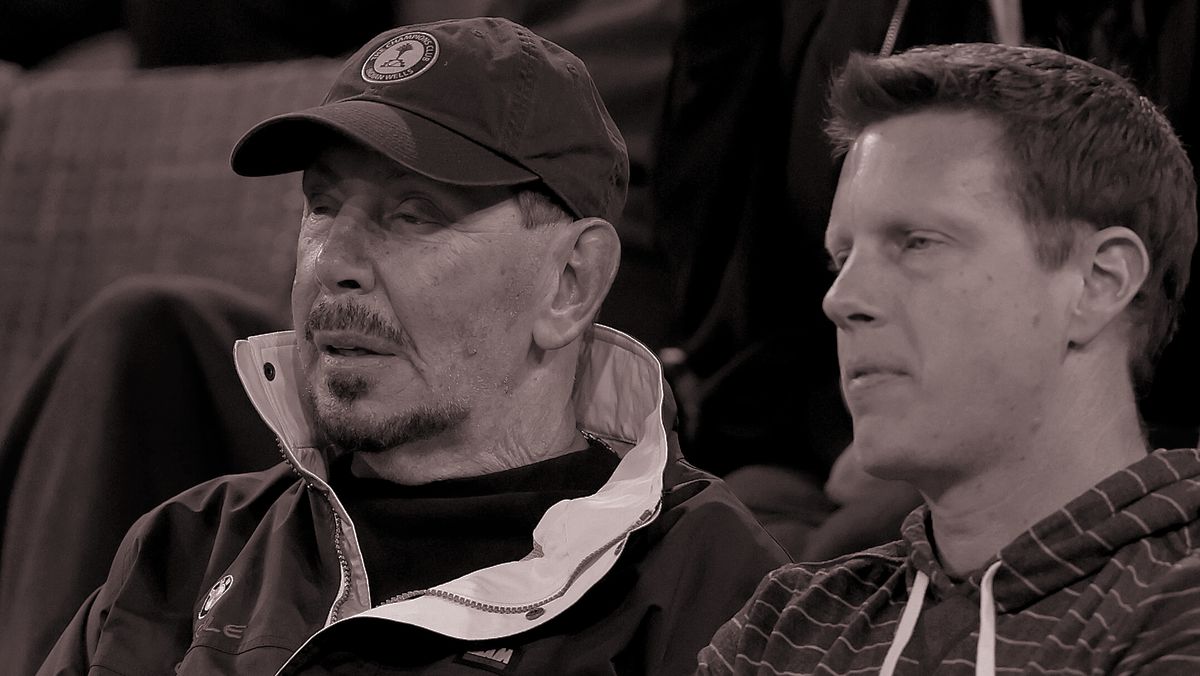
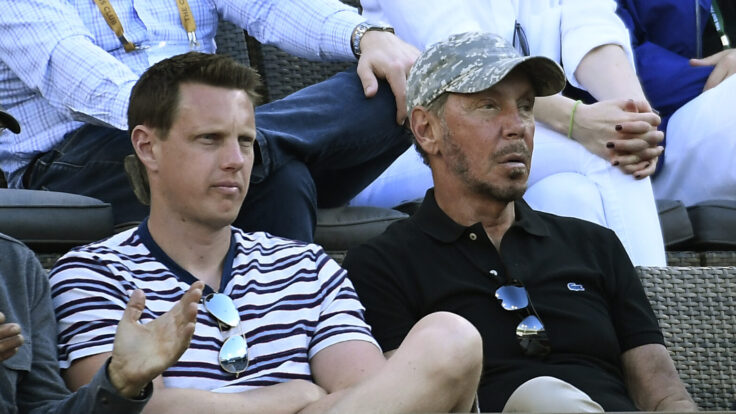
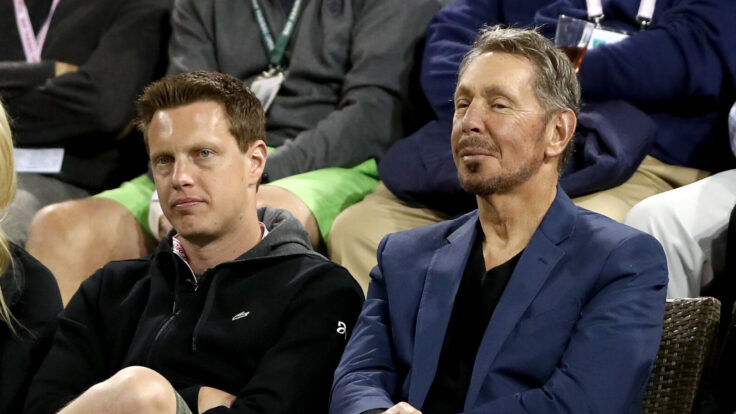
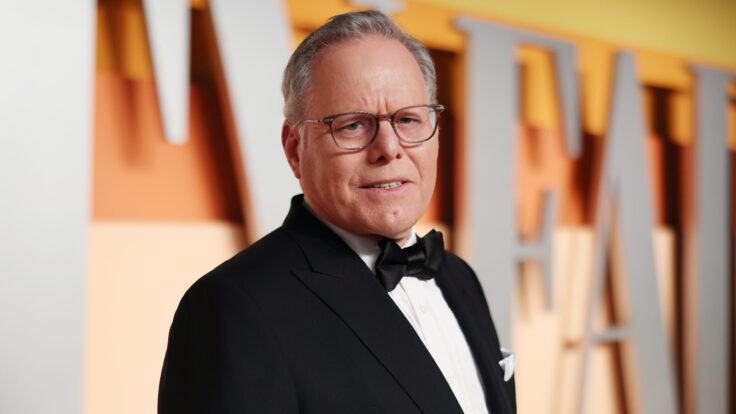
Like many of you, I remain fascinated not only by the Ellisons’ interest in David Zaslav’s Warner Bros. Discovery, but also by the way they’re going about their bidding. It’s been very quiet since the Journal’s report that they were plotting a cash offer. So what’s behind the quietude? As a former M&A guy, I have a few ideas. So do many of my banker friends, a
number of whom are equally fascinated by the deal kremlinology. As you can imagine, it’s the talk of the clam shack crowd.
But first… |
- Dallas
buyers club: The tug-of-war over The Dallas Morning News finally came to an end last week. As of Wednesday, September 24, the privately held Hearst Corporation is now the proud owner of the local newspaper, as well as Medium Giant, an affiliated marketing agency. The shareholders of DallasNews Corporation, the publicly held parent company that owned the newspaper, overwhelmingly agreed to sell the business to Hearst for $16.50 a share—or a total consideration of $88.3
million—despite a higher competing bid from Alden Global Capital, which bid $20 a share, or $107 million, for the company.
As I’ve previously noted, Hearst was forced to raise its initial bid of $14 a share, tendered in July, twice over in response to unsolicited offers from Alden—the hedge fund known for its newspaper acquisitions and rapacious restructuring plans. Obviously, it’s pretty rare for shareholders to accept the lesser of two all-cash bids, but this deal seemed filled
with emotions. Robert Decherd, the scion of the family that controlled the paper, vowed not to sell to Alden. His votes, plus those of many other shareholders, won the day. Now it all belongs to Hearst, which also owns 28 daily newspapers, including the Albany Times Union and the San Francisco Chronicle.
There really isn’t much that Alden can do about this outcome, either. I suppose the fund could file a lawsuit to try to undo the deal, but that’s going
to be a longshot, especially in the Texas courts, where home field advantage is definitely a thing. A spokesman for Alden said he would check for me whether the company had any plans to try to nullify the Hearst deal, somehow, somewhere. But he did not get back to me. - A $14B TikTok mystery: Something seems very fishy to me about Trump’s long-awaited TikTok deal, which will see the platform’s U.S. operations handed
over to a coterie of billionaire loyalists, including Larry Ellison, Rupert Murdoch, and Michael Dell. According to the framework for the deal, 80 percent of TikTok in the United States will go to “American investors, American companies, great ones,” as Trump said last week. (He neglected to mention that he’s also allowing MGX, the Abu Dhabi–based investment firm, to have a seat at the table.)
There has also been plenty of
scrutiny of the astonishingly meager $14 billion valuation for TikTok U.S. Dan Ives, a managing director and senior analyst at Wedbush Securities, has pegged TikTok U.S. at “well north of $100 billion” with the algorithm included. Mark Zgutowicz, an analyst at Benchmark, put it at $55 billion without the algorithm. (Apparently, the new TikTok U.S. will receive a license of the algorithm, not outright ownership of the algorithm itself.)
And yet the government is forking it over for the price of Snap, which gets a fraction of the engagement. “The number’s got to be wrong,” Brent Thill, a technology analyst at Jefferies, said on CNBC on Thursday. “It doesn’t make sense.” Deal maven J.D. Vance recently offered another view in the Oval Office. “We actually think this is a good deal for investors,” he said. No kidding. The White House, of course, was not forthcoming about its total
economic value calculations, either. - The men in the arena: I wanted to turn your attention to an excellent episode of The Varsity, my partner John Ourand’s podcast focused on the sports business industry. His guest this morning was Michael Nathanson, the elite analyst and namesake of
MoffettNathanson, the gold standard when it comes to publicly traded media entities. The two covered a plethora of juicy topics—the future consolidation of the industry and the Comcast–Google rights battle, among them.
John and Michael will be taking their act to the big stage next month at In the Arena, Puck’s inaugural business of sports conference, in partnership with MN. The extraordinary lineup features Adam Silver, Gerry Cardinale, and many others.
The tickets are running out, so book yours here before it’s too late. I’ll be there, interviewing some of these luminaries onstage, and would love to say hello in person.
|
Now on to the main event… |
|
|
An inside view into the kremlinology of the Ellison–WBD deal—the surprising comms plan, the
eerie post-announcement silence, and the unintended consequences pertaining to the final price. |
|
|
For the life of me, I still can’t figure out the timing of the September 11 leak to The Wall Street
Journal that Paramount Skydance, the newly created Big Media company formed by the Ellisons and RedBird Capital, was planning a cash and stock bid for Warner Bros. Discovery. It’s been 17 days, and there is still no PSKY bid forthcoming for David Zaslav’s WBD. My partner Matt Belloni noted recently that Ellison was keeping a very tight circle of trust on the deal, and he might have even submitted it. (Paramount would not confirm it, and a spokesperson told me that the company is now locked down tighter than a prisoner in solitary confinement.) The silence is deafening.
But while I have no idea who fed that information to the Journal, I do know the leak is proving very costly for the Ellisons and for PSKY. These days, the market
capitalization of WBD is closing in on $50 billion, up roughly 60 percent since the leak. That’s great for WBD shareholders, but pretty lousy for the prospective buyers, who are now faced with a much more expensive target. “Why would you do that?” one longtime Wall Street M&A banker asked me, rhetorically. “You don’t see me doing that. It’s inexplicable.”
Of course, even if Ellison & Co. succeed in getting Zaz and his savvy board of directors to accept a deal, they would still have to pay
a premium. That’s a given in pretty much every M&A deal, especially if it’s going to be a mostly cash deal rather than a strategic, stock-for-stock arrangement, which occasionally happens without any premium required. A few of these come to mind: the Exxon–Mobil deal in ’99; the Daimler–Chrysler deal in ’98; the Bank of New York–Mellon deal in ’07; the Anglo American–Teck Resources deal earlier this year. But they are rare. Much more common are deals where the acquirer pays a decent
takeover premium.
In stock deals, the premiums tend to be in the range of 15 percent to 25 percent. In cash deals, the premiums tend to be higher, in the range of 25 percent to 35 percent. In contested takeovers, with multiple parties with a serious intent to win, the takeover premium can be much higher. In the small deal for DallasNews Corporation, which I have been following closely, Hearst’s winning bid of $16.50 in cash was something like a 277 percent premium to the
per-share price of $4.39 on the day before Hearst started bidding for the company. That’s a huge outlier, obviously, in large part because DallasNews was a thinly traded, micro-cap company effectively controlled by Robert Decherd, a scion of the founding family.
Most of the time, the two sides do everything in their power to keep the news of the potential deal from leaking, until it’s deemed a “strategic leak,” and then the Journal or the Times
gets the call. That way, when the deal is announced, and the target’s stock inevitably trades up to approach the value of what the buyer is offering, the premium doesn’t look too high—a dynamic that satisfies both sides. If the news of the potential PSKY deal for WBD had not leaked, and PSKY could have offered a 35 percent premium above WBD’s September 10 closing price, or roughly $17 per share, few would be able to reasonably complain. But on account of the leak, the WBD stock is already
trading at a 60 percent premium to the pre-leak share price. And the WBD share price is pretty much staying there, even though the Ellisons and PSKY still have not made their bid.
It’s not all that clear to me how the Ellisons get the WBD share price to float back to Earth, except perhaps by delaying any bid, perhaps for months. If no bid were forthcoming in the next few weeks, or months, WBD shareholders might begin to feel that a bid may not be coming after all. And all the speculators,
or arbitrageurs, might begin dumping their shares, putting downward pressure on the stock. Might this explain why things have gone so silent, so suddenly? |
On the other hand, I can imagine that the Ellisons might decide enough is enough, and that the current 60
percent increase in the WBD stock is sufficient premium to get the deal done. I could certainly see a bid at the current market price of WBD, without any additional premium: $50 billion for the equity, plus the assumption of $30 billion of WBD’s net debt. Zaz, of course, will try to gin up a real auction, but I just don’t see anyone else—not Comcast, not Netflix, not Amazon, not Apple—entertaining the whole enchilada. (This is not investment advice.)
At the moment, then, the difference
between a 35 percent premium for WBD and a 60 percent premium for WBD is roughly $8 billion—the leak tax, as it were. Maybe the Ellisons don’t care about that $8 billion, and maybe they’re right not to care. After all, Larry Ellison’s net worth has skyrocketed $176 billion so far in 2025, to $368 billion. What’s more, equity investors seem to like the idea of the PSKY deal for Paramount, too. Its stock is up 27 percent, or roughly $5.6 billion, since the leak to the
Journal.
I’m not sure analyzing who benefits from the leak gets you very far either. If the leak came from the PSKY crew, that was costly, but it also let the world know that the Ellisons intend to be a big player in Hollywood and media, and might box out other bidders once they saw the stock pop. Could the leak have come from WBD and Zaz world? It seems very unlikely that a shrewd deal guy like Zaz would have started an auction process with a bomb of that magnitude. He likely
will, and probably should, make the argument that WBD will create more long-term shareholder value by cleaving itself and having the two parts of WBD float off independently and realize their individual values sometime down the road. And he might be right that the two separate pieces of WBD might one day be worth more than whatever PSKY offers in cash today. But that’s going to be a tough argument to make at this moment, even if he’s right. The bird in the hand is still worth more than two in
the bush.
In a sense, then, the leak hurts and helps both PSKY and WBD. But the timing is confounding. My Wall Street sources tell me it’s likely a bid will still be forthcoming; they just don’t understand why it’s taking so long. The truth, of course, is that we are living in unprecedented times and this is merely the latest example. |
|
|
Puck’s daily political newsletter from Washington on what’s really happening in this town, from the White House to the Pentagon
to Capitol Hill, K Street, and the campaign trail. |
|
|
Puck fashion correspondent Lauren Sherman and a rotating cast of industry insiders take you deep behind the scenes of this
multitrillion-dollar biz, from creative director switcheroos to M&A drama, D.T.C. downfalls, and magazine mishaps. Fashion People is an extension of Line Sheet, Lauren’s private email for Puck, where she tracks what’s happening beyond the press releases in fashion, beauty, and media. New episodes publish every Tuesday and Friday. |
|
|
Need help? Review our FAQ page or contact us for assistance. For brand partnerships, email ads@puck.news. You received this email because you signed up to receive emails from Puck, or as part of your Puck account associated with {{customer.email}}. To stop receiving this newsletter and/or manage all your email preferences, click here. |
Puck is published by Heat Media LLC. 107 Greenwich St, New York, NY 10006 |
|
|
|