Welcome back to Dry Powder. I’m Bill Cohan.
It’s been an exhilarating week
on Wall Street: The Ellisons tapped Quinn Emanuel to argue the WBD bidding process was rigged; Netflix announced its $83 billion deal for the company; and everyone has been left to speculate whether Paramount might go hostile. There were plenty of rumors about another shoe dropping on Friday afternoon. This, of course, is catnip for us at Puck. My partners have already dominated the discourse on the deal: Matt Belloni
offered a counterintuitive perspective on what this means for the industry; Dylan Byers explained the downstream impact on CNN; and Eriq Gardner and Peter Hamby
discussed the regulatory gauntlet ahead.
Today, I’m focused on the structure of the Netflix deal, and whether or not the Ellisons will counter it, despite having already had their $30-a-share cash bid rejected. Is one of the world’s wealthiest families willing to increase its bid to something like the low-30s per share—a once unfathomable number for a stock traded
at around $7.50 some six months ago—or even launch a hostile deal for WBD?
But first… |
- A
quick update on our pal S.B.F.: Last month, as I previewed at the time, Sam Bankman-Fried’s attorneys argued his appeal before the Second Circuit Court of Appeals. And while we await the court’s decision, S.B.F. has made no secret of coveting one of Trump’s famous pardons, which would result in his immediate release from
his Southern California prison cell. After all, the president recently pardoned Changpeng “C.Z.” Zhao, the co-founder of Binance who triggered the run on FTX back in October 2022. (Yes, C.Z. went out of his way to help launch the Trump family’s crypto business, a gesture of goodwill that was seemingly reciprocated.) Then, there’s the curveball Sam threw last week by endorsing Trump’s full and unconditional pardon of Juan Orlando Hernández, the
onetime president of Honduras, who was convicted of trafficking drugs into the United States and was sentenced to 45 years in prison. S.B.F. (or whoever has control of his account these days) took to X to share his views about his former pal from their 18 months together at the Metropolitan Detention Center in Brooklyn. Didn’t see that one coming. “Juan Orlando is the most innocent prisoner I’ve met,” S.B.F. posted, noting that he’s “not aggressive” and “speaks softly” and “doesn’t even
curse.”
S.B.F. further wrote that Hernandez “has a stubborn dedication to doing what’s right,” that “he hates drugs,” and that “he was framed.” There was “a massive narco conspiracy in Honduras,” S.B.F. continued, but Hernández left office as “the President who ended Honduras’ role as one of the cocaine capitals of the world.” S.B.F. praised Trump’s pardon effusively and criticized “the Left” for objecting to it. The Times, a favorite Trump piñata, enjoyed a special
mention. (Air Mail has a great piece on Hernández’s curious pardon this weekend.)
Will S.B.F. now argue for a pardon of his other new friend, Sean “Diddy” Combs, currently serving four years in prison in Fort Dix, New Jersey, for prostitution-related charges? We’ll see. Meanwhile, if Sam wants that pardon from Trump, he’ll still
need to explain his own hefty political donations toward Democratic Party causes and his torching of Sullivan & Cromwell, one of Trump’s favorite law firms.
|
Now on to Zaz, David, and Gerry et al.… |
|
|
A talmudic reading of the mishegas following the $83 billion Netflix-WBD deal: Zaz’s
personal economics; the likelihood that this turns hostile; the unusual consortium of banks underwriting the deal; the value of the Gunnar stub; regulatory open questions; the $5.8 billion breakup fee; and more. |
|
|
The blockbuster announcement that Netflix had agreed to buy the studio and streaming assets of Warner Bros.
Discovery for $83 billion, which leaked Thursday night, was presented with all the trappings of corporate finality by Friday morning. Both company boards had approved the deal. There was an impressive rollout of corporate press releases and a meeting between Wall Street analysts and Netflix executives. There was even a signed, fully negotiated merger agreement—somehow included in the Netflix 8K—that was filed Friday afternoon with the Securities and Exchange Commission.
It was also clear
that Netflix, which had never before made an acquisition larger than $700 million, had stepped up big time for Warner Bros. Discovery, hoping to box out the other two competitors and agreeing to pay $27.75 per share in cash and stock. The mix of consideration is $70 billion of cash, or 84 percent of the total, and the rest in collared Netflix stock. Netflix is also assuming $11 billion of Warner Bros. Discovery’s $30 billion of net debt. As part of the deal, Warner shareholders will
also receive the equity in the so-called Discovery Global business of Warner Bros.—the linear TV assets, including CNN, TNT, and the Food Network, among others—when it is spun off with the balance of WBD’s $20 billion net debt under Gunnar Wiedenfels in the third quarter of 2026. The Netflix deal for the remaining pieces of WBD is expected to close long after Gunnar’s business goes solo.
Jessica Reif Ehrlich, a research analyst at Bank of America, has
estimated that on a stand-alone basis, the Discovery Global business would trade at a minimum of $5 per share. This is proving to be a consequential—even controversial—analysis. Using Ehrlich’s math, the total consideration of Netflix’s deal for Warner Bros. Discovery looks like roughly $33 per share. Back in April, when doubts were running high about the company’s future, the stock was trading around $7.50 per share. That’s a jump of 167 percent in the last six months—a pretty
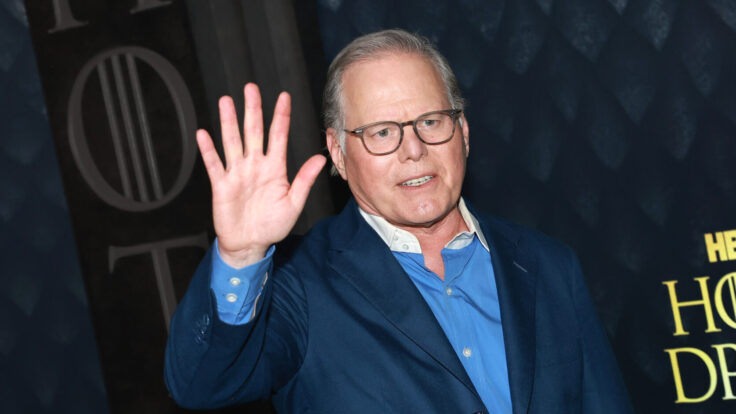
astounding outcome, especially since the stock was otherwise up a mere 6 percent since April 2022, when David Zaslav took over the company. At the Netflix deal price, Zaz’s stock options, re-cut in June at the time of the split-up of the company, will likely be worth around $375 million at closing, and some estimates have his take at around $500 million or more. In other words, he is highly motivated to get this deal done. (As part of our recent acquisition of Air Mail, Zaz is a
de minimis investor in Puck.)
Netflix, for its part, has lined up a $59 billion senior unsecured bridge loan from an odd consortium of banks, including Wells Fargo, BNP Paribas, and HSBC, and outlined a modest but important handful of closing conditions, including an affirmative vote by WBD shareholders and, of course, regulatory approval. Netflix will use that bridge loan, plus its own cash, plus a bit of its stock, to pay for the acquisition. Closing of the deal is
expected between a year and 18 months from now.
Despite the moat that Netflix and WBD are trying to put up around the deal, questions remain about whether this is a fait accompli. Will Comcast and Paramount, the other two suitors, let Netflix walk away with the prize uncontested? And are either of them willing to pay more than $34 a share—a price that includes the $2.8 billion breakup fee that would also have to be paid—to win the day? After the deal was announced Friday morning,
the Warner Bros. Discovery stock traded up to a little more than $26 a share, suggesting, at the moment anyway, that a bidding war is not in the offing. “WBD’s 8 percent discount to the proposed deal price, adjusted for time to close, seems to imply market confidence in approval,” Peter Supino at Wolfe Research wrote. But I don’t think this one is over quite yet. |
Comcast’s
Contentment & Ellison’s Furor
|
Comcast currently has an enterprise value of $200 billion: $100 billion of debt and $100 billion of equity.
Adding a roughly $100 billion acquisition seems like a long putt, even for an historically acquisitive company. In fact, my Comcast sources tell me that the company is done, and that it will not try to break up the Netflix/WBD deal. “If you’re writing a story on what potential next moves by the bidders will be, I would not include us,” one very knowledgeable person close to the company said. “We like our company [the way it is].” So, let’s assume Comcast… is out.
Paramount Skydance,
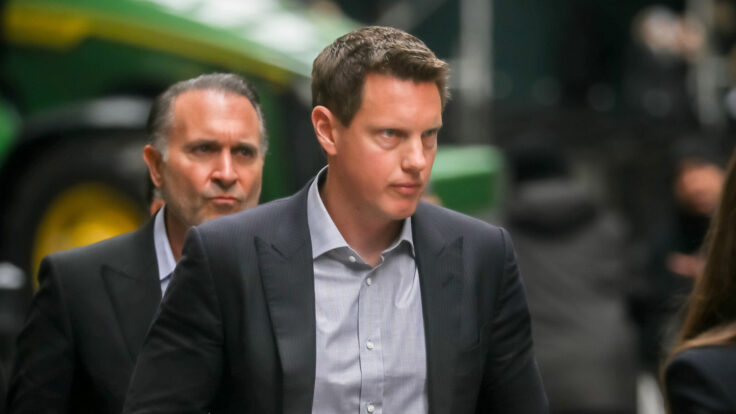
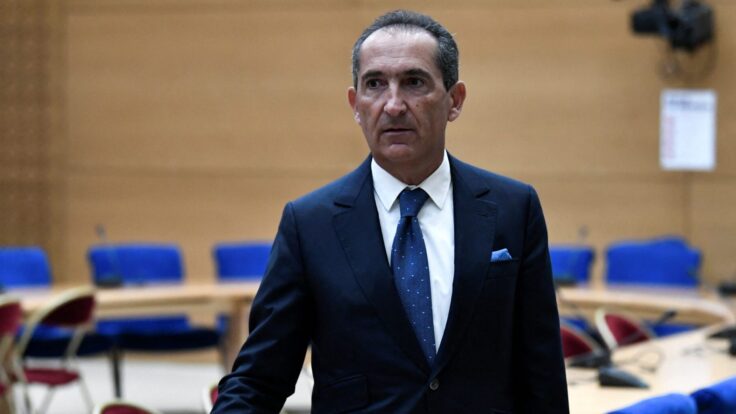
meanwhile, which got this whole ball rolling back in September, seems to be considering its options. The company has long coveted Warners, and my sources tell me the PSKY folks feel like the WBD board gave their offer short shrift. PSKY, of course, made at least three bids for the combined company, each one slowly ratcheting up. Its latest offer this past week, for all of WBD, was an impressive $30 a share—all cash—giving WBD an enterprise value of roughly $105 billion. That’s not nothing.
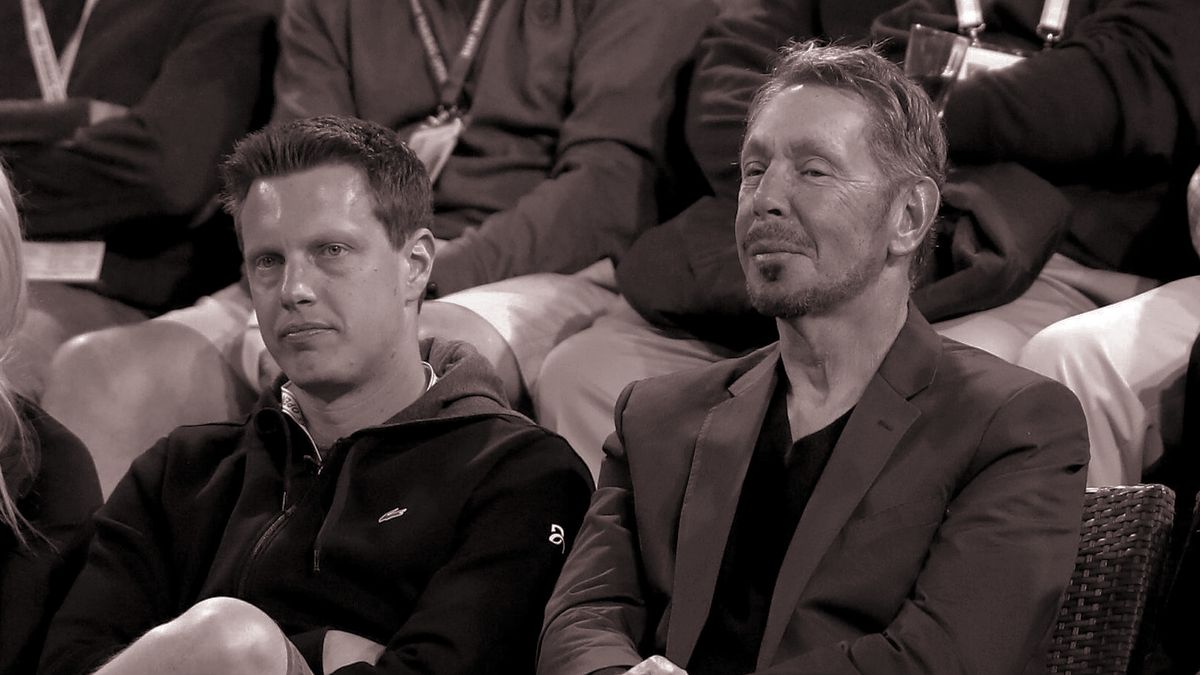
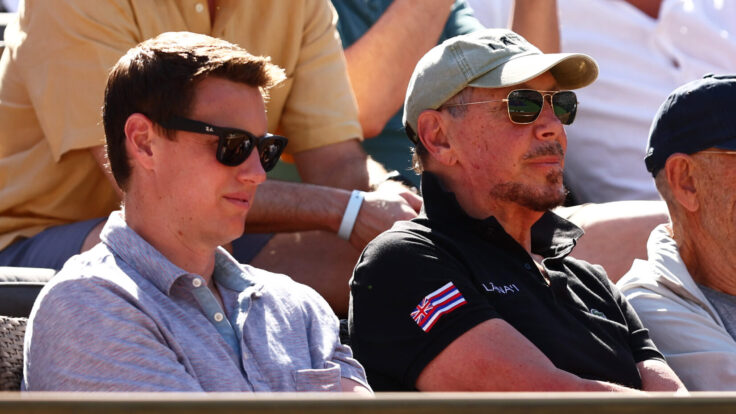
Contrary to rumors floating around out there, the PSKY bid is fully financed by David Ellison’s father, Larry, with help from RedBird Capital and the Saudis, and both Citigroup and Bank of America were prepared to refinance some $54 billion of the combined debt of the two companies. (RedBird is also a minority investor in Puck.)
For reasons that aren’t yet completely clear, the WBD board seems to have given more credibility—or value—to Netflix’s $27.75
bid, plus the Discovery Global stub equity, than to PSKY’s all cash $30-a-share bid. That’s the board’s right, of course, using its “business judgment” to favor one bid over another. That doesn’t mean it’s not a bit of a head-scratcher. Could the differentiator for the board be the equity value of the Discovery Global stub, of all things? According to Reif Ehrlich’s math, it’s worth $5 a share—which, and I’m guessing here, must be similar to what WBD’s three bankers came up with for the stub in
the fairness opinions they prepared for the board. But if the value of the stub is closer to the $2-to-$3-a-share range, as the PSKY advocates believe, it’s a much tougher call. Could Gunnar and CNN be the key to the WBD board’s deliberations on a $100 billion deal? We may have to wait and read the proxy statement to find out how the bankers valued Discovery Global and to better understand the board’s decision-making.
In any event, that’s kind of a moot point at the moment. The question
now is whether PSKY wants to try to come up with the $34-plus a share that would be needed to get the Warners board of directors to switch its recommendation. I know that Larry Ellison has deep pockets—he’s worth $275 billion at last count—and the Paramount Skydance crew has enlisted equity support from the Saudis, but we’re entering serious squid-eating-the-whale territory. The market value of Paramount Skydance is $15 billion—down nearly 10 percent on Friday after the Netflix news—making the
stretch to something like $115 billion for Warner Bros. Discovery seem rather large. It could still happen, though, if the Ellisons are really determined to win. What’s another $10 billion or so among friends at this point?
Not much is the likely answer, but we aren’t quite there yet. The Ellisons and RedBird Capital seem to believe they have the superior bid, and they may be contemplating whether they should take their bid “directly” to the WBD shareholders,
which is Wall Street code for going hostile. That won’t be pretty, of course—and the flavor of the potential hostility was already previewed in the Quinn Emanuel letter that was leaked when WBD’s board began to favor Netflix over the Ellisons. Quinn Emanuel insinuated that the process had not been fair and asked that a special committee of the WBD board of directors be appointed to consider the deals. (That did not happen, obviously.) But a hostile $30-a-share all-cash deal, or a bit more, might
be what wins the day here, if the Ellisons have the cojones to do it.
Could PSKY bring its reported $30-a-share offer directly to the WBD shareholders by slapping a tender offer in The Wall Street Journal (like in the old days)? Sure. The funds are committed and I suspect the will is there. PSKY has plenty of time to pull that move together, since it is still an open question until the WBD shareholders vote on the Netflix deal many months from now.
Would $30 a
share from PSKY, all cash, for the full WBD monty be more appealing to WBD shareholders than the combo of $27.75 from Netflix plus the Discovery Global stub? Going hostile will be the only way that the Ellisons and RedBird principal Gerry Cardinale—and the rest of us—get the answer. |
Then there is the regulatory battle, which the Paramount team has long considered their advantage given the
Larry-Trump bromance and the Bari Weiss–Dana White–Taylor Sheridan of it all. In the December 3 letter to the WBD board, the Ellisons’ attorney wrote, “We remain confident that the Paramount offer would provide the maximum value to WBD stockholders.” But that cockiness about needed regulatory approvals won’t, on its own, supersede the important monetary considerations.
Netflix is also highly confident, as they used to say
on Wall Street, that it will be able to overcome any legal challenges from the Justice Department. In fact, Netflix has agreed to hand Warner Bros. Discovery $5.8 billion if the deal fails because of a regulatory block. “We’re highly confident in the regulatory process,” Ted Sarandos, the Netflix co-C.E.O., said on the investor call on Friday. “This deal is pro-consumer, pro-innovation, pro-worker, it’s pro-creator, it’s pro-growth. And our plans here are to work really closely
with all the appropriate governments and regulators. But [we are] really confident that we’re going to get all the necessary approvals that we need.” Unless the Ellisons go hostile, or come up to the $34-per-share range, there would be no way the Warner Bros. board, special committee or not, could recommend a deal with Paramount Skydance.
Netflix, ever the chameleon, will likely transform Hollywood if this deal gets through all the hurdles it still faces. The company has a long history of
changing strategies in midstream: Over the years, Netflix said it was just going to license programming, then it started making original programming. Then it said it would never allow advertising on the platform; now it has a long-term target of $10 billion a year in advertising. It used to be fine with sharing passwords; now it cracks down on password sharing. Netflix wasn’t going to get into the business of sports programming; now there is sports programming… etcetera. Somehow, it has
all worked, and Netflix now has a market value of $425 billion—more than Disney and Comcast combined.
Netflix leadership is unlikely to get rattled by all this uncertainty. I recall interviewing company founder Reed Hastings for Vanity Fair in 2012, amid the fallout of his ill-advised decision to split the company into two pieces, a nascent streaming business and its original business of mailing DVDs in self-addressed red envelopes to subscribers in their homes.
“When I look at the challenges that Gandhi had, or the various leaders through history, our challenges pale in comparison,” Hastings told me. “Over the last 10 years, I’ve read a ton about Winston Churchill and Abraham Lincoln. I’ve worked very hard, but my life’s always been fun. It’s not been the Civil War of 1862. That was dark, and how you hold things together at a time like that is completely different than what we experienced. When we had
our stumble—in comparison to a health crisis—I slept well every night. I didn’t get all tense. Our issues were ones that were unfortunate business judgments, not of morality or ethics or scandal.” Hastings, now the chairman of the Netflix board, is likely still espousing that same zen from inside the boardroom.
The promise of the deal, though, is how it intends to reorder Hollywood into a series of global players—Netflix/Warner, Disney to a lesser extent, YouTube, TikTok, and Amazon—where
you’ll go to get whatever you want to watch, content-wise. Then there will be the regional players, such as Paramount and Comcast, domestically, and the likes of RTL, in Germany, and Berlusconi, in Italy, among others. The deal will also marry the ultimate buyer of other people’s content with the ultimate producer. Yes, the combined Netflix/Warners will be big, and yes, it will be powerful. And that might concern many people. But it just might be the peg that reorients the whole business of
Hollywood, and just in the nick of time.
Unless, of course, the Ellisons decide to go hostile, and the calculus of the deal gets turned on its head once more. |
|
|
Puck founding partner Matt Belloni takes you inside the business of Hollywood, using exclusive reporting and insight to explain
the backstories on everything from Marvel movies to the streaming wars. |
|
|
Ace media reporter Dylan Byers brings readers into the C-suite as he chronicles the biggest stories in the industry: the future
of cable news in the streaming era, the transformation of legacy publishers, the tech giants remaking the market, and all the egos involved. |
|
|
Need help? Review our
FAQ page or contact us for assistance. For brand partnerships, email ads@puck.news.
You received this email because you signed up to receive emails from Puck, or as part of your Puck account associated with {{customer.email}}. To stop receiving this newsletter and/or manage all your email preferences, click here. |
Puck is published by Heat Media LLC. 107 Greenwich St., New York, NY 10006 |
|
|
|