Welcome back to Dry Powder. Today, I pick up where I left off last Sunday—with the latest murmurs
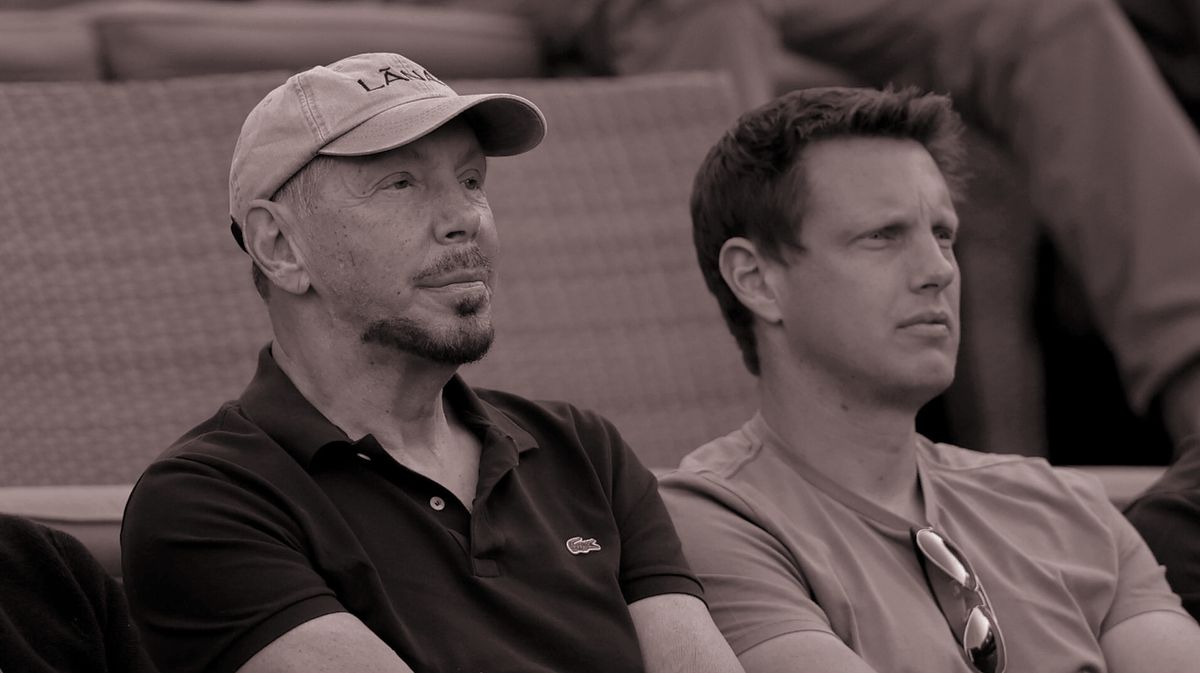
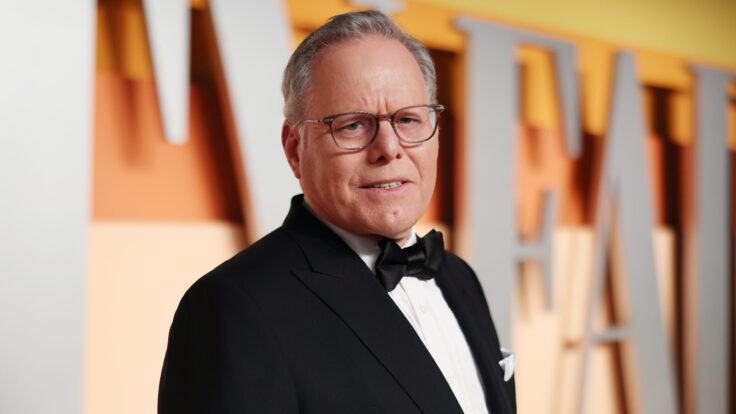
surrounding the Ellisons’ pursuit of David Zaslav’s WBD. The silence is revealing, or at least the subject of serious debate among the elite banking community. I have all the latest theorizing below, including the prevailing scholarship from analysts.
Also, as a reminder, I’ll be joining my partner John Ourand at his inaugural sports media conference, In the Arena, in Hudson Yards on October 16. John and our friends at MoffettNathanson
have amassed an extraordinary lineup including Josh Harris, Gerry Cardinale, Adam Silver, Michael Rubin, and many, many more. There are a few tickets left. Click here to claim yours. |
- What
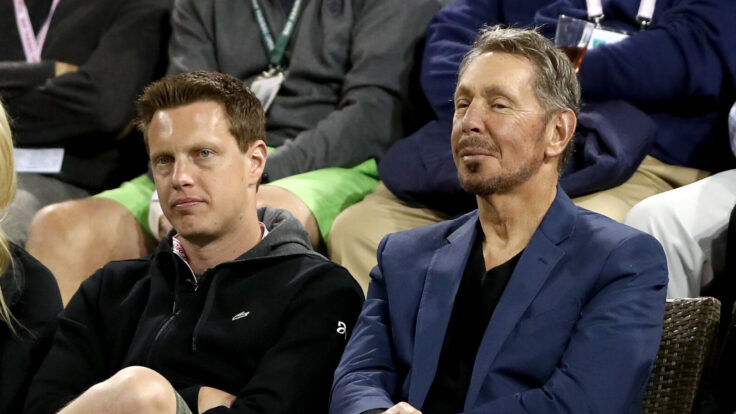
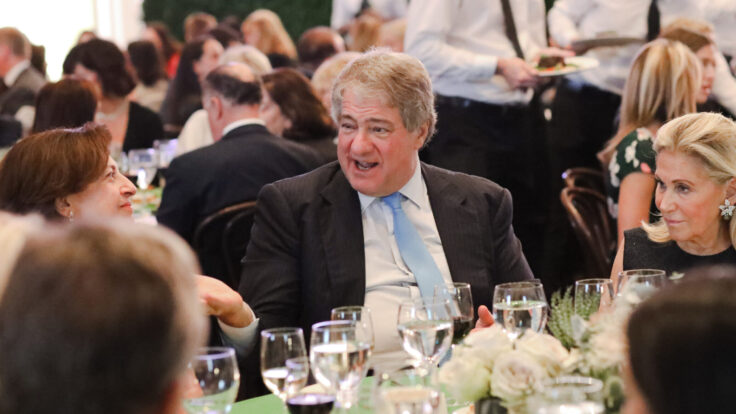
the Dell?: As you’re surely aware, Donald Trump appears to be facilitating the sale of TikTok U.S. for the plum and seemingly undermarket price of $14 billion to a trio of billionaires: Larry Ellison (net worth: $350 billion), Egon Durban (at Silver Lake Partners, net worth: more than $2 billion), and Michael Dell ($150 billion). The inclusion of Dell in the deal was a bit of a surprise, since he hadn’t been mentioned much
as a possible suitor.
But Dell may be an increasingly prominent figure on the periphery of Trumpworld. In May 2022, the Trump Organization sold its lease to the Trump International Hotel in Washington, D.C., in the Old Post Office building, to CGI Merchant Group for about $375 million, perfecting a reported profit of around $100 million or so. CGI turned the hotel into a Waldorf Astoria property. In 2023, however, CGI defaulted on a $285 million loan on the hotel. Its lender happened to
be BDT & MSD Partners, otherwise known as Dell’s investment and M&A advisory firm—which also had a preferred equity investment in Shari Redstone’s family holding company, National Amusements Inc., which the Ellisons acquired in August for $2.4 billion in cash in order to get their hands on what is now Paramount Skydance.
BDT & MSD bought control of the Waldorf Astoria hotel lease for $100 million in August 2024 at a foreclosure auction. The hotel is now managed by Hilton.
Trump’s interest in reacquiring the lease on his namesake hotel was widely reported late last year, but since then there has been no news. Sources tell me he still wants to buy it back. Why, I don’t know. Among the partners at BDT & MSD is Dina Powell, the ex-Goldman partner and deputy national security advisor in Trump I, who is married to Dave McCormick, the Republican junior senator from Pennsylvania. Maybe this is all just a coincidence… - What is Marc doing?: Tony Blair is reportedly considering Marc Rowan, C.E.O. of Apollo, to serve on his Gaza International Transitional Authority, the international board that the former British P.M. is proposing as the “supreme political and legal authority” for the region once hostilities cease. The 10-member board, which would include “at least one qualified Palestinian representative,” will make “binding decisions,”
pass legislation, and provide “strategic direction” to the U.N. Security Council. One faithful correspondent wrote to me about the Rowan appointment, “The only more insane choice would be Bill Ackman.”
According to The New York Times, Rowan—whom Trump considered for Treasury secretary before settling on Scott Bessent— is also one of the key intellectual figures behind the administration’s latest assault on higher education, a so-called
compact offered to nine major U.S. universities, including Brown, Dartmouth, the University of Virginia, and the University of Texas. The deal would give them access to “substantial and meaningful federal grants” in exchange for their consent to a variety of stipulations, including limiting the number of international students on campus, requiring standardized tests for admission,
protecting conservative voices, and recognizing that “academic freedom is not absolute,” whatever that means. Rowan, a graduate of Wharton, played a key role at Penn amid the controversies that resulted in the departure of university president Liz Magill following the October 7 attack on Israel. (These headaches also led to the resignation
of Rowan’s fellow Wall Streeter Scott Bok, the C.E.O. of Greenhill & Co., who was the chairman of Penn’s board of trustees.)
|
|
|
It’s been nearly a month since news broke that Paramount Skydance was considering a bid for
Warner Bros. Discovery—a fraught period that has allowed analysts and veteran Wall Street hands to opine, publicly and privately, on the potential deal and whether it should go the distance. |
|
|
There’s now been nearly a month of eerie silence since The Wall Street Journal published the leaked
news about Paramount Skydance’s planned takeover of Warner Bros. Discovery—an eternity of inactivity in Wall Street M&A terms. I’m told that WBD C.E.O. David Zaslav has hired Goldman Sachs and the Ellisons have hired Blair Effron at Centerview—serious M&A firepower—and yet, as the weeks pass with no further announcements, questions have inevitably been raised about the likelihood of a deal.
The research analysts are already offering some circumspection.
On September 26, KeyBanc’s Brandon Nispel downgraded WBD’s stock after its huge run-up in the weeks following the Journal leak, reasoning that the takeover speculation had already pushed the price beyond what its operating fundamentals would support. If no deal from PSKY for WBD materialized, he warned, the downside risk to the stock would be significant.
Nispel suggested that there is a 50 percent chance PSKY won’t make any bid at all for WBD, in which case WBD
stock would surrender its speculative gains and return to trading at around $12 per share from its current $19. He put the likelihood of a PSKY bid at 40 percent, and posited that the takeover value of that bid would be $25 a share. (As always, this is not investment advice.) Nispel’s other scenario, with a 10 percent probability, was a “bidding war” for WBD, which would drive the targetco’s stock price to around $40 a share. (I’d say 10 percent is too optimistic there, but I agree it’s at least
possible.) “We continue to like the fundamental improvement story,” Nispel wrote, “though there is likely downside from here if a deal fails to materialize, as the probability-adjusted return from various scenarios seems low.”
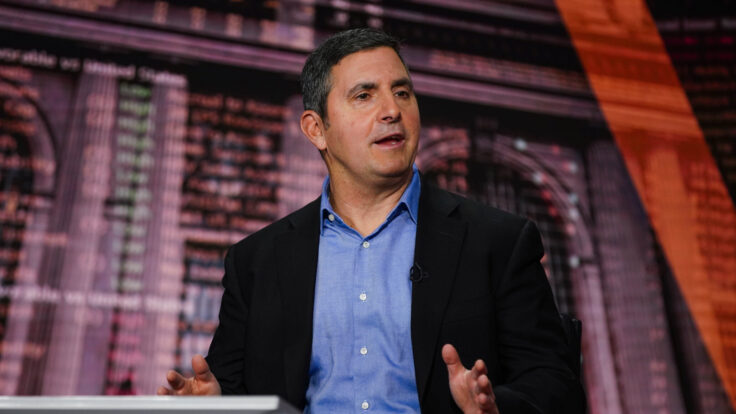
Then, last Monday, CNBC deal maven (and my friend) Dave Faber suggested that PSKY would still make a bid for WBD, but that the negotiations would be intense—or even hostile. A “friendly deal seems unlikely,” Faber said. “My expectation is that
Paramount will make an offer, that they will not be able to get something done friendly, via conversation, and therefore will have to come forward with an offer, and then it will be up to the board of directors.”
Of course, lots of deals that start out unfriendly—or even hostile—end up closing once the bid price enters a range that the board of directors has a fiduciary responsibility to accept. Tactically, Zaz may be digging in his heels in order to draw out the process, force the
Ellisons’ hand, and entice another bidder. But the idea that PSKY may have to go hostile, or make an offer directly to shareholders, has a very different vibe than the one that we were all presented with three weeks ago, when even Faber was suggesting a deal could get done in the $22-to-$24-per-share range. Faber also said that it’s “very much unclear” whether Paramount will be able to reach a deal “quietly” with WBD, leaving Wall Street “wondering and waiting for when, in fact, said offer will
be made.”
The following day, longtime BofA Securities media research analyst Jessica Reif Ehrlich threw even more cold water on a PSKY-WBD merger. “It is our view that as a standalone entity WBD’s streaming and studio assets would generate a bidding war amongst potential buyers,” Jessica wrote, “and therefore, we believe a split of the company can garner the greatest potential value.” (My emphasis, not hers.)
Jessica’s note was the first to
support my thesis from last week—namely, that Zaz might be able to persuade WBD’s board of directors that, in the long run, his split-up plan, announced in June, would produce more value for WBD shareholders. Either way, Zaz’s split is expected to close next April, which could be in the ballpark of when any Paramount Skydance deal for WBD would close, given the
time it takes to file the required documents with the S.E.C. and get approval from the regulators—even if the Ellisons already have some dealmaking experience under the current administration. |
The “Crown
Jewels” Argument
|
So, can Zaz effectively argue that his split-up plan will create more value for shareholders than a
cash-and-stock bid from PSKY? The post-split Streaming and Studio business, which Zaz would run as C.E.O., would be a highly attractive M&A target for the likes of Netflix, Apple, Amazon, or even Comcast’s NBCU. And, frankly, Jessica’s imprimatur offered a whole new level of credibility. “We continue to believe the WBD Streaming and Studios businesses are crown jewel assets in the media ecosystem,” she wrote. “As we have written previously, we believe there will be significant demand for the
Warner Bros. assets following a split of the company.”
Jessica added that, “at takeout valuation,” post-split, WBD should be worth more than $30 per share—more than PSKY is currently contemplating forking over. (She also argued that the market is underestimating the value of what will become Gunnar Wiedenfels’ Global Networks business. This is all very fascinating.)
I can confirm that the Paramount Skydance board of directors met recently to authorize
something—an actual bid? Continued exploration of a bid? Who knows? If PSKY decides to proceed, any cash-and-stock bid for WBD would be fully financed, with the cash portion coming from Larry Ellison, or a bank or private credit borrowings, or likely a combination of both. The days of the Highly Confident letter are long gone, so it would be idiotic for the Ellisons to proceed to bid for WBD without the financing lined up. The Ellisons, and their partner Gerry
Cardinale at RedBird Capital, are some of the smartest dealmakers in the business. (A spokesman for Paramount Skydance declined to comment.) |
Meanwhile, my sources on Wall Street are also starting to voice skepticism that a deal will materialize. One
esteemed source wrote to me that “the whole thing feels very J.V.” and that there has been no bid for WBD because “there is no money to finance a bid.” If Larry Ellison were funding the deal, he hypothesized, it “would have happened already.” Ellison, even with his $350 billion fortune, doesn’t have $50 billion of cash “lying around,” as this person put it. He would probably need around $100 billion of Oracle stock, or other assets, available to be margined—at 50 percent—to get the $50 billion
in cash to buy all of WBD. Plus, PSKY would have to assume WBD’s $30 billion of net debt.
Ellison, this person continued, didn’t become the third-wealthiest man in history by making emotional decisions with his money. Would Larry really want to pledge one-third of his fortune to the combination of PSKY and WBD, a deal that would combine three movie studios with a bunch of declining cable channels and two big newsrooms? “It’s also already leveraged,” he wrote “This all looks
absurd now. Something doesn’t add up. It just smells funny.”
There’s another not uncommon theory on Wall Street that I’ve heard this week: If Larry really had a positive economic view of these businesses, he would have ponied up the additional $5 billion or so needed to take PSKY fully private, rather than leaving a small (30 percent or so) float out there. If he wasn’t willing to do that, the thinking goes, why would he step up for the $50 billion—or even $40 billion, assuming another
$10 billion could come from the Wall Street wiseguys? Their answer? He wouldn’t, and won’t.
I actually see the logic of leaving the PSKY equity stub out there: It gives the Ellisons an equity currency for future deals, such as the Free Press deal, which my partner Dylan Byers noted is imminently closing. Also, for what it’s worth, I don’t really think the
Ellisons care about the extra cost of being a public company.
It’s all about capital allocation, even for Larry, according to another wise media M&A hand. PSKY has already spent $7.7 billion over seven years for rights to broadcast UFC, plus another $1.5 billion over five years to lock up South Park. “They’re going to have to pay up for the NFL, and it looks like sooner rather than later,” he added. “I think that’s going to make the $7.7 billion for UFC look cheap.” The Ellisons,
he said, have their hands and their capital committed.
By the way, this is a guy who still thinks, on balance, that the Ellisons will make an offer for WBD, if they haven’t already. But that doesn’t mean he thinks the deal makes sense economically. He noted that Team PSKY has said very little about how the company is performing since they took over. There hasn’t been an investor day, and its first reporting period won’t be until next month. He speculated that there are challenges aplenty
within the company as the management team races through the long-delayed integration, yet another reason why the financing for the WBD deal has been slow to come together. “If the Ellisons want to do this, they can do it,” he said. “I’m not saying that it’s going to be cheap for them now. Paying $25 [a share for WBD] makes no sense, really. And then you’re stuck with all those cable channels. And yes, of course, you can put them together with Paramount, but it’s really a lot of brain damage. The
one thing about rich people is they like making money.”
Nevertheless, he held out that it was indeed possible that something beyond money was at play here—the great known unknown in all of this. “There’s no planet on which this is an economic deal,” he continued. “Let’s just all be clear here: Even if he does it, this is not an economic deal.” Meanwhile, both stocks were essentially flat this week as the waiting game went on. |
|
|
Join Puck’s chief political columnist, John Heilemann, as he roams the corridors of power and influence in America on this
twice-weekly interview show, taking you beyond the headlines with the people who shape our culture: icons and up-and-comers, incumbents and insurgents, moguls and machers in the overlapping worlds of politics, entertainment, tech, business, sports, media, and beyond. The conversations are rich and revealing, unrehearsed and unexpected… and reliably impolitic. A Puck-Audacy joint, new episodes drop every Wednesday and Friday. |
|
|
Ace media reporter Dylan Byers brings readers into the C-suite as he chronicles the biggest stories in the industry: the future
of cable news in the streaming era, the transformation of legacy publishers, the tech giants remaking the market, and all the egos involved. |
|
|
Need help? Review our FAQ page or contact us for assistance. For brand partnerships, email ads@puck.news. You received this email because you signed up to receive emails from Puck, or as part of your Puck account associated with {{customer.email}}. To stop receiving this newsletter and/or manage all your email preferences, click here. |
Puck is published by Heat Media LLC. 107 Greenwich St, New York, NY 10006 |
|
|
|