Welcome back to the Inner Circle. I’m Marion Maneker—and, yes, I
read the New Yorker article, too. Since we’re all friends here, I’ll tell you what I really thought of it, if you tell me what you thought.
Seriously, I’ll give you my take on Sam Knight’s 12,000-word article on Patrick Drahi and Sotheby’s in The New
Yorker below. But I am sincere in saying that I’d love to hear your impressions. Did the story shock you or just tell you what you already knew? Has your opinion of the auction house, and how it does business, changed for better or worse? Just hit reply on this email or text me at 917.825.1391. That works for SMS, WhatsApp, and Signal.
Let’s get started… |
- The Art of Influence summit is sold out: I am excited to say that we have sold out the tickets for The Art of Influence on September 15. If you’ve bought a ticket, get ready for a very frank day of taking stock of the art world with Larry Gagosian, Nicolas Party, Charles Stewart, Dasha Zhukova, Michael Ovitz, Tom Hill, Glenn Fuhrman, Scott Rothkopf, Anne
Pasternak, Brett Gorvy, Wentworth Beaumont, Patti Wong—and, of course, everyone attending.
If you did not buy a ticket, we’ll be recording the sessions and presenting some of the content, either as video in the Inner Circle, or as transcripts in the newsletter. With luck, you’ll join us next time. Meanwhile, you can join the Inner Circle now.
|
|
|
A MESSAGE FROM OUR SPONSOR |
The first steps towards a masterpiece starts with a dream. The all-electric BMW i7 – the
evolution of brilliance. Learn more at BMWUSA.com |
|
|
- The Beowolff era begins at Artnet: As of August 22, Artnet is no longer a publicly listed company on the German stock exchange. And that’s not the only significant change. On September 8, Leonardo Art Holdings, Andrew Wolff’s holding company, will assume functional control of the business. At that point, a little more than 98 percent of Artnet’s shares will be in Leonardo’s hands, allowing the business to execute a “squeeze-out” that will require the last
few holdouts to sell. I contacted Beowolff, Wolff’s advisory firm, because I’d been told plans for the future of the company would be revealed at its annual general meeting on September 29. But the firm told me there will be no announcements.
Wolff has his work cut out for him. Artnet recently released financial results for 2024 and the first half of 2025, revealing that the headline revenue number dropped 4.7 percent from 2023 to 2024, and 11.4 percent from the first half of 2024 to the
first half of 2025. In 2024, revenue at the company was $24.06 million, with $12.13 million coming in the first half of the year. In 2025, that figure dropped to $10.75 million.
The biggest year-over-year decline in revenue came from the media business, which saw $8.95 million in ad sales and subscriptions for all of 2024, with $4.3 million coming in the first half of the year. For the first half of 2025, that figure dropped to $3.31 million. Advertising can be cyclical, and we all know
Artnet’s biggest clients—luxury brands—are having tough years. So it isn’t really a surprise that those numbers are down. But the data business, Artnet’s bread and butter, also fell. In 2024, Artnet made $6.7 million from its database, with $3.5 million coming in the first half of the year. In the first half of 2025, the data business generated only $3.19 million in revenue. This is significant, since data is the sector with the highest contribution margin.
The lowest contribution margin
comes from the marketplace business, where Artnet helps buyers and sellers come together. That business was fairly stable, dropping only 3.6 percent from 2023 to 2024 and then only 1.6 percent from the first half of 2024 to the first half of 2025.
The real tough news for Wolff as he starts his Artnet adventure is that the company’s losses increased by 39 percent from 2023 to 2024. But there may be one bright spot: The losses increased only 30 percent year over year for the first half.
- Jeff Koons returns to Gagosian: Gagosian announced today that the gallery now represents Jeff Koons. This is something of a homecoming for an artist who had 13 solo shows with the gallery. And it follows the successful sales of Koons’s work at Frieze earlier this year.
|
Now let’s get to the main event… |
|
|
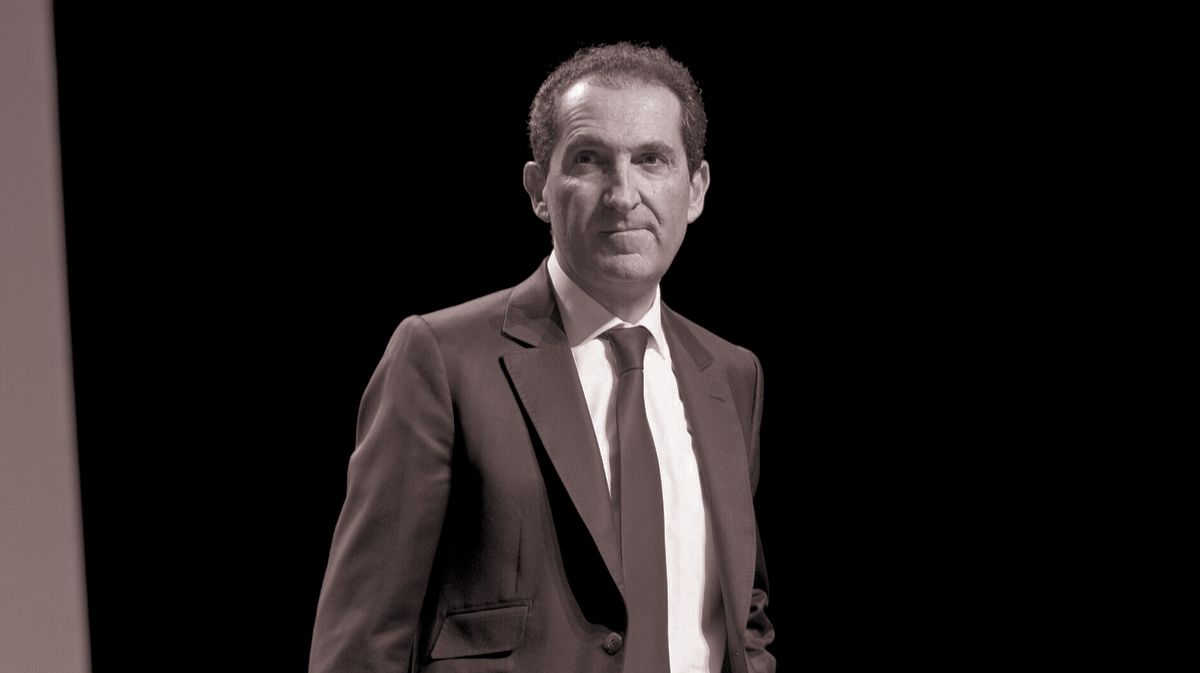
The New Yorker’s Patrick Drahi blockbuster documented what
many of us knew: Sotheby’s employees do significant moonlighting, apparently with the owner’s tacit approval. But if this unseemly practice doesn’t faze Drahi, the art world’s biggest clients may not be so tolerant. |
|
|
I’ll be honest, I didn’t want to write this review of Sam Knight’s
New Yorker article on telecom magnate and Sotheby’s owner Patrick Drahi, which was published on Monday morning. Like many of you, I spent much of Monday on the telephone with friends, acquaintances, and interested parties swapping takes on the well-researched, elegantly structured, and
admirably nuanced story. And I had already spent much of last year tussling with Sotheby’s over my own reporting on the topic. I was tapped out. We’d finally come to peace terms; and I’ve been looking forward to seeing their business thrive in an auction market rebound that always seems to be just over the next horizon.
I get that I’m in the hot take business, though writing about another journalist’s work has many pitfalls. Say something negative, or try to one-up the writer, and you
look petty. Praise the work of a competitor and you look pretty beta. But Sotheby’s is perennially newsworthy in our world, and so is its treatment in the media. So as I processed commentary about the story from art world insiders—the lack of revelations, for some, or the missing denouement—I decided to offer my own thoughts. After all, this story was not written for the few thousand people in the art market, but rather a far broader audience that might come across its details with
fresh and scrutinizing eyes. |
|
|
A MESSAGE FROM OUR SPONSOR |
The first steps towards a masterpiece starts with a dream. The all-electric BMW i7 – the
evolution of brilliance. Learn more at BMWUSA.com |
|
|
The main thrust of the story was to show how Drahi’s way of doing business has
affected his companies. That’s why Knight devoted so much space to interweaving Drahi’s rise, and the growth of his telecom company, Altice, with the story of Sotheby’s. Why Sotheby’s and not an extensively researched story about the cable telecommunications business? It’s a question that answers itself, doesn’t it? But there were two aspects of the story that seemed to have left an impression, judging from my conversations. One was Knight’s laying the decline of Sotheby’s market share in Asia on
Drahi’s son Nathan, who ran the business there until recently. The other was the revelation that a significant number of Sotheby’s employees were side dealing—seemingly, with the tacit approval of the company.
I don’t think there’s much new about Nathan here, and, besides, he’s no longer running Asia. But Knight’s coverage of the side dealing is actually important. |
Sometime last year, if I remember correctly, I was joking with a senior auction figure
at another house when he made reference to the rampant side dealing taking place at Sotheby’s. We traded some anecdotes and agreed that we were both taken aback by how far down into the organization the practice had spread. “It’s like a pirate ship over there,” my interlocutor said. That phrase stuck with me.
I’m strangely sympathetic to the side dealing. Drahi’s entire M.O.—as Knight’s article demonstrates—is to buy companies and strip them down to the lowest possible costs, often
allowing his partners to enrich themselves with side deals. In the piece, Knight wrote extensively about Drahi’s partner, Armando Pereira, who is under investigation in Portugal for allegedly demanding kickbacks from vendors, and Pereira’s son-in-law, Yossi Benchetrit, who was fired from his role overseeing a $2 billion budget at Altice for refusing to participate in a similar investigation. (Pereira, who got his passport back after a brief detention last year,
still hasn’t been charged with anything.)
It would appear from the article that Drahi has approached the specialist staff in the same way. He’s cut their salaries and their bonuses. The only other benefit to working at Sotheby’s for them now is the ability to trade on their connections and earn money on the side, essentially freelancing. The whole thing reads like a passage from a 19th century novel where an East India Company functionary comes home from the subcontinent inexplicably
rich.
I had originally thought all of this lived in a grey area that is hard to police. After all, Sotheby’s says in the New Yorker article that its employees are allowed to buy and sell works of art for their own collections. There don’t seem to be any requirements for how long a work actually stays in that collection. Nevertheless, it turns out there’s a big difference between becoming a principal in a trade—reaping profit from taking risk—and what appears to be going on at
Sotheby’s.
According to The New Yorker, Sotheby’s specialists are taking commissions on sales they broker between two other parties. In many cases, neither of these parties would transact directly through Sotheby’s. You might argue that this is no big deal, and even if the salesperson were put in a position to broker the deal through their role at Sotheby’s, where’s the harm? Isn’t this just a sign that Sotheby’s staff are swashbuckling go-getters?
That’s where I got an
education this week. First, a lawyer explained that these deals likely violate Sotheby’s conditions of employment. If Drahi wants to turn a blind eye, however, there’s not much anyone can do. Which means this is a bit like adultery, and Drahi seems to like having an open marriage with his employees. It’s worth pushing the metaphor to make it a little easier to see where the harm lies. Drahi’s apparent amorality is such that he can’t understand that others take these things seriously. And,
perhaps, he doesn’t understand that not only is everyone else not a libertine, but there are people who might not want to do business with them. |
|
|
The lawyers and fiduciaries who handle the biggest estates aren’t known for
tolerating flamboyant behavior. They’re a stuffy bunch. Both Sotheby’s and Christie’s will be gathering next week to pitch a very large art collection coming from a very status-conscious family, I’m told. If the deals being offered are close—and it would be hard for them to be far apart in these tough times—who are the fiduciaries going to choose? The very correct, very French auction house owned by Pinault, or the pirate ship owned by Drahi? Most consignors are greedy and will just
take the most money or best terms. But some very prestigious clients will choose propriety.
On the phone last night with an old Sotheby’s hand, I got schooled even further. There are two additional dangers to what The New Yorker has now made public. First, there will be a further destabilizing effect on Sotheby’s staff. If you’re a dealmaker who doesn’t have an LLC set up for action on the side, you’re going to feel like a chump. Worse, clients will likely be looking for a
workaround, too. Many will ask themselves why they should be paying Sotheby’s a commission at all, and start asking their trusted contacts at the house to work directly with them on the DL, as it were.
What’s also curious is that the evidence of side dealing seems to be coming from parties to these trades, who were happy to get their deals done by cutting out Sotheby’s, but also mad enough to rat out their contacts to The New Yorker. There really are no heroes in this
story. |
The big question about Patrick Drahi has always been why he wanted to own Sotheby’s in
the first place. Before he bought the auction house, he wasn’t a noted collector, or anybody’s idea of a whale. He seems to have little or no interest in the social benefits of owning the auction house. He winters in Nevis, for Chrissake, not St. Barts. And his claim in the article that he bought the company for his kids seems hollow or, at least, after Nathan’s misadventures in Asia, quaintly sentimental.
Knight’s article gives us the most plausible answer. Drawing from an interview with
Antoine Champagne, the French editor who has published hacked documents from Altice, Knight proposes that Drahi is a man with two pockets. One pocket holds Altice, and all of the “elaborate agglomeration of debts and corporate shells, moving around.” That stuff is just finance, a game really, not meant to produce anything but money. As a sophisticated and ruthless player, Drahi is hardly one to trust the game. But, in the other pocket, Drahi has “really real things,” as
Champagne told Knight. “It’s buildings. It’s art. It’s jewelry. It’s planes.”
That’s when the switch flipped for me. As for many men, especially someone born in the hinterlands, real wealth is measured in tangible things, not numbers on a screen. And though Drahi didn’t need to own Sotheby’s to convert the cash he was sweating out of Altice into an Aladdin’s cave of treasures, it sure helps. |
Thanks for listening to my TED Talk. We will be back on Friday with more fun and
games.
M |
|
|
The ultimate fashion industry bible, offering incisive reportage on all aspects of the business and its biggest
players. Anchored by preeminent fashion journalist Lauren Sherman, Line Sheet also features veteran reporter Rachel Strugatz, who delivers unparalleled intel on what’s happening in the beauty industry, and Sarah Shapiro, a longtime retail strategist who writes about e-commerce, brick-and-mortar, D.T.C., and more. |
|
|
Finally, a media podcast about what’s actually happening in the media—not the oversanitized,
legal-and-standards-approved version you read online. Join Dylan Byers, Puck’s veteran media reporter, as he sits down with TV personalities, moguls, pundits, and industry executives for raw, honest, sometimes salacious conversations about the business of media and its biggest egos. New episodes publish every Tuesday and Friday. |
|
|
Need help? Review our FAQ page or contact us for assistance. For brand partnerships, email ads@puck.news. You received this email because you signed up to receive emails from Puck, or as part of your Puck account associated with {{customer.email}}. To stop receiving this newsletter and/or manage all your email preferences, click here. |
Puck is published by Heat Media LLC. 107 Greenwich St, New York, NY 10006
|
|
|
|