 |

|
|
Welcome back to The Best & The Brightest, coming to you on a Saturday as we navigate this historically fascinating transition period and look ahead to the agenda of a new congress. I’m Abby Livingston.
When Elon Musk wasn’t jamming with Donald Trump to the Village People at Mar-a-Lago, he spent his holiday week trashing the most expensive Pentagon project in history, the F-35 fighter jet—setting off some panic in Congress, but eliciting even more eyerolls. In this special Saturday edition email, a close look at the whole flareup, and how this project sets up a collision between Musk’s DOGE-y dictums and the F-35’s stealthy dog-fighting capabilities on the Hill. What could possibly go wrong?
|
|
A MESSAGE FROM INSTAGRAM
|

|
|
Instagram Teen Accounts: automatic protections for teens
Parents want safer online experiences for their teens. That's why Instagram is introducing Teen Accounts, with automatic protections for who can contact teens and the content they can see.
A key factor: Only parents can approve safety setting changes for teens under 16.
Learn more
|
|
|
But first…
- A Powers that Be special episode: This morning, I sat down with Ben Landy, Puck’s executive editor, for a special transition-themed episode of our company’s flagship podcast, The Powers That Be. We presaged the fault lines in the forthcoming Hill battles over tariffs and tax cuts, which could eventually torpedo some blue state Republicans and reverse House control. (Yes, yes, everyone is already thinking very far ahead.) We’ll be offering special Saturday episodes throughout the transition. Listen to the episode here.
|
| And now, Elon… |
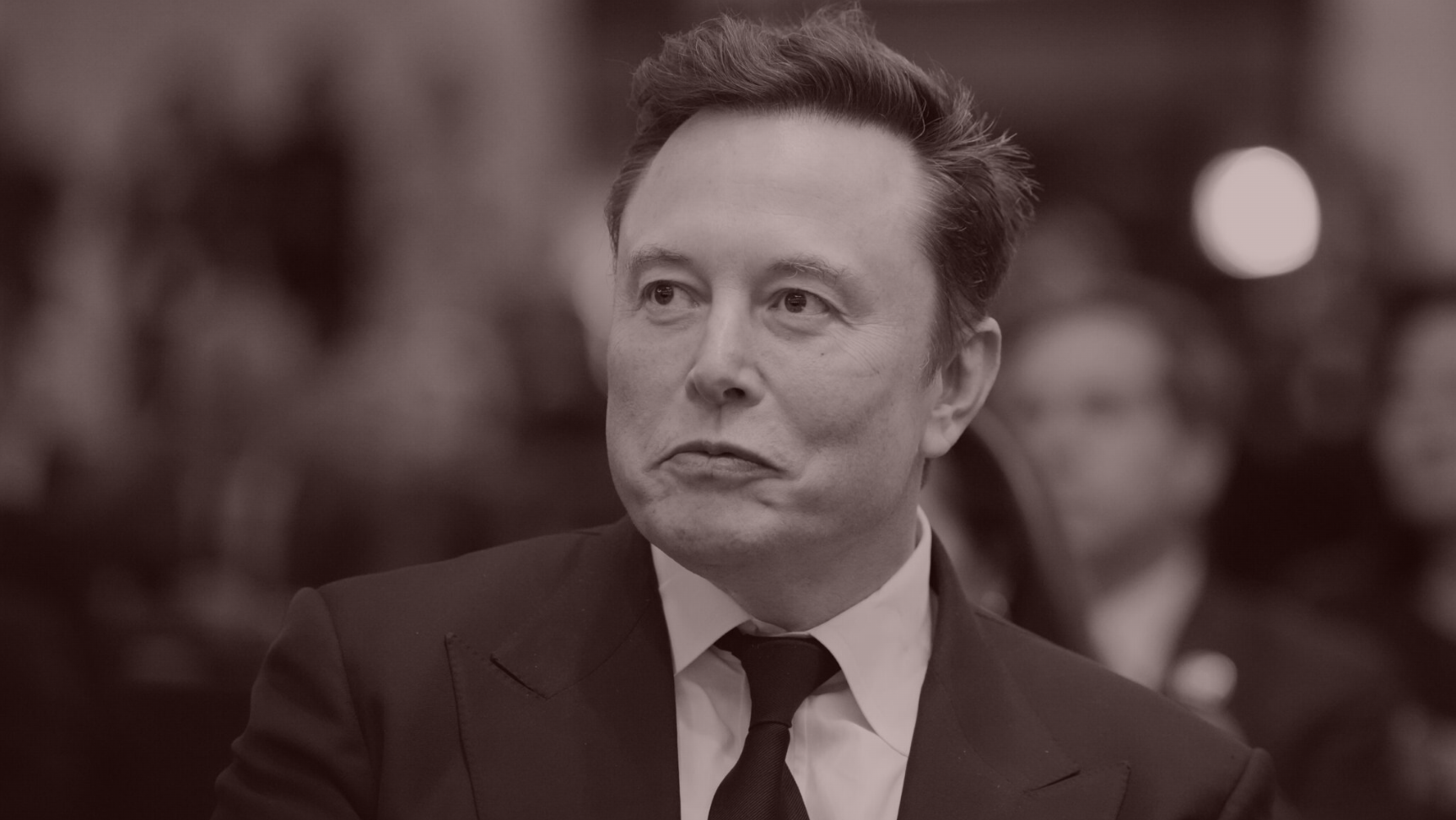 |
| DOGE-Ball: Elon vs. The F-35 |
| The Pentagon’s most expensive program has a powerful new enemy in Elon Musk. But the electric-car, social-media, and rocket tycoon faces two major obstacles in his quest for efficiency: Congress, and his buddy in the White House. |
|
|
|
| It was probably inevitable that Elon Musk, the world’s richest man and incoming co-chair of the Department of Government Efficiency, would come after the most expensive system in the most expensive corner of the U.S. government. That, of course, is the F-35 Joint Strike Fighter, the super-stealthy plane that’s now run up an estimated $2 trillion price tag for the Department of Defense, which is exactly the sort of profligate spending that Elon and Vivek Ramaswamy were ostensibly recruited to tame. And, as with many things Elon, his crusade started on the social platform formerly known as Twitter.
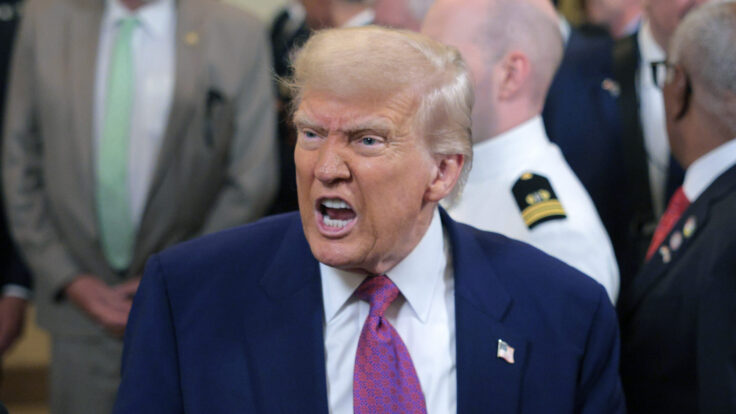
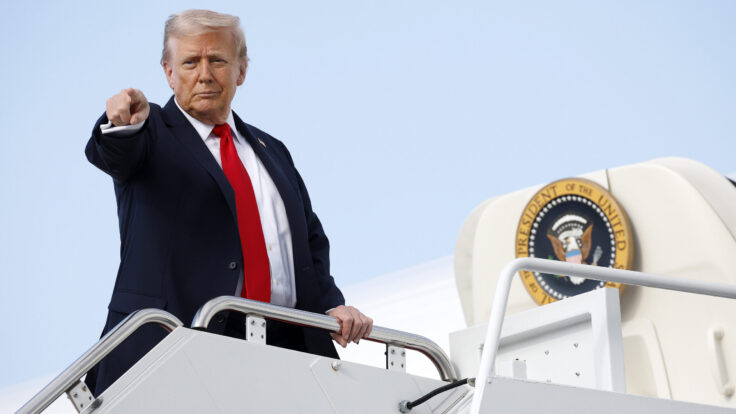
In a series of holiday-season X missives, Elon picked a fight with the fighter jet and the many, many people—spread across dozens of congressional districts—who build, maintain, supply, and fly it. He declared the plane “a shit design” constructed by “idiots” and “an expensive & complex jack of all trades, master of none” for which “success was never in the set of possible outcomes.” In the process, he’s put himself at cross-purposes not only with Trump, an earlier critic of the plane who has since repeatedly praised it on the campaign trail, but also voters in the many districts where some of that $2 trillion in spending supports jobs. And like Trump before him, Musk will probably discover that even the sickest of social-media burns are no match for congressional obstruction.
Also, while Musk’s criticism may be gratuitously mean, it’s also so last decade. Critiques of the plane and its cost are as old as the F-35 program, itself, even if the overruns keep hitting new heights: The G.A.O. recently declared that the F-35 “is now more than a decade behind schedule and $183 billion over original cost estimates.” The late John McCain called the program “a scandal and a tragedy” way back in 2016, when Musk was a middling billionaire dealing with his own cost overruns at Tesla. Trump, too, was sending mean tweets about the program eight years ago. For his part, Musk actually originally dissed the F-35 in 2020 and declared the era of the fighter jet over—prompting dismissal from the program’s then-head, Air Force Lieutenant General Eric Fick: “I guess I’m not all that interested in engaging in a battle of words with Elon Musk.” |
|
A MESSAGE FROM INSTAGRAM
|

|
|
Introducing Instagram Teen Accounts: limits for teens, peace of mind for parents
Parents want their teens to grow and thrive - and to make sure they’re staying safe.
That’s why Instagram is launching Teen Accounts, with automatic protections limiting who can contact teens and the content they can see. Putting built-in limits in place for teens, so parents can have more peace of mind.
Learn more
|
|
|
| Now, of course, Musk is not so easily dismissed, even though the remit of DOGE—a sort of glorified blue ribbon committee—is definitionally and intentionally unclear. Indeed, if Musk is serious about taking the plane down, he’ll encounter a different kind of F-35 stealth capability: entrenched political power on the Hill. |
|
|
| Trump’s own opposition to the F-35 program is instructive. Before even taking office the first time, he vowed to save billions on the plane, setting off panic in the defense world and across the many local economies connected to the project. But the F-35 had a backstop of support: Texas Republicans, who back then were the power center in the House and wielded no fewer than seven gavels, including via then-House Armed Services Chairman Mac Thornberry. Fort Worth Congresswoman Kay Granger was on her ascent in the House Appropriations Committee, too, and used that perch to financially nurture the F-35 into existence—not least by securing billions to assemble it in Fort Worth.
In the end, the backstop was just that: Lockheed Martin, the contractor that builds the plane in partnership with Northrup Grumman, waged a charm offensive on the president in the first months of his first term, apparently placating him with a vow to bring down costs and neutralizing Trump’s threat to mess with Texas. Obsequious diplomacy, the coin of the realm in Trumpworld, worked like a charm.
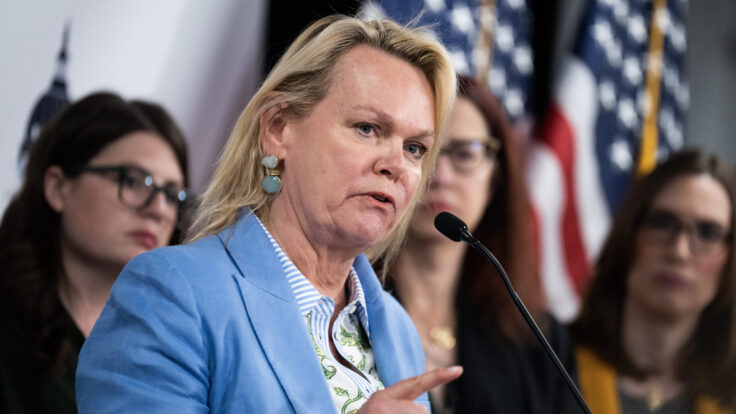
But now most of the Texas chairs are long retired. And after winning her own gavel at Approps, Granger is ending her congressional career in early January. “With Granger gone, I think that there are a lot of different things that are going in the wrong direction and we should be concerned about that,” Rep. Marc Veasey of Texas, a senior Democrat who serves on the Armed Services Committee and represents thousands of workers at the Fort Worth plant, told me. “This is the most serious threat to the F-35 program since its existence.”
Nevertheless, Musk’s headline-grabbing slash-and-burn power will be futile if the actual president-elect isn’t on his side here. The F-35 costs are sunk, the planes are in the air, and slowly the U.S. is allowing allies—particularly in northern and eastern Europe—to purchase the planes as a deterrent to Russia. (They were the tip of the spear in Israel’s recent successful strike on military targets inside Iran, another Kremlin ally.) It’s hard to imagine the logistics of unwinding the program at this point, and sources within the House Appropriations mostly rolled their eyes at Musk’s broadsides—the latest example of an outsider coming to town, only to be confronted with the vexingly byzantine bureaucracy. As Josh Rogin put it in The Washington Post: “Elon thinks he just discovered the controversy over the F-35 after 20 years of writing by the reporters and experts he thinks don’t know anything.” |
| Other Interested Players… |
|
| Musk isn’t even the savviest political operator in this debate. Lockheed and Northrup have spent decades cultivating members of Congress. Since 2012, in particular, they’ve plowed $65.5 million into campaign coffers on both sides of the aisle, according to the Center for Responsive Politics. |
|
|
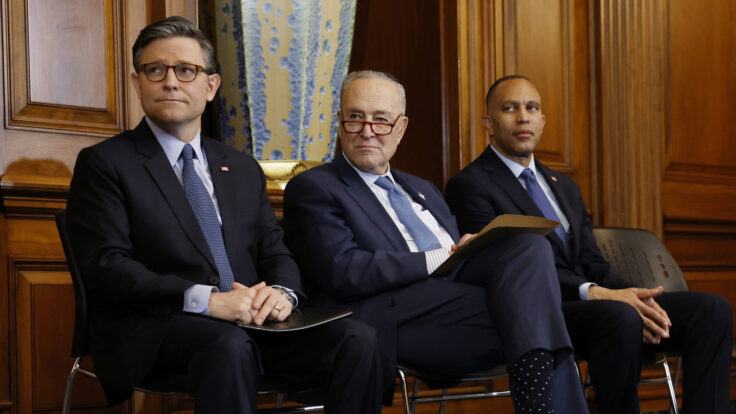
| Their largesse has extended to dozens of members on F-35-relevant committees in both houses—Appropriations, Armed Services, Foreign Affairs, Intel, etcetera—as well as to members with little relationship to the plane. No fewer than 60 senators accepted donations this past election cycle worth $5,000 or more from the contractors, including all the big dogs (incoming Appropriations Chair Susan Collins, Armed Services Chair Roger Wicker, Majority Leader John Thune, and all of their ranking Democratic counterparts). In the House, 157 members received donations, including seven major committee chairs, nine ranking members, and 37 appropriators including 15 cardinals (Capitol Hill shorthand for appropriations subcommittee chairs and ranking members).
Moreover, several incoming Trump officials or nominees also collected similar contributions—including N.S.A. pick Mike Waltz, Secretary of State nominee Marco Rubio, and U.N. ambassador nominee Elise Stefanik. Of course, Trump’s campaign received $230,000 from Lockheed and Northrup over the last campaign alone. Sure, these kinds of contributions don’t guarantee support for any given contractor. But the sheer breadth of the log-rolling operation demonstrates the sophistication and world-weariness of their lobbying efforts. In the long run, these investments will almost certainly look smarter than, say, Elon’s purchase of Twitter. |
|
|
| Lockheed and Northrup also built another political insurance policy: The plane’s economic footprint is pressed into multiple congressional districts—from remote and urban reaches of California, Arizona, Texas, Wisconsin, North Carolina, South Carolina, Nevada, Florida, Maine, and beyond. More than 200 House members have some measure of demonstrable support for, or ties with, the F-35—whether through campaign contributions, or representing a district like Veasey’s, around Dallas, in which the F-35 provides jobs, or going on record to support the plane through “dear colleague” letters or membership in the Joint Strike Fighter caucus.
As for the Musk critique, a Lockheed Martin spokesperson issued a calmly confident statement that emphasized the scale of the fighter plane’s reach. Noting projections that more than 700 F-35s will fly in European skies, and only 60 of those planes will be owned by the U.S. military, a spokesperson said: “Pilots continually emphasize that this is the fighter they want to take to war if called upon.”
Musk’s gambit here could go one of two ways. He could try to scare congressional Republicans into turning against the fighter plane by harassing them on X or vowing to fund primary challengers to recalcitrant members. But there is already an entrenched critical mass of F-35 Republican fans on the Hill. And it’s worth noting that the Fort Worth plant, for instance, is in a solidly Trump district, and that not even the most condescending Democratic elected would call MAGA factory workers “idiots” fresh off a campaign cycle supposedly about jobs and the economy. And that after a cost-of-living election, members know that their most important job right now is… jobs.
The second, and more probable scenario: This fight proves too complicated and difficult for Musk, and, like Trump before him, he declares some cost-cutting victory and moves on—likely pissed off, bored, frustrated by the serpentine favor-trading, or all of the above. He would not be the first private-sector whiz kid to enter government vowing magical transformation through the power of business principles. Whatever the Department of Government Efficiency turns out to be, the one guarantee is that the quest for “efficiency” will keep running into the same immovable obstacle: government, itself, and the stewards of the trade. |
|
|
|
| FOUR STORIES WE’RE TALKING ABOUT |
 |
|
 |
| Trumponomics 101 |
| A postgame report from Marc Rowan’s Mar-a-Lago voyage. |
| WILLIAM D. COHAN |
|
 |
| Loose Bannon |
| Steve Bannon’s wishlist for Trump II. |
| PETER HAMBY |
|
 |
|
|
|

|
 |
|
|
|
Need help? Review our FAQs
page or contact
us for assistance. For brand partnerships, email ads@puck.news.
|
|
You received this email because you signed up to receive emails from Puck, or as part of your Puck account associated with . To stop receiving this newsletter and/or manage all your email preferences, click here.
|
|
Puck is published by Heat Media LLC. 227 W 17th St New York, NY 10011.
|
|
|
|