 |
|
Welcome back to Dry Powder. I’m Bill Cohan.
|
|
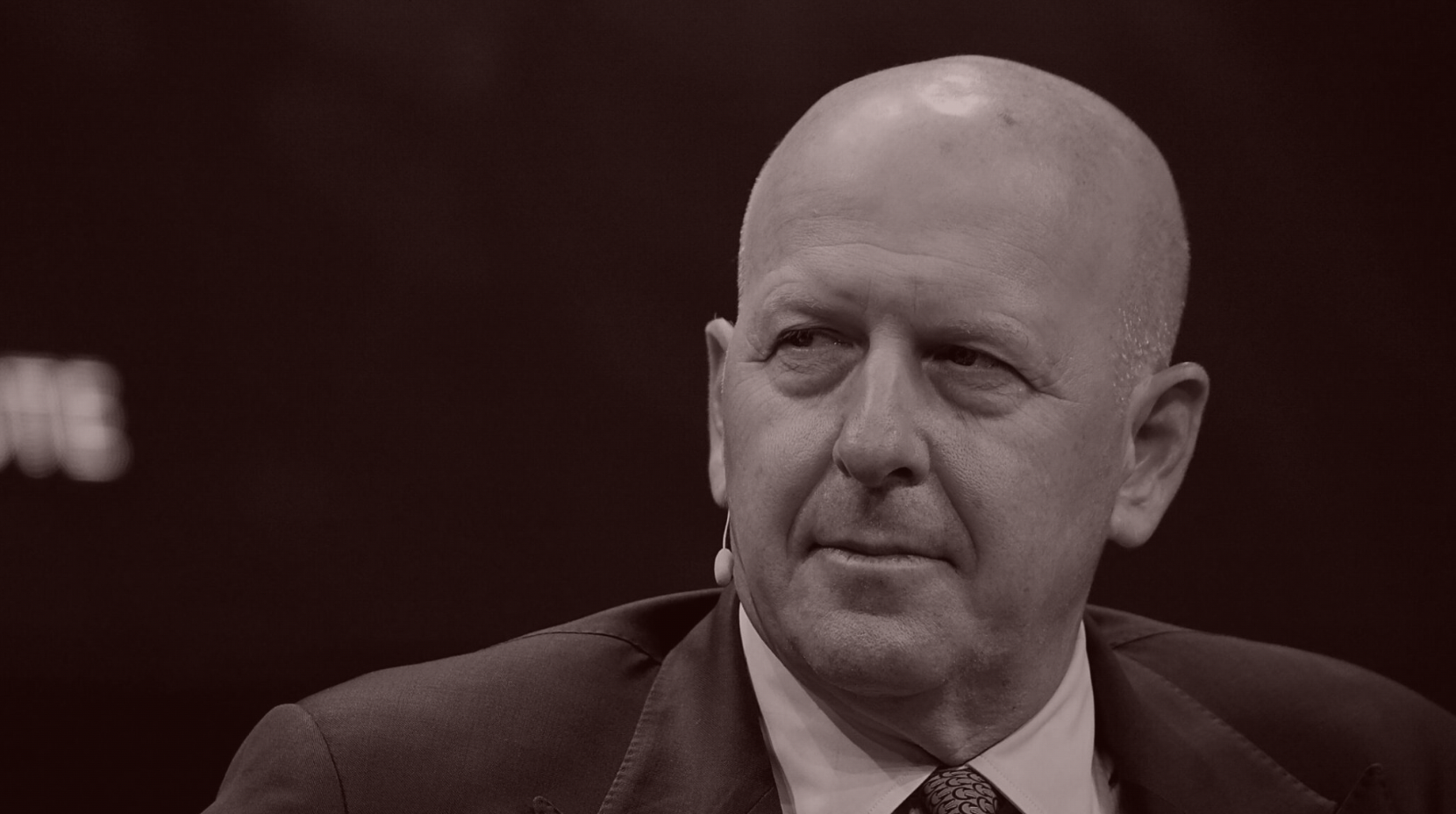
At Goldman’s investor conference last week, Wells Fargo research analyst Mike Mayo put on a show, jocularly grilling David Solomon over the firm’s foray into consumer banking. In today’s issue, a close look at Mayo’s provocative assessments, Marc Benioff’s activist investor conundrum, and the Tesla stock roller coaster.
|
|
|
| Running Goldman Sachs is not an easy job, especially these days. As C.E.O. David Solomon noted repeatedly during last week’s investor conference the last three years have been anything but normal—the global bank is still dealing with the after-effects of a global pandemic, a complicated new interest rate environment, the reality of a wildly profitable 2021 followed by a far more challenging 2022, and the continued leaks about the unrest at the firm, especially among a subset of seemingly miffed partners.
That tension was very much on display during the afternoon question-and-answer period, when the Wells Fargo research analyst Mike Mayo got under Solomon’s skin a bit. Mayo’s beef, it seemed, was that Solomon ostensibly avoided answering a question that many yearned to know about: When would Goldman jettison its nearly decade-long, unprofitable effort to delve into consumer banking, with Marcus and with its Apple and GM credit-card affiliations, as well as its cash-management businesses?
In his question to David, Mayo described Goldman’s businesses as “the good, the bad, and the ugly,” an obvious reference to the 1966 Clint Eastwood classic spaghetti western of the same name. The “good,” according to Mayo, referred to Goldman’s investment banking and trading businesses, which comprises 70 percent of the firm. “I get it,” Mayo said. The “bad,” in Mayo land, at least, was Goldman’s asset and wealth management businesses. (“What took you so long to bring down those on-balance sheet investments, which are a drag on capital and a drag on your [return-on-equity]?” he asked.) And then there was Mayo’s view of the “ugly”: Goldman’s so-called “Platform Solutions,” or consumer businesses, the aforementioned credit card and Marcus efforts. “Why don’t you just call it a day with point-of-sale financing and the credit card relationships [and] merge the transaction banking with [Goldman’s investment banking and trading division] and just get beyond this stage?” Mayo wondered.
He then made the analogy of the year when he compared Goldman’s unsuccessful foray into consumer banking with Michael Jordan’s flailing with baseball, which never progressed beyond the minor leagues, before eventually giving it up. “You’re like one of the greatest of all time in what you do, your core business,” Mayo continued, “but these extracurricular activities have really hurt your reputation, hurt your financials and seems like you took too long to kind of cut some of your losses. So where’s my thinking wrong there, or do you agree?”
A shot across the bow—a made-for-the-media bon mot—dressed up in the brutal-yet-professional lingua franca of a good Wall Street analyst. Solomon did his best to deflect and to disagree, with some humor. “I certainly don't agree with the good, the bad and the ugly,” he said. “Look, Mike, I know and I appreciate [and] one of the things I really enjoy about our interactions is you always like to frame questions and try to make them provocative. I’ll try to give you an answer that’s substantive to a provocative question.”
David conceded that the “ugly” was not great, but reminded Mayo that it was only a “relatively small” part of the firm’s business and that he was “focused” on it and “working very aggressively to correct it.” He agreed with Mayo that the good was very good. He pushed back hard on Mayo’s harsh characterization of Goldman’s asset and wealth management businesses as “bad” and said that Goldman had accomplished something significant by taking several businesses that historically had been run separately and bringing them together under one leadership team, and turning them into the “fifth largest active asset management platform.” He continued: “I would actually say that’s really good,” Solomon said. “And that doesn’t mean we don’t have a lot of work to do there.”
I caught up with Mike Mayo after the Investor Day. He reiterated that Goldman’s banking and markets business is world class and has been for a very long time. “They seem to be doing that better than anybody else on the planet,” he told me. “So, greatest of all time when it comes to deal making.” He said that his concern with Goldman’s principal investing business—with some $40 billion under management (and part of its asset and wealth management division)—is that the “regulatory penalty” for that business “just goes up and up and up,” requiring Goldman to hold more capital “and it depresses their return on equity.” He would like to see Goldman sell down some of its private-equity positions—Goldman has an excellent, $20 billion-plus private equity business—to free up that capital requirement, even though this is hardly the best market in which to try to offload those positions. He agreed that it’s a good business “but if it’s inside a bank, it’s penalized heavily,” he said, by regulators. “So keep the good part of asset and wealth management and better optimize your capital.” (Tony Fratto, Goldman’s spokesman, responded to me that Mayo’s thinking had some merit. “Mike is making an important point and it has a lot to do with our strategy to reduce the total size of direct investments in alternatives on our balance sheet to zero,” he wrote in an email, adding that Goldman would continue to co-invest in deals alongside its clients and that Goldman had reduced this item on its balance sheet to $30 billion, from $60 billion. “We’re around halfway there,” he wrote. “The goal is to be a more resilient, scaled funds-driven business.”
As for the consumer business, which began in 2016 under Lloyd Blankfein, Mayo reiterated his Jordan-in-Double-A concerns. Goldman says that the consumer business won’t be profitable, if it all, until 2025. “You start something and nine years later, you hope to break even?” Mayo said. “I mean, how is that financial discipline? How’s that excellence?” Solomon’s response to that was that Goldman was considering “strategic alternatives” for that business. “But then didn’t go any further,” Mayo continued. “So it’s three to 5 percent of the company, and a disproportionate amount of the questions related to that three to 5 percent.” As a case-in-point, Mayo still has his $425 a share target price on Goldman’s stock, up 23 percent from where the stock is trading now. So it’s not as if Mayo has soured on Goldman, or on Solomon.
On the last day of February, the Wall Street Journal’s Telis Demos wrote a Heard on the Street column titled “Let Goldman Be Goldman.” There seems to be a consensus growing around that idea. One Goldman partner emailed me that he thought the headline was right. Mayo also agreed, as do I. On the one hand, I respect Blankfein and Solomon for trying to push the boundaries of what has been Goldman’s DNA for more than 150 years. The idea of bringing Goldman Sachs to Main Street was clever, out-of-the-box thinking, but it hasn’t worked for a variety of reasons and it's become both a distraction and a weight on the stock, diluting the bonus pool, and causing the grumbling that seems to be emanating out of every pore of 200 West Street these days. |
| The Activists at Salesforce & Disney |
|
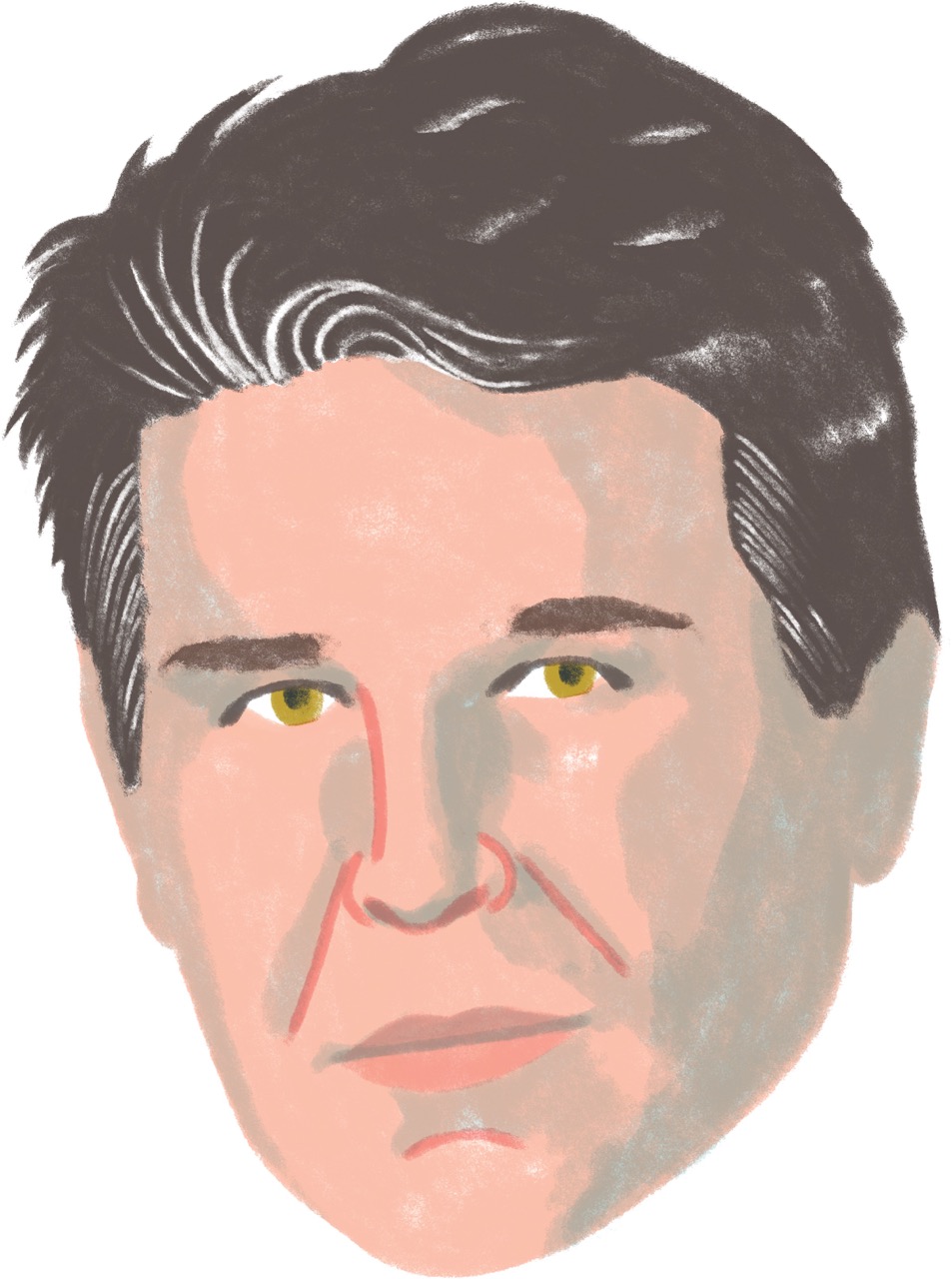
| Marc Benioff, the philanthropist and founder and C.E.O. of Salesforce, has been in overdrive of late as five activist investors have wiggled their way into his Salesforce—doing everything from criticizing Microsoft’s layoffs while executives were in Davos (“I prefer to lead from the front,” he told my friend Kara Swisher) to comparing having five different activist investors in your capital structure to being at an ice-cream shoppe, with many flavors to choose from (as he told my friend Andy Serwer). He’s even praising Mason Morfit, from ValueAct, his new hedge fund board member, for the contributions he’s been making toward getting Benioff to improve the company’s operating margins. “He was able to point out for us levers we could pull that we didn’t understand,” he told the Journal about Morfit. “As soon as we saw it, we did it.”
It’s fascinating how things seem to start working out when a C.E.O. stops fighting his or her activist investors. Since Benioff appointed Morfit to the board, he has fired about 8,000 employees, moved to improve sales and profitability, increased stock buybacks, and disbanded the M&A committee. Salesforce stock is up 13 percent in the last five days and 38 percent year-to-date.
But the activists seem to want more. According to a statement from Jesse Cohn, at Elliott Management (one of the five hedge funds inside Salesforce), Benioff’s work isn’t done. “Salesforce needs a sustainable leadership plan and a board that demonstrates it can provide accountability through proper oversight,” Cohn said. “To fully earn back the confidence and support of investors, Salesforce leadership must now deliver on its promises. Elliott intends to continue working with Salesforce as we evaluate the level of engagement necessary to achieve the best outcome for the company.” Word also got to Dave Faber, over at CNBC, that Elliott is planning on nominating some new directors to the Salesforce board prior to the nominating deadline on March 14.
In other words, just when you think it’s safe to go back into the water, it turns out the sharks are still circling. Look no further than Disney, for instance. It’s not yet clear whether the activist investors Nelson Peltz and Dan Loeb are still in the Disney stock. Peltz abandoned his proxy fight with Disney after Bob Iger laid out a plan for the company that checked nearly every box that Peltz had on his Disney agenda. (If he sold, he would have reaped roughly $150 million in profit for eight months of work.) Loeb, who bought in earlier and at a higher price point than Peltz, is probably still in the Disney stock, hoping that Iger can pull more rabbits out of his hat.
But I’m not sure the Iger magic is working. The Disney stock is up roughly 10 percent since Iger returned to the corner office last November, but it's also down about 10 percent in the last month, as Peltz abandoned his proxy fight and supposedly left the field. Appeasement is a double-edged sword. Once it has occurred, the pressure for change feels over and the media attention subsides, often giving the activist a financial windfall, as Peltz likely took with his Disney gambit. But what about the long-term Disney holders? They are left holding the bag while the fire that the activist lit goes out. That leaves a board of directors, loyal to the C.E.O., to finish the job that the activist started. But we all know that rarely happens, leaving only a long slog for the loyal shareholders to endure. |
|
|
| Wall Street was mostly underwhelmed by Elon Musk’s four-hour investor day “master plan” for Tesla, and the Tesla stock dropped about 7 percent afterward. Perhaps it was something about his promises to cut assembly line costs in half and multiply sales 15x being “short on details,” as various trade publications somberly reported.
But I’ve learned my lesson on Tesla, as have so many other rational people. At the beginning of the year, as Tesla’s stock was circling $100 per share and Elon was no longer the world’s richest man, I was on CNBC explaining that investors were finally coming to their senses about the Tesla hype and overvaluation and that the ride was finally over. You know, hold-onto-your-hats kind of thing because the party’s ending and remember that no one screams while the roller coaster is going up. But, of course, I was wrong, very wrong. Tesla’s stock price has roughly doubled since then—up 82 percent year-to-date—and Elon’s back to being Richie Rich and spouting platitudes.
I was having lunch with a friend this week who is all-in on Tesla (through an ETF, not directly), and he made the bull case for the company for me, something along the lines of the fact that there’s no stopping the move to electric vehicles—the old adage that the Stone Age didn’t end because we ran out of stones—and Tesla has a yuge lead over its competition and is building E.V.s at plants all over the world and, in effect, there ain’t no stopping the revolution’s leader now. My counter was a simple one: the company is way overvalued and has been nearly forever, the competition is heating up, many of the competitors’ products are better (or seem better to me, that’s subjective of course) and the fearless leader is often preoccupied with other things. He could see I was not going to be converted and so he dismissed me and the discussion with, “OK, you won’t be a Tesla investor then,” and he was right. I certainly will not be a Tesla investor, not at its current valuation anyway. (This is not investment advice.)
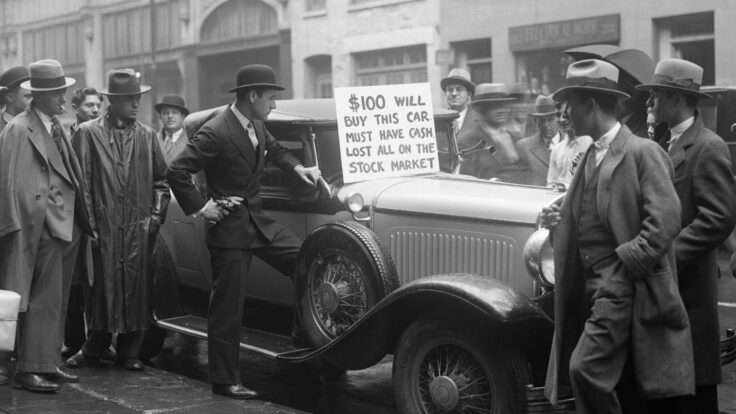
For reasons that I obviously can’t fully understand, Tesla’s investor base doesn’t care one whit about fundamental valuation metrics—my smart and sober friend said that’s outdated thinking; “the world has changed, dude”—and it’s all about riding the wave now. Incredibly, that’s a conversation that occurred this week, after the worst year in the stock and bond markets in decades. But I didn’t understand Bitcoin at $69,000 per coin either. Maybe it’s because I started my career on Wall Street in a crucible, September 1987, one month before the Dow Jones Industrial Average dropped 22.6 percent in one day and then lived through the subsequent credit crunch, the Long-Term Capital Management crisis, the bursting of the Internet Bubble, 9/11, the 2008 financial crisis, the Q.E. party and meme stock hysteria, so I just can’t digest the argument that all bets are off with Tesla and its ilk.
Yes, Tesla is a fine car company, churning out the Volkswagen Bugs of E.V.s with a big head start. And my non-Tesla, Rivian S.U.V. has been on order for two years now—the delivery window is now June-September—and the company is blowing through its cash hoard. Rivian’s stock is down 67 percent in the last year, while Tesla’s is only down 26 percent. So I get that Tesla seems to be in a different phase than its main competition. Still, last time I checked, Volkswagen isn’t making Bugs anymore. If Elon says he’s going to make and sell more Teslas than the whole American car industry combined currently sells in a good year, then fine, I’m done being his foil. God bless him. Cathie Wood says Bitcoin is going to sell for $1.5 million each soon too. |
|
|
|
| FOUR STORIES WE’RE TALKING ABOUT |
 |
| The Sununu Tease |
| On Sununu’s ’24 odds, Jeffries’ lower chamber cat herding, and Fettermania. |
| TARA PALMERI |
|
 |
| Hulu Tug of War |
| A potpourri of news nuggets emanating from Hollywood. |
| PETER HAMBY & MATT BELLONI |
|
 |
| Murdoch Shrugged |
| A close reading of the Fox-Dominion $1.6 billion lawsuit revelations. |
| DYLAN BYERS & ERIQ GARDNER |
|
 |
| DeSantis’s Unholy Coalition |
| Ron is racking up the support of Taliban 20ers, Florida-adjacent rich guys, and other anti-Trumpers. |
| TINA NGUYEN |
|
|
|
|
|
 |
|
|
|
Need help? Review our FAQs
page or contact
us for assistance. For brand partnerships, email ads@puck.news.
|
|
|
|
Puck is published by Heat Media LLC. 227 W 17th St New York, NY 10011.
|
|
|
|