 |
 |
|
Welcome back to Dry Powder.
|
|
Last week, Twitter’s lawyers filed their complaint in Delaware against Elon Musk for his decision, among other things, to allegedly “trash the company, disrupt its operations, destroy stockholder value, and walk away.” This seems like a fair assessment, in my view, all things considered. Discovery will be particularly ugly for Musk. Yet perhaps the case will reveal an answer to the fiasco’s chief existential question: What prompted Musk’s pivot?
But first…
|
|
|
| No one can predict a recession or a financial crisis. Some economists say we are already in a recession, others say we will avoid one. Still others imply it is inevitable. At the Economic Club of New York this week, former Treasury Secretary (and the economic oracle du jour) Larry Summers said it was “very unlikely” that inflation will come down to the Federal Reserve’s 2 percent goal “without a significant economic downturn.” Consumer confidence is indeed spectacularly low but, perplexingly, consumer spending is actually quite strong. If we are in, or entering, a recession, it is an unusual one, or at least that’s the way things seem at this particular moment.
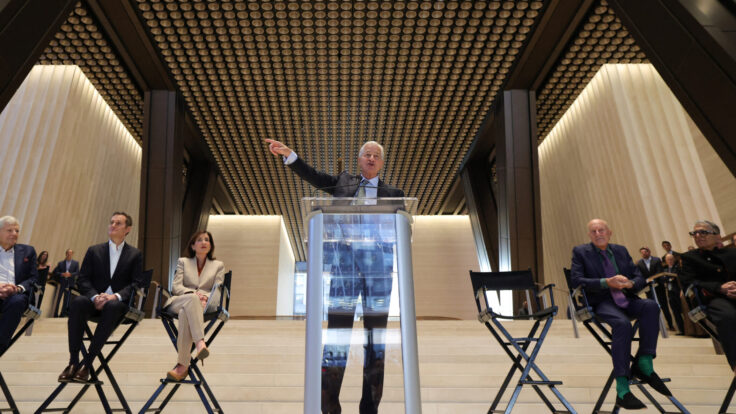
These contradictions have unsettled Wall Street, whose largest bank, JPMorgan Chase, saw its stock get buzzed last week after disappointing earnings. Uncertainty is slowing the pace of lending and M&A, and other investment banking activity that contributed to the bank’s windfall profits last year. But C.E.O. Jamie Dimon also said that, on a macro level, the bank is seeing few signs that a recession is imminent. What to make of all this?
Honestly, I am not sure what the difference is between seeing “signs of trouble in the economy” and a recession. The fact is that 2022 isn’t 2021 on Wall Street, not even close. At the House of Dimon, where Jamie told me a year or so ago that something like 80 percent of the bank’s profits were more or less locked in, with the remaining 20 percent variable, we are seeing the variable kick in, at least in the second quarter of 2022. JPMorgan Chase generated $8.65 billion in profit in the second quarter, 28 percent below the nearly $12 billion the bank earned a year earlier. (All sorts of new reserves and reversal of old reserves make year over year comparisons difficult, probably by design.)
But, look: He’s Jamie Dimon. He’s got his finger on the pulse of the economy and consumer and corporate behavior that others can only dream about. So let’s take his comments at face value, at least insofar as they pertain to the health of Wall Street, itself. If Jamie doesn’t see a recession on the horizon, that could mean that the bank could still earn as much as $40 billion this year, which is still rather astounding, all things considered. JPMorgan Chase is now trading at 8x earnings, with the stock down by a third so far in 2022. It also has a dividend yield of 3.7 percent, higher than the yield on a 10-year Treasury.
This is not investment advice but the truth is, under Jamie’s leadership, the bank has become an earnings machine, reliable in ways it never was under his predecessors. JPMorgan Chase benefits greatly from the consolidation that occurred in the wake of the financial crisis, which left the bank as the King of Wall Street, the biggest and most powerful firm and the great consolidator. And it benefits from rising interest rates since it can capture the spread between what it charges for loans (based on the higher interest rates) and what it pays depositors for use of their money (still painfully close to zero—.01 percent on a checking account these days). Banks are quick to raise the rates for loans but slow to raise the rates they pay depositors. Indeed, Citigroup just crushed analyst expectations, causing its stock to surge 13 percent on Friday, after the bank reported hauling in $12 billion in net interest income and that trading revenue had increased 25 percent in the quarter. As for the recession prospects, Jane Fraser, the Citi C.E.O., said she believed the U.S. was on the “cusp” of one.
The bottom line for Jamie Dimon and JPMorgan Chase is that he has built a bank that even in the midst of an economic slowdown, or a period of economic confusion, can still find a way to earn between $35 billion and $40 billion a year. That would have been inconceivable when I was at the bank, or its predecessors, from 1997 to 2004 and it is a testament to his skills as a C.E.O.—which probably explains why at 66 years old and with two health scares behind him, nobody is expecting him to go anywhere for at least another five years (sorry Marianne Lake and Jennifer Piepszak) and as the prime beneficiary of the oligopoly that now runs global finance. |
| ADVERTISEMENT |
 |
Are ESG investments really delivering on their promise? Some investors wonder about potentially sacrificing returns, while others consider whether their investments will make a difference. Learn how Northern Trust can build a plan that reflects your values and achieves what's most important to you. Learn more.
|
|
|
| The lone dim light on Wall Street, of course, has been investment banking. At both JPMorgan Chase and Morgan Stanley, investment banking revenue was down some 50 percent from a year ago. That’s no surprise, given the combination of the boffo 2021 for investment banking revenue and the correspondingly poor first six months of 2022. Investment banking is a notoriously cyclical business. When it’s great, it’s ridiculously great, and when it sucks, it really sucks.
These days, it really sucks. M&A volumes are down, leveraged finance volumes are way down, the high yield market is moribund, the leverage loan market is quiet. Is there even a market for issuing equity these days? No one wants to do deals when interest rates are rising rapidly and valuations are falling equally as rapidly. It’s very difficult to get anything done when buyers’ valuation metrics have fallen but the sellers’ expectations are still mired in 2021 thinking. (See Elon Musk and Twitter as but one recent example.) Investment bankers will always say how “busy” they are but, in truth, the first six months of 2022 has been quite quiet. That can spell trouble for banker compensation or banker jobs, or both. During boom times, Wall Street is quick to hire more bodies to execute the increased flow of work—but not to hire a sufficient number of people to avoid the ones who are there getting “crushed”—and are equally quick to lop people off when things slow down.
We’re in the slowdown period now and the consequences of that slowdown remain to be seen, either in significantly smaller year-end bonuses or layoffs. Somewhat mysteriously, though, despite the slowdown, there were reports from this past week that Wall Street banks have increased the pay of the youngest bankers on their payrolls. Boutique M&A firms such as Evercore and Centerview Partners have increased the starting pay for first-year bankers to $130,000 a year. Rothschild & Co., the private British banking boutique, has increased the pay of junior bankers for the third time in a year. Obviously, Generation Z is less enamored with being a junior banker on Wall Street than was my generation. Or to put it more precisely, Gen Z has many more options for high paying jobs than did my generation.
Back in the day, if you wanted a high beta job—high pay, high stress, low job security—Wall Street banking or trading was one of the few places, if perhaps the only place you could go. The pay was great on a relative basis, especially if you weren’t investing your own capital. But the hours and the work were miserable (although often plenty interesting), and the work/life balance was nearly non-existent. The only benefit back then was that, without cell phones or smartphones, you could leave the bank for the day and not be found. The jobs were highly coveted. Today, people considering a banking career can also get the same or better pay or the same or better work/life balance working for tech companies or for private-equity firms, or hedge funds. There are simply more options and Wall Street has failed to find a way to make entry level jobs at banks more desirable, or more palatable even, especially compared to tech companies or private-equity firms. That all might change now, what with tech companies starting the process of layoffs for the first time in a decade and private-equity shops facing a slowdown for the first time since the 2008 financial crisis. As Heraclitus once said, “All is flux,” and that is an increasingly evident state of affairs on Wall Street these days. |
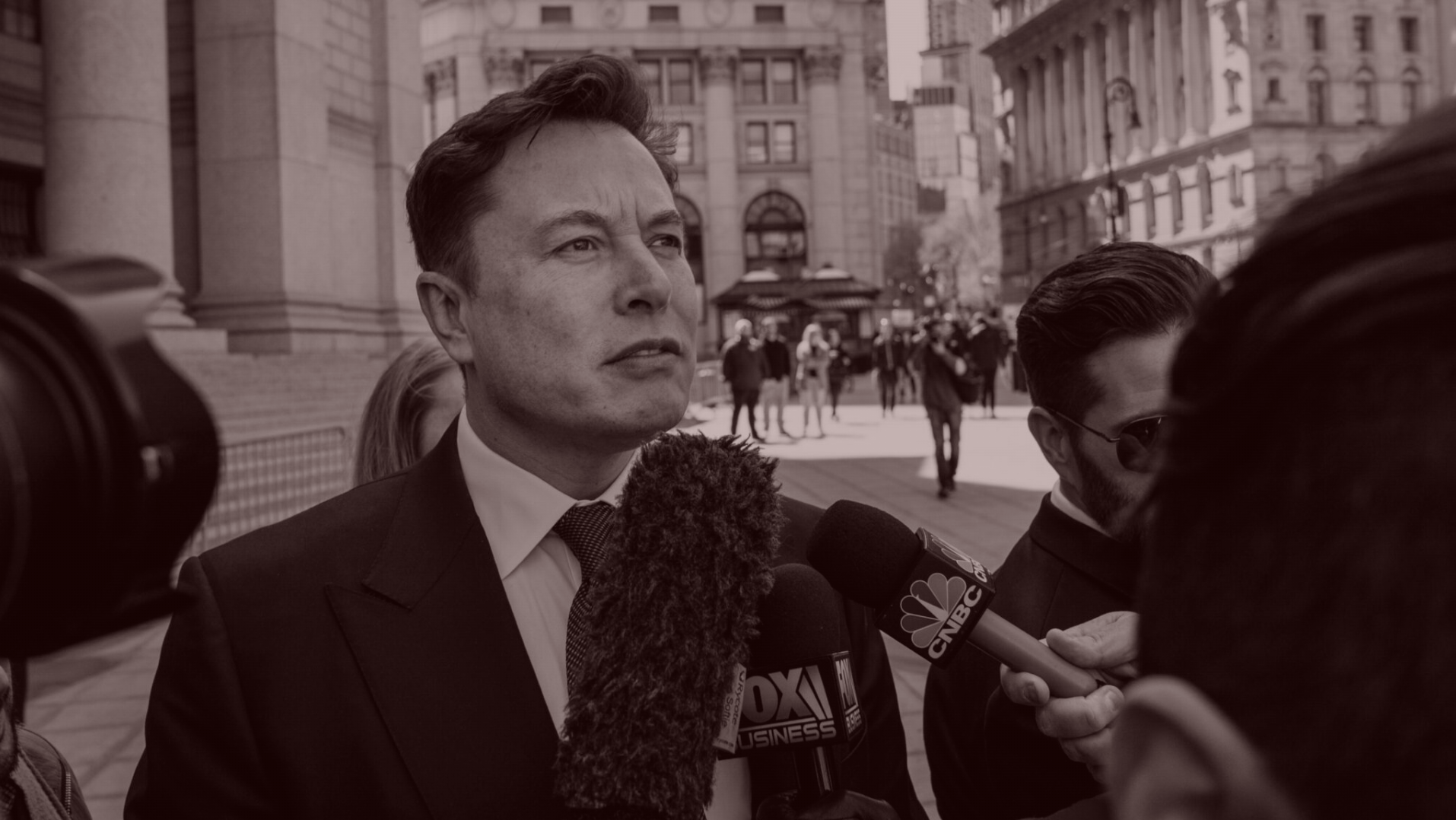 |
| The Case Against Elon |
| The depths of Musk’s legal troubles are clearly laid out in the complaint that Twitter’s attorneys filed in Delaware this week. The legal war is just starting. |
|
|
|
| Elon now has a fine mess on his hands, and he’s not going to be able to easily extract himself from it anytime soon, unless, say, he agrees to pay some sum—oh, I don’t know, perhaps $5 billion—that few people have on their Bingo cards. That prediction, pulled out of thin air, is obviously more than the $1 billion walk-away fee that no longer seems viable, or in play legally, but less than what Elon might have to pay per a court order, should he be required to close the deal as he agreed to do on April 25. It’s the kind of number that might get this sad dispute resolved outside of court more quickly.
My friend Scott Galloway suggested with merit on Pivot the other day that Elon will have to pay something more like $16 billion, the difference between the $44 billion he agreed to pay for Twitter and Twitter’s market value after the judgment in Delaware court goes against Elon, if it does, of course. (As a proxy for what that might be, I used Twitter’s roughly $28 billion market value these days.) Whatever the case may be, as I have written before, Elon is now operating from a position of weakness. He has signed a “seller friendly” merger agreement, and his buyer’s remorse over the alleged preponderance of bots on Twitter’s platform seems thin, despite what his lawyers wrote in a Friday filing that “false and spam accounts” are “fundamental to Twitter’s value.” |
| Indeed, the depths of Elon’s legal troubles are clearly laid out in the complaint that Twitter’s attorneys at Wachtell Lipton and Potter Anderson & Corroon filed on July 12 in the Delaware Court of Chancery against Elon and the two holding companies he set up to acquire Twitter. Elon and his attorneys at Skadden and at Quinn Emanuel will have the opportunity to rebuke the Twitter filing, of course, which they started to do on Friday by rejecting Twitter’s request for a speedy trial. But in the meantime, the new allegations—including heretofore private emails and letters—about Elon’s behavior since he signed the merger agreement on April 25 is both pretty revelatory and pretty damning. What this suggests to me is another point that Galloway has been predicting lately—that the discovery process in this lawsuit could be ugly for Elon and raise the bar considerably for what it will take him to reach a settlement with Twitter to avoid a trial, or will make it harder for him to actually win if both sides let it go to a trial. (Hence, the $5 billion suggestion.)
Twitter’s central argument is that, some three months after signing the April 25 merger agreement, Elon now “refuses to honor his obligations to Twitter and its stockholders because the deal he signed no longer serves his personal interests.” The Twitter lawyers continued, “Having mounted a public spectacle to put Twitter in play, and having proposed and then signed a seller-friendly merger agreement, Musk apparently believes that he—unlike every other party subject to Delaware contract law—is free to change his mind, trash the company, disrupt its operations, destroy stockholder value, and walk away.” |
| ADVERTISEMENT |
 |
|
|
| The evidence against Elon, as asserted by Twitter’s attorneys, is compelling. He signed a merger agreement, after having had the opportunity to perform his due diligence, and promised financing “backed by airtight debt and equity commitments,” including $33.5 billion of his own equity. Never before has a single person committed so much equity to a single deal, one that astoundingly consisted of 76 percent equity and only 24 percent debt. I don’t know what advice Elon was getting from his bankers at Morgan Stanley, but I can’t imagine it was to propose that capital structure.
Anyway, as the market started collapsing for technology companies at about the same time that Elon signed the merger agreement, he apparently started getting cold feet, and as the complaint alleges for the first time, started doing pretty much everything he could to thwart the deal’s progress as well as creating pretexts for how he might try to get out of the deal, as he did on July 8. Elon’s behavior, as shared in the complaint, between April 25 and July 8 is fascinating, and seems to be the opposite of the way someone who wanted to complete a deal would behave.
Twitter’s complaint argues that on May 6, the day after Elon announced that he had raised $7.1 billion of equity from an eclectic group of 19 investors, Morgan Stanley started asking for information from Twitter about fake accounts and bots. This request also coincided with the precipitous fall in the value of Tesla stock, the source of Elon’s tremendous wealth and of the collateral for the $12.5 billion margin loan that was part of the original capital structure of the deal at the time (but was later eliminated from it). Twitter’s argument is that Elon was merely looking for “a way out” of the deal. The subject of fake accounts and bots came up at an in-person meeting on May 6. On May 9, Morgan Stanley asked for more information about fake accounts and bots. “Nothing had changed about Twitter’s estimates concerning the prevalence of spam on the platform in the days since signing,” Twitter’s lawyers wrote. “Nonetheless, in the spirit of cooperation, Twitter responded on May 12 with data sets and written descriptions of its audience metrics and its process for sampling the prevalence of false or spam accounts.”
A day later, according to the same document, prior to another due diligence session to review the new bot data that Twitter had supplied, Elon tweeted that the “deal [is] temporarily on hold” until Twitter proved to him that fake accounts and bots were less than 5 percent of users. Two hours later, Elon tweeted that he was still “committed” to the deal. We can only imagine the firestorm that resulted from his “on hold” tweet that led to his “committed” tweet. The back and forth continued between Elon and Twitter, including with Parag Agrawal, the Twitter C.E.O., who tweeted a detailed explanation of the fake account situation and what Twitter does about them, followed by Elon’s adolescent response: tweeting a pile of shit emoji. (On Friday, Elon’s lawyers defended their client’s puerile behavior: “With the sense of humor of a bot, Twitter claims that Musk is damaging the company with tweets like a Chuck Norris meme and a poop emoji. Twitter ignores that Musk is its second largest shareholder with a far greater economic stake than the entire Twitter board.”)
On May 20, Elon’s lawyers requested “firehose” data from Twitter—a live feed of real-time data of people tweeting, retweeting, and liking—without explaining why they wanted the data. Twitter supplied it anyway. That was the motherlode of Twitter data, but still, apparently, not enough for Elon. The bizarre pas-de-deux between the two sides continued for weeks, with Elon asking for more and more data without explanation, Twitter fulfilling the requests, and then Elon claiming that Twitter failed to provide the information he wanted. “From the outset,” according to Twitter’s complaint, “defendants’ information requests were designed to try to tank the deal. Musk’s increasingly outlandish requests reflect not a genuine examination of Twitter’s processes but a litigation-driven campaign to try to create a record of non-cooperation on Twitter’s part. When Twitter nonetheless bent over backwards to address the increasingly burdensome requests, Musk resorted to false assertions that it had not.”
The saga of Bob Swan, the former C.E.O. of Intel who had been serving as an advisor to Elon, is particularly revealing. Swan had been working closely with Twitter executives to provide Elon financial information about Twitter to help him arrange for the $13 billion of debt financing that was already committed at the time of the signing of the merger agreement. That communication channel was working effectively. Suddenly though, on June 17, Elon demanded, through his lawyers, more financial information from Twitter, including both a “bottoms up” financial model from Twitter and a copy of the financial model that Goldman Sachs used to provide its fairness opinion to the Twitter board.
Given that the senior debt financing for the deal had already been committed months earlier, these were very unusual requests, especially the request from Elon that Goldman share with him its financial model. (I’ve never heard of a buyer making such a request of a seller’s financial advisor.) Elon also began to lay the groundwork for the idea that his financing was not actually secured. In a June 21 interview with Bloomberg, he first suggested, bizarrely, that it was still an open question whether the debt portion of the deal for Twitter would “come together,” even though his banks had already committed to providing that financing. (Twitter kindly shared with Elon the fairness opinion Goldman presented to the board; I’ve never heard of that happening before, either.)
On June 23, according to Twitter’s complaint, Elon texted Twitter management that he had fired Swan from the deal team. “[W]e are not on the same wavelength,” Elon wrote. He also made it sound like suddenly the committed debt financing was on shaky ground. When Twitter asked Elon who would be replacing Swan as someone Twitter management could communicate with, there was no response. When Goldman and JPMorgan Chase asked Morgan Stanley the same question, there was no response. When Twitter’s lawyers asked Elon for clarification about the status of the financing for the deal, as late as July 6—as was Twitter’s right under the merger agreement—Elon did not respond, other than texting Twitter management, “Your lawyers are using these conversations to cause trouble. That needs to stop.” A proposed replacement for Swan, Antonio Gracias, apparently never showed up, according to the document. Elon also ducked calls designed to get his approval of various employee retention plans and other personnel moves that Twitter believed were important to make. |
|
|
| There are many strange dynamics going on here. What prompted Musk’s pivot? Was it because he couldn’t raise the $33.5 billion of equity he promised to raise? Or was it because his banks were likely going to be on the hook for hundreds of millions of dollars in mark-to-market losses when they went to syndicate the debt they had committed to in a very different interest rate environment? Or was it because he was unable to negotiate a lower purchase price with Twitter than what he had agreed to on April 25? Possibly a combination of all three.
The “specific performance” legal argument is a powerful one. But I can’t imagine the two sides are going to allow this chess match to get as far as a judgment in the court system. As I wrote last Sunday, Twitter is better off without Elon Musk and the sooner the better. As airtight as the merger agreement is—kudos to Simpson Thacher and Wilson Sonsini—Twitter is in no position to litigate with the world’s richest man. Life is too short for that. Better to find a compromise that will make Twitter better off and that won’t materially affect Elon. That’s where I came up with $5 billion. That’s a lot of money, but for Elon it’s the equivalent of a small penalty for his childish temper tantrum and might just give him a fighting chance to get back in business with Wall Street. He can’t run the two businesses he cares most about—SpaceX and Tesla—without those relationships, after all, so he’d better figure out a way to mend his bridges, and fast.
That still leaves us with one helluva conundrum: to paraphrase The New York Times, what we have here is the prospect of a company that doesn’t want to be sold and a buyer that doesn’t want to buy it being forced by a court to complete a deal that neither side wants. If that doesn’t sound like 2022 to you, where have you been hiding? |
|
|
| FOUR STORIES WE'RE TALKING ABOUT |
|
|
|

|
|
|
| You received this message because you signed up to receive emails from Puck
Was this email forwarded to you?
Sign up for Puck here
Sent to
Unsubscribe
Interested in exploring our newsletter offerings?
Manage your preferences
Puck is published by Heat Media LLC
64 Bank Street
New York, NY 10014
For support, just reply to this e-mail
For brand partnerships, email ads@puck.news |
|
|
|