 |
 |
|
Happy Sunday, and welcome back to Dry Powder.
|
|
Jamie Dimon’s latest effort to save the banking industry has some wondering if he could succeed Janet Yellen as Treasury Secretary—the perfect closing chapter to a long and distinguished career. But who would replace him atop JPMorgan Chase? Today, a look in and around JPMC for the most likely candidates, some notes on Zaz’s salary slump, and further observations about Elon’s ongoing Twitter delusions.
|
 |
| Dimon Diplomacy & More Zazonomics |
| News and notes on the inside conversation on Wall Street: “The Jamie and Janet Show,” David Zaslav’s incentives, and Elon’s fuzzy math. |
|
|
|
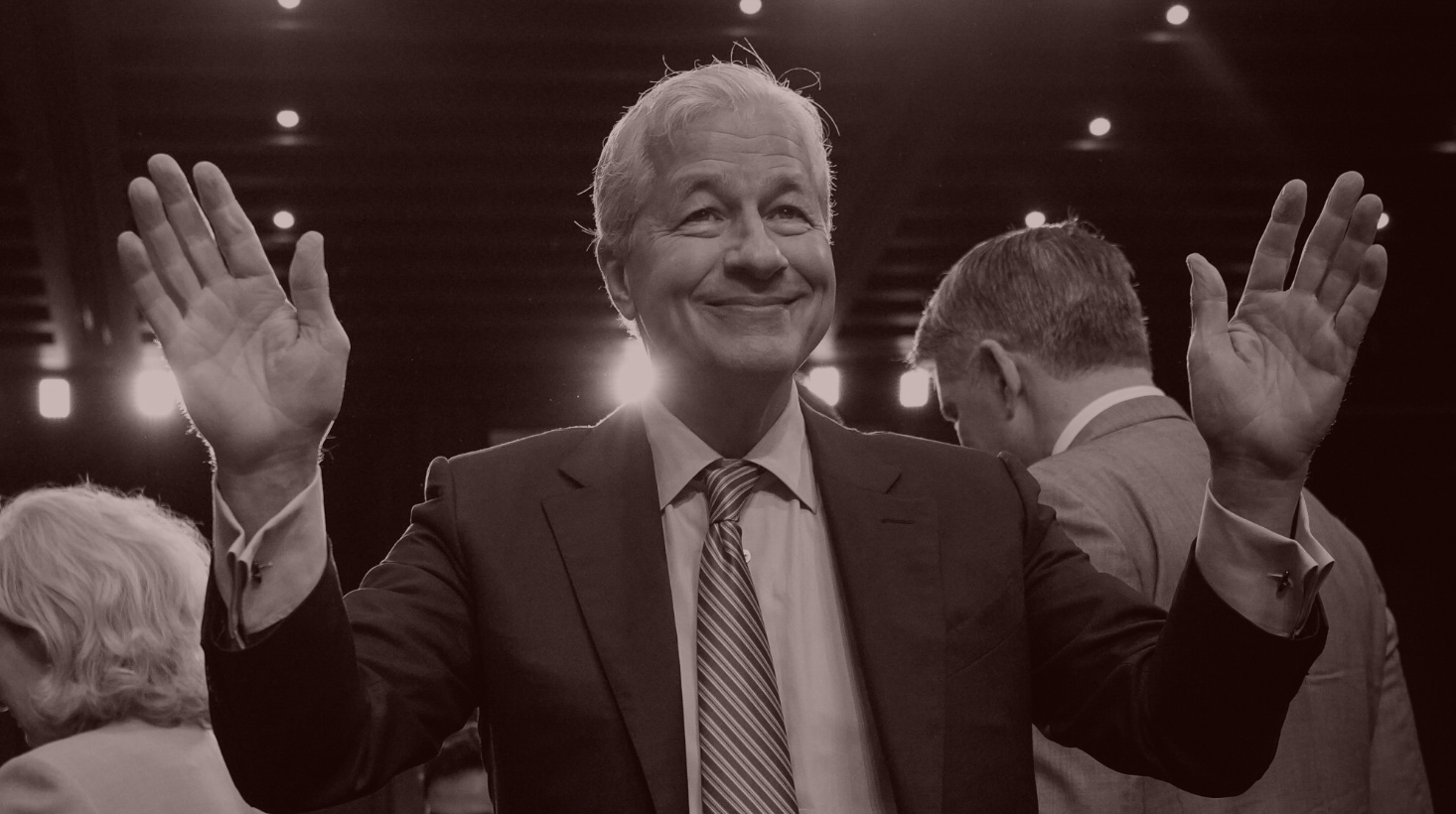
| For the second time in 15 years, Jamie Dimon was asked to serve on a Wall Street rescue committee, this time joining forces with Janet Yellen to lead an effort among 11 rival banks to stabilize First Republic. It was, as the Times reported, “the Jamie and Janet show,” a veritable reprise of Dimon’s role during the 2008 crisis, raising questions once again of whether this was simply the noblesse oblige of running the world’s largest bank or a preview of his ambitions to run the Treasury, himself.
It could be both, of course. What Wall Street banker wouldn’t want to have the chance to serve as Treasury Secretary as a capstone to a long and distinguished career? The opportunity for Dimon to join the White House cabinet would also provide Dimon with the perfect cover to finally appoint a successor. That worked for Hank Paulson, whom George W. Bush named Treasury Secretary in 2006, paving the way for Lloyd Blankfein to run Goldman Sachs. Of course, Hank had only been the C.E.O. of Goldman for seven years, a relatively short tenure compared to Dimon, now 67 years old, who has been at the helm of JPMorgan Chase since 2005, a nearly twenty year run that approaches Jack Welchian longevity.
If Joe Biden were ever to ask Dimon to succeed Yellen, whenever that day comes but possibly sometime this year, the JPMC board would be forced to cough up the name inside the Chase deposit box. The working assumption on Wall Street is that Jamie’s successor will be chosen from one of the three women who are now running several of the bank’s important divisions: Mary Erdoes, who runs Asset and Wealth Management; or either Jennifer Piepszak or Marianne Lake, who together run the bank’s consumer and community banking operation. (I can only imagine how tough it must be for Jennifer and Marianne to be both vying to succeed Jamie one day while also having to work together to run JPMorgan Chase’s retail bank; that seems a bit cruel to me.) In a pinch, the board could turn to Daniel Pinto, who is the president and chief operating officer of the bank, as well as C.E.O. of its corporate and investment bank. Pinto also served as acting co-C.E.O. a few years ago while Jamie was out attending to his medical issues. That’s a hell of a resumé. But Pinto is already 60 years old, which means that his tenure at the top would likely be a short one. Usually, a board likes to choose a new leader who could putatively serve for a longer time. Erdoes, Lake and Piepszak are all in their fifties. |
|
A MESSAGE FROM OUR SPONSOR
|
 |
| Revisiting Nuclear as a Clean Alternative
In the wake of geopolitical conflict and volatile energy prices, policymakers are rediscovering appeal in nuclear power. As a low-carbon fuel source, nuclear could be a viable bridge to a renewable energy future, while driving demand for uranium and related materials.
Explore the Global X Uranium ETF (URA) for targeted exposure to this emerging trend.
|
|
|
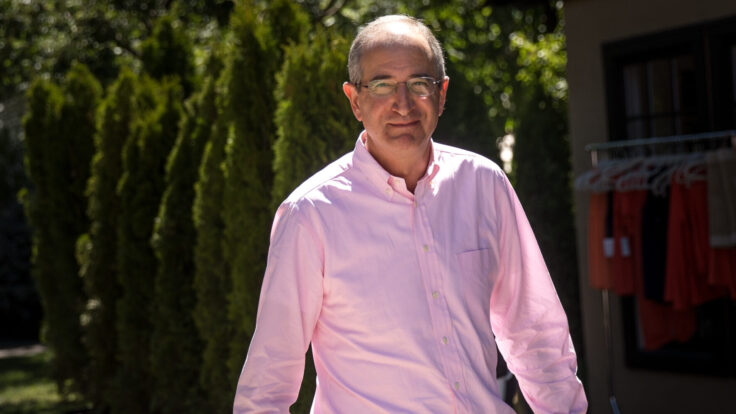
| The other possibility is that the board could go outside the bank for its next leader. Obviously, Dimon was an outsider when he took over, in 2005, after JPMorgan Chase bought Chicago’s Bank One, where he was C.E.O. The transaction was justified, in large part, to bring Dimon into the C-suite. After all, Dimon has amassed an incredible list of protégés who are now leading other banks. There is Bill Winters, formerly co-head of investment banking at JPMorgan Chase, who is C.E.O. of Standard Chartered Bank, in the U.K., though he’s 61. There’s Charlie Scharf, 57, the C.E.O. of Wells Fargo, a longtime Jamie cabinet member. There’s also Bill Demchak, the C.E.O. of PNC Financial Group, although he too is in his sixth decade. On the slightly younger end is Matt Zames, 52, a former JPMorgan Chase C.O.O. and once a leading candidate to succeed Jamie, before he decamped for Cerberus, the private equity and hedge fund, where he served as the firm’s president. He left Cerberus in 2021, after three years, and currently serves as board chairman at Doma Holdings, Inc. a publicly traded real-estate technology company where Larry Summers is also a board member. (Jes Staley, another prominent member of the Jamie Dimon coaching tree and a former C.E.O. of Barclays plc., is out of the running to succeed Jamie because of the ongoing litigation between him and the bank regarding his close association with the late Jeffrey Epstein.)
Is a shakeup in the cards? I know it seems like Biden is unwilling to move Yellen at the moment, but between the potential rough seas still on the horizon—ongoing uncertainty around some big banks, plus the still unresolved potential debt ceiling crisis—someone with Jamie’s authority and influence would be just the thing that is needed in Washington, just as Paulson proved to the exact right person to be at Treasury during the 2008 financial crisis. |
|
|
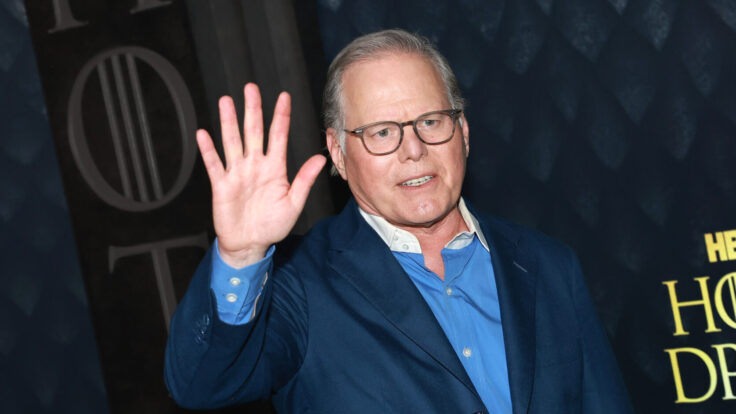
| The S.E.C. filings are in, and it turns out that David Zaslav made a measly $39 million last year—nothing to sneeze at, of course, but hardly on par with the $203 million he pocketed last year after he received a gargantuan stock option grant.
But Zaz has all the financial incentive he needs to turn around WBD. His compensation in the past two years, totalling some $242 million, is very heavily weighted toward being realizable only if the company achieves certain goals. As Samuel Di Piazza Jr., the WBD board chairman, said in a statement, Zaz and his leadership team will be rewarded handsomely but only if they reduce the company’s $45 billion-ish of net debt and increase the company’s free cash flow. So headline numbers like $242 million get plenty of attention, but the reality is that unless Zaz gets WBD’s stock price up and its debt down, he won’t be reaping those kinds of headline rewards.
And, in truth, he’s been getting extremely well paid ever since he left GE in 2006, after 17 years at NBC, to become C.E.O. of Discovery Communications, which merged a year ago with WarnerMedia to form WBD. Indeed, at this point I wonder whether he already has all the incentive he needs from a reputational and legacy perspective. He wants to be a Hollywood mogul. And he is. For $16 million, he bought the late Hollywood legend Bob Evans’ home in Beverly Hills. The question is whether he’ll be able to make WBD an operational and financial success, something no doubt that his big shareholders John Malone and the Newhouse family are counting on him to do.
So far, it’s been a rough start. The market valuation of WBD is down around 40 percent since its formation, about a year ago, to some $37 billion. On the other hand, the stock has had a rollicking good first quarter of 2023, up a whopping 58 percent. Zaz has also managed to reduce WBD net debt to around $45 billion, from the $52 billion or so it was a year ago. Fitch, the rating agency, figured in a note last month that WBD’s pro forma leverage was around 4.5x EBITDA at the end of 2022, down from nearly 5x leverage earlier in the year. Increases in debt paydown were offset by decreases in EBITDA.
Fitch seems to believe that Zaz and Gunnar Wiedenfels, his crackerjack C.F.O., will succeed in reducing WBD’s leverage ratio down to the 2.5x-3x range in the next few years. If they succeed, and they sure seem determined to do just that, WBD’s equity value, which is coiled tight like a cobra, should take off—making Zaz even richer than he already is. (This is not investment advice.) It will also solidify his legacy as a major Hollywood mogul and further position WBD for the inevitable merger with NBCU, with Zaz running the show. |
|
|
|
|
| In an email to employees last Friday, Elon Musk estimated Twitter’s value around $20 billion and hinted at coming “radical changes” while calling the company “an inverse start-up,” a funny sort of accidental acknowledgement that Twitter isn’t starting up but rather falling down.
In fact, Elon is arguably valuing Twitter about three times higher than the market would, given that the banks that own its $13 billion of senior secured debt can’t sell that debt for more than $6.5 billion, or 50 cents on the dollar. The destruction of $37.5 billion in value in less than six months must have set some sort of Wall Street record. By contrast, it took GE about 15 years to go from a $650 billion valuation down to the $100 billion or so that it’s worth these days.
Elon’s Twitter deal certainly must also rank as the most time-adjusted value-destructive leveraged buyout of all time. Sure, he probably thinks he’s doing his employees a favor by granting them stock options, or restricted stock, at a valuation of $20 billion—a 55 percent haircut to the original $44 billion valuation. But if he were being completely honest with his remaining employees, he would fess up that the company’s actual equity value is gone, except for whatever option value exists on him getting lucky by somehow turning it around, and that instead he was granting them stock or options in the company at an actual enterprise value of $6.5 billion (since he can’t be expected to grant them equity at the actual equity valuation of zero.) Either way, what remains of the employee base is presumably leery about the upside. Elon took something that was fairly broken to begin with and broke it even further, and did it rapidly. I suspect Twitter will soon be increasingly irrelevant, and it’s clear that many new entrants are trying, so far unsuccessfully, to displace it as the unofficial town square. (Again, this is not investment advice.)
At the moment, old Elon is the world’s second richest person (that we acknowledge), with a net worth, according to Bloomberg, of nearly $190 billion. (Second to Bernard Arnault, with a net worth of nearly $200 billion.) After a rough 2022 (relatively speaking), Elon’s net worth is up some $50 billion in the first three months of 2023, thanks in large part to his large minority stake in Tesla, whose stock is up 91 percent so far this year. As Jerry Seinfeld once said, I have one friend who’s up and one friend who’s down. In Elon’s case, he’s both at the same time, up and down. What a wacky world. |
|
|
|
| FOUR STORIES WE’RE TALKING ABOUT |
 |
|
 |
| Captured in Russia |
| There is something uniquely stomach-turning about Gershkovich’s arrest. |
| JULIA IOFFE |
|
 |
| Paging Godwin |
| Kim Godwin’s latest round of layoffs has re-ignited a furor inside ABC News. |
| DYLAN BYERS |
|
 |
| The Oscars Overhaul |
| Will a significant best picture rule change be thwarted by the board? |
| MATTHEW BELLONI |
|
|
|
|
|
 |
|
|
|
Need help? Review our FAQs
page or contact
us for assistance. For brand partnerships, email ads@puck.news.
|
|
|
|
Puck is published by Heat Media LLC. 227 W 17th St New York, NY 10011.
|
|
|
|